



الصفحة 32
الصفحة 32

Common Eye Diseases and their Management
There have been significant advances in the diagnosis and management of eye disease since the last edition of Common Eye Diseases and their Management was published. The specialty has developed more subspecialties, and the referring doctor has to have a good knowledge of these in order to make appropriate referrals. An increased emphasis on screening has made it necessary for the primary care doctor to have a basic knowledge of eye diseases. This applies particularly to glaucoma and diabetic eye disease. The management of eye conditions in the elderly is also an important and increasing primary care problem.
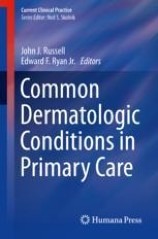
Common Dermatologic Conditions in Primary Care
This book offers a guide to common dermatologic conditions most often treated by primary care providers. Most dermatologic disorders in the United States are treated by primary care physicians, and yet primary care training programs do not prioritize dermatology. This easy-to-use reference answers that need with practical recommendations for diagnosing and treating these common diseases along with a number of illustrative color images. Throughout, chapters are either organized by population and the dermatologic conditions common to those groups or diseases commonly encountered in primary care. Populations covered include children, pregnant women, and athletes, and common diseases covered include dermatitis, warts, herpes, psoriasis, and some skin cancers.

Common complications in endodontics : Prevention and management
Describes the most commonly encountered endodontic complications and provides up-to-date information on their prevention and management. The opening chapters explain the importance of accurate diagnosis and treatment planning, outline the role of digital radiography and CBCT in managing complications, and highlight the need for close attention to anatomic landmarks in order to avoid damage to neurovascular anatomy. Endodontic problems associated with different procedural errors are then discussed in detail, covering a wide variety of access- and instrumentation-related complications and the difficulties that may arise when using obturation techniques. Readers will also find information on the endodontic–periodontal relationship, special issues in geriatric patients, and the potential medical emergencies and precautions in specific patient subsets.

Clinical Nutrition in Practice
Opens with introductory chapters on the basis of healthy nutrition, malnutrition and nutritional assessment. These are followed by chapters addressing the nutritional needs of patients with obesity, diabetes, cardiovascular disease, rheumatoid and neurologic disorders, as well as diseases of various organ systems, such as the GI tract, renal and pulmonary systems. Special attention is given to describing nutrition in cancer patients and those with HIV/AIDS and the book concludes with a discussion of enteral and parenteral nutrition.
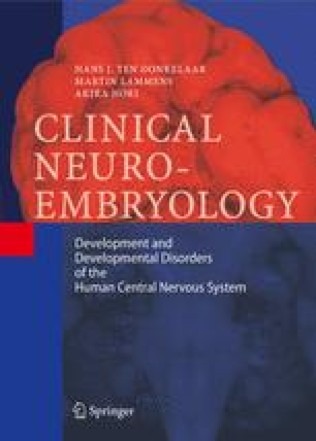
Clinical Neuroembryology : Development and Developmental Disorders of the Human Central Nervous System
Combines data from human embryology, animal research and developmental neuropathology. This book provides an overview of the development of the human Central Nervous System (CNS) in the context of its many developmental disorders due to genetic, environmental and hypoxic causes. It highlights numerous clinical cases and contains over 400 figures.
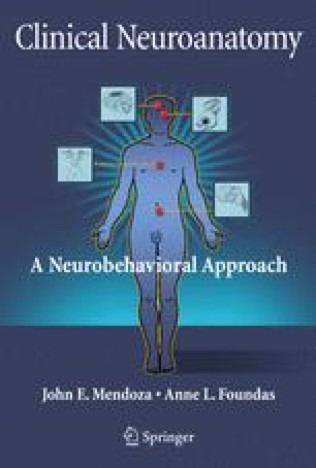
Clinical Neuroanatomy : A Neurobehavioral Approach
This book begins with a traditional review of the basic internal and external morphology, major nerve and fiber tracts, behavioral correlates, and clinical syndromes associated with spinal cord, brain stem, and cerebellum designed to reacquaint students and practicing clinicians with the functional anatomy of the subtentorial central nervous system. However, as the text was specifically geared to meet the needs of those practitioners whose primary interest is in what might be termed "higher order cognitive-behavioral function," the main focus of the text is on the brain itself. Borrowing heavily from a Lurian tradition, the central chapters reflect an attempt to offer more detailed, integrated, and, at times, theoretical models of cortical systems and their internal organization. Additional chapters highlight vascular anatomy and associated pathology, as well as neurochemical systems and their potential clinical relevance.

Clinical metabolomics applications in genetic diseases
Helps readers discover the forefront of personalized medicine on clinical metabolomics and its applications in genetic diseases. This comprehensive guide offers a functional relationship map between cell components and genetic variations in various diseases, providing insights that can be applied to personalized medicine. Covers the latest developments in metabolomics for health, with practical guidance for clinical experts looking to advance their laboratory techniques and career. The metabolomics profile is a powerful tool that has revolutionized our understanding of the relationship between genetics, clinical readouts, and disease outcomes. By integrating metabolomics with genomics and clinical phenotypes, the authors have developed diagnostic and prediction models that have vastly improved patient outcomes and deepened the understanding of disease mechanisms.

Clinical management of salivary gland disorders
Serves as a complete reference guide for the totality of salivary gland (SG) disease. Focusing on the clues available to the practitioner during the patient examination, it will completely review and update the available data concerning all manner of SG conditions. Looking beyond the perspectives of surgery, imaging, pathology, or sialendoscopy in diagnosis and therapy, this book will provide all professionals interested in the head and neck extensive and detailed diagnostic information about each SG entity.

Clinical laboratory finding in COVID-19: Diagnosis and prognosis
Coronaviruses belong to a family of viruses that comes under the order “Nidovirales”. This order includes the viruses that use a nested set of mRNAs for their replication. Further, the coronavirus sub-family has four genera (alpha, beta, gamma, and delta coronaviruses). The coronaviruses infecting humans (HCoVs) belong to two of these genera (alpha coronaviruses and beta coronaviruses).

Clinical Cases in Orofacial Pain
Individual cases cover temporomandibular joint disorders, masticatory muscle disorders, headache, neuropathic pain, dental pain, tooth wear, and dystonia. Following the popular Clinical Cases series style, cases are presented with associated academic commentary, including background information, diagnostic criteria and fundamental points that might influence the diagnosis, treatment planning or management of the case.

Clinical cases in nail disorders
Designed to facilitate the diagnosis of nail disorders though presentation of clinical cases. Each case will drive the reader to the correct diagnosis following simple steps that will be specifically indicated for each case. These include dermoscopic evaluation, pathology and the use of other specific tools depending on the diagnosis.

Climate change : Environment and history of the Near East
When the ?rst edition of this book was published in 2004, the following year 2005 has happened to have been the warmest year since 1880, when the ?rst reliable worldwide instrumental records came into existance. Claiming no li- age between the publication of our book and the temperature record, yet this record demonstrates the trend of increase in the global surface temperatures during thepast20years,reinforcedbyevidenceofriseofatmosphere’sand oceans’ temperatures, and increased melting of ice and snow in the arctic and antarctic regions as well as on mountain tops. All these observations are par- leled by the increase in the quantity of heat trapping gases in the atmosphere, causing most probably, the global greenhouse effect. In order to try and predict, what might be the impact of this effect on the on the natural and human environments of the Near East, (Figs. 1–1d) the authors adopted the saying that the past is the key for the future. The practical conclusion of this principle says that the acquiring knowledge of the impact of past climate changes on the nature and human societies, may allow conclusions with regard to future possible impact of climate changes. By correlating proxy data of all types, paleo-sea and lake levels, paleo-hydrology, pollen pro?les, environmental isotopes as well as archaeological and historical documents, the authors tried to collect as much as possible of this knowledge.

Claytons basic pharmacology for nurses
Helps you understand the principles of pharmacology and apply them to nursing practice. Known for its practical application of the nursing process to drugs and disorders, this book explains how to make informed decisions about drug therapy, educate patients, and administer medications. This edition adds new Next Generation NCLEX® (NGN)-style case studies and questions to prepare you for the critical thinking questions on the NGN exam. Concise and easy to use, this text teaches the basics of medication administration and drug actions.

Classifying madness : A philosophical examination of the diagnostic and statistical manual of mental disorders
Classifying Madness examines the conceptual foundations of the D.S.M., the main classification of mental disorders used by psychiatrists world-wide. It will be of interest to both mental health professionals and to philosophers interested in classification in science. The D.S.M. has become extremely controversial, and the possibility that there may be philosophical difficulties with it has become a commonplace in the mental health literature. Classifying Madness offers mental health professionals an opportunity to explore suspicions that there might be conceptual problems with the D.S.M. For philosophers, this book aims to contribute to debates in the philosophy of science concerning natural kinds, the theory-ladenness of classification, and the effect of sociological factors in science. These issues are normally approached via a consideration of the natural sciences and, as will be seen, approaching them via a consideration of psychiatry helps shed new light on old problems.

Classification Algorithms for Codes and Designs
Almost a century earlier, in 1782, Euler [180] published some results on classifying small Latin squares, but for the ?rst few steps in this direction one should actually go at least as far back as ancient Greece and the proof that there are exactly ?ve Platonic solids. One of the most remarkable achievements in the early, pre-computer era is the classi?cation of the Steiner triple systems of order 15, quoted above. An onerous task that, today, no sensible person would attempt by hand calcu- tion. Because, with the exception of occasional parameters for which com- natorial arguments are e?ective (often to prove nonexistence or uniqueness), classi?cation in general is about algorithms and computation.

Classical Nucleation Theory in Multicomponent Systems
Nucleation is the initial step of every first-order phase transition, and most phase transitions encountered both in everyday life and industrial processes are of the first-order. Using an elegant classical theory based on thermodynamics and kinetics, this book provides a fully detailed picture of multi-component nucleation. As many of the issues concerning multi-component nucleation theory have been solved during the last 10-15 years, it also thoroughly integrates both fundamental theory with recent advances presented in the literature. It covered are: the basic relevant thermodynamics and statistical physics; modelling a molecular cluster as a spherical liquid droplet; predicting the size and composition of the nucleating critical clusters; kinetic models for cluster growth and decay; calculating nucleation rates; and a full derivation and application of nucleation theorems that can be used to extract microscopic cluster properties from nucleation rate measurements.

Classes of Finite Groups
Many group theorists all over the world have been trying in the last twenty-five years to extend and adapt the magnificent methods of the Theory of Finite Soluble Groups to the more ambitious universe of all finite groups. This is a natural progression after the classification of finite simple groups but the achievements in this area are scattered in various papers.Our objectives in this book were to gather, order and examine all this material, including the latest advances made, give a new approach to some classic topics, shed light on some fundamental facts that still remain unpublished and present some new subjects of research in the theory of classes of finite, not necessarily solvable, groups.

City, climate, and architecture : A theory of collective practice
Based on a history of climate control on urban scales, it promotes the integration of indoors and outdoors in order to reduce environmental and thermal loads in cities. Just as heating and cooling practices inside the buildings are affecting the (urban) climate outdoors, urban heat islands are influencing the energy requirements and thermal conditions inside the buildings. While the first part of the book focuses on the interwar period in Europe, the publication’s second part considers examples from all over the globe, tracing the growing significance of ecological thinking for the design of urban environments.

Circular entrepreneurship : Creating responsible enterprise
Investigation reveals enterprises small and large delivering a stimulating message, from changes in entrepreneurial mindsets to the inclusive use of new technologies and a push for innovation. Zucchella and Urban explore the novel concept of circular enterprise, showing how, with their capacity to innovate, these firms are becoming the most powerful actors of a new, sustainable social order.
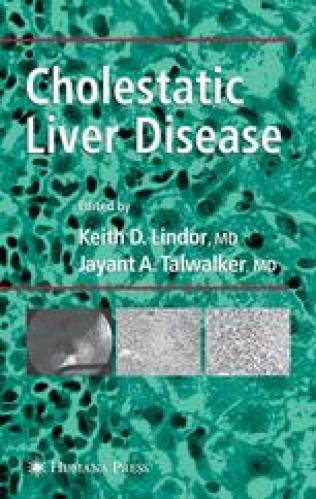
Cholestatic Liver Disease
Cholestatic Liver Disease provides essential information for individuals involved in the care of patients affected by cholestatic liver disease. This groundbreaking text also supplies scientific updates from leading experts which relate to the clinical evaluation and management of cholestatic liver disorders, useful for both novice and practitioners alike.
