



الصفحة 310
الصفحة 310

A Benchmark Approach to Quantitative Finance
The general framework is used to provide an understanding of the nature of stochastic volatility. The book is intended for a wide audience that includes quantitative analysts, postgraduate students and practitioners in finance, economics and insurance. It aims to be a self-contained, accessible but mathematically rigorous introduction to quantitative finance for readers that have a reasonable mathematical or quantitative background. Finally, the book should stimulate interest in the benchmark approach by describing some of its power and wide applicability.

A beginner's guide to urban design and development : the ABC of quality, sustainable design
Provides invaluable guidance to all those with an interest in placemaking and the built environment, from those with no experience to those who have worked for many years in industry, illustrating key principles that will secure higher quality, more sustainable design in accessible, jargon-free language. Explains the design process in a straightforward way, exploring the different roles and highlighting the opportunities and limitations different agencies have to influence design over the various stages of the process. Examples from the UK and worldwide look at how the system operates and how best practice can make a real difference on the ground. Case studies examine situations where quality or sustainability fell short – and how this could have been avoided. This book also showcases a variety of evaluation tools, explaining how they operate, and giving guidance on how to create project-specific tools to drive schemes forward. With community empowerment at its core, the book explains technical language and shares bountiful knowledge to broaden place democracy and make influencing design accessible to many, not just a few.

A Beginner's Guide to Sketching Buildings & Landscapes : Perspective and Proportions for Drawing Architecture, Gardens and More! (With over 500 illustrations)
Provides dozens of examples showing you how to establish accurate perspective guidelines and proportions for your initial pencil sketches, setting your drawings up to succeed right from the start. If a sketch's perspective and proportions are correct, your finished work will look crisp and beautiful. If not, you'll have a frustrating time trying to correct the problems at a later stage--and the finished work will never look quite right. A Beginner's Guide to Sketching Buildings & Landscapes is here to help you avoid those frustrations and set up your composition for a finished piece that will make you proud. The detailed step-by-step lessons in this indispensable guide teach you how to: Establish a composition's point of view correctly / Locate the horizon line, dividing land and sky / Break down complicated scenes into simple component shapes / Create the right relationship between foreground and background / Express 3D imagery using 2-point and 3-point perspective

A basic guide to international business law
Gives students an understanding as well as practical knowledge of legal problems arising in the area of international business, and to equip them with the skills needed to prevent and tackle these problems. All chapters employ the same didactic structure. Introductory case studies, examples, annotated case law, glossaries, diagrams, summaries and exercises are all designed to familiarize students quickly with relevant aspects of international (business) law.

70 Years of Levothyroxine
Presents the history, pharmacokinetics and pharmacodynamics of levothyroxine, discussing its role in the thyroid pathophysiology of patients of various ages and during pregnancy. It also describes the influence of levothyroxine on heart, bone and in cancer. When it was first synthesized in 1949, levothyroxine represented a significant advance in the treatment of hypothyroidism, providing a safe and effective treatment option for millions of hypothyroid patients around the globe. This synthetic form of thyroxine is now one of the most prescribed drugs in the world. Levothyroxine was first introduced by Merck KGaA,Darmstadt, Germany, in 1972, and since then the company has remained actively engaged in research on this mainstay of hypothyroidism treatment.
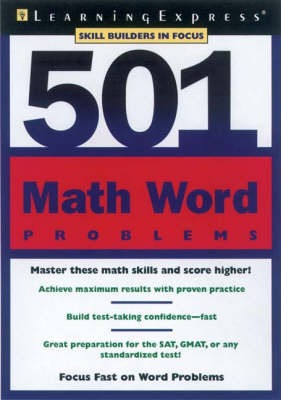
501 Math Word Problems
Contains only word problems - the kinds you encounter at school and on high stakes tests. Gaining familiarity with this specific question type is a proven technique for increasing test scores. The Skill Builder in Focus method provides the targeted practice on these questions necessary to attain higher scores. Questions are divided into six chapters: algebra, geometry, fractions, percents, decimals, and miscellaneous math. Within each chapter, questions move from easy to advanced, giving test-takers the opportunity to gain confidence in each math area. Each chapter contains questions, answers, and detailed explanations to reinforce learning and understanding. Diagrams and useful terminology help clarify math rules for effective studying and retention.

50 Years of Artificial Intelligence : Essays Dedicated to the 50th Anniversary of Artificial Intelligence
This Festschrift volume, published in celebration of the 50th Anniversary of Artificial Intelligence, includes 34 refereed papers written by leading researchers in the field of Artificial Intelligence. The papers were carefully selected from the invited lectures given at the 50th Anniversary Summit of AI, held at the Centro Stefano Franscini, Monte Verità, Ascona, Switzerland, July 9-14, 2006. The summit provided a venue for discussions on a broad range of topics.
3-D Structural Geology : A Practical Guide to Quantitative Surface and Subsurface Map Interpretation
This book provides an overview of techniques for constructing structural interpretations in 2-D, 2½-D and 3-D environments; for interpolating - tween and extrapolating beyond the control points; and for validating the final int- pretation. The underlying philosophy is that structures are three-dimensional solid bodies and that data from throughout the structure, whether in 2-D or 3-D format, should be integrated into an internally consistent 3-D interpretation. It is assumed that most users of this book will do their work on a computer. C- sequently, the book provides quantitative structural methods and techniques that are designed for use with spreadsheets, mapping software, and three-dimensional c- puter-graphics programs. The book is also intended to provide the background for understanding what interpretive software, for example, a computer contouring p- gram, does automatically. Most techniques are presented in both a traditional format appropriate for paper, pencil, and a pocket calculator, and in quantitative format for use with spreadsheets and computer-graphics or computer-aided-design programs.
3-D Shape Estimation and Image Restoration : Exploiting Defocus and Motion-Blur
Images contain information about the spatial properties of the scene they depict. When coupled with suitable assumptions, images can be used to infer three-dimensional information. This useful volume concentrates on motion blur and defocus, which can be exploited to infer the 3-D structure of a scene—as well as its radiance properties—and which in turn can be used to generate novel images with better quality. 3-D Shape Estimation and Image Restoration presents a coherent framework for the analysis and design of algorithms to estimate 3-D shape from defocused and motion blurred images, and to eliminate defocus and motion blur to yield "restored" images. It provides a collection of algorithms that are optimal with respect to the chosen model and estimation criterion.

3D Segmentation for medical images (OsteoVision) = التقطيع ثلاثي الأبعاد للصور الطبية
With the increasing integration of AI across various sectors, artificial intelligence (AI) is already playing a significant role in the healthcare industry, and its use is expected to grow further. AI systems used in image processing and computer vision algorithms have shown a significant ability to perform many operations such as segmentation, classification, and detection. This project presents the application of computer vision algorithms in the field of medical imaging for diagnostic, therapeutic, and interventional purposes. This thesis explores the use of several computer vision algorithms to address different pathologies, specifically brain tumors (glioma) (see Appendix A) and knee osteoarthritis (OA), as well as tracking the progression of knee osteoarthritis using the Kellgren and Lawrence (KL) grading system, a common method for classifying the severity of OA into five grades. To achieve the desired impact, the project employs various techniques, including 3D segmentation for brain tumors, 2D segmentation for knee joints, and multinomial classification for determining the severity of knee OA injuries. The primary aims of the project are to enhance diagnostic accuracy, assist in creating treatment plans, provide an assistive tool for healthcare providers to make more informed decisions, leverage AI's capabilities to detect abnormalities that might escape the human eye, and streamline workflow. To facilitate these goals, the project incorporates a user-friendly UI, a website, and a Flutter-based mobile application, enabling healthcare providers to efficiently integrate these tools into their practice and improve patient care.

3D Recording and Interpretation for Maritime Archaeology
Includes recording and analysis of maritime archaeology through emerging technologies, including both practical and theoretical contributions. Topics include photogrammetric recording, laser scanning, marine geophysical 3D survey techniques, virtual reality, 3D modelling and reconstruction, data integration and Geographic Information Systems. This convergence of digital technologies such as underwater photography and photogrammetry, 3D sonar, 3D virtual reality, and 3D printing has highlighted a pressing need for these new methodologies to be considered together, both in terms of defining the state-of-the-art and for consideration of future directions.
3D Printing in Oral Health Science : Applications and Future Directions
Equips readers with a sound understanding of contemporary clinical applications in all fields of dentistry and their future directions. In the last few years, the development of 3D printing for medical and dental applications has increased tremendously. Advancements in 3D printing create the possibility of customized products, savings on small-scale productions, ease of sharing and processing of patient image data, and educational up-gradation. Looking at the dental specialties, it is evident that 3D printing has applications in all aspects of oral health science including prosthodontics, oral surgery, periodontics, endodontics, and orthodontics. This book will cover all major fields in dentistry and will help the practitioner in the process of decision-making and apply concepts in clinical or laboratory practice. It is based on current scientific evidence to provide readers with an up-to-date contemporary underst
3D Mesh processing and character animation : with examples using OpenGL, OpenMesh and Assimp
Focusses specifically on topics that are important in three-dimensional modelling, surface design and real-time character animation. It provides an in-depth coverage of data structures and popular methods used in geometry processing, keyframe and inverse kinematics animations and shader based processing of mesh objects. It also introduces two powerful and versatile libraries, OpenMesh and Assimp, and demonstrates their usefulness through implementations of a wide range of algorithms in mesh processing and character animation respectively. This Textbook is written for students at an advanced undergraduate or postgraduate level who are interested in the study and development of graphics algorithms for three-dimensional mesh modeling and analysis, and animations of rigged character models.
3D Manufacturing Innovation : Revolutionary Change in Japanese Manufacturing with Digital Data
3D Manufacturing Innovation introduces the best practices developed by Toyota, Sony, Nikon, Casio and other pioneers in the global engineering scene, providing the reader with invaluable tips for manufacturing innovation.
3D Imaging, Analysis and Applications
This textbook is designed for postgraduate studies in the field of 3D Computer Vision. It also provides a useful reference for industrial practitioners; for example, in the areas of 3D data capture, computer-aided geometric modelling and industrial quality assurance. This second edition is a significant upgrade of existing topics with novel findings. Additionally, it has new material covering consumer-grade RGB-D cameras, 3D morphable models, deep learning on 3D datasets, as well as new applications in the 3D digitization of cultural heritage and the 3D phenotyping of crops.

3D imaging in endodontics : A new era in diagnosis and treatment
Provides readers with a full understanding of the role of cone beam computed tomography (CBCT) in helping to solve many of the most challenging problems in endodontics. It will shorten the learning curve in application of this exciting imaging technique in a variety of contexts: difficult diagnostic cases, treatment planning, evaluation of internal tooth anatomy prior to root canal therapy, nonsurgical and surgical treatments, early detection and treatment of resorptive defects, and outcomes assessment.

3D design reconstruction
This report will talk about a way to design and rebuild a cheap, true-to-the-truth 3D system using reverse engineering. The system provides the service of reconstructing objects into 3D models by placing the object in a predetermined place facing a set of sensors and cameras at a certain distance and at precise angles, using the angle of rotation for each image and combining the points of triangulation we can build a form of 3D modeling types. These models can be used in digital animation or printed with 3D printers for a wide variety of applications.

35th Hemophilia Symposium Hamburg 2004 ; epidemiology ; risk of infections and inhibitors in hemophilia ; chronic lic synovitis and long-term results of orthopedic treatment ; laboratory diagnostics : coagulation factors ; inhibitors, monitoring ; pediatric hemostaseology ; Free Lectures
Motion analysis as introduced 2 years ago on a national basis effectively identifies individual functional disorders and provides a means for describing them on the basis of a score. Individual therapy planning is possible. More treatment tends to produce better function scores and thus helps to lower the strain on the joint.

2D Functional Nanomaterials : Synthesis, Characterization, and Applications
In 2D Functional Nanomaterials: Synthesis, Characterization, and Applications, Dr. Ganesh S. Kamble presents an authoritative overview of the most recent progress in the rational design and synthesis of 2D nanomaterials and their applications in semiconducting catalysts, biosensors, electrolysis, batteries, and solar cells. This interdisciplinary volume is a valuable resource for materials scientists, electrical engineers, nanoscientists, and solid-state physicists looking for up-to-date information on 2D heterojunction nanomaterials.

250 Things a Landscape Architect Should Know
In this book 50 landscape architects from Europe, North and South America, Asia and Australia each give five responses. These include practitioners and teachers, young start-ups as well as internationally established firms. The publication illustrates the complex and dynamic nature of the discipline, and presents a diverse cross-section of the core expertise of this field. At the same time, it allows the reader to trace the individual attitudes into which geographical conditions, social contexts and political circumstances flow.
