



الصفحة 3
الصفحة 3

Molecular Mechanisms of Parasite Invasion
All of the parasitic organisms highlighted in this new book represent medically important human pathogens that contribute significantly to the global burden of disease. As such there is intense interest in understanding the molecular basis of infection by these pathogens—not only with regard to their clinical relevance but also the fascinating biology they reveal. For most of the parasites discussed here the ability to penetrate biological barriers and/or to establish intracellular residence is critical to survival of the pathogen in the mammalian hosts. For other parasites, a tissue invasive phenotype is a key virulence determinant. In the ensuing 18 chapters, select members of this diverse set of protozoan parasites, as well as some examples of the extremely reduced fungal parasites classified as Microsporidia, are discussed within the context of the fascinating molecular strategies employed by these organisms to migrate across biological barriers and to establish residence within target host cells.

Molecular Chaperones in Health and Disease
Molecular chaperones are involved in a wide variety of essential cellular processes in living cells. A subset of molecular chaperones have been initially described as heat shock proteins protecting cells from stress damage by keeping cellular proteins in a folding competent state and preventing them from irreversible aggregation. Later it became obvious that molecular chaperones are also expressed constitutively in the cell and are involved in complex processes such as protein synthesis, intracellular protein transport, post-translational modification and secretion of proteins as well as receptor signalling. Hence, it is not surprising that molecular chaperones are implicated in the pathogenesis of many relevant diseases and could be regarded as potential pharmacological targets. Starting with the analysis of the mode of action of chaperones at the molecular, cellular and organismic level, this book will then describe specific aspects where modulation of chaperone action could be of pharmacological and therapeutic interest.

Molecular autoimmunity
The autoimmune disease paroxysmal cold hemoglobinuria, a rare hemolytic disorder. After a century of research, the list of autoimmune diseases has become impressive. With a prevalence of approximately 5% of the world-wide population, these chronic, debilitating conditions affect almost every major organ of the body and, for reasons that remain unclear, are much more prevalent in woman than in men. Despite our rapidly expanding knowledge of the cellular and molecular pathways that govern a normal immune response, deciphering the precise etiology of autoimmune diseases remains an important challenge. Over the last few years, our understanding of the pathogenesis of autoimmune diseases has improved rapidly, leading to the emergence of elegant immunointervention strategies. Molecular Autoimmunity illustrates how cutting-edge research is continuing to advance our understanding of autoimmune disease mechanisms and identifies novel therapeutic targets that provide a hope for effective future treatments. This volume contains a selected number of exciting advances in unraveling autoimmune reactions, and the resulting new armory of experimental immunotherapies that may lead to new ways of controlling autoimmune reactions.

Molecular and Cellular Signaling
A small number of signaling pathways, no more than a dozen or so, form a control layer that is responsible for all signaling in and between cells of the human body. The signaling proteins belonging to the control layer determine what kinds of cells are made during development and how they function during adult life. Malfunctions in the proteins belonging to the control layer are responsible for a host of human diseases ranging from neurological disorders to cancers. Most drugs target components in the control layer, and difficulties in drug design are intimately related to the architecture of the control layer. Molecular and Cellular Signaling provides an introduction to molecular and cellular signaling in biological systems with an emphasis on the underlying physical principles. The text is aimed at upper-level undergraduates, graduate students and individuals in medicine and pharmacology interested in broadening their understanding of how cells regulate and coordinate their core activities and how diseases arise when these regulatory systems malfunction, as well as those in chemistry, physics and computer science interested in pursuing careers in biological and medical physics, bioinformatics and systems biology. To that end, the book includes background information and review sections, and chapters on signaling in the immune, endocrine (hormonal) and nervous systems. It has chapters on cancer, apoptosis and gene regulation, and contains chapters on bacteria and viruses. In those chapters not specifically devoted to pathogens, connections between diseases, drugs and signaling are made. Each chapter also features a problem set to facilitate further discussion and understanding.

Modern aspects of pharmaceutical quality assurance : developing and proposing application models, SOPs, practical audit systems for pharma industry
Aims to develop a tool that will substantially decrease the number of Inspectional Observations and Warning letters, thus eliminating Import Alerts and Consent Decree. This book targets the Pharmaceutical Industry and students of Pharmaceutical Quality Assurance so they can get in hand-ready consolidated information on Pharmaceutical Quality guidelines, Quality metrics, and implementation of simplified SOP guidelines, plant layouts to implement Quality metrics for Pharmaceutical Manufacturing systems in tablets, capsules, liquid orals, and semi-solid dosage forms.

Modern Anesthetics
Some important constraints of anesthesia must be taken into consideration when the pharmacological properties of modern anesthetics are discussed. The most imp- tant of these could be that the target effect be achieved preferably within seconds, at most within a few minutes. Similarly, offset of drug action should be achieved within minutes rather hours. The target effects, such as unconsciousness, are pot- tially life-threatening, as are the side effects of modern anesthetics, such as respi- tory and cardiovascular depression. Finally, the patient’s purposeful responses are not available to guide drug dosage, because, either the patient is unconscious, or more problematically, the patient is aware but unable to communicate pain because of neuromuscular blockade. in this book the very mechanism of anesthetic action at the biophase” was discussed within the theoretical framework of the “u- tary theory of narcosis”.
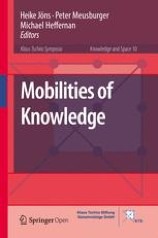
Mobilities of Knowledge
This collection of essays examines how spatial mobilities of people and practices, technologies and objects, knowledge and ideas have shaped the production, circulation, and transfer of knowledge in different historical and geographical contexts. Targeting an interdisciplinary audience, Mobilities of Knowledge combines detailed empirical analyses with innovative conceptual approaches. The first part scrutinizes knowledge circulation, transfer, and adaption, focussing on the interpersonal communication process, early techniques of papermaking, a geographical text, indigenous knowledge in exploration, the genealogy of spatial analysis, and different disciplinary knowledges about the formation of cities, states, and agriculture.

Mobile Phone Programming and its Application to Wireless Networking
This book provides a solid overview of mobile phone programming targeting both academia and industry. Mobile Phone Programming covers all commercial realizations of Symbian, Windows Mobile and Linux platforms. Each programming language (JAVA, Python, C/C++) and a set of development environments are introduced “step by step” making developers familiar with current limitations, pitfalls, and challenges. Each chapter contains examples and source code to rapidly make developers familiar with the most important concepts. Examples cover peer to peer networks, cooperative networking, cross layer protocol design, key challenges such as power consumption, and sensor networks for which a full hardware and software implementation is provided. Whether you are an experienced developer or an advanced student Mobile Phone Programming will be your key reference for successfully entering the world of software development for mobile devices.

Mix-Design and Application of Hydraulic Grouts for Masonry Strengthening
Provides guidance for the rational design and application of hydraulic grouts, based on a series of specific data (type of masonry, voids' width, targeted strength and durability level, available materials, etc.). To this end, the basic characteristics of a grout, i.e. its injectability (penetrability, fluidity and stability), its strength and durability, are taken into account by means of rational models and quantified expressions of all grout-design parameters. Thus, a holistic, rational mix design methodology for optimization of grout composition is given, permitting the preliminary design of grouts, without having to resort to multiple tests in advance.

Misleading marketing communication : Assessing the impact of potentially deceptive food labelling on consumer behaviour
Presenting four complementary experimental studies targeting recurrent grey-zone scenarios on the Danish food market, the book illustrates the potential of the so-called ShopTrip test paradigm which simulates and registers real-life e-shopping behaviour as it unfolds while yielding new types of data against which opposing assessments of potential misleadingness can be matched. The results are discussed in the light of possible paths of theoretical explanation and implications for future regulative practices, including companies’ self-regulation.

Microfinance, EU structural funds and capacity building for managing authorities : A comparative analysis of European convergence regions
Presents a study of capacity building and structural funds in public managing authorities for the microcredit sector. It presents two surveys to highlight the strengths and weaknesses of the managing authorities' capacity building. The first survey investigates the authorities' need for and interests in capacity building activities, assessing the areas in which capacity building support is needed, and explores the different types of support offered. The second survey analyses the results of the microcredit and microfinance programming activity, investigating its target groups and other operational features. It examines the key monitoring and reporting issues involved in this activity, before analysing the regulatory framework of the microcredit and microfinance sector.

Microbial protein toxins
Since the initial establishment of Robert Koch’s postulates in the nineteenth century, microbial protein toxins have been recognized as a major factor of bacterial and fungal virulence. An increasing number of proteins produced and secreted by various bacteria, yeasts and plants are extremely toxic and most of them developed remarkably "intelligent" strategies to enter, to penetrate and to finally kill a eukaryotic target cell by modifying or blocking essential cellular components. This book describes the strategies employed by protein toxins to render their pro- and eukaryotic producers a selective growth advantage over competitors. In providing an up-to-date overview on the mode of protein toxin actions, it accommodates biomedically and biologically relevant toxin model systems. As a result, it significantly broadens our perspective on biochemical architecture and molecular ploy behind the lethal principles of pro- and eukaryotic toxins.

Medicinal plants and antimicrobial therapies
Serves as an excellent comprehensive material covering the current understandings and updates on antimicrobial resistance (AMR) and the use of medicinal plant resources for tackling it. Chapters cover important aspects of AMR and strategies to address this threatening issue with medicinal plants and their resources. One health perspectives for addressing AMR have been presented for the readers. Antimicrobial medicinal plant therapeutic resources including crude extracts, active fractions, pure molecules and essential oils, besides using them as functionalizing agents for nano-antimicrobials have been covered. Further, plant endophytes as a source of antimicrobial compounds have been discussed. Chapters cover both the bactericidal as well as resistance-reversal (or potentiating/ combinatorial therapies) potencies of medicinal plant resources. The book also focuses on how medicinal plant resources effectively target major determinants of AMR.

Medicinal Chemistry for Practitioners
Presenting both a panoramic introduction to the essential disciplines of drug discovery for novice medicinal chemists as well as a useful reference for veteran drug hunters, this book summarizes the state-of-the-art of medicinal chemistry. It covers key drug targets including enzymes, receptors, and ion channels, and hit and lead discovery. The book hen surveys a drug's pharmacokinetics and toxicity, with a solid chapter covering fundamental bioisosteres as a guide to structure-activity relationship investigations.

Ion channels as targets in drug discovery
Built around ion channel research and, more specifically, ion channels as important therapeutic drug targets. Under the editorial leadership of Gary Stephens in academic research and Edward Stevens from industry, the aim is to bring these strands together to provide a cutting-edge translational reference on ion channel drug discovery. Exploiting our knowledge of ion channel structure and function has clear current and future potential to intervene and correct the pathophysiology associated with debilitating conditions, including cardiovascular disease, diabetes, cystic fibrosis, pain, epilepsy, and neurodegenerative disorders. Individual chapters have a disease focus, also providing a “case study story” that will also appeal to a clinical audience

Introductory Statistics with R
R is an Open Source implementation of the S language. It works on multiple computing platforms and can be freely downloaded. R is now in widespread use for teaching at many levels as well as for practical data analysis and methodological development. This book provides an elementary-level introduction to R, targeting both non-statistician scientists in various fields and students of statistics. The main mode of presentation is via code examples with liberal commenting of the code and the output, from the computational as well as the statistical viewpoint. A supplementary R package can be downloaded and contains the data sets.

Introduction to toxicology
Charts the evolution of the field of toxicology, from the use of natural toxins by ancient tribes through the developments established by Paracelsus, and progresses through to the current topics in the public interest. For centuries, the study of toxicology has fascinated students. The book begins with basic toxicological principles, including an historical summary, dose-response relationships (NEW chapter), exposure-response relationships (NEW chapter), disposition, and metabolism of xenobiotic toxic substances. Other important new chapters include target organ toxicity, toxicity of carcinogenic agents and new and updated concepts in toxicity testing, and antidotes and treatment of poisonings. In all, nine new or expanded chapters from the third edition are advanced. Current concerns about the effects of therapeutic drugs, carcinogens, industrial toxins, pesticides, and herbicides on human health, animal welfare, and the stability and maintenance of the ecosystem continue to highlight toxicology as an important and growing scientific discipline.

Introduction to Project Management : A Source Book for Traditional PM Basics
Presents the fundamentals of project management in simple language and an easy-to-understand format. It is targeted principally at those who are learning or desiring to learn project management as well as those who are already taking project management as a course of study or as a profession

Introduction to organic and medicinal chemistry
Designed to be an undergraduate reference textbook for students of chemistry who aim to select degree modules geared towards medicinal chemistry. The first two chapters offer an overview of basic organic chemistry, followed by organic synthesis in Chapter 3, with an emphasis on the importance of synthetic procedures in relation to the chemistry of drug design. In Chapter 4, the book covers foundational aspects of biochemistry and biomedical science to provide a basis for students understanding where and how drugs work on selected targets. Later, the book explains how medicines have been created for selected topics in medicinal chemistry – namely against pathogens, cancer and neurological targets.

Introduction to Empirical Processes and Semiparametric Inference
This book provides a self-contained, linear, and unified introduction to empirical processes and semiparametric inference. These powerful research techniques are surprisingly useful for developing methods of statistical inference for complex models and in understanding the properties of such methods. The targeted audience includes statisticians, biostatisticians, and other researchers with a background in mathematical statistics who have an interest in learning about and doing research in empirical processes and semiparametric inference but who would like to have a friendly and gradual introduction to the area. The book can be used either as a research reference or as a textbook. The level of the book is suitable for a second year graduate course in statistics or biostatistics, provided the students have had a year of graduate level mathematical statistics and a semester of probability.
