



الصفحة 3
الصفحة 3

Flowing Matter
This book presents an introduction to selected research topics in the broad field of flowing matter, including the dynamics of fluids with a complex internal structure -from nematic fluids to soft glasses- as well as active matter and turbulent phenomena. Flowing matter is a subject at the crossroads between physics, mathematics, chemistry, engineering, biology and earth sciences, and relies on a multidisciplinary approach to describe the emergence of the macroscopic behaviours in a system from the coordinated dynamics of its microscopic constituents. Depending on the microscopic interactions, an assembly of molecules or of mesoscopic particles can flow like a simple Newtonian fluid, deform elastically like a solid or behave in a complex manner. When the internal constituents are active, as for biological entities, one generally observes complex large-scale collective motions. Phenomenology is further complicated by the invariable tendency of fluids to display chaos at the large scales or when stirred strongly enough. This volume presents several research topics that address these phenomena encompassing the traditional micro-, meso-, and macro-scales descriptions, and contributes to our understanding of the fundamentals of flowing matter.
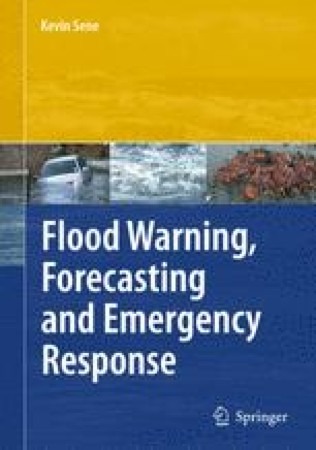
Flood Warning, Forecasting and Emergency Response
This book provides a comprehensive account of flood warning, forecasting and emergency response processes, including techniques for predicting the development of flood events and for issuing appropriate warnings. Topics such as telemetry and information systems, flood warning economics, and river and coastal monitoring are also discussed. This book brings together many aspects of this interesting multidisciplinary topic and will serve as a valuable reference for researchers, policy makers and engineers.

Experimental rock deformation : The brittle field
The primary aim of this monograph is to present the current knowledge of brittle properties of rocks as determined in laboratory experiments. The principal aspects of brittle behavior are described with special attention to the fundamental physical aspects. Thus, the book provides a useful introduction to the basics of rock properties for engineering and earth science applications. Furthermore, it serves as a guide for graduate students and non specialists by presenting the relevant background material and where it can be found. For the new edition a further chapter has been added, and almost

Evaporites : Sediments, Resources and Hydrocarbons
The monograph offers a comprehensive discussion of the role of evaporites in hydrocarbon generation and trapping. For the first time, diverse knowledge on exploitable salts has been assembled and organized, along with a summary of evaporate karst hazards as well as a summary of exploitative methods and pitfalls in dealing with evaporites in conventional and solution mining. Written by a field specialist in research and exploration, the book presents a comprehensive synthesis of the low temperature realm of evaporite evolution. It is aimed for earth science professionals, sedimentologists, oil and gas explorers, mining geologists, as well as environmental geologists.

Environmental Challenges in Civil Engineering II
Rports on findings concerning structural material behavior, and new methods and technologies in constructions. A special emphasis is given to sustainable constructions practices, including material recycling and reuse, renovation and restoration of historical building and to those fostering sustainable development of cities and rural areas, and a better integration of buildings with the environment. Offering a good balance of theory and practice, and covering both technical and organizational aspects in civil engineering and architectural projects, this book offers extensive information on solutions and current challenges in construction projects and structural interventions in the context of environmental protection and earthquake prevention.

Encyclopedia of Soil Science
The Encyclopedia of Soil Science provides a comprehensive, alphabetical treatment of basic soil science in a single volume. It constitutes a wide ranging and authorative collection of about 160 academic articles covering the salient aspects of soil physics, chemistry, biology, fertility, technology, genesis, morphology, classification and geomorphology.

Economic evaluations in exploration
This textbook, now in its second English edition, is originally a translation of the G- man textbook “Rechnen für Lagerstättenkundler und Rohstoffwirtschaftler, Teil 1”, also translated into the Chinese and Russian languages. Compared to the previous English and German editions the chapters have been updated with new examples and in many cases amended. The textbook is intended for the economic geologist who deals with the evaluation of deposits at an early stage of development. Once an exploration project has reached the feasibility stage, the exact calculations that are necessary for a comprehensive te- nical and economic assessment will be performed by a team of geologists, mining engineers, metallurgists, and economists. In the early stages of exploration, however, any evaluator of deposits must be able to cover the whole spectrum himself. Since only order of magnitude parameters are available at this early stage, the c- culations can only yield order of magnitude results.

Earthquakes : Simulations, Sources and Tsunamis
This book includes a variety of studies that focus on the modeling of tsunamis and earthquakes, both large-scale simulation and visualization programs, as well as detailed models of small-scale features. Particular attention is paid to computational techniques, languages, and hardware that can be used to facilitate data analysis, visualization, and modeling. Also included are studies of several earthquake forecasting techniques and associated comparisons of their results with historic earthquake data. Finally, the volume ends with theoretical analyses of statistical properties of seismicity by internationally recognized experts in the field. This volume will be of particular interest to researchers interested in the multiscale simulation and visualization of large earthquakes and tsunamis.

Earth Structures : In Transport, Water and Environmental Engineering
This book describes the principles of working with soil as a construction material, including two basic ways of treating it: geosynthetics and stabilization. The book discusses the design logic and ways to control Earth Structures, which differ significantly from other construction materials. Building with Earth involves greater uncertainty and risk, which means that there is a need for better design detailing and improvement in the quality of financial calculations. The general part of the book gives a detailed description of the principles of limit states according to Eurocode 7, after which geotechnical design is also described. Subsequent chapters concentrate on earth structures for transport, water, and environmental projects. The chapter on Earth Structures in transport engineering presents detailed coverage of limit states of stability and deformation. Earth Structures in water engineering prioritizes the limit state of internal erosion. Earth Structures in environmental engineering describes new designs, in which part of the structure is created from non-standard materials which are usually susceptible to internal collapse, double porosity, unsaturation, etc. It also focuses on protecting the surrounding environment from contamination.

Earth Sciences and Mathematics ; Vol.1
This volume contains papers addressing different topics as deformation modelling applied to natural hazards, inverse gravimetric problem to determine 3D density structure, advanced differential SAR interferometry, climate change, geomagnetic field, Earthquake statistics, meteorological studies using satellite images, climate energy balance models, study of soils properties, and multifractal data sets.

Earth science satellite remote sensing ; Vol.2 : Data, computational processing, and tools
Earth science satellite remote sensing has been rapidly expanding during the last decade. Volume 2 of this two volume monograph provides information on the Earth science remote sensing data information and data format such as HDF-EOS, and tools. It evaluates the current data processing approaches and introduces data searching and ordering from different public domains. Further it explores the remote sensing and GIS migration products and WebGIS applications. The core of this book arose from the workshop for Earth Science Satellite Remote Sensing held at George Mason University (GMU) in October 2002. Both volumes are designed to give scientists and graduate students with limited remote sensing background a thorough introduction to current and future NASA, NOAA and other Earth science remote sensing.

Earth science satellite remote sensing ; Vol.1 : Science and instruments
Satellite remote sensing for Earth science data has been rapidly expanding during the last decade. Volume 1 of this two volume monograph covers missions/sensors, such as Sea-viewing Wide Field-of-view Sensor (SeaWiFS), Tropical Rainfall Measuring Mission (TRMM), Total Ozone Mapping Spectrometer (TOMS), Atmospheric Infrared Sounder (AIRS), and Advanced Microwave Sounding Unit (AMSU). It also discusses the NPOESS and NPP missions. Emphasis was placed on the recently launched Moderate Resolution Imaging Spectroradiometer (MODIS) on board of both Terra and Aqua. Some key MODIS science team members were invited to contribute several chapters. The core of this monograph arose from the workshop for Earth Science Satellite Remote Sensing held at George Mason University (GMU) in October 2002. Both volumes are designed to give scientists and graduate students with limited remote sensing background a thorough introduction to current and future NASA, NOAA and other Earth science remote sensing missions.

Dynamics of Freezing-Thawing Soil around Subway Shield Tunnels
Addresses development laws for axial strain and excess pore water pressure in silty clay around subway shield tunnels before and after freezing-thawing when subjected to subway loading, as well as the effect of freezing-thawing on the dynamic parameters of silty clay, including the dynamic modulus and damping ratio, introducing readers to the design and construction of bypasses in subway tunnels with the artificial freezing method. On this basis, it then studies the microstructures of silty clay before and after freezing-thawing cyclic loading by means of scanning electron microscope tests and mercury intrusion porosimetry tests. Lastly, the book presents a numerical simulation of the dynamics of silty clay around subway tunnels before and after thawing.

Design and Construction of Tunnels : Analysis of controlled deformation in rocks and soils (ADECO-RS)
It uses the advance core (the core of ground ahead of the face) as a structural tool for the long and short term stabilisation of tunnels, after its rigidity has first been regulated using conservation techniques. Tunnels can consequently be driven in difficult stress-strain conditions to predetermined safety standards with operations industrialised and scheduled precisely.

Cosmic Ray Neutron Sensing : Estimation of Agricultural Crop Biomass Water Equivalent
Provides methods for the estimation of Biomass Water Equivalent (BEW), an essential step for improving the accuracy of area-wide soil moisture by cosmic-ray neutron sensors (CRNS). Three techniques are explained in detail: (i) traditional in-situ destructive sampling, (ii) satellite based remote sensing of plant surfaces, and (iii) biomass estimation via the use of the CRNS itself. The advantages and disadvantages of each method are discussed along with step by step instructions on proper procedures and implementation.

Continental Scientific Drilling : A Decade of Progress, and Challenges for the Future
Scientific drilling is an indispensable tool of modern Earth science - search, as it provides the only means of obtaining direct information on processes operating at depth. Drilling allows for the determination of - situ properties of solid materials and fluids and permits testing of hypot- ses and models derived from surface observations. In addition, drill holes may be used as a natural laboratory for experiments and as observatories for long-term monitoring of on-going active processes. Earth drilling, therefore, plays a critical role in scientific research directed towards - proved understanding of the workings of our planet and has a key role in solving urgent socio-economic problems. As a rule, drilling projects are an integral component of major geosci- tific research programs, comprising comprehensive pre-site investigations, accompanying laboratory studies, the drilling phase itself, and consecutive measurements and tests in the drill hole. Such drilling programs are costly and thus only realizable to a limited extent. International cost sharing, the optimal utilization of all available resources, the incorporation of inter- tional leading experts, and the application of the existing know-how, as well as the selection of an optimal drilling location (“World Geological Site”), are thus essential elements of an international scientific drilling p- gram.

Contaminant Geochemistry : Interactions and Transport in the Subsurface Environment
This book combines earth science, subsurface hydrology and environmental geochemistry, providing a comprehensive background for specialists interested in the protection and sustainable management of the subsurface environment.The major focus of the book is on contaminant reactions in soil solutions, groundwater and porous media solid phases, accounting for their persistence and transformation in the subsurface, as they are transported from the land surface into groundwater.

Computational Geometry : Algorithms and Applications
This introduction to computational geometry focuses on algorithms. Modern insights in computational geometry are used to provide solutions that are both efficient and easy to understand and implement.

Cloud-Resolving Modeling of Convective Processes
Introduces the framework of cloud-resolving model, methodologies for analysis of modeling outputs, and validation of simulations with observations. The book details important scientific findings in the aspects of surface rainfall processes, precipitation efficiency, dynamic and thermodynamic processes associated with tropical convection, diurnal variations, radiative and cloud microphysical processes associated with development of cloud clusters, air-sea coupling on convective scales, climate equilibrium states, and remote sensing applications.
Mathematical Methods for Engineers and Geoscientists
This book introduces and explains classical and modern mathematical procedures as applied to the real problems confronting engineers and geoscientists. Written in a manner that is understandable for students across the breadth of their studies, it lays out the foundations for mastering difficult and sometimes confusing mathematical methods.
