


تحسين النتائح
ترتيب حسب
من
الى

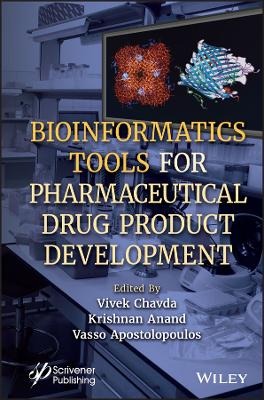
Presents the latest information on bioinformatics tools, artificial intelligence, machine learning, computational methods, protein interactions, peptide-based drug design, and omics technologies. And include bioinformatics tools for the pharmaceutical sector and the healthcare sector. Bioinformatics brings a new era in research to accelerate drug target and vaccine design development, improving validation approaches as well as facilitating and identifying side effects and predicting drug resistance. As such, this will aid in more successful drug candidates from discovery to clinical trials to the market, and most importantly make it a more cost-effective process overall.
The conference was organized by the Laboratory of Theoretical Genetics, Institute of Cytology and Genetics, Siberian Branch of the Russian Academy of Sciences, Novosibirsk, Russia. The material covers the most recent topics in bioinformatics, including (i) regulatory genomic sequences: databases, knowledge bases, computer analysis, modeling, and recognition; (ii) large-scale genome analysis and functional annotation; (iii) gene structure detection and prediction; (iv) comparative and evolutionary genomics; (v) computer analysis of genome polymorphism and evolution; computer analysis and modeling of transcription, splicing, and translation; structural computational biology: structure- function organization of genomic DNA, RNA, and proteins; (vi) gene networks, signal transduction pathways, and genetically controlled metabolic pathways: databases, knowledge bases, computer analysis, and modeling; principles of organization, operation, and evolution; (vii) data warehousing, knowledge discovery and data mining; and (viii) analysis of basic patterns of genome operation, organization, and evolution.
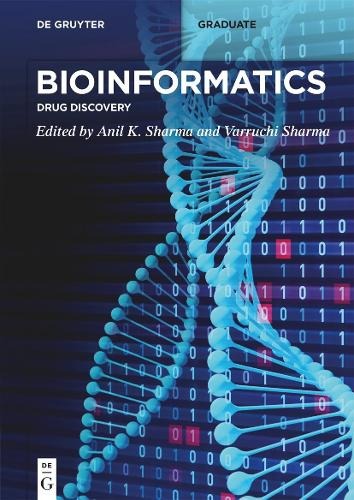
Quantitative tools are becoming increasingly important in order to understand complex cascade of signal transduction events, pathways or biochemical reactions. The book showcases how computational techniques and algorithms are applied to biological data analysis, interpretation, and modelling. It covers applications in drug design and discovery, immune systems, phylogenetic analysis and protein structures.
Collaborative research in bioinformatics and systems biology is a key element of modern biology and health research. This book highlights and provides access to many of the methods, environments, results and resources involved, including integral laboratory data generation and experimentation and clinical activities. Collaborative projects embody a research paradigm that connects many of the top scientists, institutions, their resources and research worldwide, resulting in first-class contributions to bioinformatics and systems biology. Central themes include describing processes and results in collaborative research projects using computational biology and providing a guide for researchers to access them. The book is also a practical guide on how science is managed. It shows how collaborative researchers are putting results together in a way accessible to the entire biomedical community.
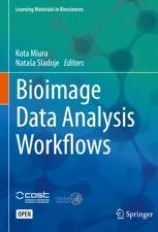
This book provides students and researchers in the life sciences with essential practical information on how to quantitatively analyze data images. It refrains from focusing on theory, and instead uses practical examples and step-by step protocols to familiarize readers with the most commonly used image processing and analysis platforms such as ImageJ, MatLab and Python.

Biogeography considers the distribution of biological units over a wide range of scales. The units range from genotypes, populations and species to families and higher taxa. Processes can be local, such as the isolation on islands due to sea-level fluctuations, or large-scale tectonic processes that separates continents and creates oceans. In all processes time is an important factor and by combining data on recent patterns with paleontological data the understanding of the distribution of extant taxa can be improved. This volume focuses on speciation due to isolation in island-like settings, and the evolution of large-scale diversity as the result of origination, maintenance and extinction.

The idea for Bioethics in Law began more than a decade ago, while I was studying social science and law. I was parti- larly interested in the collaborations that comprised social s- ence in law. Economic and social data in the pioneering Brandeis brief had been used to defend an early 20th-century labor law; surveys of consumer confusion had helped resolve trademark - fringement cases; psychologists’ predictions of future violence had informed capital sentencing decisions. Additionally, Kenneth Clark’s “doll studies,” cited by the Supreme Court in Brown v. Board of Education, had helped change the course of American 1 history.
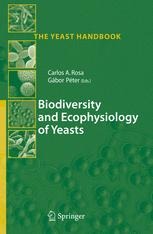
In the last few decades more and more yeast habitats that were not investigated earlier, spanning cold climates to tropical regions and dry deserts to rainforests, have been explored. As a result, a large body of ecological data has been accumulated and the number of known yeast species has increased rapidly. This book provides an overview of the biodiversity of yeasts in different habitats. The recent advances achieved by the application of molecular biological methods in the field of yeast taxonomy and ecology are also incorporated in the book. Wherever possible, the interaction between yeasts and the surrounding environment is discussed.
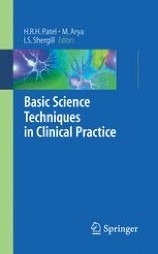
Medical researchers including doctors, nurses, medical students and allied health professionals are required to undertake a period of research as part of their career pathway. Basic Science Techniques in Clinical Practice covers the main areas, allowing anyone to set up and complete research projects and this information can easily be translated to clinical projects. Written by international authors to provide a flavor from many institutions, the book’s appeal is cross-sectional, both at hospital and primary care levels worldwide.
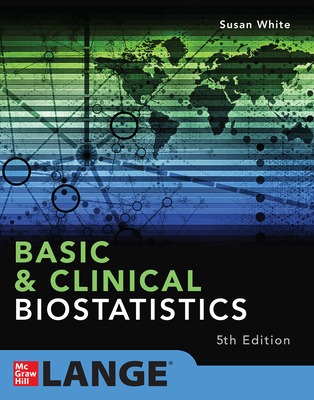
Provides medical students, researchers, and practitioners with the knowledge needed to develop sound judgment about data applicable to clinical care. This fifth edition has been updated throughout to deliver a comprehensive, timely introduction to biostatistics and epidemiology as applied to medicine, clinical practice, and research. Particular emphasis is on study design and interpretation of results of research.
Brings together new and updated methods to explore the structure and function of bacterial chromatin from molecular to the cellular scale. Chapters detail experimental protocols of in vivo and in vitro approaches, approaches to genome structure modeling, and data analysis. Written in the highly successful Methods in Molecular Biology series format, chapters include introductions to their respective topics, lists of the necessary materials and reagents, step-by-step, readily reproducible laboratory protocols, and key tips on troubleshooting and avoiding known pitfalls.

The auricle is a privileged place to observe and treat patients reflexively. It is endowed with both a particularly rich innervation, and brief connections with the higher nervous centers. It constitutes both a reading pavilion, to observe information coming from the organs and nerve endings of the skin, and a control pavilion to help correct abnormal information. It is a lookout post, placed bypassing the brainstem, on the path connecting the organs and the brain. It thus allows a fair control and an effective intervention. In this medical treatise on Auriculotherapy, historical and scientific data, medical explanations and bibliographical references are presented.
Where there are patients, clients, or study participants, there are data. And when data involve personal variables of race, ethnicity, gender, and/or sexual orientation, questions of relevance and marginalization often arise. Assessing Race, Ethnicity, and Gender in Health brings needed clarity to the debate by identifying the ethical issues as well as the technical challenges inherent in measuring these elusive concepts.
Looks at applications of artificial intelligence (AI), machine learning (ML), and deep learning (DL) in drug design. The chapters in this book describe how AI/ML/DL approaches can be applied to accelerate and revolutionize traditional drug design approaches such as: structure- and ligand-based, augmented and multi-objective de novo drug design, SAR and big data analysis, prediction of binding/activity, ADMET, pharmacokinetics and drug-target residence time, precision medicine and selection of favorable chemical synthetic routes. How broadly are these approaches applied and where do they maximally impact productivity today and potentially in the near future.
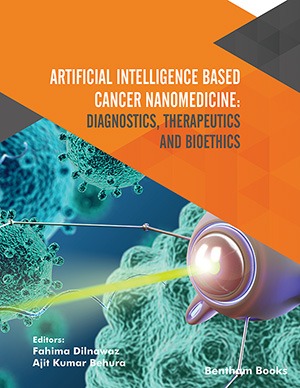
Nanomedicine is evolving with novel drug formulations devised for multifunctional approaches towards diagnostics ad therapeutics. Nanomedicine-based drug therapy is normally explored at a fixed dose. The drug action is time-dependent, dose-dependent and patient-specific. To overcome challenges of nanomedicine testing, artificial intelligence (AI) serves as a helping tool for optimizing the drug and dose parameters. Real time conversions between these two features enables upgradation of patient data acquisition and improved design of nanomaterials. In this scenario, AI-based pattern analysis and algorithms models can greatly improve accuracy of diagnostics and therapeutics.
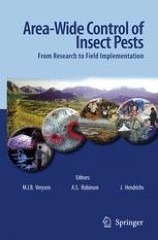
This new textbook on area-wide control of insect pests collates a series of selected papers that attempts to address various funda- mental components of AW-IPM, e.g. the importance of relevant problem-solving research, the need for essential baseline data, thesignificanceofadequatetoolsforappropri-atecontrolstrategies,andthevalueofpilottri- als, etc.
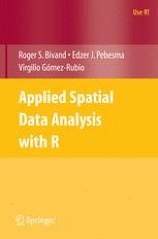
Applied Spatial Data Analysis with R is divided into two basic parts, the first presenting R packages, functions, classes and methods for handling spatial data, The second part showcases more specialised kinds of spatial data analysis, including spatial point pattern analysis, interpolation and geostatistics, areal data analysis and disease mapping.
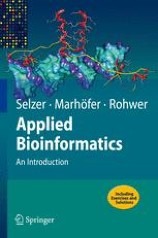
In this book, anyone who can operate a PC, standard software and the Internet will learn to understand the biological basis of bioinformatics of the existence as well as the source and availability of bioinformatics software how to apply these tools and interpret results with confidence.This is aided by introductory chapters to important aspects of bioinformatics, detailed bioinformatics exercises, including solutions and a glossary of definitions and terminology relating to bioinformatics.
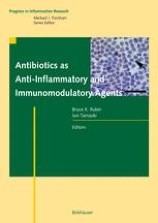
Although the potential for immunomodulation has been recognized for many years there has been an explosion of data in this field with relevance especially to the treatment of chronic airway diseases. Most of the work in this field has been conducted by Japanese investigators but in the last decade there has been a body of work outside of Japan that supports and enhances these findings. The book covers basic research like effects on bacteria, anti-inflammatory and mucoregulatory effects, but also clinical results with up-to-date information for the use of such medications to potentially treat diseases as diverse as chronic airway diseases, arthritis, inflammatory bowel disease, and cancer.

This volume provides an overview of climate change data, its effects on the structure and functioning of Antarctic ecosystems, and the occurrence and cycling of persistent contaminants. It discusses the unique physico-chemical characteristics of the Antarctic environment, ecophysiological adaptations of terrestrial and marine organisms, the transfer of contaminants in pelagic and neritic food chains and the possible consequences for animals at higher trophic levels.

سوريا - اتستراد درعا - غباغب
+963-15 2050 - 15 860 380 /1/2/3 - 11 662 3900