



الصفحة 3
الصفحة 3

Knowledge Solutions : Tools, Methods, and Approaches to Drive Organizational Performance
Covers topics in knowledge management and competence in strategy development, management techniques, collaboration mechanisms, knowledge sharing and learning, as well as knowledge capture and storage. Presented in accessible “chunks,” it includes more than 120 topics that are essential to high-performance organizations. The extensive use of quotes by respected experts juxtaposed with relevant research to counterpoint or lend weight to key concepts; “cheat sheets” that simplify access and reference to individual articles; as well as the grouping of many of these topics under recurrent themes make this book unique. In addition, it provides scalable tried-and-tested tools, method and approaches for improved organizational effectiveness.
Competence of Top Management Teams and Success of New Technology-Based Firms : A Theoretical and Empirical Analysis Concerning Competencies of Entrepreneurial Teams and the Development of Their Ventures
In his book, Jan Brinckmann develops a comprehensive competence concept for new technology-based firms. It is grounded in competence-related literature combining insights from entrepreneurship and management research. The competence concept comprises three domains: general entrepreneurial competencies, social competencies, and functional competencies in technology, marketing, and financial management. A measurement model is developed to specify the contents of each sub-domain and to facilitate self-assessment of these competencies. In an empirical study, 212 executives of German NTBFs assessed their team’s competencies. This data is analyzed using structural equation modelling to identify the most relevant competencies for new venture success.
Competence Assessment in Dementia
The increasing proportion of demented elderly in populations, debates over patient's rights and autonomy, and the growing body of knowledge on dementia has inspired the European Dementia Consensus Network to regard competence assessment in dementia as an important topic of debate.
Competence and Vulnerability in Biomedical Research
In this book, the author develops a novel justificatory framework for making judgments of decisional competence to consent to biomedical research with reference to five groups of cognitively vulnerable individuals - older children and adolescents, adults with intellectual disabilities, adults with depression, adults with schizophrenia and adults with dementia, including Alzheimer’s disease.

Clinical decision-making in oral medicine : A concise guide to diagnosis and treatment
Accurately diagnosing the myriad of diseases that can affect the mouth, guiding patients correctly, and offering treatment with competence is a permanent challenge for dental surgeons and health professionals. Often, the diagnosis of these diseases is neglected or wrongly performed. This concise book guides health professionals in clinical decision making in oral diseases, assisting them not only on the diagnosis and treatment of oral and maxillofacial diseases, but also in terms of value and benefit of who treats the condition and, above all, who will be treated. The work provides guidelines formulated by a compilation of specific protocols of conduct, focusing on the scientific evidence and enriched by the authors’ critical analyses.
Careers of University Graduates : Views and Experiences in Comparative Perspectives
In this volume, scholars from twelve countries show how transition to employment, job assignments, employment assessments of the quality of employment and work vary by the graduates’ socio-biographic and educational background. It also focuses on experiences during the course of study and competences acquired, international experience, regional background and regions of employment. It demonstrates more substantial differences of the relationships between study and subsequent employment between various countries than previous debates and analyses have suggested.
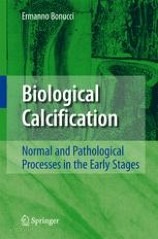
Biological Calcification : Normal and Pathological Processes in the Early Stages
This book follows a precursor volume devoted to biological calci?cation, - sued by the CRC Press, Boca Raton (Florida) in 1992. Several basic aspects of the calci?cation process were analyzed in it by outstanding authors who had unquestioned competence in their respective research areas. Its main aim was that of giving readers access to a series of papers which, even though they discussed divergent aspects of biological calci?cations drawn from the study of systems as different as vertebrate skeletons and mollusks, in vitro cultures and unicellular organisms, ectopic calci?cation and urinary stones, provided elements permitting a coherent approach to a comprehensive view of the calci?cation process in biological tissues.
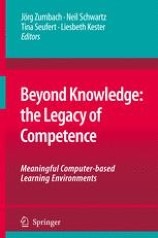
Beyond knowledge : The legacy of competence : Meaningful computer-based learning environments
The edited and peer reviewed volume presents selected papers of the conference "Beyond knowlegde: the legacy of competence" It reflects the current state-of-the-art work of scholars worldwide within the area of learning and instruction with computers. Mainly, areas of computer-based learning environments supporting competence-focused knowledge acquisition but also foundational scientific work are addressed. More specific, contents cover cognitive processes in hypermedia and multimedia learning, social issues in computer-supported collaborative learning, motivation and emotion in Blended Learning and e-Learning.

Balancing Exploration and Exploitation by Creating Organizational Think Tanks
Key for successful knowledge management is a balance between exploration and exploitation. Danger arises when exploration is neglected in favour of exploitation since that may result in an organization which lacks innovation capability. In order to prevent this, an idea has been put forward in recent knowledge management research called ambidexterity, which means the simultaneous and balanced pursuing of both exploration and exploitations activities. Tatjana-Xenia Puhan follows up on this idea by concluding that ambidexterity need not necessarily be implemented in one single organization but can also be realised in a network of associated organizations. The interorganizational ambidexterity is based on co-specialisation: one organisation is devoted solely to exploration while associated organizations focus on their competences in exploitation. Furthermore, the author develops the concept of think tanks as organizations that concentrate on radical innovations while their network associates exploit this newly generated knowledge commercially.
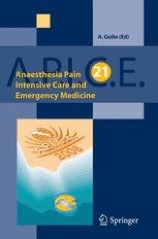
Anaesthesia, pain, intensive care and emergency medicine A.P.I.C.E. ; Proceedings of the 21st Postgraduate Course in Critical Medicine: Venice-Mestre, Italy - November 10-13, 2006
Developing sectors in the Intensive Care field – and in Critical Care Medicine in general – require specific levels of competence having a same common denominator: an in-depth knowledge of human pathophysiology. Although this volume presents plenty of topics in constant evolution, as witnessed by the collection of chapters compiled by several researchers, this edition includes, in particular, fields in which decision-making at the patient’s bedside prevails over theoretical argumentation. In other words, the first and foremost message this edition wants to provide is for the reader to focus his/her attention on evidence-based medicine.

Advanced CBCT for Endodontics : Technical Considerations, Perception, and Decision-Making
This book encourages endodontists to develop a sound technical and theoretical understanding of CBCT. The authors compare the capabilities of modern CBCT imaging with traditional radiography and also present vital information about image interpretation and perception to increase competence and confidence in CBCT interpretation and minimize overdiagnosis and subsequent overtreatment.

A healthcare professionals training system
The Objective Structured Clinical Examination (OSCE) is a type of examination often used in health sciences. It is designed to test clinical skill performance and competence in a range of skills. It is a practical, real-world approach to learning and assessment. Comprises a circuit of short (5-10 minutes) stations, in which each candidate is examined on a one-to-one basis with one or two impartial examiner(s) and patients who are either real or simulated (actors or electronic patient simulators). Each station has a different examiner; in comparison, the traditional method of clinical examination is when a candidate is assigned to an examiner for the entire examination.
