



الصفحة 3
الصفحة 3

Information Technologies in Environmental Engineering ; ITEE 2007 - 3rd International ICSC Symposium
Potentially dangerous environmental changes are happening in the atm- phere, oceans, animal habitats and places where hazardous materials are used, or have been discarded without adequate environmental protections. These increasing problems that also affect human health demand for int- disciplinary approaches where engineers, natural scientists, economists and computer scientists work together. This book publishes the results of the ITEE 2007 conference where information about the topics above has been presented and discussed among environmental engineers, computer scientists and economists.

In Vivo Models of Inflammation ; Vol. II
In Vivo Models of Inflammation (Vol. 2) provides biomedical researchers in both the pharmaceutical industry and academia with a description of the state-of-the-art animal model systems used to emulate diseases with components of inflammation.
In Vivo Models of Inflammation ; Vol. I
In Vivo Models of Inflammation (Vol. 1) provides biomedical researchers in both the pharmaceutical industry and academia with a description of the state-of-the-art animal model systems used to emulate diseases with components of inflammation.

In vivo Models of HIV Disease and Control
An AIDS vaccine is still elusive and HIV treatment continues to develop multidrug resistance at alarming rates. Because of the similarities between HIV and immune deficiency infections in a variety of animals, it is only natural that scientists use these animals as models to study pathogenesis, treatment, vaccine development and many other aspects of HIV. Part of the series Infectious Agents and Pathogenesis, this volume reviews the immune deficiency virus in a variety of hosts. Pathogenesis, vaccine and drug development, epidemiology, and the natural history of the monkey, mouse, cat, cow, horse, and other animal viruses are detailed and compared to HIV. Also included are chapters on the history and future of animal models, as well as a chapter on ethical and safety considerations in using animal models for AIDS studies.

In Vivo Imaging of Cancer Therapy
In Vivo Imaging of Cancer Therapy addresses a variety of cutting-edge imaging techniques, including their use for best practice, and provides examples of results found in both pre-clinical and clinical studies. This comprehensive text covers the entire spectrum of in vivo imaging for oncology, including current approaches to detailed anatomic measurements, MR and optical spectroscopy, and molecular imaging techniques requiring exogenously administered imaging agents. The challenges and approaches to quantification are also outlined. The authors describe technologies and methods that are currently clinically available, and many that are still in a developmental stage or useful only in animal studies.
Impact of Pollution on Animal Products
The present workshop contributed highly to the exchange between scientists giving the opportunity for researchers from Central Asia to access to new scientific approaches and methodologies, and for European scientists to assess the extent of the environmental problems in this part of the world. No doubt that these exchanges were the main success of the workshop marked by very stimulating discussions. Such meeting was also the opportunity to put on the first stone of a scientific network focused on the subject of the workshop. The importance of pollution in Central Asia in general and in Kazakhstan in p- ticular is a well-known feature and several references are available on the source and localization of pollution problems in those countries. The references are also abundant on the impact of the environmental failures on human health.

Il fuoco di Sant’Antonio : Storia, tradizioni e medicina = St. Anthony's fire : History, Traditions, and Medicine
Il libro descrive la storia di Sant'Antonio Abate, il grande taumaturgo ed il fondatore del monachesimo cristiano. Molto prima che ciò fosse una pratica comune tra i fedeli, egli praticò l’ascetismo nel deserto ad imitazione di Cristo e le sue tentazioni demoniache descritte nella biografia scritta da Sant’Atanasio hanno costituito il tema favorito di molti pittori ed ispirato "La Tentation de Saint Antoine" di Gustave Flaubert. Padrone del fuoco e protettore degli animali, viene spesso raffigurato con accanto una fiamma ed un maialino, ragione per cui è anche chiamato "Sant’Antonio del porcello". Egli era il santo prediletto dai contadini ed inoltre patrono dei cestai, dei porcai, dei ceramisti e di molte altre professioni, ma era famoso soprattutto per le sue capacità curative sì da divenire il santo taumaturgo per eccellenza. Pertanto, dal Medio Evo al XIX era invocato per curare le più dolorose piaghe che affliggevano l’umanità, soprattutto quelle più devastanti che furono chiamate "Fuoco di Sant’Antonio". Questo termine includeva molte malattie completamente diverse tra loro, ma che avevano in comune solo un dolore intollerabile.
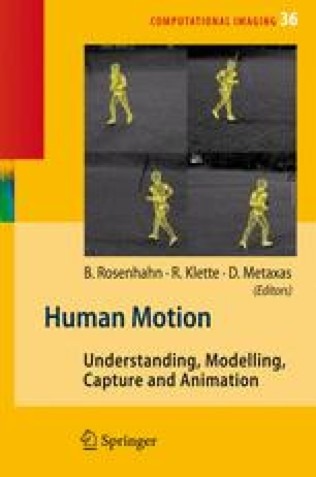
Human motion : Understanding, modeling, capture and animation
Edward Muybridge (1830–1904) is known as the pioneer in motion capt- ing with his famous experiments in 1887 called “Animal Locomotion”. Since then, the feld of animal or human motion analysis has grown in many dir- tions. However, research and results that involve human-like animation and the recovery of motion is still far from being satisfactory. Progress in human motion analysis depends on empirically anchored and grounded research in computer vision, computer graphics, and biomechanics. This book is based on a June 2006 workshop held in Dagstuhl, Germany. This workshop brought together for the frst time researchers from the afo- mentioned disciplines.
Human Cytomegalovirus
The golden age of cytomegalovirus research was ushered in during the late 1970s and early 1980s by a set of powerful new technologies that included restriction enzymes, DNA cloning, DNA sequencing, and open reading frame prediction. The genetic manipulation and propagation of novel CMV strains was accelerated with the app- cation of bacterial artificial chromosome technology. Today, we still struggle to understand the full spectrum of disease associated with human CMV. To the molecular biologist, CMV is a master of regulation in the eukaryotic cell where it either replicates or remains latent. To the immunologist, CMV is a master of immune evasion with tools to escape both the innate and acquired immune responses. The use of animal models with non-human CMVs has become significantly more sophisticated and tied to a more certain understanding of the interrelationships of non-human and human CMV genes.
Human and Animal Relationships
Pathogenic fungi are widely distributed and can infect many organisms, particularly humans, but also other vertebrates and insects. Due to a growing number of fungal infections, there is an increasing need to understand the interaction of pathogenic fungi with their hosts. This second completely updated and revised edition of Volume VI of The Mycota consists of state of the art reviews written by experts in the field, covering three major areas of this rapidly developing field. In the first part the current understanding of pathogenic fungi and the physiological reactions relevant for the pathogen - host interaction are elucidated. The second part describes novel technologies for the identification of proteins, virulence factors and mechanisms central to the host - pathogen interaction. The third part deals with the characterization of the host response towards pathogenic fungi and addresses timely clinical aspects.

How the immune system recognizes self and nonself : Immunoreceptors and their signaling
This brain function must have been particularly important for most animals to protect their lives from enemies and for species to survive through evolution. Similarly, higher organisms have also acquired their immune system through evolution that discriminates nonself pathogens and self-body to protect their lives from pathogens such as bacteria or viruses. The brain system may distinguish integrated images of self and nonself created from many inputs, such as vision, sound, smell, and others. The immune system recognizes and distinguishes a variety of structural features of self and nonself components. The latter actually include almost everything but self.

Host-pathogen interactions : Methods and protocols
Serves as multidisciplinary compendium of approaches and techniques employed to analyze the role of different molecules, processes, or strategies used by different guests to survive and proliferate in their associations with eukaryotic hosts. Beginning with animal-pathogen interactions, the book then continues with chapters exploring virus-host interactions, plant-microbe interactions, as well as different molecular techniques that were initially applied to non-pathogenic interactions but can be adapted to study other host-pathogen associations. Written for the highly successful Methods in Molecular Biology series, chapters include introductions to their respective topics, lists of the necessary materials and reagents, step-by-step and readily reproducible laboratory protocols, as well as tips for troubleshooting and avoiding known pitfalls.

Hormonal carcinogenesis V
Information gathered from cell-free systems, cell cultures, animal models, and human studies, together will (1) provide important insights to our understanding of hormonal cancer causation, development, and prevention; (2) be the primary objective of these Symposia.

High Density Lipoproteins : From Biological Understanding to Clinical Exploitation
In this Handbook of Experimental Pharmacology on “High Density Lipoproteins – from biological understanding to clinical exploitation” contributing authors (members of COST Action BM0904/HDLnet) summarize in more than 20 chapters our current knowledge on the structure, function, metabolism and regulation of HDL in health and several diseases as well as the status of past and ongoing attempts of therapeutic exploitation.

Hepatitis Delta Virus ; Vol. 307
Since its discovery nearly 30 years ago, hepatitis delta virus (HDV) has continued to surprise and fascinate. At 1,680 nucleotides the HDV genome is the smallest known to infect man. It is unique among animal viruses, the closest known relatives being plant viroids. To compensate for its limited protein coding capacity, HDV relies heavily on host functions and on structural features of its circular RNA genome. HDV infection depends on hepatitis B virus as a helper, and increases the severity of liver disease caused by HBV alone. There is currently neither an effective HDV vaccine nor a generally accepted useful therapy for HDV infection. This volume encompasses recent developments in HDV research, from molecular virology to genetics to experimental investigation of new therapeutic and vaccine candidates.

Hearing : From Sensory Processing to Perception
Hearing – From Sensory Processing to Perception presents the papers of the latest International Symposium on Hearing. The 59 chapters treat topics such as: the physiological representation of temporal and spectral stimulus properties as a basis for the perception of modulation patterns, pitch and signal intensity; spatial hearing and the physiological mechanisms of binaural processing in mammals.

Handbook of plant and animal toxins in food : Occurrence, toxicity, and prevention
Focuses on various selected toxins in foods derived from plants as well as animals. The prominent plant toxins include solanine and chaconine, mushroom toxins, phytates, tannins, oxalates, goitrogens, gossypol, phytohemagglutinins, erucic acid, saponins, cyanogenic glycosides, enzyme inhibitors, BOAA (lathyrogens), toxic amino acids and toxic fatty acids. The prominent animal toxins covered in the book include various seafood toxins, shellfish toxins and biogenic amines. Presents complete information about a plethora of toxins Provides quick and easy access to data on major plant and animal toxins Covers distribution of toxins in the plant and animal kingdom Provides comprehensive information on chemistry, safety and precautions of each toxin

Handbook of Pathogens and Diseases in Cephalopods
The aim of this book is to facilitate the identification and description of the different organs as well as pathogens and diseases affecting the most representative species of cephalopods focussed on Sepia officinalis, Loligo vulgaris and Octopus vulgaris. These species are valuable ‘morphotype’ models and belong to the taxonomic groups Sepioidea, Myopsida and Octopoda, which include most of the species with a high market value and aquaculture potential. The study is based on photographs at macroscopic and histological level in order to illustrate the role of the most important pathogens and related diseases from the view of a pathological diagnosis. The reader is able to familiarize with functional anatomy, necropsy and general histology of adults and paralarvae, as well as with the identification of different pathogens and pathologies. This work is thus an invaluable guide for the diagnosis of cephalopod diseases. Besides including pathogens for non-European cephalopod species, it also provides a useful contribution encouraging marine pathologists, parasitologists, veterinarians and those involved in fishery sanitary assessments, aquarium maintenance and aquaculture practices aiming to increase their knowledge about the pathology of cephalopods.

Handbook of neurochemistry and molecular neurobiology : Development and Aging Changes in the Nervous System
In the animal nervous system, a very high metabolic turnover, fragile but steep ionic gradients, and morphological and structural constraints - dictated by the necessity for prompt neuronal transmission of electrical impulses and necessary plasticity - result in a highly fragile organ system. Here, we address a small sampling of major constituents of neural function at the cellular and molecular level that play important roles in development and aging, two endogenous processes that embody features of allostasis or the dynamic shifts in set points for specific homeostatic mechanisms associated with development and aging. These chapters stress the dynamic features of neuronal responses to internal (developmental) cues or the more harmful external events (injury and disease) in a modern perspective.

Handbook of In Vivo Chemistry in Mice : From Lab to Living System
The Handbook of In Vivo Chemistry in Mice: From Lab to Living System introduces readers to general information about live animal experiments and detection methods commonly used for these animal models. It focuses on chemistry-based techniques to develop selective in vivo targeting methodologies, as well as strategies for in vivo chemistry and drug release.
