



الصفحة 26
الصفحة 26

Advances in artificial intelligence ; Vol. 3501 ; 18th Conference of the Canadian Society for Computational Studies of Intelligence, Canadian AI 2005, Victoria, Canada, May 9-11, 2005, Proceedings
Contains the papers accepted and presented at 18th Conference of the Canadian Society for Computational Studies of Intelligence, Canadian AI 2005, Victoria, Canada 2005. The 18th conference of the Canadian Society for the Computational Study ofIntelligence (CSCSI) continued the success of its predecessors. This set of papers reflects the diversity of the Canadian AI community and its internationalpartners.AI 2005 attracted 135 high-quality submissions: 64 from Canada and 71 fromaround the world. Of these, eight were written in French. All submitted paperswere thoroughly reviewed by at least three members of the Program Committee.A total of 30 contributions, accepted as long papers, and 19 as short papers areincluded in this volume.

Advances in Artificial Intelligence ; 20th Conference of the Canadian Society for Computational Studies of Intelligence, Canadian AI 2007, Montreal, Canada, May 28-30, 2007, Proceedings
This book cover agents, bioinformatics, classification, constraint satisfaction, data mining, knowledge representation and reasoning, learning, natural language, and planning.
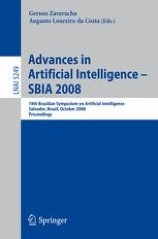
Advances in Artificial Intelligence - SBIA 2008 ; 19th Brazilian Symposium on Artificial Intelligence Savador, Brazil, October 26-30, 2008. Proceedings
Constitutes the refereed proceedings of the 19th Brazilian Symposium on Artificial Intelligence, SBIA 2008, held in Salvador, Brazil, in October 2008.

Advances in Artificial Intelligence - IBERAMIA-SBIA 2006 ; 2nd International Joint Conference, 10th Ibero-American Conference on AI, 18th Brazilian AI Symposium, Ribeirao Preto, Brazil, October 23-27, 2006
This decision was a consequence of the successful event organized in 2000, when the First International Joint Conference IBERAMIA/ SBIA 2000 (7th Ibero- American Artifcial Intelligence Conference and 15th Brazilian Artifcial Intel- gence Symposium) occurred in Brazil. Moreover, in 2006 the artifcial intelligence community celebrated the golden anniversary of the 1956 Dartmouth Conference that marked the beginning of artifcial intelligence as a research feld. th SBIA 2006 was the 18 conference of the SBIA conference series, which is the leading Brazilian conference for the presentation of AI research and applications.

Advances in Applied Artificial Intelligence ; 19th International Conference on Industrial, Engineering and Other Applications of Applied Intelligent Systems, IEA/AIE 2006, Annecy, France, June 27-30, 2006, Proceedings
Intelligent Design and complex problem solving are twined like wife and husband.” In the current competitive global industrial environment there are many pr- lems which need intelligent systems technology for optimal solutions. The central theme of the 19th International Conference on Industrial, Engineering & Other Applications of Applied Intelligent Systems (IEA/AIE 2006) is to focus on the research methodologies and practical implementations of these methodologies for intelligent solutions of problems in real-world applications. We are pleased to present the papers in these proceedings which cover va- ous aspects of applications of applied intelligent systems. We received more than 330 papers from many countries and each paper was reviewed by at least two reviewers. Only 134 papers were selected for presentation in the normal and special sessions.

Advanced Web and Network Technologies, and Applications ; APWeb 2008 International Workshops : BIDM, IWHDM, and DeWeb Shenyang, China, April 26-28, 2008. Revised Selected Papers
Constitutes the thoroughly refereed joint post-workshop proceedings of three international workshops held in conjunction with the 10th Asia-Pacific Web Conference, APWeb 2008, in Shenyang, China, in April 2008.
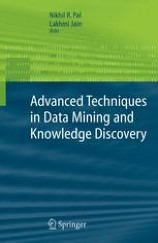
Advanced Techniques in Knowledge Discovery and Data Mining
This explosion is a result of the growing use of electronic media. But what is data mining (DM)? A Web search using the Google search engine retrieves many (really many) definitions of data mining. We include here a few interesting ones. One of the simpler definitions is: “As the term suggests, data mining is the analysis of data to establish relationships and identify patterns” [1]. It focuses on identifying relations in data. Our next example is more elaborate: An information extraction activity whose goal is to discover hidden facts contained in databases. Using a combination of machine learning, statistical analysis, modeling techniques and database technology, data mining finds patterns and subtle relationships in data and infers rules that allow the prediction of future results. Typical applications include market segmentation, customer profiling, fraud detection, evaluation of retail promotions, and credit risk analysis .
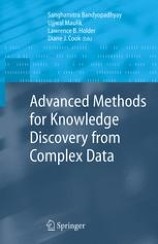
Advanced methods for knowledge discovery from complex data
An overview of the field, looking at the issues and challenges involved is followed by coverage of recent trends in data mining, including descriptions of some currently popular tools like genetic algorithms, neural networks and case-based reasoning. This provides the context for the subsequent chapters on methods and applications. Part I is devoted to the foundations of mining different types of complex data like trees, graphs, links and sequences. A knowledge discovery approach based on problem decomposition is also described. Part II presents important applications of advanced mining techniques to data in unconventional and complex domains, such as life sciences, world-wide web, image databases, cyber security and sensor networks. With a good balance of introductory material on the knowledge discovery process, advanced issues and state-of-the-art tools and techniques, as well as recent working applications this book provides a representative selection of the available methods and their evaluation in real domains. It will be useful to students at Masters and PhD level in Computer Science, as well as practitioners in the field.

Advanced Intelligent Computing Theories and Applications. With Aspects of Contemporary Intelligent Computing Techniques ; 4th International Conference on Intelligent Computing, ICIC 2008 Shanghai, China, September 15-18, 2008 Proceedings
Constitutes the refereed proceedings of the Fourth International Conference on Intelligent Computing, ICIC 2008, held in Shanghai, China in September 2008.

Advanced Intelligent Computing Theories and Applications : With Aspects of Contemporary Intelligent Computing Techniques ; 3rd International Conference on Intelligent Computing, ICIC 2007 Qingdao, China, August 21-24, 2007 Proceedings
The International Conference on Intelligent Computing (ICIC) was formed to provide an annual forum dedicated to the emerging and challenging topics in artificial intelligence, machine learning, bioinformatics, and computational biology, etc. It aims to bring - gether researchers and practitioners from both academia and industry to share ideas, problems and solutions related to the multifaceted aspects of intelligent computing.This year, the conference concentrated mainly on the theories and methodologies as well as the emerging applications of intelligent computing. Its aim was to unify the picture of contemporary intelligent computing techniques as an integral concept that highlights the trends in advanced computational intelligence and bridges theoretical research with applications.

Advanced Intelligent Computing Theories and Applications : With Aspects of Artificial Intelligence ; 4th International Conference on Intelligent Computing, ICIC 2008 Shanghai, China, September 15-18, 2008 Proceeding
This book - in conjunction with the two volumes CCIS 0015 and LNCS 5226 - constitutes the refereed proceedings of the 4th International Conference on Intelligent Computing, ICIC 2008, held in Shanghai, China, in September 2008.

Advanced Information Systems Engineering ; 20th International Conference, CAiSE 2008 Montpellier, France, June 16-20, 2008 Proceedings
This book constitutes the refereed proceedings of the 20th International Conference on Advanced Information Systems Engineering, CAiSE 2008, held in Montpellier, France, in June 2008.

Advanced Fuzzy Logic Technologies in Industrial Applications
Addresses the problem by introducing a dynamic, on-line fuzzy inference system. In this system membership functions and control rules are not determined until the system is applied and each output of its lookup table is calculated based on current inputs. The tuning process is a major focus in this volume because it is the most difficult stage in fuzzy control application. Using new methods such as µ-law technique, histogram equalization and the Bezier-based method, all detailed here, the tuning process can be significantly simplified and control performance improved. The other great strength of this book lies in the range and contemporaneity of its applications and examples which include: laser tracking and control; robot calibration; image processing and pattern recognition; medical engineering; audio systems; autonomous underwater vehicles and data mining.

Advanced Data Mining Techniques
This book covers the fundamental concepts of data mining, to demonstrate the potential of gathering large sets of data, and analyzing these data sets to gain useful business understanding. The book is organized in three parts. Part I introduces concepts. Part II describes and demonstrates basic data mining algorithms. It also contains chapters on a number of different techniques often used in data mining. Part III focusses on business applications of data mining. Methods are presented with simple examples, applications are reviewed, and relativ advantages are evaluated.

Advanced data mining and applications ; Vol. 4093 : 2nd International Conference, ADMA 2006, Xi'an, China, August 14-16, 2006, Proceedings
This book constitutes the refereed proceedings of the Second International Conference on Advanced Data Mining and Applications, ADMA 2006, held in Xi'an, China in August 2006. The 41 revised full papers and 74 revised short papers presented together with 4 invited papers were carefully reviewed and selected from 515 submissions. The papers are organized in topical sections on association rules, classification, clustering, novel algorithms, text mining, multimedia mining, sequential data mining and time series mining, web mining, biomedical mining, advanced applications, security and privacy issues, spatial data mining, and streaming data mining.

Advanced data mining and applications ; Vol. 3584 ; 1st International Conference, ADMA 2005, Wuhan, China, July 22-24, 2005, Proceedings
This book constitutes the refereed proceedings of the First International Conference on Advanced Data Mining and Applications, ADMA 2005, held in Wuhan, China in July 2005. The 25 revised full papers and 75 revised short papers presented were carefully peer-reviewed and The papers are organized in topical sections on association rules, classification, clustering, novel algorithms, text mining, multimedia mining, sequential data mining and time series mining, web mining, biomedical mining, advanced applications, security and privacy issues, spatial data mining, and streaming data mining.

Advanced Data Mining and Applications ; 4th International Conference, ADMA 2008, Chengdu, China, October 8-10, 2008. Proceedings
This book constitutes the refereed proceedings of the 4th International Conference on Advanced Data Mining and Applications, ADMA 2008, held in Chengdu, China, in October 2008.

Advanced Data Mining and Applications ; 3rd International Conference, ADMA 2007, Harbin, China, August 6-8, 2007 Proceedings
The Third International Conference on Advanced Data Mining and Applications (ADMA) organized in Harbin, China continued the tradition already established by the first two ADMA conferences in Wuhan in 2005 and Xi’an in 2006. One major goal of ADMA is to create a respectable identity in the data mining research com- nity. This feat has been partially achieved in a very short time despite the young age of the conference, thanks to the rigorous review process insisted upon, the outstanding list of internationally renowned keynote speakers and the excellent program each year. The impact of a conference is measured by the citations the conference papers receive. Some have used this measure to rank conferences.
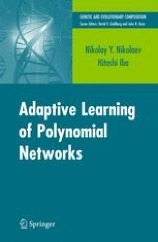
Adaptive Learning of Polynomial Networks : Genetic Programming, Backpropagation and Bayesian Methods
This book provides theoretical and practical knowledge for develop ment of algorithms that infer linear and nonlinear models. It offers a methodology for inductive learning of polynomial neural network mod els from data. The design of such tools contributes to better statistical data modelling when addressing tasks from various areas like system identification, chaotic time-series prediction, financial forecasting and data mining. The main claim is that the model identification process involves several equally important steps: finding the model structure, estimating the model weight parameters, and tuning these weights with respect to the adopted assumptions about the underlying data distrib ution. When the learning process is organized according to these steps, performed together one after the other or separately, one may expect to discover models that generalize well.
Adaptive Business Intelligence
In the modern information era, managers must recognize the competitive opportunities represented by decision-support tools. Adaptive business intelligence systems combine prediction and optimization techniques to assist decision makers in complex, rapidly changing environments. These systems address the fundamental questions: What is likely to happen in the future? And what is the best decision right now? Adaptive Business Intelligence includes elements of data mining, predictive modeling, forecasting, optimization, and adaptability.
