



الصفحة 25
الصفحة 25

Implementing an Electronic Health Record System
"Implementing an Electronic Health Record System" addresses the range of issues and opportunities that implementing an electronic health records system (EHR) poses for any size of medical organization - from the small one-man operation to a large healthcare system. The book is divided into sections on preparation, support, implementation and a summary and prospects section, enabling the clinician to define the framework necessary to implement and evaluate a clinically effective EHR system. With the increasing involvement of clinicians in the day-to-day running of the practice, interest is now focused on EHR as a key area for improving clinical efficiency. This book uniquely provides the guidance a clinical team needs to plan and execute an effective EHR system within any clinical setting. Practical in its scope and coverage, the authors have provided a tool-kit for the medical professional in the often complex field of medical informatics. Designed for senior clinicians, decision-makers and EHR teams, the book is of use to anyone involved in the efficient management of clinical records.

Impacted Third Molars
Impacted Third Molars, Second Edition, provides dentists with all the information they need to confidently remove impacted third molars, from case selection and imaging to sedation and patient management. Step-by-step surgical procedures support dentists in the successful surgical removal of third molars.

Impact Tectonics
This volume is the 8th in a series of impact books resulting from the activities of the scientific program "Response of the Earth System to Impact Processes" (IMPACT), by the European Science Foundation. The book resulted from an international meeting at Mora, Sweden, which was held as part of the IMPACT program. The papers cover various structural geologic, geochemical, and geophysical topics on research of asteroid impact structures on Earth and Mars.
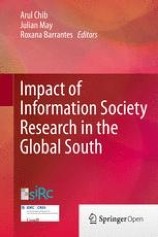
Impact of Information Society Research in the Global South
This book addresses two aspects— Impact of research: How is the research on ICTs in the Global South playing a role in creating an information society? (e.g. policy formulation, media coverage, implementation in practice) and Research on impact: What is the evidence for the impact of ICTs on society? (i.e. the objectives of socio-economic development). This volume brings together a multiplicity of voices and approaches from social scientific research to produce an engaging volume for a variety of stakeholders including academics, researchers, practitioners, policy-makers and those in the business and civil sectors of society.

Immanent Realism : An Introduction to Brentano
A set of knotty questions are implied in the very title of Brentano's work "Psychology from an empirical standpoint". To solve them, Albertazzi guides us systematically through Brentano's life and works, investigating into the inherent complexity of both his view of mental life and the related methodology. In so doing, she discloses a number of threads into the open texture of modern philosophy of mind." Lia Formigari, Ordinary professor of Philosophy of Language, La Sapienza, Rome, Italy

Imaging planetario : Guida all’uso della webcam = Planetary Imaging : Guide to using the webcam
In this book, Martin Mobberley introduces the amateur to the use of webcams and digital image processing, while providing detailed tips for shooting the Sun, Moon and planets. Each object, with its specific shooting and processing techniques, is treated in a separate chapter. Through the images in this book, the amateur will be able to realize what can be done by applying a webcam to your telescope!

Imaging of the Shoulder : Techniques and Applications
This volume covers the broad spectrum of imaging methods and abnormalities of relevance in the diagnostic workup of the shoulder. In the first part of the book, individual chapters are devoted to radiography, arthrography, computed tomography and CT arthrography, magnetic resonance imaging and MR arthrography, ultrasound and interventional procedures. The second part of the book then documents the application of these techniques to each of the clinical problems and diseases encountered in the shoulder. The authors are all experts in their field and include rising stars of musculoskeletal radiology.

Imaging of Orthopedic Sports Injuries ; 2nd ed.
This book, now in a revised and updated second edition, provides a review of imaging abnormalities in orthopedic sports injuries. The first part of the book includes background information on relevant basic science and general imaging principles in sports traumatology, while the second part discusses the topography of various sports injuries. Each chapter highlights the merits of different imaging techniques, focusing on a specific clinical problem. The third part then examines natural history and monitoring. Several new chapters have been added, including a chapter on postoperative joint imaging in the sports patient as well as image-guided interventions in sports injuries.

Imaging of Orthopedic Sports Injuries ; 1st ed.
This volume provides an updated review of imaging abnormalities in orthopedic sports injuries. The first part of the book contains background information on relevant basic science and general imaging principles in sports traumatology. The second part comprises a topographic discussion of sports injuries. Each chapter highlights the merit of different imaging techniques, focused on a specific clinical problem. In the third part, natural history, monitoring and follow-up by imaging are discussed. This well-illustrated book will be of value for musculoskeletal radiologists, orthopedic surgeons, sports physicians and everyone else involved in sports medicine.

Imaging of occupational and environmental disorders of the chest
This book provides an up-to-date and comprehensive approach to modern imaging of environmental and occupational diseases of the chest. The first part of the book addresses the basic knowledge required to understand imaging in this context, while the second focuses on the imaging results achieved in a variety of specific disorders. There is particular emphasis on the role of thin-section computed tomography since this technique facilitates the detection of early subclinical abnormalities.

Imaging of Kidney Cancer
This is one of the first books to deal specifically with diagnostic imaging of the entire spectrum of kidney cancers. Both new and conventional imaging modalities are fully considered. In an introductory chapter, the histopathological classification of kidney cancers is presented and discussed. The following five chapters describe in great detail the abilities, advantages, and disadvantages of the various imaging modalities used in the diagnosis of kidney cancers and the assessment of disease extension. Subsequent chapters offer an exhaustive description of the radiological features of the different histological subtypes of kidney cancer, with radiological and histological illustrations and tables.

Imaging in Drug Discovery and Early Clinical Trials
Efficient tools for the selection and validation of drug targets both at the preclinical and clinical level are required. Non-invasive imaging and in particular molecular imaging methods are becoming essential technologies to support drug discovery and dvelopment. Imaging provides structural, functional, metabolic and molecular readouts that are being applied to characterize a disease phenotype (diagnosis), to elucidate molecular mechanisms involved, to evaluate drug efficacy and safety, and to identify potential biomarkers of the drug's mechanism-of-action, efficacy and safety. Non-invasive imaging techniques constitute a bridge between preclinical and clinical drug evaluation. In this monograph the contribution of imaging modalities to the various stages of drug discovery and development, from early target validation to their use in clinical development programs, is described. Chapters are devoted to the description of the drug discovery process as such, to the various imaging modalities being used both preclinically and clinically, to applications of imaging during the optimization of a lead compound (addressing issues such as bioavailability and efficacy) and during the drug safety evaluation.

Imaging for Detection and Identification
The dynamic interaction between world-renowned scientists from the usually disparate communities of pure mathematicians and applied sci- tists which occurred at our seven previous ASI’s continued at this meeting. The fusion of basic ideas in mathematics, radar, sonar, biology, and ch- istry with ongoing improvements in hardware and computation offers the promise of much more sophisticated and accurate detection and identi?cation capabilities than currently exist. Coupled with the dramatic rise in the need for surveillance in innumerable aspects of our daily lives, brought about by hostile acts deemed unimaginable only a few short years ago, the time is ripe for image processing scientists in these usually diverse ?elds to join together in a concerted effort to combat the new brands of terrorism. This ASI was one important initial step.

Imaging Atlas of the Pelvic Floor and Anorectal Diseases
The goal of Imaging Atlas of the Pelvic Floor and Anorectal Diseases is to clearly and precisely present indications, techniques, limitations, sources of errors, and pitfalls of these imaging modalities.

Images, Representations and Heritage : Moving beyond Modern Approaches to Archaeology
Recent archaeological theory has show that images of the past have carried a particularly strong resonance within modern social groups. This volume explores the immeasurable impact that the phenomenon of archaeology has had on the representation of the past in the modern world. Modern society’s ‘archaeological imagination’ conceives of archaeology as a producer of images of the past which become representations of modern group identities. If archaeology is utilized by public groups to construct and represent identities, then what are archaeologists to do with that public? The very fact that the public is interested in the past and in archaeological research is an opportunity for archaeology to engage that public.
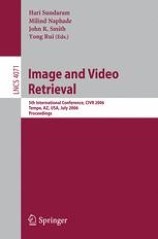
Image and video retrieval ; Vol. 4071 ; 5th Internatinoal Conference, CIVR 2006, Tempe, AZ, USA, July 13-15, 2006, Proceedings
This volume contains the proceeding of the 5th International Conference on - age and Video Retrieval (CIVR), July 13–15, 2006, Arizona State University, Tempe, AZ, USA: http://www. civr2006. org. Image and video retrieval cont- ues to be one of the most exciting and fast-growing research areas in the ?eld of multimedia technology. However, opportunities for exchanging ideas between researchers and users of image and video retrieval systems are still limited.

Il solito Albert e la piccola Dolly : La scienza dei bambini e dei ragazzi = The usual Albert and little Dolly : The science of children and young people
After hundreds of years, science has come out of the ivory tower and entered society. Today science is not done with laboratory research alone but by involving different social actors. There are scientists, but also politicians, administrators, entrepreneurs and ordinary people, young and old. Their fears, real or perceived, can put a stop to its development. Their trust and their hopes nourish it and create a climate of expectations that are not always met. In the great narrative of science, the first actors, the scientists, are from time to time destroyers and benefactors, saints or monsters, fathers of the Golem with feet of clay or of Frankestein who turns and destroys. Not infrequently then there are many Sisyphus who continually restart their business - and it is not excluded that in the eyes of some they share with Penelope the habit of undoing at night what they do during the day.

Il senso e la narrazione = The sense and the narration
Humans are creatures of narration: infinitely they narrate and narrate themselves, intertwine dialogues, light up stories to illuminate the dark caves of the heart and the world, recover and transmute memories. We live between a firm and rough, unknowable reality, an enormous furnace of perturbations and calls and colors, and an elusive, delicate and ephemeral interiority: and between the two, between the world and us, we weave with thought and with words a fragile ponte, a bridge called sense. Swing this bridge at the unequal breath of a cosmic wind, dropping phosphoric fragments: sudden hourglasses, anonymous centaurs, sleepless geometers, distant syllogisms, vanished lineages, black basalts, crazy anchorites, silent plesiosaurs, flutes and bagpipes ... and they recompose figures, and we ask ourselves questions about those figures and tell stories. Only the vertigo of asking and narrating can give meaning to a life that some say is interwoven with pure chance. Forever detached from the flourishing matrix of the world, tormented by thought, prisoners of words, slaves of interpretation, lost in a long corridor of facing mirrors: we are at the center of a great, incomprehensible rumble.

Il cancro e la ricerca del senso perduto = Cancer and the search for lost meaning
Cancer disease can be approached with the aim of killing diseased cells or with that of making them go backwards on the road that leads from a state of natural equilibrium to the disease. This book tells an original research by the author inspired by this biological vision of cancer, research that led to the production and use of anticancer products. Inevitably, the history of research slips into a vision of the world and of life that presents the features of a documented critique of the values and priorities that characterize the world in which we live. A profound and human book, which makes you think, which makes you hope.
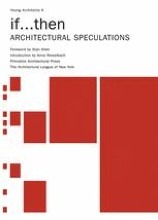
If ... then : Architectural speculations
he creates houses and other buildings that are snugly energy-ef?cient and sit lightly on the land. Introduction 10 Camera-Ready Green Design 11 Standards and Practices Introduction 12 A Very Short History Camera-Ready Green Design 13 A Movement’s Priorities Introduction 14 Camera-Ready Green Design 15 The Damage Done Introduction 16 Camera-Ready Green Design 17 city Cities have been around for more than six thousand years, drawing successive waves of new residents with their blend of commerce, culture, energy, and opportunity. The first city to surpass a population of one million was Baghdad, thirteen centuries ago. London topped ?ve million in 1825; New York exceeded ten million a hundred years later
