



الصفحة 24
الصفحة 24
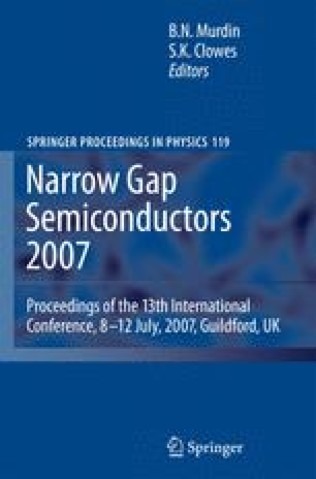
Narrow Gap Semiconductors 2007 ; Proceedings of the 13th International Conference, 8-12 July, 2007, Guildford, UK
Narrow gap semiconductors have provided an exciting field of research and show a number of extreme physical and material characteristics. They are the established material systems for infrared detectors and emitters, and with new developments in the technology these materials are emerging as a viable route to high speed, low power electronics. New kinds of narrow gap semiconductor, such as graphene and other composite nanocrystals, are also providing renewed interest in the underlying physics.

Napoleonic Governance in the Netherlands and Northwest Germany : Conquest, Incorporation, and Integration
This Palgrave Pivot explores the ways in which French Emperor Napoleon tried to integrate the present-day Netherlands and Northwest Germany into his Empire, by replacing traditional institutions and governing practices with French ones ('Napoleonic governance'). The northern periphery of the Napoleonic Empire continues to be overlooked by the bulk of historians; this study shows that a transregional approach can yield important findings. In a broader sense, the study does not deal with these regions alone, but also with the difficulties that are inherent to European integration.

Nanotribology and nanomechanics : An introduction ; 2nd ed.
This volume serves as a timely, practical introduction to the principles of nanotribology and nanomechanics and applications to magnetic storage systems, MEMS/NEMS and BioMEMS/bioNEMS. Assuming some familiarity with macrotribology/mechanics, the book comprises chapters by internationally recognized experts, who integrate knowledge of the field from the mechanics and materials-science perspectives. They cover key measurement techniques, their applications, and theoretical modelling of interfaces, each beginning their contributions with macro- and progressing to microconcepts

Nanotribology and nanomechanics : An introduction ; 1st ed.
This volume serves as a timely, practical introduction to the principles of nanotribology and nanomechanics and applications to magnetic storage systems and MEMS/NEMS. Assuming some familiarity with macrotribology/mechanics, the book comprises chapters by internationally recognized experts, who integrate knowledge of the field from the mechanics and materials-science perspectives. They cover key measurement techniques, their applications, and theoretical modelling of interfaces, each beginning their contributions with macro- and progressing to microconcepts.

Nanotechnology-Enabled Sensors
Nanotechnology provides us with tools to create functional materials, devices, and systems by controlling materials at the atomic and molecular scales, and at the same time make use of novel properties and phenomena. Considering that most chemical and biological sensors, as well as many physical sensors, depend on interactions occurring within the nano scale range, the impact that nanotechnology will have on the sensor world is significant. Nanotechnology enabled sensors find applications in several novel fields such as sensing single molecules, bio-hazards, toxic chemicals, gas sensors, process control and diagnostics.

Nanotechnology in Intelligent Food Packaging
This book is a state-of-the-art exposition of nanotechnology and food packaging which is undergoing rapid advancement. This book is specially designed with an emphasis on the state-of-the-art in nanotechnology and food packaging. It offers fascinating techniques for producing smart and active food packaging and also discusses its toxicity and the role that nanosensors play in detecting different pathogens in food packaging. The concluding chapters also explain recent developments concerning the incorporation of health supplements in food packaging and their future role in producing intelligent food packaging.
Nanotechnology in endodontics : Current and potential clinical applications
Provides detailed information on the emerging applications of nanomaterials and nanoparticles within endodontics, highlighting the exciting potential clinical impact of nanotechnology in the field. The range of applications covered is diverse, encompassing drug and gene delivery, tissue engineering, antibacterial strategies, dentin tissue stabilization, dentin pulp regeneration and use in restorative and endodontic materials. Important scientific background information relating to each application is provided, with clear coverage of basic principles. In addition, potential pitfalls are identified and explained. The cytotoxicity of nanomaterials and nanoparticles is also addressed in a separate chapter. The book will be of value both for endodontic practitioners and for all scientists and graduate students who are interested in the application of nanotechnology in endodontics.

Nanotechnology for Oral Drug Delivery : From Concept to Applications
Discusses the current challenges of oral drug delivery, broadly revising the different physicochemical barriers faced by nanotechnolgy-based oral drug delivery systems, and highlighting the challenges of improving intestinal permeability and drug absorption. Oral delivery is the most widely used form of drug administration due to ease of ingestion, cost effectiveness, and versatility, by allowing for the accommodation of different types of drugs, having the highest patient compliance.

Nanotechnology for Microfluidics
The book focuses on microfluidics with applications in nanotechnology. The first part summarizes the recent advances and achievements in the field of microfluidic technology, with emphasize on the the influence of nanotechnology. The second part introduces various applications of microfluidics in nanotechnology, such as drug delivery, tissue engineering and biomedical diagnosis.

Nanotechnology based cosmetics
Explores the applications and advantages of nanotechnology-based cosmetic products compared to conventional formulations. It examines the principles and mechanisms of nanotechnology in enhancing cosmetic product efficacy, delivery, and performance. Key applications covered include nanoparticles for sunscreens, nanoencapsulation for controlled release, nanoemulsions, liposomes for targeted delivery, and antimicrobial nanoparticles. Analyzes case studies from major international cosmetic companies utilizing nanotechnology. It also discusses challenges like safety concerns, potential toxicity, regulations, labeling, consumer awareness, and environmental impact.
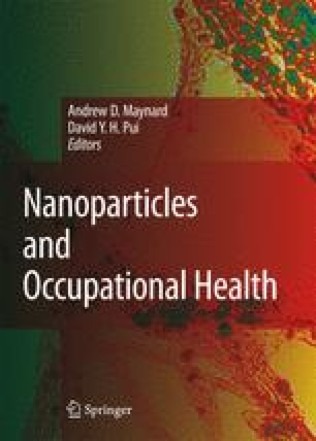
Nanotechnology and Occupational Health
Nanotechnology is rapidly invading many aspects of modern society - from science, research and engineering to industrial and commercial applications and, inevitably, to man and his environment. One of the biggest challenges, therefore, is managing environmental, health and safety risks of nanomaterials. Yet, the information necessary to assess their longterm effects is scarce. Systematic research into what potentially makes engineered nanomaterials hazardous, how this translates into risk, and how these can be managed will be vital and involves interdisciplinary collaboration.

Nanotechnology : Societal Implications ; I : Maximising Benefits for Humanity ; II : Individual Perspectives
This book includes a collection of essays by leading scientists, engineers, and social scientists reviewing the possible uses of these impending technical developments in various industrial, medical, and national security applications, and the corresponding ethical, legal, social, economic, and educational issues that they raise. The report outlines potential areas for research into societal implications of nanotechnology, as well as some preliminary suggestions for how potential positive impacts of nanotechnology can be maximized, while minimizing any possible negative impacts, real or imagined. This book also provides the beginning of a blueprint for how one should address second-order consequences of the new technology, either positive implications or potential risks.

Nanotechnology : Assessment and Perspectives
A new definition of Nanotechnology by the authors is used as an anchor for the various sections of the book. This leads to an integrated text reflecting the multidimensional challenges occurring around Nanotechnology. The most important results of the study are transferred into acting recommendations concerning scientific progress, industrial relevance, economic potential, educational needs, potential adverse health effects and philosophical aspects of Nanotechnology.

Nanotechnologies, Hazards and Resource Efficiency : A Three-Tiered Approach to Assessing the Implications of Nanotechnology and Influencing its Development
Nanotechnology is frequently described as an enabling technology and 1 fundamental innovation, i.e. it is expected to lead to numerous innovative developments in the most diverse fields of technology and areas of app- cation in society and the marketplace. The technology, it is believed, has the potential for far-reaching changes that will eventually affect all areas of life. Such changes will doubtlessly have strong repercussions for society and the environment and bring with them not only the desired and intended effects such as innovations in the form of improvements to products, pr- esses and materials; economic growth; new jobs for skilled workers; relief for the environment; and further steps toward sustainable business, but also unexpected and undesirable side effects and consequences.

Nanostructured Soft Matter : Experiment, Theory, Simulation and Perspectives
This book provides an interdisciplinary overview of a new and broad class of materials under the unifying name Nanostructured Soft Matter. It covers materials ranging from short amphiphilic molecules to block copolymers, proteins, colloids and their composites, microemulsions and bio-inspired systems.

Nanostructured Coatings
Controlling the performance of structures and components of all sizes and shapes through the use of engineered coatings has long been a key strategy in materials processing and technological design. The ever-increasing sophistication of en- neered coatings and the rapid trend toward producing increasingly smaller devices with greater demands on their fabrication, properties and performance have led to signicant progress in the science and technology of coatings, particularly in the last decade or two. Nanostructured coatings constitute a major area of sci- ti?c exploration and technological pursuit in this development.Nanostructured coatings demand study in a highly interdisciplinary research arena which encompasses: surface and interface science study of defects modern characterization methodologies cutting-edge experimental developments to deposit.

Nanoscience : Nanotechnologies and Nanophysics
Nanotechnologies and nanosciences are a fast-developing field of research, which sit at the point of convergence of several disciplines (physics, chemistry, biology, mechanics, etc.). This practically-oriented overview is designed to provide students and researchers with essential information on both the tools of manufacture and specific features of the nanometric scale, as well as applications within the most active fields (electronics, magnetism, information storage, biology).

Nanoscaled Semiconductor-on-Insulator Structures and Devices
This proceedings volume constitutes an archive of the contributions of the key-speakers who attended the NATO Advanced Research Workshop on “Nanoscaled Semiconductor-On-Insulator Structures and devices” held in the Tourist and Recreation Centre “Sudak” (Crimea, Ukraine) from 15 to 19 October 2006. The semiconductor industry has sustained a very rapid growth during the last three decades through impressive technological developments which have resulted in products with higher performance and lower cost per function. After many years of development it is now confidently predicted that semiconductor-on-insulator materials will enter and increasingly be used by manufacturing industry. The wider use of semiconductor (es- cially silicon) on insulator materials will not only enable the benefits of these materials to be demonstrated but, also, will drive down the cost of substrates which, in turn, will stimulate the development of other novel devices and applications.

Nanoscale Devices - Fundamentals and Applications
This book contains a collection of papers giving insight into the fundamentals and applications of nanoscale devices. The main focus is on the synthesis and characterization of nanoscale magnetic materials, the fundamental physics and materials aspects of solid-state nanostructures, the development of novel device concepts and design principles for nanoscale devices, as well as on applications in electronics with special emphasis on defence against the threat of terrorism.

Nanoscale Assembly : Chemical Techniques
Recent advances have pushed the limits of lithography firmly into the sub-100 nm domain, with smallest feature sizes around 10 nm. However, compared to living organisms, devices fabricated using nanolithography are not nearly as complex, as they are essentially 2D and contain only a limited number of chemical elements. For centuries, Nature has been a major inspiration for science. First of all to learn how Life functions at cellular level, but increasingly, as a blueprint for designing non-natural devices where the building blocks and their assembly are inspired by biological examples. The key tool in translating these examples into the domain of engineering, has been self-assembly or self-organization. This book gathers a spectrum researchers who have not only furthered our knowledge of self-assembly using small molecules, polymers and colloidal particles as building blocks, but who have also shown it to be a practical tool in the assembly of an astonishing variety of devices, ranging from molecular electronics to biosensors.
