



الصفحة 233
الصفحة 233

Food irradiation
Treatment of food by specific ionizing radiations to improve microbiological safety and storability is one of the most extensively studied technology of the XXth century. However, much of the research has been carried out in laboratories and it is still relatively underutilized commercially. Its application potential is very diverse, from inhibition of sprouting of tubers and bulbs to production of commercially sterile food products. The safety of consumption and wholesomeness of irradiated food have been extensively studied in international cooperations. Numerous international expert groups set up jointly by the FAO, the IAEA and the WHO, or the Scientific Committee on Food of the European Commission concluded that foods irradiated with appropriate technologies are both safe and nutritionally adequate. A Codex General Standard for Irradiated Foods and a Recommended International Code of Practice for Radiation Processing of Food have been developed.

Food Engineering : Integrated Approaches
Food Engineering: Integrated Approaches presents an up-to-date review of important food engineering concepts, issues and recent advances in the field. Distinguished food engineers and food scientists from key institutions worldwide have contributed chapters that provide a deep analysis of their particular subjects. At the same time, each topic is framed within the context of a broader more integrated approach, demonstrating its relationship and interconnectedness to other areas. The premise of this work, therefore, is to offer both a comprehensive understanding of food engineering as a whole and a thorough knowledge of individual subjects. This approach appropriately conveys the basic fundamentals, state-of-the-art technology, and applications of the involved disciplines.
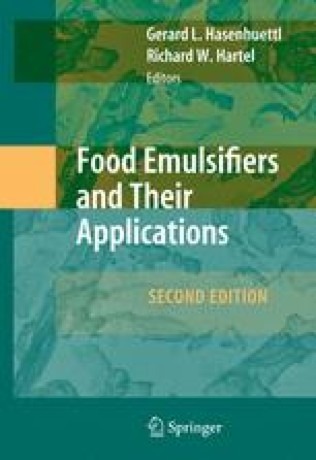
Food Emulsifiers and Their Applications
Thoroughly revised and updated, the second edition of Food Emulsifiers and their Applications integrates theoretical background with practical orientation and serves as the definitive reference on subject. It offers practitioners an overview of the manufacture, analysis, physical properties, interactions and applications of emulsifiers used in processed food. Written for food technologists as well as R & D and product development personnel, begins with the design and preparation of emulsifiers (including interactions with other food ingredients), which leads in to product categories, including dairy, infant nutrition, bakery, confectionery, and margarine, followed by nutrition improvement and processing techniques.

Food chemistry : A laboratory manual
FOOD CHEMISTRY A manual designed for Food Chemistry Laboratory courses that meet Institute of Food Technologists undergraduate education standards for degrees in Food Science Every chapter offers introductory summaries of key methodological concepts and interpretations of the results obtained from food experiments. The book provides a supplementary online Instructor’s Guide useful for adopting professors that includes a Solutions Manual and Preparation Manual for laboratory sessions.

Food bites : The science of the foods we eat
Food Bites is an easy-to-read, often humorous book on the scientific basis of the foods we eat, and answers those pesky, niggling questions such as: Is the quality of beer really affected by the type of water used? and Processed foods: good or bad? Readers will be captivated by this superbly written book, especially so as their guides are Professor Richard Hartel, professor of Food Engineering at UW-Madison, along with his daughter, AnnaKate Hartel. Professor Hartel has for the last four years penned a witty and illuminating column on all aspects of food science for the Capital Times of Madison, and his weekly wisdom has now been collected into a single publication.
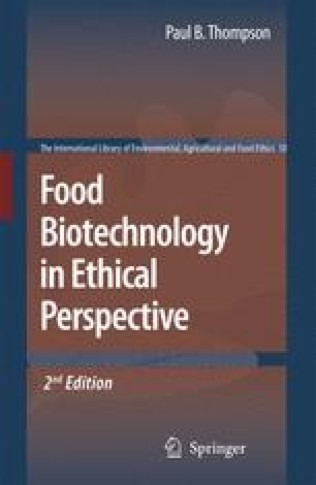
Food Biotechnology in Ethical Perspective
Agrifood biotechnology—the genetic transformation of plants and animals through recombinant means—has created controversy in the food system for more than twenty years. The new edition reflects lessons from the hotly contested debates over those issues in the intervening decade, and includes wholly new discussions on ethical issues associated with livestock cloning, the Precautionary Principle, and the transatlantic debate between United States and European perspectives on biotechnology.
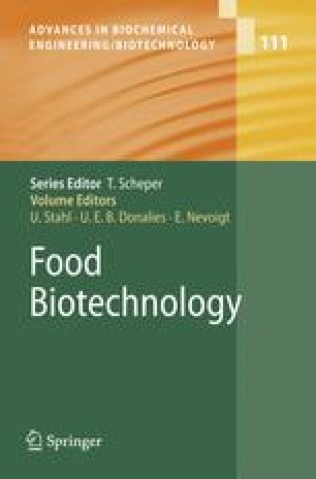
Food biotechnology
This work, with only six chapters, covers a fraction of the vast area of food biotechnology … . the detailed information included in each chapter is meticulously referenced and complete. … the chapters are well written and easy to understand. The many examples used by the authors give the book a very practical feel, making it an easier read than one might expect.

Food basket = السلة الغذائية
يقع المشروع في الحي الشرقي من المدينة وهو المدخل للمدينة من جهة انخل وطريق دمشق، مما يتيح له وصول سهل كونه على علاقة شبه مباشرة مع أوتوستراد جاسم الرئيسي وأيضا وجود المشروع على اطراف المدينة يؤمن عدم اﻻزعاج للسكان وزيادة اﻻزدحام وأيضا يرتبط المشروع بأحياء المدينة عبر طرق رئيسة تؤمن الوصول ﻷصحاب محال البيع بالتجزئة او المستهلكين بشكل سلس وسريع
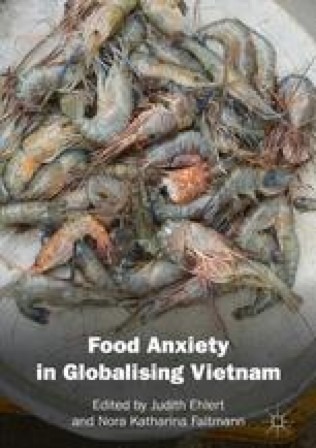
Food Anxiety in Globalising Vietnam
This book approaches the anxieties inherent in food consumption and production in Vietnam. The country’s rapid and recent economic integration into global agro-food systems and consumer markets spurred a new quality of food safety concerns, health issues and distrust in food distribution networks that have become increasingly obscured. This edited volume further puts the eating body centre stage by following how gendered body norms, food taboos, power structures and social differentiation shape people’s ambivalent relations with food. It uncovers Vietnam’s trajectories of agricultural modernisation against which consumers and producers manoeuvre amongst food self-sufficiency, security and abundance. It provides social science perspectives on anxieties related to food and surrounding discourses that travel between the local and the global, the individual and society and into the body. Therefore, the book’s lens of food anxiety matters for social theory and for understanding the embeddedness and discontinuities of food globalizations in Vietnam and beyond.

Food and behavior
The effect of nutrition on behavior is one of the new topics that nutritionists are discussing at the present time. They have proven that there is a clear relationship between food, behavior and decisions. The aim of this research is to shed light on this new aspect of nutriti onal science, as we are presenting in this project some of the experiments, researches and statistics that scientists have reached and referred to this effect.
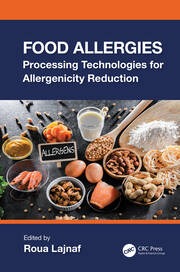
Food allergies processing technologies for allergenicity reduction
Provides an authoritative source of information on the relationship between food processing technologies and food allergens with a greater variety of studied allergens including peanuts, tree nuts, cow’s milk, eggs, sesame, lupine, soy, wheat, mustard, mushroom, fish and shellfish, as well as the importance of processing these when producing hypoallergenic foods.
Food allergens : methods and protocols
Provides a comprehensive collection of methods and protocols in food allergy and food allergens studies. The selected protocols explore the study of food allergens, from recombinant production, purification procedures, IgE and T cell epitopes characterization, to allergen structure description, cellular responses, and tolerance induction, through a variety of techniques and animal models.

Food addiction
This approach acknowledges the apparent parallels between substance use disorders and overeating of highly palatable, high-caloric foods. Although this idea seems to be relatively new, research on food addiction actually encompasses several decades, a fact that often remains unrecognized. Scientific use of the term addiction in reference to chocolate even dates back to the 19th century. In the 20th century, food addiction research underwent several paradigm shifts, which include changing foci on anorexia nervosa, bulimia nervosa, obesity, or binge eating disorder. Thus, the purpose of this review is to describe the history and state of the art of food addiction research and to demonstrate its development and refinement of definitions and methodologies

Food - drug interactions
The effect of drug on a person may be different than expected because that drug interacts with another drug the person is taking (drug-drug interaction), food, beverages, dietary supplements the person is consuming (drug-nutrient/food interaction) or another disease the person has (drug-disease interaction). A drug interaction is a situation in which a substance affects the activity of a drug, i.e. the effects are increased or decreased, or they produce a new effect that neither produces on its own. These interactions may occur out of accidental misuse or due to lack of knowledge about the active ingredients involved in the relevant substances. Regarding food-drug interactions physicians and pharmacists recognize that some foods and drugs, when taken simultaneously, can alter the body's ability to utilize a particular food or drug, or cause serious side effects.
Fondamenti di ingegneria clinica ; Vol.2 : Ecotomografia = Fundamentals of clinical engineering ; Vol.2 : Ultrasound
With the second volume of Clinical Engineering, the Author intends to provide an updated scientific-didactic overview of the physical principles of ultrasound, of the technology and of the implementation aspects of the ecotomograph.

Folk Psychology Re-Assessed
FOLK PSYCHOLOGY, THEORY OF MIND AND SIMULATION The tasks we face in our day to day social lives are quite heterogeneous but many of them make a common demand upon us. They require us to understand and interact with other people and, in most social encounters, we exhibit a special sensitivity to our fellow human beings that is quite different from the way we respond to inanimate objects and most other species of organism. Social life is dependent, to a considerable degree, on our ability to understand what is distinctive about human behaviour and to successfully apply that understanding in all manner of situations.

Foliations and Geometric Structures
Offers basic material on distributions and foliations. This book introduces and builds the tools needed for studying the geometry of foliated manifolds. Its main theme is to investigate the interrelations between foliations of a manifold on the one hand, and the many geometric structures that the manifold may admit on the other hand.
Fog and boundary layer clouds : Fog visibility and forecasting
The e?ect of fog on human life was recognized in the early ages of mankind but its impact has signi?cantly increased during recent decades due to increasing air, marine, and road tra?c. In fact, the ?nancial and human losses related to fog and low visibility became comparable to the losses from other weather events, e.g., tornadoes or, in some situations, even hurricanes. The purpose of this review is to summarize the earlier works on fog and to lay a basis for the articles presented in this special issue and outline perspectives for future fog research.

Focusing telescopes in nuclear astrophysics
This volume is the first of its kind on focusing gamma-ray telescopes. Forty-eight refereed papers provide a comprehensive overview of the scientific potential and technical challenges of this nascent tool for nuclear astrophysics. The book features articles dealing with pivotal technologies such as grazing incident mirrors, multilayer coatings, Laue- and Fresnel-lenses - and even an optic using the curvature of space-time. The volume also presents an overview of detectors matching the ambitious objectives of gamma ray optics, and facilities for operating such systems on the ground and in space. The extraordinary scientific potential of focusing gamma-ray telescopes for the study of the most powerful sources and the most violent events in the Universe is emphasized in a series of introductory articles.

Focused Access to XML Documents ; 6th International Workshop of the Initiative for the Evaluation of XML Retrieval, INEX 2007 Dagstuhl Castle, Germany, December 17-19, 2007. Selected Papers
This book constitutes the thoroughly refereed post-conference proceedings of the 6th International Workshop of the Initiative for the Evaluation of XML Retrieval, INEX 2007, held at Dagstuhl Castle, Germany, in December 2007.The 37 revised full papers presented were carefully reviewed and selected for presentation at the workshop from 50 initial submissions. The papers are organized in an ad hoc track and 6 topical sections on book search, XML-mining, entity ranking, interactive, link-the-wiki, and multimedia.
