



الصفحة 23
الصفحة 23

Energy minimization methods in computer vision and pattern recognition ; 6th International Conference, EMMCVPR 2007, Ezhou, China, August 27-29, 2007, Proceedings
Contains critical issues of representation, learning, and inference. Important new themes include pr- abilistic grammars, image parsing, and the use of datasets with ground-truth to act as benchmarks for evaluating algorithms and as a way to train learning algorithms. Other themes include the development of efficient inference algorithms using advanced techniques from statistics, computer science, and applied mathematics. This book makes no distinction between oral and poster papers. It also contiants sections on al- rithms, applications, image parsing, image processing, motion, shape, and thr- dimensional processing.
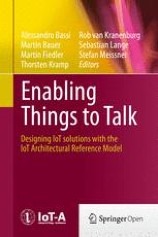
Enabling things to talk : Designing IoT solutions with the IoT architectural reference model
The Internet of Things (IoT) is an emerging network superstructure that will connect physical resources and actual users. It will support an ecosystem of smart applications and services bringing hyper-connectivity to our society by using augmented and rich interfaces. Whereas in the beginning IoT referred to the advent of barcodes and Radio Frequency Identification (RFID), which helped to automate inventory, tracking and basic identification, today IoT is characterized by a dynamic trend toward connecting smart sensors, objects, devices, data and applications. The next step will be “cognitive IoT,” facilitating object and data re-use across application domains and leveraging hyper-connectivity, interoperability solutions and semantically enriched information distribution.

Emerging Technologies in Computing ; 3rd EAI International Conference, iCETiC 2020, London, UK, August 19–20, 2020, Proceedings
This book constitutes the refereed conference proceedings of the Third International Conference on Emerging Technologies in Computing, iCEtiC 2020, held in London, UK, in August 2020. Due to VOVID-19 pandemic the conference was helt virtually.The 25 revised full papers were reviewed and selected from 65 submissions and are organized in topical sections covering blockchain and cloud computing; security, wireless sensor networks and IoT; AI, big data and data analytics; emerging technologies in engineering, education and sustainable development.

Emerging Technologies and Information Systems for the Knowledge Society ; 1st World Summit on the Knowledge Society, WSKS 2008, Athens, Greece, September 24-26, 2008. Proceedings
This book, in conjunction with the volume CCIS 19, constitutes the refereed proceedings of theFirst World Summit, WSKS 2008, held in Athens, Greece, in September 2008.

Emerging solutions for future manufacturing Systems ; IFIP TC 5 / WG 5.5. Sixth IFIP International conference on information technology for balanced automation systems in manufacturing and services, 27-29 September 2004, Vienna, Austria
This book includes the papers selected for the BASYS’04 conference, which was held in Vienna, Austria in September 2004 and sponsored by the International Federation for Information Processing (IFIP).

Embedded System Design : Topics, Techniques and Trends; IFIP TC10 Working Conference: International Embedded Systems Symposium (IESS), May 30 - June 1, 2007, Irvine (CA), USA
Embedded systems have gained an enormous amount of processing power and functionality. Many of the formerly external components can now be integrated into a single System-on-Chip. This tendency has resulted in a dramatic reduction in the size and cost of embedded systems. As a unique technology, the design of embedded systems is an essential element of many innovations. This book including design methodology, specification and modeling, embedded software and hardware synthesis, networks-on-chip, distributed and networked systems, and system verification and validation. Particular emphaisis is paid to automotive and medical applications. A set of actual case studies and special aspects in embedded system design are included as well.

Embedded System Design
Embedded System Design starts with an introduction into the area and a survey of specification languages for embedded systems. A brief overview is provided of hardware devices used for embedded systems and also presents the essentials of software design for embedded systems. Real-time operating systems and real-time scheduling are covered briefly. Techniques for implementing embedded systems are also discussed, using hardware/software codesign. It closes with a survey on validation techniques. Embedded System Design can be used as a text book for courses on embedded systems and as a source which provides pointers to relevant material in the area for PhD students and teachers. The book assumes a basic knowledge of information processing hardware and software.

Embedded Robotics : Mobile Robot Design and Applications with Embedded Systems
This book presents a unique examination of mobile robots and embedded systems, from introductory to intermediate level. It is structured in three parts, dealing with Embedded Systems (hardware and software design, actuators, sensors, PID control, multitasking), Mobile Robot Design (driving, balancing, walking, and flying robots), and Mobile Robot Applications (mapping, robot soccer, genetic algorithms, neural networks, behavior-based systems, and simulation).

Embedded Robotics : Mobile Robot Design and Applications with Embedded Systems
The EyeBot controller and mobile robots have evolved over more than a decade. This book gives an in-depth introduction to embedded systems and autonomous mobile robots, using the EyeBot controller (EyeCon) and the EyeBot mobile robot family as application examples. This book combines teaching and research material and can be used for courses in Embedded Systems as well as in Robotics and Automation.

Embedded robotics : From mobile robots to autonomous vehicles with Raspberry Pi and Arduino
Presents a unique examination of mobile robots and autonomous vehicles using embedded systems, from introductory to advanced level. It is structured in four parts, dealing with Embedded Systems (processors, sensors, actuators, control, multitasking and communication), Robot Hardware (driving and walking robots, autonomous boats and planes, as well as robot manipulators), Robot Software (localization, navigation, image processing and automotive systems), and Artificial Intelligence (neural networks, genetic algorithms and deep learning). The book is organized for ease of use, with numerous figures, photographs, and worked example programs. The book is written as a text for courses in computer science, computer engineering, IT, electronics engineering, and mechatronics, as well as a guide for robot hobbyists and researchers.

Embedded image processing on the TMS320C6000™ DSP : Examples in code composer studio™ and MATLAB
the author also explains the uses and rationale behind a plethora of technologies, most notably several industry-standard and essential TI developer technologies, including the Code Composer Studio™ IDE. Highlights include numerous debugged MATLAB and C/C++ Visual Studio prototype applications and efficient C implementations of real-world algorithms tested on both the C6416 DSK and C6701 EVM development platforms
Embedded Computer Systems : Architectures, Modeling, and Simulation; 20th International Conference, SAMOS 2020, Samos, Greece, July 5–9, 2020, Proceedings
This book constitutes the refereed proceedings of the 20th International Conference on Embedded Computer Systems: Architectures, Modeling, and Simulation, SAMOS 2020, held in Samos, Greece, in July 2020.* The 16 regular papers presented were carefully reviewed and selected from 35 submissions. In addition, 9 papers from two special sessions were included, which were organized on topics of current interest: innovative architectures for security and European projects on embedded and high performance computing for health applications.
Embedded Computer Systems : Architectures, Modeling, and Simulation ; 7th International Workshop, SAMOS 2007, Samos, Greece, July 16-19, 2007, Proceedings
The book is unique in the sense that not only solved research problems are presented and discussed but also (partly) unsolved pr- lems and in-depth topical reviews can be unleashed in the scientific arena. C- sequently, it provides the participants with an environment where collaboration rather than competition is fostered.
Embedded and Ubiquitous Computing - EUC 2005 Workshops ; EUC 2005 Workshops : UISW, NCUS, SecUbiq, USN, and TAUES, Nagasaki, Japan, December 8-9, 2005
This book constitutes the refereed proceedings of the EUC 2005 workshops held in conjunction with the IFIP International Conference on Embedded and Ubiquitous Computing, EUC 2005, in Nagasaki, Japan in December 2005.The 132 revised full papers presented were carefully reviewed and selected from 352 submissions. Topics covered by the five workshops are ubiquitous intelligence and smart worlds (UISW 2005), network-centric ubiquitous systems (NCUS 2005), security in ubiquitous computing systems (SecUbiq 2005), RFID and ubiquitous sensor networks (USN 2005), and trusted and autonomic ubiquitous and embedded systems (TAUES 2005).

EM Modeling of Antennas and RF Components for Wireless Communication Systems
The book focuses on the practical aspects of computational electrodynamics. A short review of electromagnetic field theory and an illustrative introduction to basic concepts of numerical methods provide the mathematical and physical background. The main part the book guides the reader step-by-step through the modelling process: from the initial "what question shall the model answer?", through the setting up of a computer model by creating geometry, boundary conditions, sources, …, to post processing, validation, and optimization. A number of antenna and filter examples demonstrate the advantages and disadvantages of different numerical methods. So the book provides a realistic view on the capabilities and limits of state-of-the-art 3D-field simulators and on how to apply this knowledge efficiently to EM analysis and designing of RF applications in modern communication systems.

Elementary physics of complex plasmas
Complex plasmas are dusty plasmas in which the density and electric charges of the dust grains are sufficiently high to induce long-range grain-grain interactions, as well as strong absorption of charged-plasma components. Together with the sources replenishing the plasma such systems form a highly dissipative thermodynamically open system that exhibits many features of collective behaviour generally found in complex systems. Most notably among them are self-organized patterns such as plasma crystals, plasma clusters, dust stars and further spectacular new structures. Beyond their intrinsic scientific interest, the study of complex plasmas grows in importance in a great variety of fields, ranging from space-plasma sciences to applied fields such as plasma processing, thin-film deposition and even the production of computer chips by plasma etching, in which strongly interacting clouds of complex plasmas can cause major contamination of the final product.

Electronic Imaging in Astronomy : Detectors and Instrumentation
The second edition of Electronic Imaging in Astronomy: Detectors and Instrumentation describes the remarkable developments that have taken place in astronomical detectors and instrumentation in recent years – from the invention of the charge-coupled device (CCD) in 1970 to the current era of very large telescopes, such as the Keck 10-meter telescopes in Hawaii with their laser guide-star adaptive optics which rival the image quality of the Hubble Space Telescope. Authored by one of the world’s foremost experts on the design and development of electronic imaging systems for astronomy, this book has been written on several levels to appeal to a broad readership. Mathematical expositions are designed to encourage a wider audience, especially among the growing community of amateur astronomers with small telescopes with CCD cameras.
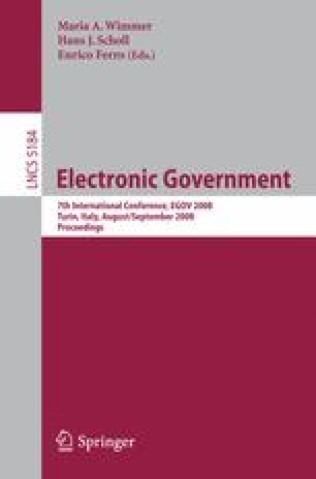
Electronic Government ; 7th International Conference, EGOV 2008, Turin, Italy, August 31 - September 5, 2008. Proceedings
This book constitutes the refereed proceedings of the 7th International Conference on Electronic Government, EGOV 2008, held in Torino, Italy, in August/September 2008 within the DEXA 2008 conference cluster.

Electromagnetic Technologies in Food Science
Electromagnetic Technologies in Food Science examines various methods employed in food applications that are based on the entire electromagnetic (EM) spectrum. Focusing on recent advances and challenges in food science and technology, this is an up-to-date volume that features vital contributions coming from an international panel of experts who have shared both fundamental and advanced knowledge of information on the dosimetry methods, and on potential applications of gamma irradiation, electron beams, X-rays, radio and microwaves, ultraviolet, visible, pulsed light, and more.
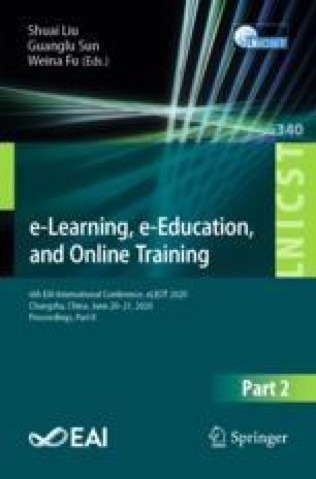
e-Learning, e-Education, and Online Training ; 6th EAI International Conference, eLEOT 2020, Changsha, China, June 20-21, 2020, Proceedings, Part II
Constitutes the proceedings of the 6th International Conference on e-Learning, e-Education, and Online Training, eLEOT 2020, held in Changsha, China, in June 2020. The conference was held virtually due to the COVID-19 pandemic. The 68 full papers presented were carefully reviewed and selected from 141 submissions. They focus on most recent and innovative trends and new technologies in for educational modernization, such as artificial intelligence and big data. The theme of eLEOT 2020 was “Education with New Generation Information Technology”.
