



الصفحة 23
الصفحة 23

I recettori dellangiotensina : Dalla biologia molecolare alla terapia con gli antagonisti recettoriali
Describes all the structural and functional characteristics of angiotensin receptors, with particular reference to their molecular and pharmacological properties. The therapeutic applications of AT1 receptor antagonists and the results obtained from large trials are also discussed, especially in arterial hypertension, heart failure, diabetic nephropathy and stroke.

Hypertension in the Elderly
Topics range from basic concepts, epidemiology and trials, and evaluation and management, to pharmacological treatment, special populations, and adherence, all presented with an emphasis on the optimal management of patients. The authors examine in detail the mechanisms of hypertension in the elderly, particularly age-related changes in vascular stiffness, and methodically review the lifestyle and outcomes trials that were conducted in older persons. The problems of clinical evaluation, secondary hypertension, and target organ damage are also fully addressed, and a practical approach is provided for correctly determining blood pressure, one of the most important tasks in evaluating an older patient. Extensive discussions of pharmacological therapy detail the role of individual drug classes, including diuretics and b-blockers, angiotensin-converting enzyme inhibitors, angiotensin receptor blockers, calcium antagonists, a-1 blockers, and combination drug therapies. Additional chapters focus on special populations, such as African Americans, patients with diabetes, and patients with arthritis, as well as on the clinician's role in improving therapeutic adherence in older patients. Offers family practitioners and general internists an up-to-date, user-friendly reference on the diagnosis, treatment, and complications of hypertension in the elderly.

Hyperparameter tuning for machine and deep learning with R : A practical guide
Equips readers with the ability to achieve better results with significantly less time, costs, effort and resources using the methods described here. The case studies presented in this book can be run on a regular desktop or notebook computer. The content focuses on the hyperparameter tuning of ML and DL algorithms, and is divided into two main parts: theory (Part I) and application (Part II). Essential topics covered include: a survey of important model parameters; four parameter tuning studies and one extensive global parameter tuning study; statistical analysis of the performance of ML and DL methods based on severity; and a new, consensus-ranking-based way to aggregate and analyze results from multiple algorithms.

Hyperlipidemia Management for Primary Care : An Evidence-Based Approach
Hyperlipidemia Management for Primary Care: An Evidence-Based Approach is a comprehensive resource for primary care providers that offers information and treatment options that can be incorporated with ease into everyday clinical practice. This evidence-based text weighs the benefits of pharmacologic treatments, popular diets, therapeutic foods, herbs and vitamins as a means to manage hyperlipidemia.

Hypercomputation : Computing Beyond the Church-Turing Barrier
Hypercomputation is a relatively new theory of computation which treats computing methods and devices that transcend the Church-Turing thesis. This book will provide a thorough description of the field of hypercomputation, covering all attempts at devising conceptual hypermachines and all new promising computational paradigms that may eventually lead to the construction of a hypermachine.Readers will reach a deeper understanding of what computability is and why the Church-Turing thesis poses an arbitrary limit to what actually can be computed. Hypercomputing is quite a novel idea, and therefore the book is interesting to the reader in its own right.

Hydrogen-based Autonomous Power Systems : Techno-economic Analysis of the Integration of Hydrogen in Autonomous Power Systems
Hydrogen-based Autonomous Power Systems contains a review of hydrogen technologies suitable for RES-based autonomous power systems, presents already-existing demonstration hydrogen-based power systems, and provides concrete examples for the integration of hydrogen technologies into existing autonomous power systems.

Hydrogen bonded polymers
Control of polymeric structure is among the most important endeavours of modern macromolecular science. In particular, tailoring the positioning and strength of intermolecular forces within macromolecules by synthetic me- odsandthusgaining structuralcontrolover the'nalpolymeric materials has become feasible, resulting in the ?eld of supramolecular polymer science. - sides other intermolecular forces, hydrogen bonds are unique intermolecular forces enabling the tuning of material properties via self-assembly processes, The important contribution of hydrogen bondstotheareaofsupramole- lar polymer chemistry is de'nitely outstanding, most of all since the potency of hydrogen-bonding systems has been found to be unique in relation to other supramolecular interactions.
Hydrogels : Design, Synthesis and Application in Drug Delivery and Regenerative Medicine
Hydrogels are crosslinked, macromolecular polymeric materials arranged in a three-dimensional network, which can absorb and retain large amounts of water. Hydrogels are commonly used in clinical practice and experimental medicine for a wide range of applications, including drug delivery, tissue engineering and regenerative medicine, diagnostics, cellular immobilization, separation of biomolecules or cells, and barrier materials to regulate biological adhesions.

Hydra = هايدرا
Forgery involves the use of advanced algorithms to replicate and distribute deceptive products across various categories, casting shadows of doubt on the authenticity of goods. Although counterfeit detection can be useful in identifying and mitigating fraudulent activities, the widespread presence of counterfeit goods poses significant dangers, undermining consumer confidence and brand reputation. To underscore the severity of this issue, consider instances such as fake luxury items flooding the market, counterfeit electronics compromising safety, or bogus pharmaceuticals endangering health. Addressing this issue is critical in maintaining the integrity of brands, safeguarding consumer well-being, and preserving trust in the marketplace. The ability to distinguish between authentic and counterfeit products is paramount in ensuring accurate decision-making and preventing the harmful consequences of fraudulent goods. This technological context underscores the urgency of developing and deploying cutting-edge solutions to combat the evolving landscape of product forgery. Hydra emerges as a robust solution, utilizing a comprehensive approach that includes extracting posts and images from search engine tools, and is integrated with AI models to detect forgery. The Hydra platform not only provides users with a powerful tool for detecting counterfeit products but also offers tangible benefits such as enhanced brand security, increased awareness about the prevalence of forgeries, and the opportunity to actively participate in a real-time community.

Hybrid metaheuristics ; 4th International Workshop,HM 2007, Dortmund, Germany, October 8-9, 2007, Proceedings
This book constitutes the refereed proceedings of the 4th International Workshop on Hybrid Metaheuristics, HM 2007, held in Dortmund, Germany. The 14 revised full papers discuss specific aspects of hybridization of metaheuristics, hybrid metaheuristics design, development and testing.

Hybrid Artificial Intelligent Systems ; 15th International Conference, HAIS 2020, Gijón, Spain, November 11-13, 2020, Proceedings
This book constitutes the refereed proceedings of the 15th International Conference on Hybrid Artificial Intelligent Systems, HAIS 2020, held in Gijón, Spain, in November 2020. The 65 regular papers presented in this book were carefully reviewed and selected from 106 submissions. The papers are grouped into these topics: advanced data processing and visualization techniques; bio-inspired models and optimization; learning algorithms; data mining, knowledge discovery and big data; and hybrid artificial intelligence applications.

Hyaluronic Acid
Hyaluronic acid, also known as hyaluronan, is a clear, gooey substance that is naturally produced by your body, Hyaluronic acid is generally very safe to use, with few reported side effects. The largest amounts of it are found in your skin, connective tissue and eyes, and Hyaluronic acid has a variety of uses. Many people take it as a supplement, but it’s also used in topical serums, eye drops and injections, and the almost indications are Promotes Healthier, More Supple Skin, accelerate wound healing, Relieve Joint Pain by Keeping Bones Well Lubricated, reduce symptoms of acid reflux, Relieve Dry Eye and Discomfort, Preserve Bone Strength and Prevent Bladder Pain.
Human semen analysis : From the WHO manual to the clinical management of infertile men
Intended to bridge the gap between the laboratory manual and the clinician by explaining in detail the test indication, its clinical utility, interpretation of results, and presenting a decision algorithm based on the test results. Thebook has 19 chapters grouped under seven sections that follow the chapters of the sixth edition of the WHO manual. Each chapter is written and reviewed by a team of senior clinicians, thus bringing a perspective that is truly clinically relevant. This book will be of great value to all clinicians involved in the management of male infertility and will also be of interest to laboratory scientists involved in semen testing by providing them with clinical perspectives of the test they perform. Human Semen Analysis: From the WHO Manual to the Clinical Management of Infertile Men is a useful guide for utilizing the WHO manual, interpreting test results, and deciding what subsequent clinical actions to take.
Human mitochondrial DNA and the evolution of homo sapiens
Mitochondrial DNA is one of the most explored genetic systems because of what it can tell us about the human past. This volume takes a unique perspective, presenting the disparate strands that must be tied together to exploit this system. From molecular biology to anthropology, statistics to ancient DNA, this first volume of three presents the global picture of human mitochondrial DNA variation. It takes a critical look at the field, flagging the problems, as well as the successes, and always placing the mitochondrial phylogeny centre stage.
Human Interaction with Machines ; Proceedings of the 6th International Workshop held at the Shanghai JiaoTong University, March 15-16, 2005
The International Workshop on “Human Interaction with Machines” is the sixth in a successful series of workshops that were established by Shanghai Jiao Tong University and Technische Universität Berlin. The goal of those workshops is to bring together researchers from both universities in order to present research results to an international community. The series of workshops started in 1990 with the International Workshop on “Artificial Intelligence” and was continued with the International Workshop on “Advanced Software Technology” in 1994.
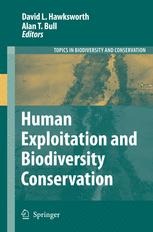
Human Exploitation and Biodiversity Conservation
The sustainable use of biodiversity is one of the three key objectives of the 1992 "Convention on Biological Diversity". To achieve this, sound conservation practice has to be recognized as beneficial and implemented by all who access, or use it – from subsistence farmers to skiers and pharmaceutical bioprospectors. At the same time, indigenous peoples necessarily utilize enormous numbers of plants, fungi, and fish, particularly for foods and medicines. This book gathers together a wide range of contributions addressing diverse aspects of front-line human involvement in biodiversity exploitation and conservation. Its scope is broad, the organisms explored ranging from birds, invertebrates and mammals – both terrestrial and aquatic – to crops and medicinal plants. Meanwhile, the issues addressed include land use changes, the importance of gardens, hedges and green lanes, housing developments, hunting, invasive species, local community involvement, sacred groves, socioeconomic factors and trade.

Human Drug Metabolism
The third edition of this comprehensive book covers basic concepts of teaching drug metabolism, starting from extreme clinical consequences to systems and mechanisms and toxicity. It provides an invaluable introduction to the core areas of pharmacology and examines recent progress and advances in this fast moving field and its clinical impact.

Human battle against obesity
Obesity is one of the most common preventable diseases and it is a medical condition in which excess fat has accumulated in the body, mostly in the subcutaneous tissues. Clinical obesity is considered to be present when a person has a body mass index of 30 or over. Obesity results from a chronic positive energy balance regulated by a complex interaction between endocrine tissues and the central nervous system, This activity reviews the pathophysiology of obesity, inflammatory markers secreted by excessive fat deposition in adipose tissue, and their effects on chronic diseases such as hypertension, diabetes, and dyslipidemia.

Hugo and Russell's pharmaceutical microbiology
Microbiology is one of the essential pharmaceutical sciences upon which the study and practice of pharmacy is built. It has a bearing on all aspects of the manufacture of medicines and sterile products, from their design and development to their delivery as quality products. Few interventions are more central to modern medicine than the treatment of infection, where antibiosis, vaccination and hygienic practices have essential roles to play. The COVID-19 pandemic, the appearance of new pathogens and the rise of antibiotic resistance have demonstrated most completely the need for pharmaceutical practitioners, researchers and industrial scientists to be fully conversant with this field. The 9th edition of Hugo and Russell’s Pharmaceutical Microbiology has been updated to meet this need. Having long served as the sole comprehensive textbook covering this subject, it has now been adapted to a critical new period in the advancement of medical and pharmaceutical research and development. Its experienced editors have incorporated contributions from subject experts and created a text which will serve the next generation of pharmacy students, pharmaceutical industry scientists and researchers.

How humans judge machines
80 experimental scenarios help us understand how humans judge AIs as opposed to other humans in the same situation
