



الصفحة 216
الصفحة 216

Development and evaluation of setup strategies in printed circuit board assembly
The last decade has seen a rapid extension of electronic control devices for various types of technical products. In modern electronics manufacturing, highly automated assembly systems are used to mount the electronic components onto the printed circuit boards (PCBs). Maintaining high production flexibility in order to meet the desired product variety and, at the same time, achieving high utilization rates of the capital-intensive production equipment can only be achieved by applying highly sophisticated planning and control strategies for the operation of modern placement machines. Ihsan Onur Yilmaz develops a novel group setup strategy which integrates multiple problems of the PCB assembly, especially in a medium-variety production environment. At the core of his principle approach are the identification of similarities between different types of PCBs and the generation of PCB clusters upon which group setup strategies are based. The developed setup strategies are also innovative in the sense that they integrate the optimization of detailed machine operations. This integration has not been achieved in the classical approaches which primarily rely on statistical clustering techniques.

Developing Students Statistical Reasoning : Connecting Research and Teaching Practice
This book is written for mathematics and statistics educators and researchers. It summarizes the research and highlights the important concepts for teachers to emphasize, and shows the interrelationships among concepts. It makes specific suggestions regarding how to build classroom activities, integrate technological tools, and assess students’ learning.

Developing Statistical Software in Fortran 95
"This book gives statisticians, biostatisticians and methodologically-oriented researchers the tools they need to develop high-quality statistical software. This book is for those who want to learn how to create statistical applications quickly and effectively. Prior experience with a programming language such as Basic, Fortran or C is helpful but not required. More experienced programmers will learn new strategies to harness the power of modern Fortran and the object-oriented paradigm. This may serve as a supplementary text for a graduate course on statistical computing."

Developing Prosocial Communities Across Cultures
Skillfully combining psychological knowledge and humanitarian wisdom, Developing Prosocial Communities across Cultures shows how nurturing environments can be rooted in the common concerns of people and institutions, while giving readers the steps toward achieving this goal. Psychologist/activist Forrest Tyler emphasizes individuals’ collective responsibilities—to themselves, each other, and society—and describes a coordinated balance of discrete social changes brought about by civic action, policy changes initiated by officials, and collaboration between professionals and the community. Instructive examples from locales as varied as Colombia, Jordan, and the United States offer models from which readers can form unique, innovative solutions.

Developing metaverse for AIU
Metaverse is the virtual world in which humans can see each other in the form of 3D and communicate with each other in a virtual place that looks exactly like the real world, but the developers of metaverse so far used these virtual worlds for profit purposes only, this is what prompted us to build a virtual world that basicly contain the university, which can help students communicate with each other, see teachers and obtain the information they need from university employees without having to travel long distances, this project provides a distance education service without dispensing the idea of interacting with teachers directly and seeing others. Our virtual world has the ability to connect with any virtual world because of it’s base structure, It’s scalable as much as we need because it’s connected to the blockchain.

Developing burn ointment using seasam oil, tea tree oil, and,shea butter
The objective of our research project is to develop a burn healing ointment (Meburn) and to compare it with a well-known ointment, MEBO®. The second formula shows very good accelerated stability test results, its histology test was very promising, its ability to accelerate blood vessel formation in heat burns is significant, and, the rats that have been treated with (Meburn and Mebo®) started to get back to their normal weight after 2 weeks in approximate results. Results obtained from our study using rats as an animal model, showed that our proposed ointment (Meburn) has burn healing efficacy similar to Mebo® ointment.

Developing BIM talent : A guide to the BIM body of knowledge with Metrics, KSAs, and learning outcomes
A systematic Building Information Modeling (BIM) framework features cutting-edge use cases and competencies for students and professionals pursuing BIM careers. Offers: A solid foundation and guidelines for educators and practitioners for starting or enhancing a BIM curriculum or training program Templates, expert interviews, and case studies that provide in-depth knowledge and lessons learned that can facilitate process changes and strategic action plans Strategies for standardizing emerging BIM job tasks, descriptions, and methods for benchmarking performance

Deterministic Numerical Modeling of Soil Structure Interaction
In order to describe soil–structure interaction in various situations (nonlinear, static, dynamic, hydro-mechanical couplings), this book gives an overview of the main modeling methods developed in geotechnical engineering. The chapters are centered around: the finite element method (FEM), the finite difference method (FDM), and the discrete element method (DEM). Deterministic Numerical Modeling of Soil–Structure Interaction allows the reader to explore the classical and well-known FEM and FDM, using interface and contact elements available for coupled hydro-mechanical problems.

Deterministic and statistical methods in Machine Learning ; 1st International Workshop, Sheffield, UK, September 7-10, 2004. Revised Lectures
This book consitutes the refereed proceedings of the First International Workshop on Machine Learning held in Sheffield, UK, in September 2004. The 19 revised full papers presented were carefully reviewed and selected for inclusion in the book. They address all current issues in the rapidly maturing field of machine learning that aims to provide practical methods for data discovery, categorisation and modelling. The particular focus of the workshop was advanced research methods in machine learning and statistical signal processing.

Designing virtual reality systems : The structured approach
Virtual Reality (VR) is a field of study that aims to create a system that provides a synthetic experience for its users. Developing and maintaining a VR system is a very difficult task, requiring in-depth knowledge in many different disciplines, such as sensing and tracking technologies, stereoscopic displays, multimodal interaction and processing, computer graphics and geometric modeling, dynamics and physical simulation, performance tuning, etc. The difficulty lies in the complexity of having to simultaneously consider many system goals, some of which are conflicting.

Designing sustainable energy for all : Sustainable product-service system design applied to distributed renewable energy
This open access book addresses the issue of diffusing sustainable energy access in low- and middle-income contexts.The book analyses, discusses and classifies the promising Sustainable Product-Service System (S.PSS) business models to deliver Distributed Renewable Energy systems in an effective, efficient and sustainable way. Its message is supported with cases studies and examples, discussing the economic, environmental and socioethical benefits as well as its limitations and barriers to its implementation. An innovative design approach is proposed and a set of design tools are supplied, enabling readers to create and develop Sustainable Product-Service System (S.PSS) solutions to deliver Distributed Renewable Energy systems.Practical applications of the book’s design approach and tools by companies and practitioners are discussed and the book will be of interest to readers in design, industry, govermanetal institution, NGOs as well as researchers.

Designing sustainable and resilient cities : Small interventions for stronger urban food-water-energy management
Explores the link between the food-water-energy nexus and sustainability, and the extraordinary value that small tweaks to this nexus can achieve for more resilient cities and communities. Using data from Urban Living Labs in six participating cities (Eindhoven, Gdansk, Miami, Southend-on-Sea, Taipei and Uppsala) to co-define context-specific challenges, the results from each city are collated into an Integrated Decision Support System to guide and improve robust decision making on future urban development. The book presents contributions from CRUNCH, a transdisciplinary team of scholars and practitioners whose expertise spans urban climate modelling; food, water and energy management; the design of resilient public space; collecting better urban data; and the development of smart city technology. Whilst previous works on the food-water-energy nexus have focused on large, transnational cases, this book explores local ways to use the food-water-energy nexus to improve urban resilience.
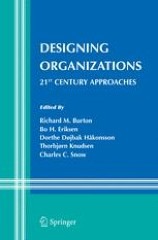
Designing Organizations : 21st Century Approaches
The design of organizations has been an ongoing concern of management theory and practice over the past several decades. Over this time, there has been little change in the fundamental theory, principles and concepts of Organization Design (OD). Recently organizational life has changed dramatically with the advent of: new communication systems, adaptive mechanisms, information technology, knowledge management systems, innovation processes and more. This book systemically examines these developments and their impact on OD with contributions from leading scholars in the area. Also featured in the book are the practical issues with implementing OD in organizations. The individual chapters are organized into five sections: (1) Putting Contingency Theory in its Place, (2) Focus on Individuals Who Make up the Organization, (3) Innovation Processes and Organization Design, (4) Adaptation and Technology, and (5) Design for Performance. Each chapter examines aspects of the book’s threefold theme: (1) core issues in organization design, (2) emerging theoretical perspectives in OD, and (3) new developments and directions in OD. A special feature of each chapter is: 1) implications for theory, and 2) implications for practice.

Designing machine learning systems : An iterative process for production-ready applications
Machine learning systems are both complex and unique. Each design decision--such as how to process and create training data, which features to use, how often to retrain models, and what to monitor--in the context of how it can help your system as a whole achieve its objectives. The iterative framework in this book uses actual case studies backed by ample references. The book will help you tackle scenarios such as: Engineering data and choosing the right metrics to solve a business problem Automating the process for continually developing, evaluating, deploying, and updating models Developing a monitoring system to quickly detect and address issues your models might encounter in production Architecting an ML platform that serves across use cases Developing responsible ML systems

Designing Intelligent Construction Projects
Readers will find: Illuminating case study material that highlights how change management methodologies, game theory, and collaborative contractual design can deliver results Strategies for achieving lean, viable, and digitally oriented construction leadership fit for the modern market Rigorous discussions of the current and potential future impact of digitization on construction firms

Designing human interface in speech technology
Designing Human Interface in Speech Technology bridges a gap between the needs of the technical engineer and cognitive researchers working in the multidisciplinary area of speech technology applications. The approach is systematic and the focus is on the utility of developing and designing speech related products. Included is coverage of topics such as neuroscience on the multimodal cortex, cognitive theories on multi-task performance, stress and workload, as well as human information process theory and ecological interface design theory for evaluating speech-related human-system interfaces.

Designing Democracy : Ideas for Better Rules
While liberal democracies are the best systems of self-governance for societies, they rarely invoke great enthusiasm. On the one hand, democracies have been known to fail in achieving efficient or fair allocations. On the other hand, many citizens take the democratic system for granted as they have yet to experience an alternative. In this book the vision we propose is that the potential of democ racies has not yet been exhausted, and that optimal democracies are both the Utopia for societies and the aim that scientists should be committed to. We present a number of ideas for drawing up new rules to im prove the functioning of democracies. The book falls into two parts. The first part examines ways of combining incentive contracts with democratic elections. We suggest that a judicious combina tion of these two elements as a dual mechanism can alleviate a wide range of political failures, while at the same time adhering to the founding principles of democracies. The second part presents new rules for decision-making and agenda setting. Together with modern communication devices, these rules can sometimes transcend the limitations of liberal VI Preface democracies in achieving desirable outcomes. Examples of such rules include the flexible majority rule where the size of the ma jority required depends on the proposal, or the rule that only those belonging to the winning majority can be taxed.

Designing big data platforms : How to use, deploy, and maintain big data systems
Provides expert guidance and valuable insights on getting the most out of Big Data systems. Helps readers understand how to process large amounts of data with well-known Linux tools and database solutions, use effective techniques to collect and manage data from multiple sources, transform data into meaningful business insights, and much more. Author Yusuf Aytas, a software engineer with a vast amount of big data experience, discusses the design of the ideal Big Data platform: one that meets the needs of data analysts, data engineers, data scientists, software engineers, and a spectrum of other stakeholders across an organization. Detailed yet accessible chapters cover key topics such as stream data processing, data analytics, data science, data discovery, and data security. This real-world manual for Big Data technologies: Provides up-to-date coverage of the tools currently used in Big Data processing and management / Offers step-by-step guidance on building a data pipeline, from basic scripting to distributed systems / Highlights and explains how data is processed at scale / Includes an introduction to the foundation of a modern data platform

Designing and evaluating e-management decision tools : The integration of decision and negotiation models into internet-multimedia technologies
Presents the most relevant concepts for designing intelligent decision tools in an Internet-based multimedia environment and assessing the tools using concepts of statistical design of experiments. The book covers : Decision modeling paradigms , Visual interactive decision modeling , Online preference elicitation , collaborative decision making , negotiation and conflict resolution , marketing decision optimization , and guidelines for designing and evaluating decision support tools. This book is designed for the following uses: 1) for researchers and engineers, who are seeking recent advances and who are developing e-management systems; 2) for practitioners and managers, who seek insights about ICT potential and using ICT for business intelligence management; and 3) for students, who seek theoretical and practical concepts of building and evaluating prototype decision tools.

Design to Value : The architecture of holistic design and creative technology
Design to Value is a commitment to process above all else. Well understood and applied in the manufacturing industries, its potential is only now starting to be realised in architecture, engineering and construction. It challenges designers to lead the way in creating more innovative and stakeholder-centric analyses, workflows, construction techniques and products. Through architectural thinking, value in the built environment can be maximised. Seeking to create deep and lasting impacts on industry, society and the planet, Design to Value rejects architecture’s current professional services model. The design and delivery stages of traditional procurement routes are not sustainable, and Design to Value outlines a new path for informed design processes.
