



الصفحة 21
الصفحة 21

Case-based reasoning research and development ; 6th International conference on case-based reasoning, ICCBR 2005, Chicago, IL, USA, August 23-26, 2005, Proceedings
This book constitutes the refereed proceedings of the 6th International Conference on Case-Based Reasoning, ICCBR 2005, held in Chicago, IL, USA, in August 2005. The 19 revised full research papers and 26 revised poster papers presented together with the abstracts of 3 invited talks were carefully reviewed and selected from 74 submissions. The papers address all current foundational, theoretical and research aspects of case-based reasoning as well as advanced applications either with innovative commercial deployment or practical, social, environmental or economic significance.
Case-Based Reasoning on Images and Signals
This book is the first edited book that deals with the special topic of signals and images within Case-Based Reasoning (CBR). It offers different learning capabilities, for all phases of a signal-interpreting system, that satisfy different needs during the development process of a signal-interpreting system.
Cancer Proteomics : From Bench to Bedside
the authors collectively provide the current status of proteomics in cancer therapy and offers the existing technologies used in proteomics that allow for protein profiling and for the identification of druggable targets in human samples. Mass spectrometry based protein characterization and protein microarrays hold great promise of predicting response to specific drugs in cancer therapy. Insightful to the reader with broad perspectives on topics related to the use of proteomic strategies in cancer therapy, Cancer Proteomics offers anticipated challenges that may arise from its application in daily practice.

Cancer du sein ; Compte rendu du cours supérieur francophone de cancérologie (Saint-Paul-de-V Vence, ence, 18–20 janvier 2007) = Breast cancer : Proceedings of the French-speaking oncology higher course (Saint-Paul-de-V Vence, ence, 18–20 January 2007)
Durant les deux premières journées, toutes les étapes importantes de la prise en charge des cancers du sein ont été déclinées. L’analyse du risque de voir survenir un cancer du sein a été explorée dans sa diversité suivie par les résultats du dépistage organisé et les problèmes du diagnostic. Les traitements locorégionaux ont précédé les traitements adjuvants sans oublier les patientes dont la tumeur présentait une hyperexpression de HER2. Une session a été consacrée aux cancers métastatiques et une autre aux personnes âgées. Comme à chaque cours, nous nous sommes penchés sur l’avenir en dissertant sur la classification moléculaire et sur le passé avec la très belle conférence du Pr David Khayat sur le bilan du Plan Cancer.

Caesarean section delivery
It is the most common surgical operation performed in the world. Since first described 400 years ago, surgical rates continue to rise globally. Caesarean rates are now reported from South American countries of over 50% and rates of over 32% are currently being reported from the United States, China, England and Scotland. Surgical complications can occur at the time of operation and there are major implications for future pregnancies, including increased rates of placenta previa/accreta, stillbirth and preterm labour. This Element discusses many aspects of CD, including the Robson 10 group classification system, which classifies populations by characteristics such as parity, presentation of the fetus and the history of previous births, an evidencebased approach to surgical techniques, recommendations of the major guidelines and recommendations concerning trial of labour after previous caesarean.

Business process management Workshops ; Vol. 3812 : BPM 2005 International Workshops, BPI, BPD, ENEI, BPRM, WSCOBPM, BPS, Nancy, France, September 5, 2005. Revised Selected Papers
Six parallel Business Process Management workshops were held on September 5th, 2005,The topics of the workshops ranged from fundamental process modeling primitives to the recently emerged field of Web service choreography and orchestration, rep- sented in the “Workshop on Business Processes and Services” and the “Workshop on Web Service Choreography and Orchestration;” a topic which intersects the research fields of business process management and Web services.

Breast Cancer Management and Molecular Medicine : Towards Tailored Approaches
This book provides an overview of the most recent techniques, agents and approaches for breast cancer that contribute to the individualization of treatment. Current biomedical research focuses on facilitating the transfer of molecular biology knowledge into the clinical management of patients, leading to increased survival as well as improved quality of life. Particular attention is given in this book to organ-specific tailored approaches, specific populations, patients’ preferences and rehabilitation.

Breast cancer : Nuclear medicine in diagnosis and therapeutic options
This book provides general information on breast cancer management and considers all new methods of diagnosis and therapy. It focuses on nuclear medicine modalities by comparing their results with other diagnostic and therapeutic approaches.
Branch-and-Bound Applications in Combinatorial Data Analysis
There are a variety of combinatorial optimization problems that are relevant to the examination of statistical data. Combinatorial problems arise in the clustering of a collection of objects, the seriation (sequencing or ordering) of objects, and the selection of variables for subsequent multivariate statistical analysis such as regression. The options for choosing a solution strategy in combinatorial data analysis can be overwhelming. Because some problems are too large or intractable for an optimal solution strategy, many researchers develop an over-reliance on heuristic methods to solve all combinatorial problems. However, with increasingly accessible computer power and ever-improving methodologies, optimal solution strategies have gained popularity for their ability to reduce unnecessary uncertainty. In this monograph, optimality is attained for nontrivially sized problems via the branch-and-bound paradigm.

Brain tumor pathology : Current diagnostic hotspots and pitfalls
Since Bailey and Cushing (1926), all brain tumor classifications have been called histogenetic. The nosographic position that the tumor types progressively acquired in the classification systems derived from the resemblance of tumor cells to those of the cytogenesis, modified whenever new information became available from different biological research fields and especially from molecular genetics. Classically, on the basis of the rough correspondence between the mature/immature aspect of tumor cells and the benign/malignant biological behavior of the tumors, the histological labels contained a prognostic significance. The supposed origin of the tumors was thus a factor for prognosis. Later on, with the concept of anaplasia (Cox, 1933; Kernohan et al., 1949) new criteria were introduced for establishing the malignancy grades of tumors. Immunohistochemistry and later molecular genetics further refined the prognostic diagnoses, substantially increasing the opportunities to recognize the cell origin of tumors, beside revealing the pathogenetic mechanisms. Prognoses became more accurate, as required by the greater and more targeted possibilities of therapy.
Biometrics and Identity Management ; 1st European Workshop, BIOID 2008, Roskilde, Denmark, May 7-9, 2008. Revised Selected Papers
This volume constitutes the post-conference proceedings of the First European Workshop on Biometrics and Identity Management, BIOID 2008, held in Roskilde, Denmark, during May 7-9, 2008.

Biometric Authentication ; International ECCV 2002 Workshop Copenhagen, Denmark, June 1, 2002 Proceedings
Biometric authentication refers to identifying an individual based on his or her distinguishing physiological and/or behavioral characteristics. It associates an individual with a previously determined identity based on that individual s appearance or behavior. Because many physiological or behavioral characteristics (biometric indicators) are distinctive to each person, biometric identifiers are inherently more reliable and more capable than knowledge-based (e.g., password) and token-based (e.g., a key) techniques in differentiating between an authorized person and a fraudulent impostor. For this reason, more and more organizations are looking to automated identity authentication systems to improve customer satisfaction, security, and operating efficiency as well as to save critical resources.
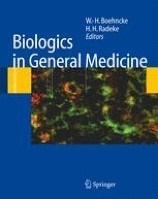
Biologics in General Medicine
The idea for this book was born during the symposium on biologics organized by ZAFES (Center for Drug Research, Development and Safety at the University of Frankfurt am Main) in September 2005. Highly distinguished researchers special- ing in the field of biologics had gathered together to exchange information on this relatively new subject. Realizing that this symposium was one of the few sources of condensed information on biologics, it became obvious that we had to create a means of informing an interested wider circle of scientists and especially general c- nicians. Therefore, the editors of this book suggested to the researchers at the symposium andalsotoprominent scientists andcliniciansinvolvedinthe developmentand application of biologics as their major field of interest the idea of assembling this compendium. We received an overwhelmingly positive response – thankfully also from the publisher – most being more than willing to support this innovative project with highly relevant chapters on the latest state of the art.
Biological and artificial intelligence environments
The book reports the proceedings of the 15th Italian workshop on neural networks issued by the Italian Society on Neural Networks SIREN. The longevity recipe of this conference stands in three main points that normally renders the reading of these proceedings so interesting as appealing. 1. The topics of the neural networks is considered an attraction pole for a set of researches centered on the inherent paradigm of the neural networks, rather than on a specific tool exclusively. Thus, the subsymbolic management of the data information content constitutes the key feature of papers in various fields such as Pattern Recognition, Stochastic Optimization, Learning, Granular Computing, and so on, with a special bias toward bioinformatics operational applications. An excerpt of all these matters may be found in the book. 2. Though managed at domestic level, the conference attracts contributions from foreign researchers as well, so that in the book the reader may capture the flavor of the state of the art in the international community. 3. The conference is a meeting of friends as well. Thus the papers generally reflect a relaxed atmosphere where researchers meet to generously exchange their thought and explain their actual results in view of a common cultural growing of the community.
Bioinformatics Using Computational Intelligence Paradigms
Bioinformatics as well as Computational Intelligence are undoubtedly remarkably fast growing fields of research and real-world applications with enormous potential for current and future developments. "Bioinformatics using Computational Intelligence Paradigms" contains recent theoretical approaches and guiding applications of biologically inspired information processing systems(Computational Intelligence) against the background of bioinformatics. This carefully edited monograph combines the latest results of Bioinformatics and Computational Intelligence and offers a promising cross-fertilisation and interdisciplinary work between these growing fields.

Bioinformatics research and applications ; 3rd International Symposium,ISBRA 2007, Atlanta, GA, USA, May 7-10, 2007, Proceedings
This book including clustering and classification, gene expression analysis, gene networks, genome analysis, motif finding, pathways, protein structure prediction, protein domain interactions, phylogenetics, and software tools.

Bioinformatics research and applications : 4th International Symposium, ISBRA 2008, Atlanta, GA, USA, May 6-9, 2008. Proceedings
This book constitutes the refereed proceedings of the Fourth International Symposium on Bioinformatics Research and Applications, ISBRA 2008, held in Atlanta, GA, USA in May 2008.
Bioinformatics and Computational Biology Solutions Using R and Bioconductor
Bioconductor is a widely used open source and open development software project for the analysis and comprehension of data arising from high-throughput experimentation in genomics and molecular biology. Bioconductor is rooted in the open source statistical computing environment R. This volume's coverage is broad and ranges across most of the key capabilities of the Bioconductor project, including: Importation and preprocessing of high-throughput data from microarray, proteomic, and flow cytometry platforms / Curation and delivery of biological metadata for use in statistical modeling and interpretation. / Statistical analysis of high-throughput data, including machine learning and visualization,modeling and visualization of graphs and networks. This book is a dynamic document. Code underlying all of the computations that are shown is made available on a companion website, and readers can reproduce every number, figure, and table on their own computers.

Biogeography and Ecology of Bulgaria
The book includes 22 chapters by 28 authors united by the single theme: biogeography and ecology of Bulgaria. From the single-celled organisms in the Black Sea sand to the endemic cave crustaceans, from the mountain glacial relict insects to the most diverse bird fauna in Europe, the unique fauna of Bulgaria has been a subject of study of mostly Bulgarian zoologists for more than a century. This is the first monograph in English broadly addressing all vertebrate and many key invertebrate groups of Bulgaria, their faunistics, origin, geographical and ecological distribution, and conservation issues are addressed by the experts on each group.

Bioceramic Materials in Clinical Endodontics
This book focuses on hydraulic calcium silicate-based materials available in clinical dentistry, used as pulp capping materials, root canal sealers, root-end fillers, or root repair materials and which offer improved properties and easier clinical application compared with the original mineral trioxide aggregate. The book introduces the current classification of bioceramic materials and explains their characterization and their physicochemical and biological properties.
