



الصفحة 21
الصفحة 21
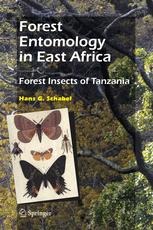
Forest Entomology in East Africa : Forest Insects of Tanzania
East African forests, among the world’s most biologically rich and diverse, are subject to multiple pressures, including insects. As the first work to focus exclusively on East African forest insects, this monograph distils 135 years of scientific and historical literature extending from before the colonial era to the present into an authoritative survey of this region’s major pests of trees and wood, as well as their antagonists. This comprehensive treatise also addresses insects of social and economic importance, such as endemics, edible and collectible insects, wild bees and silk producers. It should be of great value to foresters, entomologists, conservation biologists, resource managers, safari outfitters and anyone else interested in the natural history of this fascinating region.

Forest ecosystems and environments : Scaling up from shoot module to watershed
The Global Change Impacts on Terrestrial Ecosystems in Monsoon Asia (TEMA) project was carried out as a unique contribution to the international project Global Change and Terrestrial Ecosystems. TEMA aimed to integrate forest ecosystem processes. This volume presents the scaling-up concept for better understanding of ecosystem functioning.
Forest Diversity and Management
Natural forests with thousands of years of ecological continuity are unrivalled as the treasure store of terrestrial biodiversity on Earth. And while there is currently no fully comprehensive inventory of the biota associated with any given forest, it is reasonable to assume that in conserving natural forests we can conserve the myriads of unnamed bacteria, fungi, insects, mites and nematodes that forests support. Drawing on diverse research from biodiversity experts around the world, this collection of papers reflects the diversity of forest types and forest issues that concern forest scientists globally. Forest types considered vary from savannah and tropical rainforests to the ancient oak forests of Poland; issues explored include the effects of logging, management practices, forest dynamics and climate change on forest structure and biodiversity.
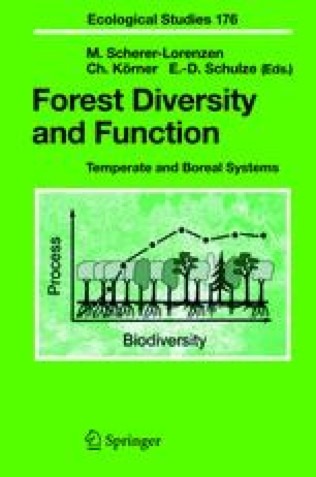
Forest Diversity and Function : Temperate and Boreal Systems
One of the central research themes in ecology is evaluating the extent to which biological richness is necessary to sustain the Earth's system and the functioning of individual ecosystems. In this volume, for the first time, the relationship between biodiversity and ecosystem processes in forests is thoroughly explored. The text examines the multiple effects of tree diversity on productivity and growth, biogeochemical cycles, animals, pests, and disturbances.

Forest and Rangeland Soils of the United States Under Changing Conditions : A Comprehensive Science Synthesis
This book synthesizes leading-edge science and management information about forest and rangeland soils of the United States. It offers ways to better understand changing conditions and their impacts on soils, and explores directions that positively affect the future of forest and rangeland soil health.
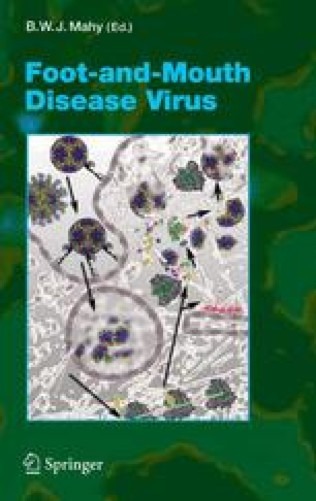
Foot-and-Mouth Disease Virus
The chapters in this volume provide an account of the present knowledge and understanding of Foot and Mouth disease virus pathogenesis and global epidemiology, the detailed structure of the virus itself and the properties of its RNA genome. Also considered are the immune response of the host and the state of the art in vaccine production, and the nature of virus evolution.

Food-Borne Parasitic Zoonoses : Fish and Plant-Borne Parasites
The focus of this book is on those zoonoses that are transmitted by fish, plant and invertebrate foods. While people, especially those living in developed countries, are commonly aware of meat-borne zoonoses such as trichinellosis and cysticercosis, fewer are acquainted with parasitic diseases caused by liver, lung and intestinal flukes, fish-borne tapeworms, and tissue roundworms. This book reviews not only the prevalence and distribution of these zoonoses, including available health and economic impact data, but also highlights gaps in our knowledge base that must be filled in order to gain insights on approaches to prevention. The topics on epidemiology, diagnosis, and clinical aspects emphasize knowledge gaps that limit a full understanding of these zoonoses, and target where greater research investments on these parasitic diseases should be focused.

Focus on bacterial biofilms
Bacterial biofilms are colonies of bacterial cells embedded in their self-produced matrix composed of polysaccharides, DNA, and proteins. They protect bacterial cells against antibiotics, antibacterial agents, soaps and detergents, and shear stress. Some of the most common biofilm-associated infections in humans include urinary tract infections, infection of wounds and surgical sites, diabetic foot ulcers, dental caries (tooth decay) and gingivitis (gum inflammation), ventilator-associated infections, sinusitis, microbial keratitis, secondary infection related to Covid-19 and other viral infections, and so on. Bacterial resistance to common antibiotics (e.g., penicillin, gentamycin, erythromycin, ciprofloxacin, etc.) is driving us to a catastrophic failure of our health systems. Strategies to develop novel antibacterial agents and technology must be prioritized to combat and eradicate biofilms and their associated challenges. This book provides a comprehensive overview of biofilms with chapters on bacterial virulence factors, quorum sensing in bacteria, antimicrobial resistance in bacteria, strategies to develop new antibacterial agents, and much more.
Fluorescence Spectroscopy in Biology : Advanced Methods and their Applications to Membranes, Proteins, DNA, and Cells
This volume - the third book in the Springer-Verlag Series on Fluorescence - reviews some of the most characteristic topics of the multidisciplinary area of fluorescence applications in life sciences either presendted directly at th 8th MAF Conference or considered to be a cruical development in the field. In the initial contribution in Part 1 - Basics and Advanced Approaches, the - itors explain the basics of fluorescence and illustrate the relationship between some modern fluorescence techniques and classical approaches. The second contrigution by B.

Flowering Plants. Eudicots: Asterales
This volume contains a complete systematic treatment of the flowering plant order Asterales, comprising 12 families with approx. 1,720 genera and about 26,300 species. The order includes Compositae as the largest family of flowering plants. Based on traditional studies, several of the constituent families have long been recognized as being closely interrelated. The inclusion in the order of Alseuosmiaceae, Argophyllaceae, Carpodetaceae, Phellinaceae and Rousseaceae is the result mainly of new advances in molecular systematics. Identification keys are provided for all genera, and likely phylogenetic relationships are discussed extensively. The wealth of information contained in this volume makes it an indispensable source for all working in the fields of pure and applied plant sciences.
Flowering Plants. Eudicots : Berberidopsidales, Buxales, Crossosomatales, Fabales p.p., Geraniales, Gunnerales, Myrtales p.p., Proteales, Saxifragales, Vitales, Zygophyllales, Clusiaceae Alliance, Passifloraceae Alliance, Dilleniaceae, Huaceae, Picramniaceae, Sabiaceae
In this volume, the ninth of the series, treatments are offered for 52 families containing 432 genera belonging to 13 eudicot orders, many of which have recently been newly designed; four families remain unassigned to order. Emphasis is on the early-diverging eudicots and basal core eudicots the phylogenetic relationships and diversification of which have recently been in focus and are critically discussed. Systematically relevant information includes descriptions of families and genera, keys to the genera, and references to recent revisions. Introductions to the families provide convenient, in-depth overviews of key aspects of systematics. The wealth and precision of information contained in this volume will make it an important source of reference for both the scholar and the practitioner in the fields of pure and applied plant sciences.
Flower Breeding and Genetics : Issues, Challenges and Opportunities for the 21st Century
This book provides a unique and valuable resource on the many issues and challenges facing flower breeders, as well as the industry at-large. In this volume, the first comprehensive assemblage of its kind, a team of 32 international authorities has contributed to make this book a ‘must-have’ reference to research and develop flower crops for the 21st century consumers. Part 1 of this book (flower breeding program issues) contains unique features of interest to horticultural professionals and students, include coverage of plant protection strategies, cultivar trialing methodology, germplasm collection/preservation, preventing invasiveness, and other timely topics. The collective body of knowledge for 24 flower crops (Part 2: Crop-specific Breeding and Genetics) represents the in-depth science and art of breeding technology available for bedding plants, flowering potted plants, cut flowers, and herbaceous perennials. Each author provides crop-specific history, evolution, biology, taxonomy, state-of-the-art breeding/genetics, classical/molecular technologies, species traits, interspecific hybridization, and directions for future development/enhancement.
Flow cytometry : Principles and applications
Flow cytometry forms an integral part of both basic biological research and clinical diagnosis in pathology. This straightforward new volume provides a clear, easy-to-read, and practical manual for both clinicians and non-clinicians at all levels of their careers. The chapter topics range from basic principles to more advanced subjects, such as apoptosis and cell sorting. Throughout Flow Cytometry: Principles and Applications, well-informed expert contributors present theoretical descriptions and practical protocols on this important and complex laboratory technique and its applications. Immunologists and Hematologists in the field of pathology, as well as biological researchers working with both human and animal models will appreciate the simple, clear-cut style in which principles and protocols in this volume are presented, and will refer to this book time and time again for clear and easy-to-follow protocols.
Fish Histology : Female Reproductive Systems
This volume describes the myriad ways in which fish have approached problems of reproduction — it is an amply illustrated comparative study of the microscopic structure of the female genital systems of fish. The timing of its appearance is auspicious in that it coincides with the decline of the golden age of descriptive morphology. It is a compilation of thousands of micrographs — mostly electron micrographs — from classic works in the field and should prove valuable to investigators studying fish in areas such as ecology, physiology, and reproductive biology who may view histology as essential in their work but have little background in this area. It includes chapters on the origin of genital systems, the structure of ovarian follicles, mechanisms of ovulation, the cortical reaction, oviducts, oviparity, and amazing examples of viviparity.
Fish Bioacoustics
The study of how fish make and respond to sound has important implications for communication, physiology, behavior, and commercial techniques. Fish Bioacoustics, a new definitive volume on fish auditory systems, will interest investigators in both basic research of fish bioacoustics as well as investigators in applied aspects of fisheries and resource management. Topics cover structure, physiology, localization, and acoustic behavior as well as more applied topics such as using sound to detect and locate fish.
Fish and Diadromy in Europe (ecology, management, conservation)
This book contains selected papers from an international symposium organised by the Diadfish network held in Bordeaux (France) in 2005. Readers will find up-to-date information on the ecology, ecotoxicology and physiology of several diadromous species (Atlantic salmon, shads, lampreys, eels) and this whole group in Europe. Main impacts are also documented and analysed in case studies, and solutions or remediation actions are presented.
Fine-Tuning of RNA Functions by Modification and Editing
This book provides advance information on RNA modification, including the associated editing machinery, while offering the reader some perspective on the significance of such modifications in fine-tuning the structure and functions of mature RNA molecules and hence the ability to influence the efficiency and accuracy of genetic expression.

Filoviruses : A Compendium of 40 Years of Epidemiological, Clinical, and Laboratory Studies
This book summarizes in detail the contemporary knowledge of filoviruses and diseases they cause. Almost the entirety of the open literature on filoviruses, covering all major scientific and clinical fields, is referenced and summarized in this text, including most of the conference abstracts, book chapters, dissertations, government reports, patents, theses, and journal publications in many languages.

Field Measurements for Forest Carbon Monitoring : A Landscape-Scale Approach
This volume is a comprehensive guide to the methods and techniques employed in forest carbon inventory and monitoring. Since forest carbon research is interdisciplinary, it is unlikely that any one investigator will possess expertise in all of the types of measurements needed to conduct forest carbon research at scales larger than a forest stand. Techniques used to characterize standing stocks of carbon in a forest, measure key carbon fluxes, and collect related data (such as forest canopy nitrogen concentrations and meteorological measurements) that are required to drive process models, develop predictive relationships, and link to remote sensing data are described in detail. In addition to the measurement methods, the chapters include background information, necessary calculations, and equipment requirements.

Field Manual of Techniques in Invertebrate Pathology : Application and Evaluation of Pathogens for Control of Insects and other Invertebrate Pests
The Field Manual of Techniques in Invertebrate Pathology is designed to provide background and instruction on a broad spectrum of techniques and their use in the evaluation of entomopathogens in the field. The second edition of the Field Manual provides updated information and includes two additional chapters and 12 new contributors. The intended audience includes researchers, graduate students, practitioners of integrated pest management (IPM), regulators and those conducting environmental impact studies of entomopathogens. Although it can function as a stand alone reference, the Field Manual is complementary to the laboratory oriented Manual of Techniques in Insect Pathology and to comprehensive texts in insect pathology.
