



الصفحة 200
الصفحة 200

Antifouling Paint Biocides
This volume describes the state-of-the-art advances regarding antifouling paint biocides and provides thorough evaluation of research and information on major topics such as occurrence and levels, environmental fate, analytical techniques and methods for the monitoring and control, environmental modeling, ecotoxicological effects and risk assessment placing emphasis on the knowledge acquired over the last 10 years. The contamination of the aquatic environment by antifouling compounds has been a topic of increasing importance during the last few years. The major classes of antifouling active biocides are discussed including the old-fashioned organotin compounds, the modern organic booster biocides and the promising naturally occurring antifoulant products. Therefore, the reader will get a balanced view of this developing field. Chapters were written by leading experts in their field who critically surveyed all the major areas of progress. This volume is an important resource and can constitute a good grounding in the field of antifouling paint biocides.

Antifouling Compounds
Increasing awareness of the deleterious effects of toxic components in antifouling coatings has raised interest in the potential for nontoxic alternatives. This book examines how marine organisms from bacteria to invertebrates and plants use chemicals to communicate and defend themselves. Chemicals that prevent colonisation of living surfaces are particularly pertinent to antifouling technology and may inspire new solutions. The challenge is to identify such compounds, identify the means for sustainable production and incorporate them into coatings to give long-term antifouling efficacy.
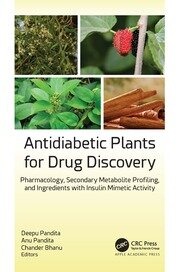
Antidiabetic plants for drug discovery pharmacology, secondary metabolite profiling, and ingredients with insulin mimetic activity
Takes an in-depth look at the potential pharmacological applications of 11 important antidiabetic plants, examining their antihyperglycemic, hypoglycemic, and anti-lipidemic properties along with current genome editing research perspectives. Plant natural products, or phytoconstituents, are promising candidates for antidiabetic pharmacological actions. The phytoconstituents, such as fl avonoids, terpenoids, saponins, carotenoids, alkaloids and glycosides, play vital roles in the current and future potent antidiabetic drug development programs. Each chapter reviews a particular plant with antidiabetic properties, explaining the therapeutic aspects, its active antidiabetic compounds, and relevant genome editing technology.
Antidiabetic medicinal plants and herbal treatments
Diabetes is a chronic condition associated with metabolic disorder. Persons suffering from diabetes have shown accelerated levels of blood sugar which often harms the heart, blood vessels, eyes, kidneys, and nerves. Over the past few decades, the prevalence of diabetes has been progressively increasing. Synthetic drugs are used to treat diabetic patients to help control the disorder, but it is shown that numerous medicinal plants and herbal drugs are widely used in several traditional systems of medicine to prevent and treat diabetes. They are reported to produce beneficial effects in combating diabetes and alleviating diabetes-related complications. These plants contain phtyonutrients and phytoconstituents demonstrating protective or disease preventive properties. In many developing countries, herbal drugs are recommended by traditional practitioners for diabetes treatment because the use of synthetic drugs is not affordable.

Antidepressants Beyond Depression, and Into Bacteria
Antidepressants are one of the most predominant drug groups in the pharmaceutical world, primary care units and the general public. Their original use was majorly for the treatment of depression along with other mental disorders. Today, antidepressant consume over 20% of the medical prescriptions and healthcare plans due to their recently discovered applications outside the psychiatry field. Due to the alarming rise of antibiotic resistance and the slow pace of new drug discovery, the world has been searching frantically for new or alternative drugs with antibacterial activity. Repurposing already FDA- approved drugs for uses that are off-label has become an important preposition in the pharmacy world due to its availability, low risk and low cost.

Anti-bribery laws in common law jurisdictions
The legal regimes adopted and being implemented by parties to the OECD Convention flow from a common framework. Yet even when the anti-bribery legal regimes are virtually identical, the differences can still be significant in the context of a range of factors that are unique to each legal system.

Antibiotic prescribing pattern for patients with community-acquired pneumonia in Syrian hospitals
Community-acquired pneumonia (CAP) is a leading cause of morbidity and mortality worldwide. The clinical presentation of CAP varies, ranging from mild pneumonia characterized by fever and productive cough to severe pneumonia characterized by respiratory distress and sepsis.Antibiotics are essential for CAP treatment, whereas inappropriate use of antibiotics might lead to increase in resistant bacteria and treatment failure
Antibiotic pharmacokinetic : Pharmacodynamic considerations in the critically Ill
Provides unique insights into the issues that drive modified dosing regimens for antibiotics in the critically ill. Leading international authors provide their commentary alongside a summary of existing evidence on how to effectively dose antibiotics. Severe infection frequently necessitates admission to the intensive care unit (ICU). Equally, nosocomial sepsis often complicates the clinical course in ICU. Early, appropriate application of antibiotic therapy remains a cornerstone of effective management. However, this is challenging in the critical care environment, given the significant changes in patient physiology and organ function frequently encountered. Being cognisant of these factors, prescribers need to consider modified dosing regimens, not only to ensure adequate drug exposure, and therefore the greatest chance of clinical cure, but also to avoid encouraging drug resistance.
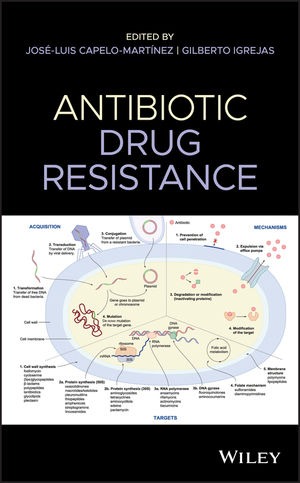
Antibiotic Drug Resistance
This book presents a thorough and authoritative overview of the multifaceted field of antibiotic science – offering guidance to translate research into tools for prevention, diagnosis, and treatment of infectious diseases.
Antiangiogenic Agents in Cancer Therapy
Antiangiogenesis remains a dynamic and evolving field in oncology. New therapeutic targets continue to emerge followed by the rapid development of new therapeutic agents to be investigated in clinical trials. Optimizing the therapeutic potential of antiangiogenic agents in combination with the other therapies in the armamentarium to fight cancer will be an on-going challenge. Antiangiogenic Agents in Cancer Therapy, Second Edition provides a current, up-dated perspective on the state of the art of angiogenesis and therapy with a compendium of scientific findings and approaches to the study of angiogenesis in cancer. Leaders in the field present chapters on such topics as the environmental influences and the genetic and physiologic abnormalities that mediate angiogenesis and its role in the progression of malignant disease, working models of tumor angiogenesis, and the role of angiogenesis inhibition in the therapy of malignant disease in humans. Comprehensive and cutting-edge, Antiangiogenic Agents in Cancer Therapy, Second Edition is an ideal, valuable guide to the most recent advances in the field, and a collection that will be useful for many years to come.

Anti Cancer medicines derived from plants
Cancer is a broad term. It describes the disease that results when cellular changes cause the uncontrolled growth and division of cells. Some types of cancer cause rapid cell growth, while others cause cells to grow and divide ata slower rate. Certain forms of cancer result in visible growths called tumors, while others, such as leukemia, do not. Most of the body’s cells have specific functions and fixed lifespans. While it may sound like a bad thing, cell death is part of a natural and beneficial phenomenon called apoptosis.
Anthropological Perspectives on Environmental Communication
Through anthropological and ethnographic analyses, this collection addresses how interests, values, and ideologies affect dialogue and sustainability work. Drawing on studies from three continents – Europe, North America, and South America – the paradoxes and the plurality of meanings associated with the creation of sustainable futures are explored. The book focuses on how communication practices collide with organizational frameworks, customary practices, livelihoods, and landscape.
Anthracycline Chemistry and Biology II : Mode of Action, Clinical Aspects and New Drugs
This series presents critical reviews of the present position and future trends in modern chemical research. It contains short and concise reports on chemistry, each written by the world renowned experts. The series is still valid and useful after five or ten years. More information as well as the electronic version of the whole content is available at: springerlink.com.

Anterior knee pain and patellar instability
This multidisciplinary book reviews the diagnosis and management of anterior knee pain and patellar instability in an eminently clinical and practical manner. The book reviews the therapeutic alternatives, both surgical and non-surgical, emphasizing the considerable importance of minimal intervention and non-surgical methods. Similarly, anterior knee pain following ACL reconstruction is covered in detail.

Antarctic ecosystems : Environmental contamination, climate change, and human impact
This volume provides an overview of climate change data, its effects on the structure and functioning of Antarctic ecosystems, and the occurrence and cycling of persistent contaminants. It discusses the unique physico-chemical characteristics of the Antarctic environment, ecophysiological adaptations of terrestrial and marine organisms, the transfer of contaminants in pelagic and neritic food chains and the possible consequences for animals at higher trophic levels.

Another side of drugs
Drug interactions remain an important consequence of pharmacologic intervention. It is clear that the pharmacologic response of a drug can be markedly influenced by concurrent administration of another therapeutic agent or food. These interactions may result in a decreased therapeutic effect or in an increase in the amount and extent of untoward reactions. Despite the well-described and real clinical consequences of certain drug interactions, this aspect of patient care often continues to be overlooked.

Anorexia nervosa and mood-enhancing foods
Anorexia nervosa (AN) is a serious mental illness characterized by failure to maintain normal weight and by overvalued ideas about the importance of body shape and weight. This study aims to discuss Anorexia nervosa and understand the pathophysiology to successfully fight this enigmatic illness and present the goal of the treatment for individuals with AN. The bi-directional influences between emotion and food consumption are discussed. Finally, we have searched in Future Directions and Treatment development of AN.
Anorectal Malformations in Children : Embryology, Diagnosis, Surgical Treatment, Follow-up
The book assembles many new aspects in the broad field of anorectal and genitourinary malformations. Special attention is given to the new surgical techniques posterior sagittal anorectal plasty (PSARP), urogenital sinue advancement, and laparoscopy. The results of an international workshop of 26 international authorities on congenital malformations of the organs of the pelvis and perineum are presented. The new classification proposed at the Krickenberg Conference will enable future studies comparing the types and the results of treatment of anorectal malformations.

Anomaly Detection : Techniques and Applications
When information in the data warehouse is processed, it follows a definite pattern. An unexpected deviation in the data pattern from the usual behavior is called an anomaly. The anomaly in the data is also referred to as noise, outlier, spammer, deviations, novelties and exceptions. Identification of the rare items, events, observations, patterns which raise suspension by differing significantly from the majority of data is called anomaly detection. With progress in the technologies and the widespread use of data for the purpose for business the increase in the spams faced by the individuals and the companies are increasing day by day. This noisy data has boomed as a major problem in various areas such as Internet of Things, web service, Machine Learning, Artificial Intelligence, Deep learning, Image Processing, Cloud Computing, Audio processing, Video Processing, VoIP, Data Science, Wireless Sensor etc. Identifying the anomaly data and filtering them before processing is a major challenge for the data analyst. This anomaly is unavoidable in all areas of research. This book covers the techniques and algorithms for detecting the deviated data.

Annotating, Extracting and Reasoning about Time and Events ; International Seminar, Dagstuhl Castle, Germany, April 20-15, 2005, Revised Papers
The book presented centers around an emergingde factost and ardfortime and event annotation: TimeML. TimeML has recently been adopted as a candidate for an ISO standard, and is currently being reviewed in this capacity.It discussions focussed on the following three Time- related issues: using the TimeML language efiectively for consistent annotation, determining how useful such annotation is for further processing,and describing modifications that should be applied to the standard for applications such as question-answering and information retrieval. Discussions at the Dagstuhl Seminar led to new researchideas, and a variety
