



الصفحة 20
الصفحة 20

Applied scanning probe methods VI : Characterization
The scanning probe microscopy feld has been rapidly expanding. It is a demanding task to collect a timely overview of this feld with an emphasis on technical dev- opments and industrial applications. It became evident while editing Vols. I–IV that a large number of technical and applicational aspects are present and rapidly - veloping worldwide. Considering the success of Vols. I–IV and the fact that further colleagues from leading laboratories were ready to contribute their latest achie- ments, we decided to expand the series with articles touching felds not covered in the previous volumes. The response and support of our colleagues were excellent, making it possible to edit another three volumes of the series

Applied scanning probe methods IX : Characterization
The success of the Springer Series Applied Scanning Probe Methods I–VII and the rapidly expanding activities in scanning probe development and applications worldwide made it a natural step to collect further speci c results in the elds of development of scanning probe microscopy techniques (Vol. VIII), characterization (Vol. IX), and biomimetics and industrial applications (Vol. X). These three volumes complement the previous set of volumes under the subject topics and give insight into the recent work of leading specialists in their respective elds. Following the tradition of the series, the chapters are arranged around techniques, characterization and biomimetics and industrial applications. Volume VIII focuses on novel scanning probe techniques and the understanding of tip/sample interactions. Topics include near eld imaging, advanced AFM, s- cializedscanningprobemethodsinlifesciencesincludingnewselfsensingcantilever systems, combinations of AFM sensors and scanning electron and ion microscopes, calibration methods, frequency modulation AFM for application in liquids, Kelvin probe force microscopy, scanning capacitance microscopy, and the measurement of electrical transport properties at the nanometer scale.

Applied scanning probe methods IV : Industrial applications
The sc- ning probes emerged as a new - strument for imaging with a p- cision suf?cient to delineate single atoms. At first there were two – the Scanning Tunneling Microscope, or STM, and the Atomic Force Mic- scope, or AFM. The STM relies on electrons tunneling between tip and sample whereas the AFM depends on the force acting on the tip when it was placed near the sample. These were quickly followed by the M- netic Force Microscope, MFM, and the Electrostatic Force Microscope, EFM. The MFM will image a single magnetic bit with features as small as 10nm. With the EFM one can monitor the charge of a single electron.

Applied scanning probe methods III : Characterization
The sc- ning probes emerged as a new - strument for imaging with a p- cision suf?cient to delineate single atoms. At first there were two – the Scanning Tunneling Microscope, or STM, and the Atomic Force Mic- scope, or AFM. The STM relies on electrons tunneling between tip and sample whereas the AFM depends on the force acting on the tip when it was placed near the sample. These were quickly followed by the M- netic Force Microscope, MFM, and the Electrostatic Force Microscope, EFM. The MFM will image a single magnetic bit with features as small as 10nm. With the EFM one can monitor the charge of a single electron.

Applied scanning probe methods II : Scanning probe microscopy techniques
The sc- ning probes emerged as a new - strument for imaging with a p- cision suf?cient to delineate single atoms. At first there were two – the Scanning Tunneling Microscope, or STM, and the Atomic Force Mic- scope, or AFM. The STM relies on electrons tunneling between tip and sample whereas the AFM depends on the force acting on the tip when it was placed near the sample. These were quickly followed by the M- netic Force Microscope, MFM, and the Electrostatic Force Microscope, EFM. The MFM will image a single magnetic bit with features as small as 10nm. With the EFM one can monitor the charge of a single electron.

Applied Physics of Carbon Nanotubes : Fundamentals of Theory, Optics and Transport Devices
The book describes the state-of-the-art in fundamental, applied and device physics of nanotubes, including fabrication, manipulation and characterization for device applications; optics of nanotubes; transport and electromechanical devices and fundamentals of theory for applications. This information is critical to the field of nanoscience since nanotubes have the potential to become a very significant electronic material for decades to come. The book will benefit all all readers interested in the application of nanotubes, either in their theoretical foundations or in newly developed characterization tools that may enable practical device fabrication.
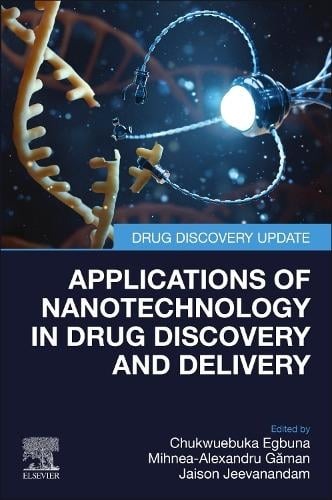
Applications of nanotechnology in drug discovery and delivery
Presents complete coverage of the application of nanotechnology in the discovery of new drugs and efficient target delivery of drugs. The book highlights recent advances of nanotechnology applications in the biomedical sciences, starting with chapters that provide the basics of nanotechnology, nanoparticles and nanocarriers. Part II deals with the application of nanotechnology in drug discovery, with an emphasis on enhanced delivery of pharmaceutical products, with Part III discussing toxicological and safety issues arising from the use of nanomaterials
Analytical Ultracentrifugation VIII
This book presents a comprehensive collection of 21 contributions from leading scientists in this field covering a broad spectrum of topics and presenting recent progress concerning instrumentation, data analysis and modeling, biological systems, particles, colloids, synthetic macromolecules, interacting systems. Due to the versatility of this fascinating and powerful technique, information and original publications are widespread and comprehensive collections are rare. Therefore, this volume presents a valuable source for biologists, chemists, materials scientists, and physicists interested in most recent information, results and development related to this important analytical method.

Analytical Ultracentrifugation of Polymers and Nanoparticles
Analytical ultracentrifugation (AUC) is a powerful method for the characterization of polymers, biopolymers, polyelectrolytes, nanoparticles, dispersions, and other colloidal systems. The method is able to determine the molar mass, the particle size, the particle density and interaction parameters like virial coefficients and association constants. Because AUC is also a fractionation method, the determination of the molar mass distribution, the particle size distribution, and the particle density distribution is possible. A special technique, the density gradient method, allows fractionating heterogeneous samples according to their chemical nature that means being able to detect chemical heterogeneity.

AmIware : Hardware Technology Drivers of Ambient Intelligence
Ambient Intelligence is one of the new paradigms in the development of information and communication technology, which has attracted much attention over the past years. The aim is the to integrate technology into people environment in such a way that it improves their daily lives in terms of well-being, creativity, and productivity. Ambient Intelligence is a multidisciplinary concept, which heavily builds on a number of fundamental breakthroughs that have been achieved in the development of new hardware concepts over the past years. New insights in nano and micro electronics, packaging and interconnection technology, large-area electronics, energy scavenging devices, wireless sensors, low power electronics and computing platforms enable the realization of the heaven of ambient intelligence by overcoming the hell of physics.

Advances of novel formulations in drug delivery
This is an endeavor to bring all the nanotechnology-based drug carriers under the umbrella of a single text. The drug carriers made up using natural as well as synthetic polymers are described in detail. The drug carriers include (though not limited to) particulates, vesicular, dendrimers, quantum dots, carbon nano tubes, nanocrystals, nanoemulsions, nanofibers

Advances in the toxicity of construction and building materials
Presents the potential and toxic effects of building materials on human health, along with tactics on how to minimize exposure. Chapters are divided into four sections covering the toxicity of indoor environments, fire toxicity, radioactive materials, and toxicity from plastics, metals, asbestos, nanoparticles and construction wastes. Key chapters focus on the reduction of chemical emissions in houses with eco-labelled building materials and potential risks posed by indoor pollutants that may include volatile organic compounds (VOC), formaldehyde, semi-volatile organic compounds (SVOC), radon, NOx, asbestos and nanoparticles.

Advances in solid state physics ; Vol. 46
Many topical talks given at the numerous symposia are included. Most of these were organized collaboratively by several of the divisions of the Arbeitskreis. The topis range from zero-dimensional physics in quantum dots, molecules and nanoparticles over one-dimensional physics in nanowires and 1d systems to more applied subjects like optoelectronics and materials science in thin films.

Advances in solid state physics ; Vol. 45
The book presents, to some extent, the status of the field of solid-state physics in 2005 not only in Germany but also internationally. It is ''nanoscience'', namely the physics of quantum dots and wires, electrical transport, optical properties, spin transport in nanostructures, and magnetism on the nanoscale, that is of central interest to the physics community. Also, soft matter and biological systems are covered.

Advances in Fracture Research : Honour and plenary lectures presented at the 11th International Conference on Fracture (ICF11), held in Turin, Italy, on March 20-25, 2005
Biological materials are bottom-up designed systems formed from billions of years of natural evolution. In the long course of Darwinian competition for survival, nature has evolved a huge variety of hierarchical and multifunctional systems from nucleic acids, proteins, cells, tissues, organs, organisms, animal communities to ecological s- tems. Multilevel hierarchy a rule of nature. The complexities of biology provide an opportunity to study the basic principles of hierarchical and multifunctional s- tems design, a subject of potential interest not only to biomedical and life sciences, but also to nanosciences and nanotechnology. Systematic studies of how hierarchical structures in biology are related to their functions and properties can lead to better understanding of the effects of aging, diseases and drugs on tissues and organs, and may help developing a scienti?c basis for tissue engineering to improve the standard of living.
Advances in Electronic Testing : Challenges and Methodologies
The book is a comprehensive elaboration on important topics which capture major research and development efforts today. The motivation and inspiration behind this book is to deliver a thorough text that focuses on the evolution of test technology, provides insight about the abiding importance of discussed topics, records today’s state of the art and industrial practices and trends, reveals the challenges for emerging testing methodologies, and envisages the future of this journey. The book consists of eleven edited chapters written by experts in Defect-Oriented Testing, Nanometer Technologies Failures and Testing, Silicon Debug, Delay Testing, High-Speed Test Interfaces, DFT-Oriented Low-Cost Testers, Embedded Cores and System-on-Chip Testing, Memory Testing, Mixed-Signal Testing, RF Testing and Loaded Board Testing.

Advances in dental implantology using nanomaterials and allied technology applications
Discusses how nanotechnology has influenced the provision of implant treatment from surgery to prosthetic reconstruction and post treatment biological complications. It aims to present both the nanotechnology and allied research along with the clinical concepts of almost every different aspect of implantology in one volume.

Advanced Time-Correlated Single Photon Counting Techniques
Time-correlated single photon counting (TCSPC) is a remarkable technique for recording low-level light signals with extremely high precision and picosecond-time resolution. TCSPC has developed from an intrinsically time-consuming and one-dimensional technique into a fast, multi-dimensional technique to record light signals. So this reference and text describes how advanced TCSPC techniques work and demonstrates their application to time-resolved laser scanning microscopy, single molecule spectroscopy, photon correlation experiments, and diffuse optical tomography of biological tissue. It gives practical hints about constructing suitable optical systems, choosing and using detectors, detector safety, preamplifiers, and using the control features and optimising the operating conditions of TCSPC devices. Advanced TCSPC Techniques is an indispensable tool for everyone in research and development who is confronted with the task of recording low-intensity light signals in the picosecond and nanosecond range.

Advanced Techniques in Biophysics
Technical advancements are basic elements in our life. In biophysical studies, new applications and improvements in well-established techniques are being implemented every day. This book deals with advancements produced not only from a technical point of view, but also from new approaches that are being taken in the study of biophysical samples, such as nanotechniques or single-cell measurements. This book constitutes a privileged observatory for reviewing novel applications of biophysical techniques that can help the reader enter an area where the technology is progressing quickly and where a comprehensive explanation is not always to be found.
Advanced Nanomaterials
Covers synthesis, characterization, and applications of diverse types of nanomaterials. Specifically, it describes carbon, graphene, and graphene oxide-based nanomaterials and their use for environmental remediation. Nanomaterials for concrete coating applications and advances in the processing of high-entropy alloys by means of mechanical alloying are also covered. Subsequently, the use of nanomaterials in endodontics and the use of nanotechnology strategies to enhance restorative resin-based dental nanomaterials are reported.
