



الصفحة 2
الصفحة 2

Fundamentals of Relational Database Management Systems
Information is a valuable resource to an organization. Computer software provides an efficient means of processing information, and database systems are becoming an increasingly common means by which it is possible to store and retrieve information in an effective manner. This book provides comprehensive coverage of fundamentals of database management systems. This book is for those who wish a better understanding of relational data modeling, its purpose, its nature, and the standards used in creating relational data models.
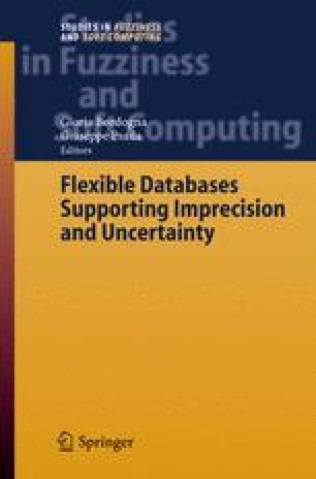
Flexible Databases Supporting Imprecision and Uncertainty
This volume collects selected contributions on the application of heterogeneous methods for managing uncertainty and imprecision in databases. It contains both survey chapters on classic topics such as "flexible querying in databases", and up to date ontributions on "database models to represent imperfect data". Further, it includes specific contributions on uncertainty management in database integration, and in representing and querying semistructured and spatial data. These topics are of particular relevance nowadays with the diffusion of the internet since, most of the time, applications require information spread across several information sources and their integration may result in inconsistent information.

Flexible and Efficient Information Handling ; 23rd British National Conference on Databases, BNCOD 23, Belfast, Northern Ireland, UK, July 18-20, 2006, Proceedings
This book constitutes the refereed proceedings of the 23rd British National Conference on Databases, BNCOD 23, held in Belfast, Northern Ireland, July 2006. The volume presents 12 revised full papers and 6 revised short papers, together with 2 invited lectures and 13 poster papers. Topical sections include data modelling and architectures and transaction management, data integration and interoperability and information retrieval, query processing and optimisation, data mining, data warehousing and more.

Fast Track to MDX
Fast Track to MDX gives you all the necessary background to let you to write useful, powerful MDX expressions and introduces the most frequently used MDX functions and constructs. No prior knowledge is assumed and examples are used throughout the book to rapidly develop your MDX skills to the point where you can solve real business problems.
Facebook API Developers Guide
The Facebook API allows web developers to create Facebook applications and access Facebook data from other applications. Facebook API Developers Guide covers the use and implementation of the Facebook API—what the key features are and how you can access them. You will learn, through practical examples, the main features of the Facebook API including an introduction to the API–specific languages FQL and FBML. These examples are further supported by the introduction of other technologies like language libraries, relational database management systems, and XML. Covers all key features of the Facebook API Explains the API languages FQL and FBML Teaches by example, with useful code and tips you can use in your own applications
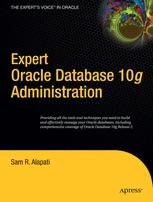
Expert Oracle Database 10g Administration
This book covers the new 10g management and performance tools and provides essential primers on Unix, Linux and Windows NT administration and on core SQL and PL/SQL programming techniques. And it provides everything the new and aspring Oracle database administrator needs to build and administer complex Oracle 10g databases.

Database System Concepts
Presents the fundamental concepts of database management. This text is suitable for a first course in databases at the junior/senior undergraduate level or the first year graduate level

Database Programming Languages ; 8th International Workshop, DBPL 2001, Frascati, Italy, September 8-10, 2001. Revised Papers
The papers here are organized in topical sections on semistructured data OL AP and data mining systems, schema integration, and index concurrency XML spatial databases user languages and rules.

Database and expert systems applications ; 16th international conference, DEXA 2005, Copenhagen, Denmark, August 22-26, 2005, Proceedings
DEXA 2005, the 16th International Conference on Database and Expert Systems Applications, was held at the Copenhagen Business School, Copenhagen, Denmark, from August 22 to 26, 2005. The success of the DEXA series has partly been due to the way in which it has kept abreast of recent developments by spawning specialized workshops and conferences each with its own proceedings. In 2005 the DEXA programme was co-located with the 7th International Conference on Data Warehousing and Knowledge Discovery [DaWaK 2005], the 6th International Conference on Electronic Commerce and Web Technologies [EC-Web 2005], the 4th International Conference on Electronic Government [EGOV 2005], the 2nd International Conference on Trust, Privacy, and Security in Digital Business [TrustBus 2005], the 2nd International Conference on Industrial Applications of Holonic and Multi-agent Systems [HoloMAS 2005], as well as 19 specialized workshops. These proceedings are the result of a considerable amount of hard work.

Database : Enterprise, skills and innovation; 22nd British national conference on databases, BNCOD 22, Sunderland, UK, July 5-7, 2005, Proceedings
The British National Conference on Databases (BNCOD) was established in 1980 as a forum for research into the theory and practice of databases. The original conference in the series took place at the University of Aberdeen. To be precise, this conference was in fact entitled ICOD which stood for International Conference on Databases. It was the intention, when the series began, that an ICOD would take place every two years, whilst a BNCOD would run in the years in between. As the record shows ICOD was only held in 1980 and 1983. The more junior conference has managed to acquire a lifetime much longer than that of its senior relative! If truth wereknown,however,BNCOD has,overthe years,growninto ICOD and although the conference is still titled “British National,” it is, in fact, an international conference that takes place on a yearly basis. Proof of this can be obtained simply by looking at the table of contents of these proceeding which clearlyshowthatthe majorityofpaperspresentedatthis year’sconferencecame from contributors whose a?liations are outside the UK. Despitetherangeofpapersono?er,BNCODstillretainsitsuniquelyBritish ?avor. The Programme Committee is drawn from UK academics and the c- ference is always held at a British university (or in earlier years a polytechnic!).
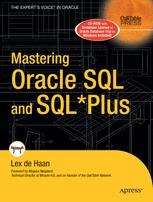
Mastering Oracle SQL and SQL*Plus
This exceptional book explains fundamentals in detail, supported by realistic examples, while most other books on the market do not properly cover such basics. If you work with relational databases you need to understand the SQL language. And you will gain full competence to define, access, and manipulate data in an Oracle database, if you do so following this book's guidance.
Logical Data Modeling : What it is and How to do it
LOGICAL DATA MODELING: What It Is and How To Do IT is directed toward three groups of people: (1) Business subject matter experts, (2) information technology professionals, (3) advanced students in Computer Science, Management Information Systems, and e-Business. Its purpose is to outline the basics of logical data modeling—specifically, data modeling for relational database management systems—in simple, practical terms and in a business context. The focus on relational data modeling is consciously made because it is superior in modeling real business activities.
Logical and Relational Learning
This textbook covers logical and relational learning in depth, and hence provides an introduction to inductive logic programming (ILP), multirelational data mining (MRDM) and (statistical) relational learning (SRL). These subfields of data mining and machine learning are concerned with the analysis of complex and structured data sets that arise in numerous applications, such as bio- and chemoinformatics, network analysis, Web mining, natural language processing, within the rich representations offered by relational databases and computational logic.

Landscapes of Lifelong Learning Policies across Europe : Comparative Case Studies
This book explores different landscapes of Lifelong Learning policies (LLP), producing case-based examinations of their institutional, discursive, and relational dimensions. Across Europe, young people develop their life courses amidst diverse living conditions and are confronted with a variety of institutional and structural arrangements that impact on their opportunities in education and labour. Considering the relevance of LLP in shaping those opportunities, the chapters draw from multi-level, mixed-methods research and offer original insights on the interplay of discourses and governance patterns in the processes of policy-making and deliverance. The book yields noteworthy insights into the widely differing realities across the European landscape, and also into the diverging ways young people deal with and actively participate in LLP.

Knowledge Representation Techniques : A Rough Set Approach
The basis for the material in this book centers around a long term research project with autonomous unmanned aerial vehicle systems. One of the main research topics in the project is knowledge representation and reasoning. The focus of the research has been on the development of tractable combinations of approximate and nonmonotonic reasoning systems. The techniques developed are based on intuitions from rough set theory. Efforts have been made to take theory into practice by instantiating research results in the context of traditional relational database or deductive database systems.

Knowledge Discovery in Inductive Databases ; Vol.3377 : 3rd International Workshop, KDID 2004, Pisa, Italy, September 20, 2004, Revised Selected and Invited Papers
Cnstitutes the thoroughly refereed joint postproceedings of the Third International Workshop on Knowledge Discovery in Inductive Databases, KDID 2004, held in Pisa, Italy in September 2004 in association with ECML/PKDD. Inductive Databases support data mining and the knowledge discovery process in a natural way. In addition to usual data, an inductive database also contains inductive generalizations, like patterns and models extracted from the data. This book presents nine revised full papers selected from 23 submissions during two rounds of reviewing and improvement together with one invited paper. Various current topics in knowledge discovery and data mining in the framework of inductive databases are addressed.

Knowledge Discovery in Inductive Databases ; 5th International Workshop, KDID 2006 Berlin, Germany, September 18th, 2006 Revised Selected and Invited Papers
Constitutes the thoroughly refereed joint postproceedings of the 5th International Workshop on Knowledge Discovery in Inductive Databases, KDID 2006. The papers address various current topics in knowledge discovery and data mining in the framework of inductive databases such as constraint-based mining, database technology and inductive querying.
Knowledge discovery in databases : PKDD 2006 ; 10th European Conference on Principles and practice of knowledge discovery in databases, Berlin, Germany, September 18-22, 2006, Proceedings
The European Conference on Principles and Practice of Knowledge Discovery in Databases celebrates its tenth anniversary ; the first PKDD took place in 1997 in Trondheim, Norway. Over the years, the ECML/PKDD series has evolved into one of the largest and most selective international conferences in these areas, the only one that provides a common forum for the two closely related ?elds. In 2006, the 6th collocated ECML/PKDD took place during September 18-22, when the Humboldt-Universität zu Berlin hosted the 17th European Conference on Machine Learning (ECML) and the 10th European Conference on Principles and Practice of Knowledge Discovery in Databases (PKDD). The successful model of a hierarchical reviewing process that was introduced last year for the ECML/PKDD 2005 in Porto has been taken over in 2006.
Knowledge Discovery in Databases : PKDD 2005 ; 9th European Conference on Principles and Practice of Knowledge Discovery in Databases, Porto, Portugal, October 3-7, 2005, Proceedings
585 different paper submissions were received for both events, which maintains the high s- mission standard of last year. Of these, 335 were submitted to ECML only, 220 to PKDD only and 30 to both. Such a high volume of scientific work required a tremendous effort from Area Chairs, Program Committee members and some additional reviewers. On average, PC members had 10 papers to evaluate, and Area Chairs had 25 papers to decide upon. We managed to have 3 highly qua- ?ed independent reviews per paper (with very few exceptions)and one additional overall input from one of the Area Chairs. After the authors’ responses and the online discussions for many of the papers, we arrived at the final selection of 40 regular papers for ECML and 35 for PKDD. Besides these, 32 others were accepted as short papers for ECML and 35 for PKDD. This represents a joint acceptance rate of around 13% for regular papers and 25% overall. We thank all involved for all the e?ort with reviewing and selection of papers. Besides the core technical program, ECML and PKDD had 6 invited speakers, 10 workshops, 8 tutorials and a Knowledge Discovery Challenge.
JDBC Recipes : A Problem-Solution Approach
JDBC Recipes provides easy-to-implement, usable solutions to problems in relational databases that use JDBC. You will be able to integrate these solutions into your web-based applications, such as Java servlets, JavaServer Pages, and Java server-side frameworks. This handy book allows you to cut and paste the solutions without any code changes. This book focuses on topics that have been ignored in most other JDBC books, such as database and result set metadata. It will help you develop database solutions, like adapters, connectors, and frameworks using Java/JDBC. The insightful solutions will enable you to handle all data types, including large binary objects. A unique feature of the book is that it presents JDBC solutions (result sets) in XML.
