



الصفحة 2
الصفحة 2

Grid economics and business models ; 4th International workshop, GECON 2007, Rennes, France, August 28, 2007, Proceedings
In the third contribution, Altmann and colleagues formulate a taxonomical - proach to Grid business models. They survey the development and origin of Grid technologies and focus on the importance of business-directed values when trying to commercialize today’s Grids. Therein, they identify the reduction of costs, the - provement of efficiency, the creation of novel products and services as well as the quality and collaboration between companies as key factors for the differentiation of Grid business models.

Global History and New Polycentric Approaches : Europe, Asia and the Americas in a World Network System
Examines how the discipline had evolved in various historiographies, from Anglo Saxon to southern European, and its emergence in Asia with the rapid development of the Chinese economy motivation to legitimate the current uniqueness of the history and economy of the nation. It contributes to the revitalization of the field of global history in Chinese historiography, which have been dominated by national narratives and promotes a debate to open new venues in which important features such as scholarly mobility, diversity and internationalization are firmly rooted, putting aside national specificities.

Genetic control of neuronal migrations in human cortical development
Introduction Cortical development is a complex, tightly regulated process that eventually leads to the six-layered adult human neocortex, the substrate of the unique cognitive, emotional, and social abilities of our species. The basic mechanisms of early cortical development are believed to be very similar among mammals, which has led to a tendency of extrapolating experimental data from rodents on humans.

Freshwater Animal Diversity Assessment
The Freshwater Animal Diversity Assessment gives a state of the art assessment of the diversity and distribution of Metazoa in the continental waters of the world. The project deals with all major animal groups plus the macrophytes, and encompasses the complete array of terrestrial aquatic ecosystems. It is the most comprehensive study of species- and genus-level diversity and chorology of the global freshwater fauna to date, and is the first to present comparable data on the different faunal groups concerned. The project draws from the collected expertise of numerous world-renowned taxonomic experts that have bundled efforts to produce this outstanding volume. The result is invaluable to all scientists, managers and conservationists interested in non-marine aquatic animals.

Foundations of Global Genetic Optimization
This book is devoted to the application of genetic algorithms in continuous global optimization. Some of their properties and behavior are highlighted and formally justified. Various optimization techniques and their taxonomy are the background for detailed discussion. The nature of continuous genetic search is explained by studying the dynamics of probabilistic measure, which is utilized to create subsequent populations. This approach shows that genetic algorithms can be used to extract some areas of the search domain more effectively than to find isolated local minima. The biological metaphor of such behavior is the whole population surviving by rapid exploration of new regions of feeding rather than caring for a single individual. One group of strategies that can make use of this property are two-phase global optimization methods. In the first phase the central parts of the basins of attraction are distinguished by genetic population analysis. Afterwards, the minimizers are found by convex optimization methods executed in parallel.

Flowering Plants. Eudicots: Asterales
This volume contains a complete systematic treatment of the flowering plant order Asterales, comprising 12 families with approx. 1,720 genera and about 26,300 species. The order includes Compositae as the largest family of flowering plants. Based on traditional studies, several of the constituent families have long been recognized as being closely interrelated. The inclusion in the order of Alseuosmiaceae, Argophyllaceae, Carpodetaceae, Phellinaceae and Rousseaceae is the result mainly of new advances in molecular systematics. Identification keys are provided for all genera, and likely phylogenetic relationships are discussed extensively. The wealth of information contained in this volume makes it an indispensable source for all working in the fields of pure and applied plant sciences.
Flowering Plants. Eudicots : Berberidopsidales, Buxales, Crossosomatales, Fabales p.p., Geraniales, Gunnerales, Myrtales p.p., Proteales, Saxifragales, Vitales, Zygophyllales, Clusiaceae Alliance, Passifloraceae Alliance, Dilleniaceae, Huaceae, Picramniaceae, Sabiaceae
In this volume, the ninth of the series, treatments are offered for 52 families containing 432 genera belonging to 13 eudicot orders, many of which have recently been newly designed; four families remain unassigned to order. Emphasis is on the early-diverging eudicots and basal core eudicots the phylogenetic relationships and diversification of which have recently been in focus and are critically discussed. Systematically relevant information includes descriptions of families and genera, keys to the genera, and references to recent revisions. Introductions to the families provide convenient, in-depth overviews of key aspects of systematics. The wealth and precision of information contained in this volume will make it an important source of reference for both the scholar and the practitioner in the fields of pure and applied plant sciences.
Flower Breeding and Genetics : Issues, Challenges and Opportunities for the 21st Century
This book provides a unique and valuable resource on the many issues and challenges facing flower breeders, as well as the industry at-large. In this volume, the first comprehensive assemblage of its kind, a team of 32 international authorities has contributed to make this book a ‘must-have’ reference to research and develop flower crops for the 21st century consumers. Part 1 of this book (flower breeding program issues) contains unique features of interest to horticultural professionals and students, include coverage of plant protection strategies, cultivar trialing methodology, germplasm collection/preservation, preventing invasiveness, and other timely topics. The collective body of knowledge for 24 flower crops (Part 2: Crop-specific Breeding and Genetics) represents the in-depth science and art of breeding technology available for bedding plants, flowering potted plants, cut flowers, and herbaceous perennials. Each author provides crop-specific history, evolution, biology, taxonomy, state-of-the-art breeding/genetics, classical/molecular technologies, species traits, interspecific hybridization, and directions for future development/enhancement.

Etymological Dictionary of Grasses
The dictionary provides explanations of the meaning and origins of generic and specific names of grasses, one of the largest and economically most important plant families. Most of the names published during the past 250 years are included.

Ethnobotany : A phytochemical perspective
Explores the chemistry behind hundreds of plant medicines, dyes, fibers, flavors, poisons, insect repellants, and many other uses of botanicals. Bridging the gap between ethnobotany and chemistry, this book presents an introduction to botany, ethnobotany, and phytochemistry to clearly join these fields of study and highlight their importance in the discovery of botanical uses in modern industry and research. Part I. Ethnobotany, explores the history of plant exploration, current issues such as conservation and intellectual property rights, and a review of plant anatomy. An extensive section on plant taxonomy highlights particularly influential and economically important plants from across the plant kingdom. Part II. Phytochemistry, provides fundamentals of secondary metabolism, includes line drawings of biosynthetic pathways and chemical structures, and describes traditional and modern methods of plant extraction and analysis. The last section is devoted to the history of native plants and people and case studies on plants that changed the course of human history from five geographical regions: Africa, the Americas, Asia, Europe, and Ocean. Throughout the entire book, vivid color photographs bring science to life, capturing the essence of human botanical knowledge and the beauty of the plant kingdom.

Entomology
The author’s long-held belief that an introductory entomology course should present a balanced treatment of the subject is reflected in the continued arrangement of the book in four sections: Evolution and Diversity, Anatomy and Physiology, Reproduction and Development, and Ecology. For the third edition, all chapters have been updated. This includes not only the addition of new information and concepts but also the reduction or exclusion of material no longer considered "mainstream", so as to keep the book at a reasonable size.

Encyclopedia of South American Aquatic Insects : Odonata - Anisoptera : Illustrated Keys to Known Families, Genera, and Species in South America
To help readers understand naming conventions, a brief introductory biological review of the group includes illustrations of the main morphological features as well as explanations of alternative systems for naming the wing veins and other structures.

Encyclopedia of Entomology
The Encyclopedia of Entomology brings together the talents of over 350 distinguished entomologists from 36 countries to provide a detailed, global overview of insects and their close relatives, including taxonomy, behavior, ecology, physiology, history, and management.

Electronic Postage Systems : Technology, Security, Economics
This book introduces a taxonomy of electronic postage systems and explains their security risks and countermeasures. The underlying cryptographic mechanisms are introduced and explained, and the industrial-scale electronic postage systems existing worldwide, are sorted out with respect to this taxonomy. The author also discusses privacy and anonymous mail, the state of standardization of electronic postage, and the process of security evaluation and testing of electronic postage systems. This volume including electronic postage designers of postal operators and standardization bodies, software and test engineers, software vendors integrating electronic postage solutions into their applications, security engineers and cryptography experts, and accredited test laboratories evaluating electronic postage systems.

Ecology of Harmful Algae
Harmful algal blooms are one of the consequences of the human impact on aquatic ecosystems, particularly the process of eutrophication. They can cause a variety of deleterious effects, including the poisoning of fish and shellfish, habitat disruptions for many organisms, water discolouration, beach fouling, and even toxic effects for humans. This volume is a comprehensive synthesis of the latest research achievements concerning harmful algae (HA) ecology. International experts provide an in-depth analysis of HA topics including: global distribution, ecology of major HA groups, ecology and physiology of HA, HA and the food web, studying and mitigating HA, the human impact on HA and HA impact on human activity. This volume is an invaluable source of information for researchers in HA ecology as well as for advanced students, lecturers, and environmental managers.

Design for Personalisation
Presents taxonomy of personalisation, and its potential consequences for the design profession as well as its ethical and political dimensions through a collection of essays from a range of academic perspectives. The thought-provoking introduction, conclusion and nine chapters present a well-balanced mixture of in-depth literature review and practical examples to deepen our understanding of the consequences of personalisation for our professional and personal lives. Collectively, this book points towards the implications of personalisation for design-led social innovation.
Data Compression : The Complete Reference
This book of Data Compression provides an all-inclusive, thoroughly updated, and user-friendly reference for the many different types and methods of compression (especially audio compression, an area in which many new topics covered in this revised edition appear). Among the important features of the book are a detailed and helpful taxonomy, a detailed description of the most common methods, and discussions on the use and comparative benefits of different methods. The book’s logical, clear and lively presentation is organized around the main branches of data compression.

Data Center Handbook : Plan, Design, Build, and Operations of a Smart Data Center ; 2nd ed.
Explains the fundamentals, advanced technologies, and best practices used in planning, designing, building and operating a mission-critical, energy-efficient, sustainable data center. This handbook, in its second edition, covers anatomy, ecosystem and taxonomy of data centers that enable the Internet of Things and artificial intelligent ecosystems and encompass the following: Data center overview and strategic planning Data center technologies Data center design and construction Data center operations technologies

Culture history and convergent evolution : Can we detect populations in prehistory?
This volume brings together diverse contributions from leading archaeologists and paleoanthropologists, covering various spatial and temporal periods to distinguish convergent evolution from cultural transmission in order to see if we can discover ancient human populations. With a focus on lithic technology, analyzes ancient materials and cultures to systematically explore the theoretical and physical aspects of culture, convergence, and populations in human evolution and prehistory. will be of interest to academics, students and researchers in archaeology, paleoanthropology, genetics, and paleontology.
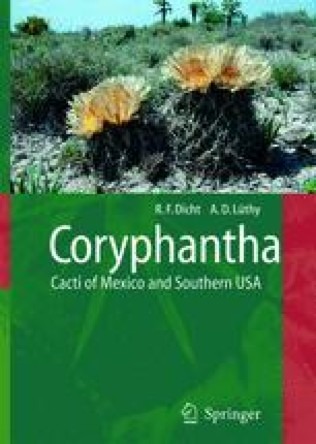
Coryphantha : Cacti of Mexico and Southern USA
This unique reference work presents the first comprehensive taxonomy of Coryphantha, with a complete key to the genus. During this process, the authors even discovered some new plants. More than 300 high-quality colour photos showing the various cacti and their habitats as well as distribution cards and illustrations explaining the morphological details complement the text.
