



الصفحة 19
الصفحة 19

Medical and healthcare interactions
Presenting a series of empirical studies by scholars working with approaches from ethnomethodology and conversation analysis, Medical and Healthcare Interactions studies real-life work and training encounters among medical and healthcare professionals and trainees or between professionals and patients. Using video analysis and detailed description, it considers the methods and procedures through which professionals, trainees, and patients produce actions and interpret those of others, exploring questions of member competence and socialization within situated courses of interaction. Offers fruitful contributions for training and education in the field of healthcare and will appeal to scholars in the human and social sciences with interests in interaction, ethnomethodology, and conversation analysis.

Medial Representations : Mathematics, Algorithms and Applications
The last half century has seen the development of many biological or physical theories that have explicitly or implicitly involved medial descriptions of objects and other spatial entities in our world. Simultaneously mathematicians have studied the properties of these skeletal descriptions of shape, and, stimulated by the many areas where medial models are useful, computer scientists and engineers have developed numerous algorithms for computing and using these models. We bring this knowledge and experience together into this book in order to make medial technology more widely understood and used.

Media Theory : Interdisciplinary Applied Mathematics
The focus of this book is a mathematical structure modeling a physical or biological system that can be in any of a number of `states.' Each state is characterized by a set of binary features, and differs from some other neighbor state or states by just one of those feature. A simple example of a `state’ is a partial solution of a jigsaw puzzle, which can be transformed into another partial solution or into the final solution just by adding or removing a single adjoining piece. The evolution of such a system over time is considered. Such a structure is analyzed from algebraic and probabilistic (stochastic) standpoints.

Mechanochemistry in Nanoscience and Minerals Engineering
Mechanochemistry as a branch of solid state chemistry enquires into processes which proceed in solids due to the application of mechanical energy. This provides a thorough, up to date overview of mechanochemistry of solids and minerals. Applications of mechanochemistry in nanoscience with special impact on nanogeoscience are described. Selected advanced identification methods, most frequently applied in nanoscience, are described as well as the advantage of mechanochemical approach in minerals engineering. Examples of industrial applications are given. Mechanochemical technology is being applied in many industrial fields: powder metallurgy (synthesis of nanometals, alloys and nanocompounds), building industry (activation of cements), chemical industry (solid waste treatment, catalyst synthesis, coal ashes utilization), minerals engineering (ore enrichment, enhancement of processes of extractive metallurgy), agriculture industry (solubility increase of fertilizers), and pharmaceutical industry (improvement of solubility and bioavailability of drugs).
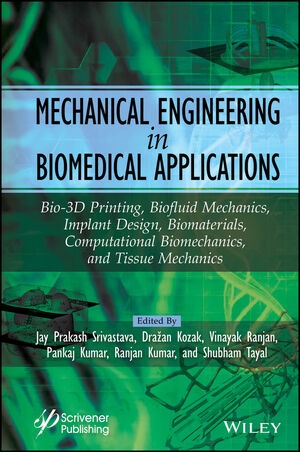
Mechanical engineering in biomedical application: bio-3D printing, biofluid mechanics, implant design, biomaterials, computational biomechanics, tissue mechanics
Explores the latest research and developments related to the interdisciplinary field of biomedical and mechanical engineering offering insights and perspectives on the research, key technologies, and mechanical engineering techniques used in biomedical applications.

Mechanical Behavior of Materials : Fundamentals, Analysis, and Calculations
Provides a holistic understanding of mechanical behavior of materials, and enables critical thinking through mathematical modeling and problem solving.Each of the 15 chapters first introduces readers to the technologic importance of the topic and provides basic concepts with diagrammatic illustrations; and then its engineering analysis/mathematical modelling along with calculations are presented.

Meat Biotechnology
The main goal of this book is to provide the reader with the recent developments in biotechnology and their applications in the meat processing chain. To achieve this goal, the book is divided into four parts. The first part deals with the use of modern biotechnology applied to farm animals. The second part focuses on the recent biotechnological developments in starter cultures for better meat fermentation. The third part discusses current approaches to improve the quality and nutritional properties of meats. The final part presents the latest advances in protection against foodborne pathogens, and other recent trends in the field. Written by distinguished international contributors, this book brings together the advances in such varied and different biotechnological topics

Measuring the Business Value of Cloud Computing
The importance of demonstrating the value achieved from IT investments is long established in the Computer Science (CS) and Information Systems (IS) literature. However, emerging technologies such as the ever-changing complex area of cloud computing present new challenges and opportunities for demonstrating how IT investments lead to business value.

Measurement, Control, and Communication Using IEEE 1588
IEEE 1588, published in November 2002, is a technology new to the engineering community expanding the performance capabilities of Ethernet networks so that they become relevant for measurement and control; this monograph embodies the first unified treatment of the associated technology, standards and applications. Readers unfamiliar with IEEE 1588 will gain understanding of the context of the technology it represents and, from three chapters of case studies, its role in a variety of application settings.

Measurement Uncertainties in Science and Technology
At the turn of the 19th century, Carl Friedrich Gauß founded error calculus by predicting the then unknown position of the planet Ceres. Ever since, error calculus has occupied a place at the heart of science. In this book, Grabe illustrates the breakdown of traditional error calculus in the face of modern measurement techniques. Revising Gauß’ error calculus ab initio, he treats random and unknown systematic errors on an equal footing from the outset. Furthermore, Grabe also proposes what may be called well defined measuring conditions, a prerequisite for defining confidence intervals that are consistent with basic statistical concepts. The resulting measurement uncertainties are as robust and reliable as required by modern-day science, engineering and technology.

MDCT and 3D Workstations : A Practical How-To Guide and Teaching File
Written by Scott A. Lipson, MD, an authority in the field, this book is ideal for radiologists, radiology residents, and CT technologists who are getting started in multidetector CT or who want to improve and optimize their CT service. This concise guide and teaching file is the perfect introduction to MDCT volumetric imaging and 3D workstations. Intended to serve as a practical, easy-to-read systematic learning tool, the book begins by introducing the reader to the process of image data acquisition, CT protocols, image reconstruction and review, 3D workstations, clinical workstation use, and CT workflow efficiency. The second section of this book is a volumetric imaging teaching file.

MDCT : From Protocols to Practice
MDCT: From Protocols to Practice tackles contemporary and topical issues in MDCT technology and applications. This volume offers new content as well as revised chapters from the previous volume.

MDCT : A Practical Approach
Computed tomography (CT) is the most rapidly evolving medical imaging technology. This book describes current examination techniques and advanced clinical applications of state-of-the-art multidetector computed tomography (MDCT) scanners in chapters contributed by several distinguished radiologists and clinicians. Each chapter is written from a practical perspective so that radiologists, residents, medical physicists, and radiology technologists can obtain relevant information about MDCT applications in neuroradiology, cardiac imaging, chest, abdominal, and musculoskeletal radiology subspecialties. Each coauthor provides pertinent illustrations and tables for better understanding of current and advanced applications of MDCT scanners. Readers will benefit from the experience these authors describe in chapters on MDCT technology, contrast administration techniques, contrast adverse effects and their management, and advanced applications of MDCT.

MDATA : A New Knowledge Representation Model: Theory, Methods and Applications
This book introduces a new knowledge representation model called MDATA (Multi-dimensional Data Association and inTelligent Analysis). By modifying the representation of entities and relations in knowledge graphs, dynamic knowledge can be efficiently described with temporal and spatial characteristics. The MDATA model can be regarded as a high-level temporal and spatial knowledge graph model, which has strong capabilities for knowledge representation. This book introduces some key technologies in the MDATA model, such as entity recognition, relation extraction, entity alignment, and knowledge reasoning with spatiotemporal factors. The MDATA model can be applied in many critical applications and this book introduces some typical examples, such as network attack detection, social network analysis, and epidemic assessment.

Mathematics of Program Construction ; 8th International Conference, MPC 2006, Kuressaare, Estonia, July 3-5, 2006, Proceedings
This volume contains the proceedings of the 8th International Conference on Mathematics of ProgramConstruction, MPC 2006,held at Kuressaare, Estonia, July 3-5, 2006, colocated with the 11th International Conference on Algebraic Methodology and Software Technology, AMAST 2006, July 5-8, 2006. TheMPCconferencesaimtopromotethedevelopmentofmathematicalpr- ciples and techniques that are demonstrably useful and usable in the process of constructing computer programs. Topics of interest range from algorithmics to support for program construction in programming languages and systems.

Mathematics Education in East Africa : Towards Harmonization and Enhancement of Education Quality
In the increasingly global and technological world mathematics is seen as a significant gatekeeper of opportunities for social and economic advancement and mobility. Hence, countries and development agencies in the broader sub-Saharan Africa region are looking towards increasing access to relevant and high-quality secondary education as a lever towards economic development. Policy makers and other key decision makers in education look towards improvement in mathematics teaching and learning as a key focus in education reform. In the East Africa region also a number of initiatives have been taken at the national level in the respective countries to improve the quality of mathematics education. This book provides an in-depth comparative analysis of the developments and issues in mathematics education in Kenya, Tanzania, Rwanda and Uganda, and advances our understanding of the state of secondary mathematics education in East Africa.

Mathematics and Technology
Mathematics and Technology presents technological applications of mathematics making use of elegant mathematical concepts. The selected subjects consist of: public key cryptography, error correcting codes, the global positioning system (GPS) and cartography, image compression using fractals and the JPEG format, digital recording, robot movement, DNA computing, Google's PageRank algorithm, savings and loans, gamma ray surgery and random number generators. The authors highlight how mathematical modeling, together with the power of mathematical tools, have been crucial for innovation in technology. The exposition is clear, straightforward, motivated by excellent examples, and user-friendly. Numerous exercises at the end of every chapter reinforce the material. An engaging quality is the various historical notes accompanying the mathematical development.

Mathematics - Key Technology for the Future : Joint Projects Between Universities and Industry 2004–2007
This book is about the results of a number of projects funded by the BMBF in the initiative "Mathematics for Innovations in Industry and Services". It shows that a broad spectrum of analytical and numerical mathematical methods and programming techniques are used to solve a lot of different specific industrial or services problems. The main focus is on the fact that the mathematics used is not usually standard mathematics or black box mathematics but is specifically developed for specific industrial or services problems. Mathematics is more than a tool box or an ancilarry science for other scientific disciplines or users. Through this book the reader will gain insight into the details of mathematical modeling and numerical simulation for a lot of industrial applications.

Mathematical Survey Lectures 1943-2004
This collection traces the career of Beno Eckmann, whose work ranges across a broad spectrum of mathematical concepts from topology and differential geometry through homological algebra to group theory. One of our most influential living mathematicians, Eckmann has been associated for nearly his entire professional life with the Swiss Federal Institute of Technology Zurich (ETH), as student, lecturer, professor, and professor emeritus.
Mathematical Software - ICMS 2006 ; 2nd International Congress on Mathematical Software, Castro Urdiales, Spain, September 1-3, 2006, Proceedings
This volume contains the outstanding collection of invited papers and refereed papers selected for the Second International Congress on Mathematical Software, ICMS 2006, held in Castro Urdiales, Spain, September 1-3, 2006. This congress was devoted to all aspects of mathematical software, whose appearance is — in our opinion — one of the most important events in mathematics. Mathematical software systems are used to construct examples, to prove theorems, and to find new mathematical phenomena. Conversely, mathematical research often motivates developments of new algorithms and new systems. Beyond mathematics, mathematical software systems are becoming indispensable tools in many branches of science and technology.
