



الصفحة 18
الصفحة 18

Advances in wheat genetics : From genome to field : Proceedings of the 12th International wheat genetics symposium
Provides a comprehensive review of the forefront of wheat research, across various important topics such as germplasm and genetic diversity, cytogenetics and allopolyploid evolution, genome sequencing, structural and functional genomics, gene function and molecular biology, biotic stress, abiotic stress, grain quality, and classical and molecular breeding. Following an introduction, 9 parts of the book are dedicated to each of these topics. A final, 11th part entitled “Toward Sustainable Wheat Production” contains 7 excellent papers that were presented in the 12th IWGS Special Session supported by the OECD.

Advances in sustainable materials and technology
Discusses numerous relevant areas and innovative technologies, such as key construction materials and production, materials with lower energy impact, production processes encouraging less use of ever-depleting natural raw materials, minimization of the generation of greenhouse gases, development of new, environmentally friendly materials and agents, characterization of the properties of construction materials, and methodologies applied in the building of structures.

Advances in Renewable Energy and Sustainable Environment : Select Proceedings of NCRESE 2019
comprises the select peer-reviewed proceedings of the National Conference on Renewable Energy and Sustainable Environment (NCRESE) 2019. brings together the latest developments in harvesting, storing and optimizing alternate and renewable energy resources. It covers latest developments in green energy technologies as well as smart grids, and their applications towards a sustainable environment. can be useful for beginners, academicians, entrepreneurs, and professionals interested in renewable energy technologies and sustainable environment practices.
Advances in production management systems : Towards smart and digital manufacturing ; IFIP WG 5.7 International Conference, APMS 2020, Novi Sad, Serbia, August 30 – September 3, 2020, Proceedings, Part II
Part II: the Operator 4.0: new physical and cognitive evolutionary paths; digital transformation approaches in production management; digital transformation for more sustainable supply chains; data-driven applications in smart manufacturing and logistics systems; data-driven services: characteristics, trends and applications; the future of lean thinking and practice; digital lean manufacturing and its emerging practices; new reconfigurable, flexible or agile production systems in the era of industry 4.0; operations management in engineer-to-order manufacturing; production management in food supply chains; gastronomic service system design; product and asset life cycle management in the circular economy; and production ramp-up strategies for product

Advances in pharma business management and research ; Vol. 1
This book presents a unique collection of practical examples from the field of pharma business management and research. It covers a wide range of topics such as: 'Brexit and its Impact on pharmaceutical Law - Implications for Global Pharma Companies', 'Implementation of Measures and Sustainable Actions to Improve Employee's Engagement', 'Global Medical Clinical and Regulatory Affairs (GMCRA)', and 'A Quality Management System for R&D Project and Portfolio Management in a Pharmaceutical Company'.
Advances in Life Cycle Engineering for Sustainable Manufacturing Businesses ; Proceedings of the 14th CIRP Conference on Life Cycle Engineering, Waseda University, Tokyo, Japan, June 11th-13th, 2007
Life cycle engineering deals with technologies for shifting the industry from mass production and mass consumption paradigm to closed loop manufacturing paradigm, in which required functions are provided for customers with the minimum amount of production. This subject is discussed from the various aspects, such as life cycle design, design for environment, reduce/reuse/recycle, life cycle assessment, and sustainable business models.Advances in Life Cycle Engineering for Sustainable Manufacturing Businesses gathers together papers from the 14th CIRP Life Cycle Engineering Conference. This conference is the longest running annual meeting in the field, in which papers are presented regarding developments of leading edge technologies, proposals of new concepts, and prominent industry case studies.

Advances in civil engineering materials : Selected articles from the 6th International Conference on architecture and civil engineering (ICACE 2022), August 2022, Kuala Lumpur, Malaysia
Presents selected articles from the 6th International Conference on Architecture and Civil Engineering 2022 (ICACE 2022), held in Malaysia. Written by leading researchers and industry professionals, the papers highlight recent advances and addresses current issues in the fields of civil engineering and architecture.

Advanced materials in smart building skins for sustainability : From nano to macroscale
Demonstrates the importance of smart and dynamic building skins in in sustainable buildings / Provides the scientific basis for integration of nanoscale materials in building envelopes with enhanced performance / Illustrates engineering solution and design process incorporating advanced materials in applications of building skins. / Updates readers on the key areas of smart building skins embodied in the novel advanced materials with unique structures and smart properties that enable multiple functions in energy efficiency, solar harvesting, and environmental greenness. It synergistically integrates the topics and knowledge of material design and experimental studies, theoretical analyses of building energy-saving mechanisms and solar energy utilization, and new design methodologies and processes taking advanced materials into account at different scales - from nano to the macroscale.
Addressing the Climate Crisis : Local action in theory and practice
This book brings together a collection of cutting-edge insights into how action can and is already being taken against climate change at multiple levels of our societies, amidst growing calls for transformative and inclusive climate action. In an era of increasing recognition regarding climate and ecological breakdown, this book offers hope, inspiration and analyses for multi-level climate action, spanning varied communities, places, spaces, agents and disciplines, demonstrating how the energy and dynamism of local scales are a powerful resource in turning the tide.
Adaptable Architecture : Theory and practice
provides thought-provoking and inquisitive insights into how we can prolong the useful life of buildings by designing them to be more adaptable, and hence create a more sustainable built environment. The book provides a theoretical foundation counterpointed by the experiences and ideas of those involved in the design and use of buildings. It explains many approaches to designing for change, with lessons from history, and case studies including The Cedar Rapids Public Library, Kentish Town Health Centre and Folkestone Performing Arts Centre, which stretch our thinking beyond the conventional notions of adaptability. The authors reveal the many conditions that make it a complex design phenomenon, by considering the purpose, design and business case of buildings as well as the physical product. Full of summaries, diagrams, reference charts, tables, and photos of exemplar solutions for use as conversational tools or working aids, this book is for any professional or student who wants to research, question, imagine, illustrate - and ultimately design for - adaptation.

Achieving the Paris Climate Agreement goals ; Part 2 : Science-based target setting for the finance industry — Net-Zero Sectoral 1.5˚C pathways for real economy sectors
Provides an in-depth analysis of industry sectors globally, and its purpose is to present emission reduction targets in 5-year steps (2025 to 2050) for the main twelve finance sectors per the Global Industry Classification System. This scientific analysis aims to support the United Nations Principles for Responsible Investment initiative to give sustainability guidance for the global finance industry. The industry sector pathways presented here are based on the latest global and regional 100% renewable energy and non-energy greenhouse gas Representative Concentration Pathways in order to keep climate change significantly under +1.5 C and thereby achieve the Paris Climate Agreement goals. The heart of this book is three chapters presenting the results of industry scenario modelling. These chapters cover twelve industry and service sectors as well as transportation and buildings. The specific energy demand and specific emissions are presented based on the emission accounting concept of “Scope 1, Scope 2 and Scope 3” emission pathways. This methodology has been developed to measure the climate and sustainability index for companies, and this research project expands the methodology to apply it to entire industry sectors ...

Achieving the Paris climate agreement goals : Global and regional 100% renewable energy scenarios with non-energy GHG Pathways for +1.5°C and +2°C
Presents detailed pathways to achieve 100% renewable energy by 2050, globally and across ten geographical regions. Based on state-of-the-art scenario modelling, it provides the vital missing link between renewable energy targets and the measures needed to achieve them. Bringing together the latest research in climate science, renewable energy technology, employment and resource impacts, the book breaks new ground by covering all the elements essential to achieving the ambitious climate mitigation targets set out in the Paris Climate Agreement. For example, sectoral implementation pathways, with special emphasis on differences between developed and developing countries and regional conditions, provide tools to implement the scenarios globally and domestically. Non-energy greenhouse gas mitigation scenarios define a sustainable pathway for land-use change and the agricultural sector. Furthermore, results of the impact of the scenarios on employment and mineral and resource requirements provide vital insight on economic and resource management implications.

Accounting for social and environmental sustainability : A multi-capital approach
Offers an in‑depth examination of multi‑capital accounting, which has already been integrated within the corporate sustainability reporting directive and will follow on from sustainability reporting. the LIFTS model (limits and foundations towards sustainability accounting model) used in this book combines various scientific and practical contributions to develop budgets for environmental impacts and social obligations on an organisational scale. it proposes an accounting mechanism that enables an organization to manage each of its budgets and measure variances between forecast and actual. it provides an introduction to the principles of this model and its conditions of application and describes its implementation in numerous companies.

Accounting and Statistical Analyses for Sustainable Development : Multiple Perspectives and Information-Theoretic Complexity Reduction
In this book Claudia Lemke develops a comprehensive Multi-Level Sustainable Development Index (MLSDI) that is applicable to micro, meso, and macro objects by conducting methodological and empirical research.

Account management strategies in B2B sales : Generating customer value and building sustainable business relationships - methodology, processes, tools
Provides employees and managers in sales with a clearly defined process for building sustainable business relationships along the account journey. Using a structured method, you will learn how to set yourself up for success right from the start, increase your competitiveness, increase market share and generate more sales.

A Handbook of Sustainable Building Design and Engineering : An Integrated Approach to Energy, Health and Operational Performance
Equips students with the tools they will need to tackle the challenges of sustainable building design and engineering. The book looks at how to design, engineer and monitor energy efficient buildings, how to adapt buildings to climate change, and how to make buildings healthy, comfortable and secure. New material for this edition includes sections on environmental masterplanning, renewable technologies, retrofitting, passive house design, thermal comfort and indoor air quality. With chapters and case studies from a range of international, interdisciplinary authors, the book is essential reading for students and professionals in building engineering, environmental design, construction and architecture

A Guide to Sustainable Corporate Responsibility : From Theory to Action
Discusses the challenges and opportunities faced by companies in an age that increasingly values sustainability and demands corporate responsibility. Beginning with the historical development of corporate responsibility, this book moves from academic theory to practical application. It points to ways in which companies can successfully manage their transition to a more responsible, sustainable way of doing business, common mistakes to avoid and how the UN Sustainable Development Goals are integral to any sustainability transformation.

A Dictionary of Construction, Surveying and Civil Engineering
Covers the key areas of civil and construction engineering, construction technology and practice, construction management techniques and processes, as well as legal aspects such as contracts and procurement. It has been updated with more than 600 new entries spanning subjects such as sustainability, new technologies, disaster management, and building software. New additions include terms such as Air source heat pump, hydraulic failure, mechanical ventilation with heat recovery, off-site construction, predictive performance, sustainable development, and value engineering.

A City in Blue and Green : The Singapore Story
Highlights Singapore’s development into a city in which water and greenery, along with associated environmental, technical, social and political aspects have been harnessed and cultivated into a liveable sustainable way of life. It is also a story about a unique and thoroughgoing approach to large-scale and potentially transferable water sustainability, within largely urbanized circumstances, which can be achieved, along with complementary roles of environmental conservation, ecology, public open-space management and the greening of buildings, together with infrastructural improvements.
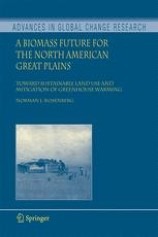
A Biomass Future for the North American Great Plains : Toward Sustainable Land Use and Mitigation of Greenhouse Warming
The Great Plains of North America is a major global breadbasket but its agriculture is stressed by drought, heat spells, damaging winds, soil erosion and declining ground water resources. This book explores the possibility that the ecology and economy of the Plains region (and similar regions) would benefit from the introduction of perennial biomass crops. Biomass production and processing on the Plains (possibly aided by genetic engineering) would partially restore a perennial vegetative cover and create new employment opportunities. Biomass also offers a means of reducing fossil fuel use, providing fuel to local power plants and a feedstock for production of cellulosic ethanol, a gasoline substitute. Interest in biofuels is growing rapidly in public, political and business circles with rising fossil fuel prices and because of a growing recognition of the need for energy independence in petroleum importing countries.
