



الصفحة 18
الصفحة 18

Entertainment Computing - ICEC 2005 ; 4th International Conference, Sanda, Japan, September 19-21, 2005, Proceedings
First of all, we appreciate the hard work of all the authors who contributed to ICEC 2005 by submitting their papers. ICEC 2005 attracted 95 technical paper submissions, 8 poster submissions and 7 demo submissions, in total 110. This number is nearly equal to ICEC 2004. Based on a thorough review and selection process carried out by 76 international experts from academia and industry as members of the senior and international program committees, a high-quality program was compiled. The program committee consisted of experts from all over the world: 1 from Austria, 3 from Bulgaria, 2 from Canada, 4 from China, 1 from Finland, 4 from France, 10 from Germany, 1 from Greece, 1 from Ireland, 1 from Israel, 1 from Italy, 26 from Japan, 1 from Korea, 4 from The Netherlands, 1 from New Zealand, 1 from Norway, 1 from Singapore, 1 from Thailand, 4 from the UK, and 8 from the USA. In this number, reviewers are included. The final decision was made at the senior program committee meeting based on three reviewers' feedback, available online via the conference management tool. Through earnest and fair discussion at the meeting, 25 technical papers were accepted as long papers and 32 technical papers were accepted as short papers from 95 submitted technical papers. Moreover, 3 poster papers and 5 demo papers were accepted.

Enterprise Risk Management Models
Offers a comprehensive guide to several aspects of risk, including information systems, disaster management, supply chain and disaster management perspectives. A major portion of the book is devoted to presenting a number of operations research models that have been (or could be) applied to enterprise supply risk management, especially from the supply chain perspective.

Enterprise interoperability III : New challenges and industrial approaches
This book provides knowledge for cost savings and business improvement as well as new technical solutions. Composed of over 50 papers, Enterprise Interoperability III ranges from academic research through case studies to industrial and administrative experience of interoperability.

Enhanced Methods in Computer Security, Biometric and Artificial Intelligence Systems
"Methods of Artificial Intelligence and Intelligent Agents" contains 13 contributions analyzing such areas of AI as fuzzy set theory, predicate logic, neural networks, clustering, data mining and others. It also presents applications of AI as possible solutions for problems like firm bankruptcy, soil erosion, flight control and others. "Information Technology Security" covers three important areas of security engineering in information systems: software security, public key infrastructure and the design of new cryptographic protocols and algorithms. "Biometric Systems" comprises 11 contributions dealing with face picture analysis and recognition systems. This chapter focuses on known methods of biometric problem solution as well as the design of new models.

Engineering thermofluids : Thermodynamics, fluid mechanics, and heat transfer
The "Engineering Thermofluids" is a unique textbook, which brings the three pillars of thermal sciences; thermodynamics, fluid mechanics, and heat transfer under one umbrella. These three distinct, yet intertwined subjects are treated in an integrated manner. The primary audiences for this book are senior undergraduate, graduate, and practicing engineers in the fields of aeronautical, chemical industrial, mechanical, and nuclear engineering. Topics are discussed in detail while still using a simple and easy to follow approach. Numerous walk-through examples are solved and illustrations are provided to guide the reader through more subtle topics

Engineering Societies in the Agents World VIII ; 8th International Workshop, ESAW 2007, Athens, Greece, October 22-24, 2007, Revised Selected Papers
This book constitutes the thoroughly refereed post-conference proceedings of the 7th International Workshop on Engineering Societies in the Agents World, ESAW 2007, held in Athens, Greece, in October 2007. The 19 revised full papers were carefully reviewed and selected for inclusion in this book. The papers are organized in topical sections on electronic institutions, models of complex distributed systems with agents and societies; interaction in agent societies; engineering social intelligence in multi-agent systems; trust and reputation in agent societies; analysis, design and development of agent societies.

Engineering Societies in the Agents World VII ; 7th International Workshop, ESAW 2006 Dublin, Ireland, September 6-8, 2006 Revised Selected and Invited Papers
It cover main themes: Engineering multi-agent systems, Methodologies for analysis, design, development and verification of agent societies, Interaction and coordination in agent societies, Autonomic agent societies, Trust in agent societies For

Engineering Societies in the Agents World VI ; 6th International Workshop, ESAW 2005, Kusadasi, Turkey, October 26-28, 2005, Revised Selected and Invited Papers
ESAW 2005 took place at the Pine Bay Hotel in Kusadasi, Turkey at the end of the October 2005. It was organized as a stand-alone event as were ESAW 2004and ESAW 2003.Following the initial ESAW vision,which wasset in 1999, by the members of the working group on “Communication, Coordination and Collaboration” of Agentlink, ESAW 2005 continued to focus on the engineering of complex software systems in terms of multi-agent societies, especially the social and environmental aspects of such societies.

Engineering societies in the agents world V : 5th international workshop, ESAW 2004, Toulouse, France, October 20-22, 2004 : revised selected and invited papers
The ?rst workshop “Engineering Societies in the Agents World” (ESAW) was held in August 2000, in conjunction with the 14th European Conference on Arti?cial Intelligence (ECAI 2000) in Berlin. It was launched by a group of - searchers who thought that the design and development of MASs (multi-agent systems) not only needed adequate theoretical foundations but also a call for new techniques, methodologies and infrastructures to develop MASs as arti?cial societies. The second ESAW was co-located with the European Agent Summer School (ACAI 2001) in Prague, and mostly focused on logics and languages, middleware, infrastructures and applications. In Madrid, the third ESAW c- centrated on models and methodologies and took place with the “Cooperative Information Agents” workshop (CIA 2002). The fourth ESAW in London was the ?rst one that ran as a stand-alone event: apart from the usual works on methodologies and models, it also stressed the issues of applications and m- tidisciplinary models. Based on the success of previous ESAWs, and also given that the di?cult challenges in the construction of arti?cial societies are not yet fully addressed, the ?fth ESAW workshop was organized in the same spirit as its predecessors.

Engineering Multi-Agent Systems ; 7th International Workshop, EMAS 2019, Montreal, QC, Canada, May 13–14, 2019, Revised Selected Papers
This book constitutes the thoroughly refereed post-conference proceedings of the 7th International Workshop on Engineering Multi-Agent Systems, EMAS 2019, held in Montreal, QC, Canada, in May 2019. The 13 revised full papers presented in this book were carefully selected and reviewed from 20 submissions. The papers are grouped in the following topical sections: Multi-Agent Interaction and Organization; Simulation; Social Awareness and Explainability; Learning and Reconfiguration; and Implementation Techniques and Tools.

Engineering Interactive Systems ; EIS 2007 Joint Working Conferences, EHCI 2007, DSV-IS 2007, HCSE 2007, Salamanca, Spain, March 22-24, 2007. Selected Papers
This book constitutes the post-conference proceedings of the WG2.7/13.4 10th Conference on Engineering Human Computer Interaction (EHCI 2007), the WG 13.2 First Conference on Human Centred Software Engineering (HCSE 2007), and the 14th Conference on Design Specification and Verification of Interactive Systems (DSV-IS 2007); jointly held as EIS 2007, the international event on Engineering Interactive Systems, in Salamanca, Spain, in March 2007 - under the auspices of IFIP.

Engineering Interactive Systems ; 2nd Conference on Human-Centered Software Engineering, HCSE 2008, and 7th International Workshop on Task Models and Diagrams, TAMODIA 2008, Pisa, Italy, September 25-26, 2008. Proceedings
This book constitutes the combined proceedings of the second working conference on Human-Centred Software Engineering (HCSE 2008) and the 6th International Workshop on TAsk MOdels and DIAgrams (TAMODIA 2008); jointly held as EIS 2008, the international event on Engineering Interactive Systems, in Pisa, Italy, in September 2008.

Engineering human computer interaction and interactive systems ; Joint Working Conferences EHCI-DSVIS 2004, Hamburg, Germany, July 11-13, 2004, Revised Selected Papers
As its name suggests, the EHCI-DSVIS conference has been a special event, merging two different, although overlapping, research communities: EHCI (Engineering for Human-Computer Interaction) is a conference organized by the IFIP 2.7/13.4 working group, started in 1974 and held every three years since 1989. The group’s activity is the scientific investigation of the relationships among the human factors in computing and software engineering. DSVIS (Design, Specification and Verification of Interactive Systems) is an annual conference started in 1994, and dedicated to the use of formal methods for the design of interactive systems. Of course these two research domains have a lot in common, and are informed by each other’s results.

Engineering Environment-Mediated Multi-Agent Systems ; International Workshop, EEMMAS 2007, Dresden, Germany, October 5, 2007. Selected Revised and Invited Papers
This book constitutes the thoroughly refereed proceedings of the International Workshop on Engineering Environment-Mediated Multi-Agent Systems, held in Dresden,The volume includes 16 thoroughly revised papers, selected from the lectures given at the workshop, together with 2 papers resulting from invited talks by prominent researchers in the field. The papers are organized in sections on engineering self-organizing applications, stigmergic interaction, modeling and structuring mediating environments, and environment-based support for context and organizations.
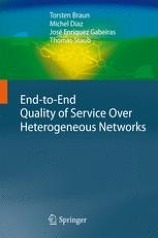
End-to-End Quality of Service Over Heterogeneous Networks
The book presents mechanisms, protocols, and system architectures to achieve end-to-end Quality-of-Service (QoS) over heterogeneous wired/wireless networks in the Internet. Particular focus is on measurement techniques, traffic engineering mechanisms and protocols, signalling protocols as well as transport protocol extensions to support fairness and QoS. It shows how those mechanisms and protocols can be combined into a comprehensive end-to-end QoS architecture to support QoS in the Internet over heterogeneous wired/wireless access networks. Finally, techniques for evaluation of QoS mechanisms such as simulation and emulation are presented.

Enabling a Simulation Capability in the Organisation
Enabling a Simulation Capability in the Organisation addresses the application of simulation modelling techniques in order to enable better informed decisions in business and industrial organisations.

Empirical Software Engineering Issues Critical Assessment and Future Directions : International Workshop, Dagstuhl Castle, Germany, June 26-30, 2006, Revised Papers
Its goal was to discuss the state of the art of empirical software engineering (ESE) by assessing past accomplishments, raising open questions, and proposing a future research agenda. At the same time, the spectrum of methods applied in ESE has broadened.

Emerging Technologies in Surgery
Tremendous acceleration and changes in scientific discovery and progress are presently occurring. These important emerging technologies that will affect the practicing surgeon within the next 10 to 20 years are illustrated in detail in this volume. Its purpose is not to review clinical experience of the common surgical practice of the past decade, but to outline and illustrate the future trends. International experts in this field demonstrate emerging procedures and significant advances.

Emergent Properties in Natural and Artificial Dynamical Systems
An important part of the science of complexity is the study of emergent properties arising through dynamical processes in various types of natural and artificial systems. This is the aim of this book, which is the outcome of a discussion meeting within the first European conference on complex systems. It presents multidisciplinary approaches for getting representations of complex systems and using different methods to extract emergent structures. This carefully edited book studies emergent features such as self organization, synchronization, opening on stability and robustness properties. Invariant techniques are presented which can express global emergent properties in dynamical and in temporal evolution systems. This book demonstrates how artificial systems such as a distributed platform can be used for simulation used to search emergent placement during simulation execution.

Emergent Intelligence of Networked Agents
his book is based on communications given at the Workshop on Emergent Intelligence of Networked Agents (WEIN 06) at the Fifth International Joint Conference on Autonomous Agents and Multi-agent Systems (AAMAS 2006), which was held at Future University, Hakodate, Japan, from May 8 to 12, 2006. WEIN 06 was especially intended to increase the awareness of researchers in these two fields sharing the common view on combining agent-based modeling and complex networks in order to develop insight and foster predictive methodologies in studying emergent intelligence on of networked agents. From the broad spectrum of activities, leading experts presented important paper and numerous practical problems appear throughout this book. The papers contained in this book are concerned with emergence of intelligent behaviors over networked agents and fostering the formation of an active multi-disciplinary community on multi-agent systems and complex networks.
