



الصفحة 17
الصفحة 17

Formal techniques for computer systems and business processes ; European performance engineering workshop, EPEW 2005 and International workshop on web services and formal methods, WS-FM 2005, Versailles, France, September 1-3, 2005, Proceedings
This book constitutes the refereed proceedings of two colocated international workshops EPEW 2005 (European Performance Engineering Workshop) and WS-FM 2005 (Web Services and Formal Methods) held in Versailles, France in September 2005. The 20 revised full papers presented were carefully reviewed and selected from 59 submissions. For EPEW 2005 only 10 papers - of the 32 submitted - were accepted for presentation; they deal with queueing theory, bounding techniques, stochastic model checking, communication schemes analysis for high-speed LAN, QOS analysis in wireless ad-hoc networks and optical networks analysis. The main topics of the 10 papers accepted for WS-FM 2005 - from 27 submissions - include: protocols and standards for WS (SOAP, WSDL, UDDI, etc.); languages and description methodologies for Choreography/Orchestration/Workflow (BPML, XLANG and BizTalk, WSFL, WS-BPEL, etc.); coordination techniques for WS (transactions, agreement, coordination services, etc.); semantics-based dynamic WS discovery services (based on Semantic Web/Ontology Techniques or other semantic theories); security, performance evaluation and quality of service of WS; semi-structured data and XML related technologies; comparisons with different related technologies/approaches.

Formal Ontology and Conceptual Realism
Theories about the ontological structure of the world have generally been described in informal, intuitive terms, and the arguments for and against them, including their consistency and adequacy as explanatory frameworks, have generally been given in even more informal terms. The goal of formal ontology is to correct for these deficiencies. By formally reconstructing an intuitive, informal ontological scheme as a formal ontology we can better determine the consistency and adequacy of that scheme; and then by comparing different reconstructed schemes with one another we can much better evaluate the arguments for and against them and come to a decision as to which system it is best to adopt.

Forensic and Legal Dentistry
Explains in detail diverse aspects of the law as it relates to dentistry and examines key issues in forensic odontostomatology. A central aim is to enable the dentist to achieve a realistic assessment of the legal situation and to reduce uncertainties and liability risk.
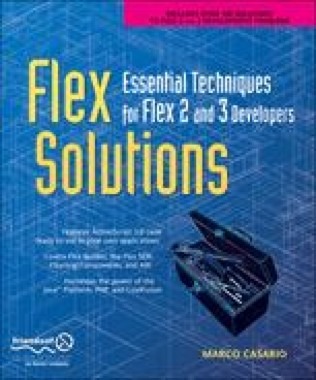
Flex solutions : Essential techniques for Flex 2 and 3 developers
Flex Solutions: Essential Techniques for Flex 2 and Flex 3 Developers faces problems and provides solutions that can be applied to any project, from the most simple to the most complex. Solutions are also provided for enhancing the security of Flex applications, and techniques are offered for optimizing the actual work environment by increasing the performance of Flex Builder, adding video content, and creating an AIR project to bring your web application onto the desktop.

Evolutionary Stasis and Change in the Dominican Republic Neogene
In practice, however, science is no less susceptible to fads, culture shifts, and pendulum swings than any other realm of human endeavor. This is an especially important feature of science to keep in mind in the present climate of shrinking government funding (at least in prop- tion to the demand) and the resulting susceptibility of individual scientists and entire disciplines to being influenced by the changing priorities of funding agencies (even if, as such agencies maintain, those priorities come ultimately “from the c- munity”). The present volume is in several important respects a testimonial to both the threats and opportunities that such scientific culture swings pose, both for the individual researcher and a wider field. When scientific research in the Dominican Republic Neogene began more than a century ago, paleontology was an essentially descriptive discipline, focused mainly on finding, describing, and documenting the taxa represented in the fossil record, and (especially in invertebrate paleontology) on using these taxa for bi- tratigraphic correlation.

Evolution of Teaching and Learning Paradigms in Intelligent Environment
This book is a fascinating window on the evolution of teaching and learning paradigms in intelligent environments. The three Australian authors include a number of chapters on issues of real relevance to today's teaching practice, including an introduction to the evolution of teaching and learning paradigms

Evidence-Based Oral Surgery : A Clinical Guide for the General Dental Practitioner
This book is designed to guide the dental practitioner in the medical and surgical management of the oral surgery patient. It provides dentists and dental professionals with up-to-date, evidence-based information on how to handle any oral surgical problem and how to work up a patient.

Evidence-Based Forensic Dentistry
Presents basic concepts in the field and describes all the standard examination procedures currently employed in the acquisition of dental evidence.

Evidence-Based Endocrinology
Evidence-based medicine (EBM) stresses the use of evidence from clinical research as the basis for medical decision making, rather than simple reliance on unsystematic clinical experience and pathophysiological rationales. EBM has changed many aspects of medical practice for the better, but its incorporation into endocrine practice has been minimal.

Evidence-based decision making in dentistry : Multidisciplinary management of the natural dentition
Covers all aspects of the evidence-based decision making process in multidisciplinary management of the natural dentition. Individual chapters focus specifically, and in detail, on endodontic, periodontal, and prosthetic considerations, identifying aspects that need to be integrated into decision making and treatment planning. Evidence-based decision making with regard to preservation of the natural tooth versus extraction and implant placement is then discussed, and a concluding chapter examines likely future trends in dentistry and how they may affect clinical decision making.

Evaluation of Multilingual and Multi-modal Information Retrieval ; 7th Workshop of the Cross-Language Evaluation Forum, CLEF 2006, Alicante, Spain, September 20-22, 2006, Revised Selected Papers
This book covers Multilingual Textual Document Retrieval, Domain-Specifig Information Retrieval, i-CLEF, QA@CLEF, ImageCLEF, CLSR, WebCLEF and GeoCLEF.

European Robotics Symposium 2006
This unique reference represents a cross-section of forefront robotics research, ranging from robotics and systems to learning, autonomy and failure detection, from vision and navigation to localization and mapping, which are based on the papers presented at the 1st European Robotics Symposium (EUROS-06) held in Palermo, Italy from 16-18 March, 2006. The European Robotics Symposium (EUROS) is a brand-new International scientific event promoted by EURON, the European Robotics Network. Since its inception in 2000, EURON links most of the European robotics research teams and today (2006) involves more than 165 universities and companies across all of its member states. The EUROS meeting will be held in Europe every other year, but international participation at all levels is strongly encouraged making it a meeting place for high-quality presentation of interesting international research on robotics.

Ethical Dimensions of the Economy : Making Use of Hegel and the Concepts of Public and Merit Goods
This book reflects philosophically about the socio-political dimension of economics. Part I provides normative reflections on the economy: Section I reflects on the interconnections between the multiple discourses on the economy, section II presents Hegel's claim that the economic order is an ethical institution and defends his ontological view of the economy against the one of Adam Smith. Section III dialogues with economists about their concepts of public and merit goods. This section defends a Hegelian ontology of the economy through an analysis of technical concepts used by economists. Part II provides applications derived from the normative analysis: Section I presents the views of authors in different academic disciplines pointing to failures in late capitalism, in particular failures of American capitalism and section II asks the question: " What must one pay attention to in a transition from a command economy to a free market?" Section III draws attention to an overlap of ideas found in Catholic Social Thought and in the publications of some recent Nobel prize winners in economics (Buchanan, Sen, Stiglitz).

Esthetic & restorative dentistry : Material selection & technique
Provides the most up-to-date information on enhanced developments, materials, and techniques that have emerged since the publication of the second edition, offering the reader a completely updated, revised, and newly illustrated overview of modern esthetic and restorative dentistry complete with tutorial videos. New topics include web-based communication with the laboratory, indirect composite chairside CAD/CAM restorations, a comparison of digital and conventional techniques, the resin composite injection technique, as well as updated information on composites and ceramic systems, including esthetic zirconia. New cases illustrate the maintenance of esthetic restorative materials, esthetic contouring, immediate dentin sealing, and novel surgical techniques such as lip repositioning, connective tissue grafting, and ridge preservation with collagen membranes.

Essentials of oral histology and embryology : A clinical approach ; 5th ed.
Uses a patient-centered approach in coveringto help dental professionals build a strong foundation in oral biology and basic science for dental professionals. It provides a clear understanding explanations of the anatomy of oral and facial tissues — and of normal and abnormal orofacial development — so that you can provide effective oral health care for all patients with abnormalities. In addition to the stages of tooth development, it covers eruption and shedding of teeth, plus the parts of teeth – including enamel, dentin, dental pulp, and cementum. Written by Daniel J. Chiego Jr., a noted dental educator and researcher, this book helps you succeed in the classroom and in clinical practice.

Essential endodontology : Prevention and treatment of apical periodontitis
Includes the most recent developments in the field, maintaining its position as the major scientific treatise of apical periodontitis. Making an often-complex subject more digestible, the book explores the scientific basis of endodontology, adopting a systematic analysis of the available clinical and laboratory evidence.

Enterprising worlds : A geographic perspective on economics, environments & ethics
Enterprising World represents the culmination of several years of work by geographers, planners, and economists. The chapters included in this volume represent the collective efforts of the International Geographical Union’s Commission on the Dynamics of Economic Spaces. This collection is the result of the 2005 annual meeting in Toledo, Ohio (USA). The chapters have been selected based on their contribution to the broader community of economic geographers and policymakers and to demonstrate the inherent interconnectedness of these themes (and at times the conceptual tension that exists between ethics, economics, and the environment) insofar as these important issues shape the contours and cleavages of contemporary regional development.

Enterprise ontology : Theory and methodology
Such a theory and a matching methodology, which has passed the test of practical experience, constitute the contents of this book. The enterprise ontology, as developed by Dietz, is the starting point for profoundly understanding the organization of an enterprise and subsequently for analyzing, (re)designing, and (re)engineering it. The approach covers numerous issues in an integrated way: business processes, in- and outsourcing, information systems, management control, staffing etc.

Enterprise interoperability II : New challenges and approaches
Interoperability: the ability of a system or a product to work with other systems or products without special effort from the user is a key issue in manufacturing and industrial enterprise generally. It is fundamental to the production of goods and services quickly and at low cost at the same time as maintaining levels of quality and customisation. Interoperability is achieved if internal and external collaborators can interact on at least three levels: data, applications and business enterprise (through the architecture of an enterprise model and making allowance for the semantics of both partners). Not only a problem of software and IT technologies, it implies support for communication and transactions between different organisations that must be based on shared business references. Today, a new and important consideration must be taken into account – economic business evaluation and the definition of dissemination policy.

Enterprise Information Systems VII
The purpose of the 7th International Conference on Enterprise Information Systems (ICEIS) was to bring together researchers, engineers and practitioners interested in the advances and business applications of information systems. Five simultaneous tracks have been held, covering different aspects of Enterprise Information Systems Applications, including Enterprise Database Technology, Systems Integration, Artificial Intelligence, Decision Support Systems, Information Systems Analysis and Specification, Internet Computing, Electronic Commerce and Human Factors.
