



الصفحة 17
الصفحة 17
Biosimilars : Regulatory, clinical, and biopharmaceutical development
Provides a comprehensive overview of the biosimilar regulatory framework, the development process and clinical aspects for development of biosimilars. The development path of a biosimilar is just as unique as a development path of a new drug, tailored by the mechanism of action, the quality of the molecule, published information on the reference product, the current competitive environment, the target market and regulatory guidance, and most importantly, the emerging totality of evidence for the proposed biosimilar during development.
Biosensing for the 21st Century
Covers trends in modern biotechnology All aspects of this interdisciplinary technology, where knowledge, methods and expertise are required from chemistry, biochemistry, microbiology, genetics, chemical engineering and computer science, are treated

Biosensing : International Research and Development
The goal of this book is to disseminate information on the worldwide status and trends in biosensing R&D to government decisionmakers and the research community. The contributors critically analyze and compare biosensing research in the United States with that being pursued in Japan, Europe and other major industrialized countries.
Biosaline Agriculture and Salinity Tolerance in Plants
This volume focuses on reclamation, management, and utilization of salt-affected soils, their sustainable use, and evaluation of plants inhabiting naturally occurring saline habitats. It is of interest to scientists and students as well as to agricultural institutions and farmers and will undoubtedly raise the scientific community's awareness of, and interest in salinity issues.

Biosaline Agriculture and High Salinity Tolerance
this book reviews the current state of knowledge in biosaline agriculture and high salinity tolerance in plants. It mainly focuses on the biotic approach to economically utilize the stress-prone areas by growing resistant plants.This volume comprises three sections: physiology and biochemistry, ecology, and molecular biology. Thus, a systematic approach has been adopted to uncover plant responses to various ecological factors at physiological and molecular levels.

Biophotonics
More profound understanding of the nature of light and light-matter interactions in biology has enabled many applications in the biology and medical fields. So a new discipline is born, namely biophotonics. The aim of this book is to review the current state-of-the-art of the field by means of authoritative chapters written by the world leaders of the respective fields. Biosensors, biochips, optical tomography, optical microsurgery, photodynamics therapy, bioactivation of gene, photobiology of skin, and nanobiophotonics are each introduced and recent advances presented. This book will be useful not only to physicians, biologists, physicists, chemists, materials scientists, and engineers but also to graduate students who are interested in these rapidly developing fields.
Biopharmaceutical manufacturing progress, trends and challenges
Source of the latest innovative research and technical development in biomanufacturing systems. It is organised into 2 parts: 1) Manufacturing of recombinant therapeutic proteins (e.g. therapeutic antibodies, biosimilars/biogenerics) and 2) Manufacturing aspects of cell and gene therapy. Each with selected chapters on the following topics for both up- and downstream, such as: Advanced process strategies, especially continuous manufacturing, Advanced culture techniques, especially single-use systems, Process transfer, scale-up/scale-down models, Processing advances/Manufacturing productivity/efficiency, Model-assisted process understanding and development/Digital Twins, Process controls and analytics, Quality control, Quality by design, Facility design and full-scale commercial systems, manufacturing technology innovation.
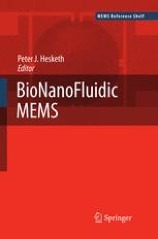
BioNanoFluidic MEMS
BioNanoFluidic MEMS explains nanofabrication and nanomaterials synthesis suitable for the development of biosensors. The fundamentals initiate an awareness for engineers and scientists who would like to develop and implement novel biosensors for various applications. In addition, the material covered includes: BioNanoFluidic MEMS connection between the interdisciplinary nature of BioNanoFluidics and MEMS BioNanoFluidics and sensor technology including Micro-Mechanical Sensors and Chemical Sensor Technologies ands-on steps for implementation of biosensor fabrication including a discussion of the clean room lithography process and etching, microsensor systems lamination, PDMS moulding, parylene deposition, and others Interconnection between the interdisciplinary nature of BioNanoFluidics and MEMS BioNanoFluidics and sensor technology including Micro-Mechanical Sensors and Chemical Sensor Technologies

Biometric User Authentication for IT Security : From Fundamentals to Handwriting
Biometric User Authentication for IT Security: From Fundamentals to Handwriting conveys general principals of passive (physiological trait like fingerprint, iris, face) and active (learned and trained behavior like voice, handwriting and gait) biometric recognition techniques to the reader. This professional book, unlike other publications in this area which concentrate on passive schemes, reflects a more comprehensive analysis of one particular active biometric technique: handwriting. Aspects which are thoroughly discussed include sensor characteristic dependency, attack scenarios, and the generation of cryptographic keys from handwriting.
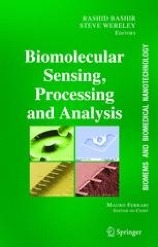
BioMEMS and biomedical nanotechnology ; Vol. IV : Biomolecular Sensing, Processing and Analysis
This volume contains 18 chapters focused on ‘Biomolecular Sensing, Processing and Analysis’, written by experts in the field of BioMEMS and biomedical nanotechnology. The chapters are groups into three broad categories of Sensors and Materials, Processing and Integrated Systems, and Microfluidics.Prof. Taun Vo-Dinh from Oakridge National Labs begins the Sensors and Materials section by providing a review of biosensors and biochips. This review is followed by an example of mechanical cantilever sensor work described by Prof. Arun Majumdar’s group at UC Berkeley and Prof. Tom Thundat at Oakridge National Laboratory.
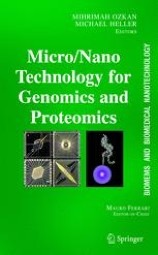
BioMEMS and biomedical nanotechnology ; Vol. II : Micro/Nano Technologies for Genomics and Proteomics
Numerous miniaturized DNA microarray, DNA chip, Lab on a Chip and biosensor devices have been developed and commercialized. Such devices are improving the way many impor-tant genomic and proteomic analyses are performed in both research and clinical diagnostic laboratories. The development of these technologies was enabled by a synergistic combina-tion of disciplines that include microfabrication, microfluidics, MEMS, organic chemistry and molecular biology. Some of these new devices and technologies utilize sophisticated mi-crofabrication processes developed by the semiconductor industry.
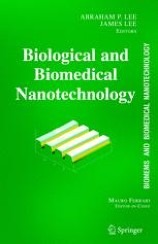
BioMEMS and Biomedical Nanotechnology : Vol. I: Biological and Biomedical Nanotechnology
Abe Lee has been working on micro/ and nanotechnology for biomedical and biotech applications since 1992. His recent research focuses on the development of integrated micro and nano fluidic chip processors for the following applications: point-of-care diagnostics, "smart" nanomedicine for early detection and treatment, stem cell biology and therapeutics, the synthesis of novel and pure materials, and biosensors to detect environmental and terrorism threats. Jim Lee's research interest includes BioMEMS/NEMS, and polymer micro/nanotechnology. In the last 4 years, he has over 20 refereed journal publications, 2 book chapters, and 5 patents in these areas. He is now leading an NSF Nanoscale Science and Engineering Center for Affordable Nanoengineering of Polymer Biomedical Devices at OSU.
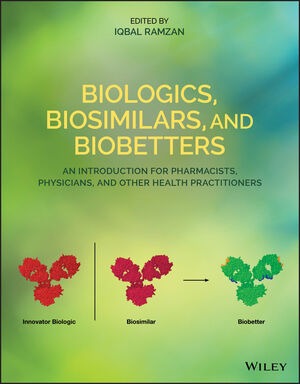
Biologics, biosimilars, and biobetters : An introduction for pharmacists, physicians and other health practitioners
Explains what pharmacists need to discuss the equivalence, efficacy, safety, and risks of biosimilars with physicians, health practitioners, and patients about Guides regulators on pragmatic approaches to dealing with these drugs in the context of rapidly evolving scientific and clinical evidence Balances scientific information on complex drugs with practical information, such as a checklist for pharmacists

Biological nitrogen fixation : Towards poverty alleviation through sustainable agriculture ; Proceedings of the 15th International nitrogen fixation congress and the 12th International Conference of the African Association for Biological Nitrogen Fixation
This volume covers recent developments in both fundamental and applied research in biological nitrogen fixation. It emphasizes the application of biological nitrogen fixation for sustainable agriculture, which should lead to poverty alleviation, environmental protection, and good agricultural practices generally. The roles of, and advances in, plant breeding, plant molecular biology, nodule physiology, and symbiotic and associative interactions between plants and microbes in sustaining agricultural productivity and soil fertility are described. The evolution of symbioses and nitrogen fixation are also covered in this volume. To ensure high agricultural productivity, while protecting the environment (both soil and water resources), requires plant cultivars that also respond to beneficial microbes.
Biological Membrane Ion Channels : Dynamics, Structure, and Applications
Ion channels are biological nanotubes that are formed by membrane proteins. Because ion channels regulate all electrical activities in living cells, understanding their mechanisms at a molecular level is a fundamental problem in biology. This book deals with recent breakthroughs in ion-channel research that have been brought about by the combined effort of experimental biophysicists and computational physicists, who together are beginning to unravel the story of these exquisitely designed biomolecules. With chapters by leading experts.
Biocompatible nanocomposites : From synthesis to applications
Presents a focused overview of biocompatible nanocomposites, emphasizing recent advancements in material design, synthesis techniques, and their expanding applications in biomedicine. It spans key areas such as regenerative medicine, drug delivery, cancer therapy, biosensing, diagnostic imaging, and vaccine delivery —illustrating how these materials are transforming modern healthcare. The book reviews widely used biomaterials including polycaprolactone, bioactive ceramics, and polymer-based hybrids, discussing their roles in cardiovascular, orthopedic, dental, maxillofacial, and ophthalmic applications.
Biocombinatorial approaches for drug finding
Genome- and proteome-based research is generating a significant increase in the number of available drug targets. Correspondingly there is an increasing need for novel, diverse compounds, particularly based on natural compounds, as screening resource
Biochemistry and molecular biology of antimicrobial drug action
This stimulating new edition of the well-respected title Biochemistry and Molecular Biology of Antimicrobial Drug Action primarily covers medically important antimicrobial agents, but also includes some compounds not in current medical use which have been invaluable as research tools in biochemistry.

Biochemistry
Biochemistry and the organization of cells -- Water : the solvent for biochemical reactions -- Amino acids and peptides -- The three-dimensional structure of proteins -- Protein purification and characterization techniques -- The behavior of proteins : enzymes -- The behavior of proteins : enzymes, mechanisms, and control -- Lipids and proteins are associated in biological membranes -- Nucleic acids : how structure conveys information -- Biosynthesis of nucleic acids : replication -- Transcription of the genetic code : the biosynthesis of RNA -- Protein synthesis : translation of the genetic message -- Nucleic acid biotechnology techniques -- Viruses, cancer, and immunology -- The importance of energy changes and electron transfer in metabolism -- Carbohydrates -- Glycolysis
Biochemical Mechanisms of Detoxification in Higher Plants : Basis of Phytoremediation
Plants play a key role in purifying the biosphere of the toxic effects of industrial activity. This book shows how systematic application of the results of investigations into the metabolism of xenobiotics (foreign, often toxic substances) in plants could make a vastly increased contribution to planetary well-being. Deep physiological knowledge gained from an accumulation of experimental data enables the great differences between the detoxifying abilities of different plants for compounds of different chemical nature to be optimally exploited. Hence planting could be far more systematically adapted to actual environmental needs than is actually the case at present.
