


تحسين النتائح
ترتيب حسب
من
الى

Ad Hoc Networks: Technologies and Protocols is a concise in-depth treatment of various constituent components of ad hoc network protocols. It reviews issues related to medium access control, scalable routing, group communications, use of directional/smart antennas, network security, and power management among other topics. The authors examine various technologies that may aid ad hoc networking including the presence of an ability to tune transmission power levels or the deployment of sophisticated smart antennae. Ad Hoc Networks: Protocols and Technologies will be immensely useful as a reference work to engineers and researchers as well as to advanced level students in the areas of wireless networks, and computer networks.
What makes an event count as an action? Typical answers appeal to the way in which the event was produced: e.g., perhaps an arm movement is an action when caused by mental states (in particular ways), but not when caused in other ways. Andrew Sneddon argues that this type of answer, which he calls "productionism", is methodologically and substantially mistaken. In particular, productionist answers to this question tend to be either individualistic or foundationalist, or both, without explicit defence.
The book covers all levels from the description of AE basics for AE beginners (level of a student) to sophisticated AE algorithms and applications to real large-scale structures as well as the observation of the cracking process in laboratory specimen to study fracture processes.

The main objective of this book is to make available to an informed audience a le gal and policy oriented study on accountability for serious human rights and inter national humanitarian law violations. It is an attempt to share the lessons learnt in accountability for atrocity crimes as conducted by the International Criminal Tri bunal for Rwanda (ICTR), and the United Nations Transitional Administration in East Timor (UNTAET). The former established subsequent to egregious atrocities that took place in 1994, and the latter following the massive outburst of violence in 1999. The book is based on two cases: Rwanda and East Timor. It is expected that it will serve as reference literature to both the legal community and policy makers on accountability for heinous international crimes.
The author undertakes an investigation into the history of Russian Freemasonry that has not been attempted previously. Her premise is that the Russian Enlightenment shows peculiar features, which prevent the application of the interpretative framework commonly used for the history of western thought. The author deals with the development of early Russian masonry, the formation of the Novikov circle in Moscow, the ‘programme’ of Rosicrucianism and the character of its Russian variant and, finally, the clash between the Rosicrucians and the State. The author concludes that the defenders of the Ancien Régime were not wrong. In fact the democratic behaviour, the critical attitude, the practice of participation, the freedom of thought, the tolerance for the diversity, the search for a direct communication with the divinity.

Integrates decision-making and environmental science. For ecologists it will bridge the gap to economics. For practitioners in environmental economics and management it will be a major reference book. It probably contains the largest collection available of expressions and basic equations that are used in environmental sciences. Applying these expressions as "rules-of-thumb" will give participants in a decision-making process a common platform for discussion and arbitration.
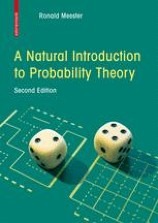
According to Leo Breiman (1968), probability theory has a right and a left hand. The right hand refers to rigorous mathematics, and the left hand refers to ‘pro- bilistic thinking’. The combination of these two aspects makes probability theory one of the most exciting ?elds in mathematics. One can study probability as a purely mathematical enterprise, but even when you do that, all the concepts that arisedo haveameaningontheintuitivelevel.Forinstance,wehaveto de?newhat we mean exactly by independent events as a mathematical concept, but clearly, we all know that when we ?ip a coin twice, the event that the ?rst gives heads is independent of the event that the second gives tails.
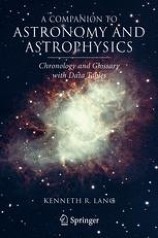
Astronomy and Astrophysics is a comprehensive, fundamental, up-to-date reference book. It is filled with vital information and basic facts for amateur astronomers and professional astrophysicists, and for anyone interested in the Universe, from the Earth and other planets to the stars, galaxies and beyond. Although serious and thorough, the language, and ideas will attract the general reader, as well as students and professionals. Astronomy and Astrophysics consists of two main parts, a Timeline and a Dictionary. The Timeline is a concise history, arranged chronologically, which provides the complete story of cosmic discovery from early Chinese and Greek astronomy to the latest findings of modern astrophysics and robotic spacecraft.
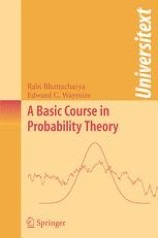
The book develops the necessary background in probability theory underlying diverse treatments of stochastic processes and their wide-ranging applications. Theorems from analysis and measure theory used in the main text are provided in comprehensive appendices, along with their proofs, for ease of reference.

سوريا - اتستراد درعا - غباغب
+963-15 2050 - 15 860 380 /1/2/3 - 11 662 3900