



الصفحة 16
الصفحة 16

Forces, Growth and Form in Soft Condensed Matter : At the Interface between Physics and Biology
This volume comprises the proceedings of a NATO Advanced Study Institute held at Geilo, Norway, 24 March - 3 April 2003, the seventeenth ASI in a series held every two years since 1971. The objective of this ASI was to identify and discuss areas where synergism between modern physics, soft condensed matter and biology might be most fruitful. The main pedagogical approach was to have lecturers focussing on basic understanding of important aspects of the relative role of the various interaction- electrostatic, hydrophobic, steric, conformational, van der Waals etc. Soft condensed matter and the connection between physics and biology have been the themes of several earlier Geilo Schools. A return to these subjects thus allowed a fresh look and a possibility for defining new directions for research. Examples of soft materials, which were discussed at this ASI, included colloidal dispersions, gels, biopolymers and charged polymer solutions, polyelectrolytes, protein/membrane complexes, nucleic acids and their complexes. Indeed, most forms of condensed matter are soft and these substances are composed of aggregates and macromolecules, with interactions that are too weak and complex to form crystals spontaneously. A characteristic feature is that small external forces, slight perturbations in temperature, pressure or concentration, can all be enough to induce significant structural changes. Thermal fluctuations are almost by definition strong in soft materials and entropy is a predominant determinant of structure, so that disorder, slow dynamics and plastic deformation are the rule. Hence the phrase ‘soft condensed matter’ has been coined.

Food-Borne Parasitic Zoonoses : Fish and Plant-Borne Parasites
The focus of this book is on those zoonoses that are transmitted by fish, plant and invertebrate foods. While people, especially those living in developed countries, are commonly aware of meat-borne zoonoses such as trichinellosis and cysticercosis, fewer are acquainted with parasitic diseases caused by liver, lung and intestinal flukes, fish-borne tapeworms, and tissue roundworms. This book reviews not only the prevalence and distribution of these zoonoses, including available health and economic impact data, but also highlights gaps in our knowledge base that must be filled in order to gain insights on approaches to prevention. The topics on epidemiology, diagnosis, and clinical aspects emphasize knowledge gaps that limit a full understanding of these zoonoses, and target where greater research investments on these parasitic diseases should be focused.

Foodborne Microbial Pathogens : Mechanisms and Pathogenesis
The author presents up-to-date information on molecular and cellular mechanism of several major foodborne microbial pathogens, including select agents for bioterrorism, virulence genes and their regulation in the host or the food environment, pathogenicity testing models, clinical symptoms, and prevention and control strategies. In order to understand the disease process, one must have certain understanding about the role of the immune system. Thus this book also covers the host parasite interaction to a level where the readers will have a better appreciation for the disease mechanism.

Food addiction
This approach acknowledges the apparent parallels between substance use disorders and overeating of highly palatable, high-caloric foods. Although this idea seems to be relatively new, research on food addiction actually encompasses several decades, a fact that often remains unrecognized. Scientific use of the term addiction in reference to chocolate even dates back to the 19th century. In the 20th century, food addiction research underwent several paradigm shifts, which include changing foci on anorexia nervosa, bulimia nervosa, obesity, or binge eating disorder. Thus, the purpose of this review is to describe the history and state of the art of food addiction research and to demonstrate its development and refinement of definitions and methodologies

Food - drug interactions
The effect of drug on a person may be different than expected because that drug interacts with another drug the person is taking (drug-drug interaction), food, beverages, dietary supplements the person is consuming (drug-nutrient/food interaction) or another disease the person has (drug-disease interaction). A drug interaction is a situation in which a substance affects the activity of a drug, i.e. the effects are increased or decreased, or they produce a new effect that neither produces on its own. These interactions may occur out of accidental misuse or due to lack of knowledge about the active ingredients involved in the relevant substances. Regarding food-drug interactions physicians and pharmacists recognize that some foods and drugs, when taken simultaneously, can alter the body's ability to utilize a particular food or drug, or cause serious side effects.
Fluid dynamics of cavitation and cavitating turbopumps
The book focuses on the fluid dynamics of cavitation with special reference to high power density turbopumps, where it represents the major source of performance and life degradation and often generates the conditions for the onset of dangerous fluid dynamic instabilities. To this purpose the first part of the book covers the more fundamental aspects of cavitation (nucleation, bubble dynamics, thermodynamic effects, cavitation erosion, stability of parallel bubbly flows) and the main kinds of cavitating flows (attached cavitation, cloud cavitation, supercavitation, ventilated supercavities, vortex cavitation, shear cavitation). The second part focuses on the hydrodynamics and instabilities of cavitating turbopumps (cavitation surge, rotating cavitation, higher order cavitation surge, rotordynamic whirl forces). Finally, the third part illustrates the alternative approaches for modeling and engineering simulation of cavitating flows.
Flowering Plants. Eudicots: Asterales
This volume contains a complete systematic treatment of the flowering plant order Asterales, comprising 12 families with approx. 1,720 genera and about 26,300 species. The order includes Compositae as the largest family of flowering plants. Based on traditional studies, several of the constituent families have long been recognized as being closely interrelated. The inclusion in the order of Alseuosmiaceae, Argophyllaceae, Carpodetaceae, Phellinaceae and Rousseaceae is the result mainly of new advances in molecular systematics. Identification keys are provided for all genera, and likely phylogenetic relationships are discussed extensively. The wealth of information contained in this volume makes it an indispensable source for all working in the fields of pure and applied plant sciences.
Flowering Plants. Eudicots : Berberidopsidales, Buxales, Crossosomatales, Fabales p.p., Geraniales, Gunnerales, Myrtales p.p., Proteales, Saxifragales, Vitales, Zygophyllales, Clusiaceae Alliance, Passifloraceae Alliance, Dilleniaceae, Huaceae, Picramniaceae, Sabiaceae
In this volume, the ninth of the series, treatments are offered for 52 families containing 432 genera belonging to 13 eudicot orders, many of which have recently been newly designed; four families remain unassigned to order. Emphasis is on the early-diverging eudicots and basal core eudicots the phylogenetic relationships and diversification of which have recently been in focus and are critically discussed. Systematically relevant information includes descriptions of families and genera, keys to the genera, and references to recent revisions. Introductions to the families provide convenient, in-depth overviews of key aspects of systematics. The wealth and precision of information contained in this volume will make it an important source of reference for both the scholar and the practitioner in the fields of pure and applied plant sciences.
Flow cytometry in hematopathology : A visual approach to data analysis and interpretation
Although instrumentation and laboratory techniques for flow cytometry (FCM) immunophenotyping of hematopoietic malignancies are well documented, there is relatively little information on how best to perform data analysis, a critical step in FCM testing. In Flow Cytometry in Hematopathology: A Visual Approach to Data Analysis and Interpretation, three physicians highly experienced in laboratory hematopathology and FCM offer a unique systematic approach to FCM data analysis and interpretation based on the visual inspection of dual parameter FCM graphics. This step-by-step approach to optimal FCM data analysis is demonstrated by means of numerous FCM graphics derived from actual well-documented clinical cases.The focus of the additional material is on the TCR-Vb eight-tube kit which has greatly facilitated the evaluation mature T-cell disorders, and on the DNA dye DRAQ5 for improved grading of malignant lymphoma. The authors also include notes on "tricks of the trade" and pitfalls to avoid. The discussion, covering leukemias, lymphomas, and other conditions, moves from simple to complex specimens, with an emphasis on visual pattern analysis.

Flavonoids as nutraceuticals
Flavonoids are well-known plant metabolites that have extraordinary properties that can be used for treating health issues. The pharmaceutical importance of flavonoids is due to their anti-depressant, anti-viral, anti-inflammatory, and antioxidant capacities. They are also of great importance when it comes to neuroprotection, cardiovascular disorders, and many types of cancer. Flavonoids are also easily available and produce less harmful side effects than some conventional therapeutics. This new volume examines the growing use of flavonoids for prevention and treatment of diseases and discusses their beneficial mechanisms. Chapters in the volume address diverse uses as anti-aging tools, as anti-inflammatory agents, for treating pregnancy-induced disorders, as a promising tool to combat infection of Covid-19, etc. The book explores their specific therapeutic antiviral potentials, the gene expression by flavonoids, and the role of flavonoids in agriculture.

FitBuddy : An artificial intelligence powered personal trainer
FitBuddy App is a sports application that employs artificial intelligence in its job as a personal trainer that enables users to exercise anywhere with convenience, tremendous benefit, and high accuracy. The user can exercise with or without weights, in addition to cycling and running. The user must first provide the application with the personal data it has asked for in order to create an appropriate sports program for the user. After that, the user may explore the sports program's weeks and day's sections.
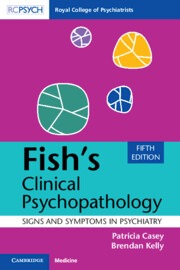
Fishs clinical psychopathology : Signs and symptoms in psychiatry
The fifth edition of this modern classic presents the clinical descriptions and psychopathological insights for which this text is renowned, and adds suggested questions to assist with eliciting key symptoms. It also covers recent revisions of diagnostic classification systems, including the World Health Organization's ICD-11: International Classification of Diseases. Clear and readable, this new edition provides concise descriptions of the signs and symptoms of mental illness and astute accounts of the varied manifestations of disordered psychological function. Designed for use in clinical practice, this is an essential text for students of medicine, trainees in psychiatry, and practising psychiatrists.

Finite-state methods and natural language processing ; 5th International Workshop, FSMNLP 2005, Helsinki, Finland, September 1-2, 2005, Revised Papers
This book constitutes the thoroughly refereed post-proceedings of the 5th International Workshop on Finite-State Methods in Natural Language Processing, FSMNLP 2005, held in Helsinki, Finland, September 2005. The book presents 24 revised full papers and seven revised poster papers together with two invited contributions and abstracts of six software demos. Topics include morphology, optimality theory, some special FSM families, weighted FSM algorithms, FSM representations, exploration, ordered structures, and surface parsing.

Finite model theory and its applications
This book gives a broad overview of core topics of finite model theory: expressive power, descriptive complexity, and zero-one laws, together with selected applications to database theory and artificial intelligence, especially, constraint databases and constraint satisfaction problems. The final chapter provides a concise modern introduction to modal logic, which emphasizes the continuity in spirit and technique with finite model theory. This underlying spirit involves the use of various fragments of, and hierarchies within, first order, second order, fixed point, and infinitary logics to gain insight into phenomena in complexity theory and combinatorics.

Finite Elements III : First-Order and Time-Dependent PDEs
Volume III is divided into 28 chapters. The first eight chapters focus on the symmetric positive systems of first-order PDEs called Friedrichs' systems. This part of the book presents a comprehensive and unified treatment of various stabilization techniques from the existing literature. It discusses applications to advection and advection-diffusion equations and various PDEs written in mixed form such as Darcy and Stokes flows and Maxwell's equations. The remainder of Volume III addresses time-dependent problems: parabolic equations (such as the heat equation), evolution equations without coercivity (Stokes flows, Friedrichs' systems), and nonlinear hyperbolic equations (scalar conservation equations, hyperbolic systems). It offers a fresh perspective on the analysis of well-known time-stepping methods. The last five chapters discuss the approximation of hyperbolic equations with finite elements. Here again a new perspective is proposed.

Financing the end-to-end supply chain : A reference guide to supply chain finance
Provides readers with a comprehensive understanding of the financial synergies across the supply chain / Combines theory and practice to tackle key issues and adapt supply chain finance to individual organizations' circumstances/ Presents several initiatives to coordinate and develop cross-border financing from institutions such as the World Bank

Financial mathematics, derivatives and structured products
Introduces readers to the financial markets, derivatives, structured products and how the products are modelled and implemented by practitioners. In addition, it equips readers with the necessary knowledge of financial markets needed in order to work as product structurers, traders, sales or risk managers. As the book seeks to unify the derivatives modelling and the financial engineering practice in the market, it will be of interest to financial practitioners and academic researchers alike. Further, it takes a different route from the existing financial mathematics books, and will appeal to students and practitioners with or without a scientific background. The book can also be used as a textbook for the following courses: Financial Mathematics (undergraduate level) Stochastic Modelling in Finance (postgraduate level) Financial Markets and Derivatives (undergraduate level) Structured Products and Solutions (undergraduate/postgraduate level)
Fiber Concrete : In Construction
Helps the user to correctly use fiber-reinforced concrete as a building material in accordance with its properties in order to create a long-lasting building for the client at low cost. Fiber-reinforced concrete as an extension of concrete offers considerable advantages for building practice, which, based on the material properties, enable a very long service life.Fiber-reinforced concrete is particularly suitable for an aggressive environment such as salt exposure, since corrosion can be completely avoided. Particular attention is also paid to the shrinkage cracks that occur in the concrete and how they can be and how these can be avoided when using fibers.

Fetus abnormalities relating drug
Drugs use in pregnancy remains a major public health problem. Fetal teratogenicity results from the effect of these substances during fetal development, particularly when used in combination. Approximately 3-5% of live births are complicated by a birth defect each year totaling around 120,000 babies. Additionally, more women taking any kind of medication has more than doubled in the last 30 years. Current evidence suggests that between 65%-94 % of women take at least one prescription drug during pregnancy. Nearly 70% of women are taking a medication in the first trimester during organogenesis. On average, women are taking 3 medications in pregnancy with over 50% of women using four or more. This includes over the counter medications and herbal supplements. During pregnancy, drugs are often required to treat certain disorders.

Ferro- and Antiferroelectricity : Order/Disorder versus Displacive
Solid-state systems are frequently classi?ed according to their physical, str- tural or chemical properties. Such schemes are extremely helpful since pr- erties related to any such classi?cation are typically known and facilitate id- tifying solids with special material classes. The best-known examples of these schemes are conductivity or resistivity measurements by means of which m- als are easily distinguishable from insulators. However, frequently clear-cut decisions between material classes are not possible, since anisotropy, chemical composition, binding forces and local effects wash out distinct properties and lead to competition or coexistence. Such unresolved situations are especially typical for transition metal oxides that exhibit a variety of ground-state properties in a fascinating way.
