



الصفحة 15
الصفحة 15

Failures in concrete structures : Case studies in reinforced and prestressed concrete
This selection of the author’s firsthand experience with incidents with RC and prestressed structures helps readers avoid the same errors—mistakes discovered at the design stage, or that led to failures or partial structure collapse. It focuses on misunderstanding of structures or codes of practice and specifics during construction.

Failure case studies steel structures
Supplies a summary of the published findings from eight steel structure failure investigations and a valuable collection of references that can be used by civil engineering students and practicing engineers to improve their failure literacy. Engineering professors and students can use these case studies as the basis for class discussions, a starting point for further research, and a reminder that learning from past failures can avoid similar failures in the future and lead to improved engineering practices.

Extreme Man-Made and Natural Hazards in Dynamics of Structures
The present threat of the terrorist attacks or accidental explosions, the climate change which brings strong stormy winds or yet the destructive earthquake motion that occurs in previously inactive regions or brings about tsunamis, are a few examples of the kind of applications we seek to address in this work.

Extragalactic Astronomy and Cosmology : An Introduction
This textbook introduces the astronomy of galaxies, their structure, their active galactic nuclei, their evolution and their large scale distribution. Starting with a detailed description of our Milky Way, the book examines the formation of structures and astronomical objects in the early universe.
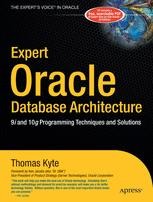
Expert Oracle Database Architecture : 9i and 10g Programming Techniques and Solutions
This is a defining book on the Oracle database for any developer or database administrator who works with Oracle-driven database applications. Tom Kyte has a simple philosophy: you can treat Oracle as a black box and just stick data into it or you can understand how it works and exploit it as a powerful computing environment. If you choose the latter, then you will find that there are few information management problems that you cannot solve quickly and elegantly. Expert Oracle Database Architecture is the first of a three-book series that completely explores and defines the Oracle database. It covers all of the most important Oracle architecture features, including: Files, memory structures and processes / Locking and latching / Transactions, concurrency and multi-versioning / Tables and Indexes / Datatypes / Partitioning and parallelism Each feature is taught in a proof-by-example manner, not only discussing what it is, but also how it works, how to implement software using it, and the common pitfalls associated with it.

Experimenting with Dynamic Macromodels : Growth and Cycles
This book presents a macroeconomic dynamic model à la Solow-Swan, including the market for labour, in a discrete time structure. Labour supply is modelled as a reversed S curve (derived in the appendix). The models are expanded to include expenditure on R&D (thus endogenous technical progress), and public expenditure on infrastructures. For each of the three models, numerical simulations are implemented in MAPLE, and the results are shown in time series figures, which make it easy to detect that even small changes in the parameters produce responses in the time behaviour of the main variables: from steady growth, to regular cycles, to chaotic-like time paths. The simulations show that cycles do not promote material welfare, as measured by total undiscounted consumption along the time horizon, and that the comparative action of R&D versus public expenditure is strictly linked to the values assigned to the parameters.

Experimental vibration analysis for civil structures : Testing, sensing, monitoring, and control
Covers a wide range of topics in the areas of vibration testing, instrumentation, and analysis of civil engineering and critical infrastructure. It explains how recent research, development, and applications in experimental vibration analysis of civil engineering structures have progressed significantly due to advancements in the fields of sensor and testing technologies, instrumentation, data acquisition systems, computer technology, computational modeling and simulation of large and complex civil infrastructure systems. The book also examines how cutting-edge artificial intelligence and data analytics can be applied to infrastructure systems.

Experimental analysis of nano and engineering materials and structures ; Proceedings of the 13th international conference on experimental mechanics, Alexandroupolis, Greece, July 1-6, 2007
ICEM13 focused on all aspects of experimental mechanics of solids with emphasis on mechanical characterization and testing at the micro and nano scale levels. The technical program of ICEM13 was the product of hard work and devotion of more than 100 world leading experts. This volume contains two-page abstracts of the 482 papers presented at ICEM13. The accompanying CD contains the full length papers. The abstracts of the fifteen plenary lectures are included in the beginning of the book. The remaining 467 abstracts are arranged in 23 tracks and 28 special symposia/sessions with 225 and 242 abstracts, respectively. The papers of the tracks have been contributed from open call, while the papers of the symposia/sessions have been solicited by the respective organizers.
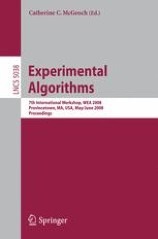
Experimental Algorithms ; 7th International Workshop, WEA 2008 Provincetown, MA, USA, May 30-June 1, 2008 Proceedings
The Workshop on Experimental Algorithms, WEA, is intended to be an international forum for research on the experimental evaluation and engineering of algorithms, as well as in various aspects of computational optimization and its applications. The emphasis of the workshop is the use of experimental me- ods to guide the design, analysis, implementation, and evaluation of algorithms, heuristics, and optimization programs. WEA 2008 was held at the Provincetown Inn, Provincetown, MA, USA, on May 30 – June 1, 2008. This was the seventh workshop of the series.

Evolutionary Synthesis of Pattern Recognition Systems
Evolutionary Synthesis of Pattern Recognition Systems presents novel effective approaches based on evolutionary computational techniques, such as genetic programming (GP), linear genetic programming (LGP), coevolutionary genetic programming (CGP) and genetic algorithms (GA) to automate the synthesis and analysis of object detection and recognition systems. The book’s concepts, principles, and methodologies will enable readers to automatically build robust and flexible systems—in a systematic manner—that can provide human-competitive performance and reduce the cost of designing and maintaining these systems. Its content covers all key aspects of object recognition: object detection, feature selection, feature discovery, object recognition, domain knowledge. Basic knowledge of programming and data structures, and some calculus, is presupposed.ing the book’s novel ideas

Evolutionary Multiobjective Optimization : Theoretical Advances and Applications
Evolutionary Multiobjective Optimization is a rare collection of the latest state-of-the-art theoretical research, design challenges and applications in the field of multiobjective optimization paradigms using evolutionary algorithms. It includes two introductory chapters giving all the fundamental definitions, several complex test functions and a practical problem involving the multiobjective optimization of space structures under static and seismic loading conditions used to illustrate the various multiobjective optimization concepts.

Evolutionary computation, machine learning and data mining in bioinformatics ; 6th European Conference, EvoBIO 2008, Naples, Italy, March 26-28, 2008. Proceedings
The feld of bioinformatics has two main objectives: the creation and main- nance of biological databases, and the discovery of knowledge from life sciences data in order to unravel the mysteries of biological function, leading to new drugs and therapies for human disease. Life sciences data come in the form of biological sequences, structures, pathways, or literature. One major aspect of discovering biological knowledge is to search, predict, or model specifc infortioninagivendatasetinorderto generate new in teresting knowledge.Computer science methods such as evolutionary computation, machine learning, and data mining all have a great deal to ofer the feld of bioinformatics.

Evolutionary Algorithms for Solving Multi-Objective Problems
This book for Solving Multi-Objective Problems, significantly augmented with contemporary knowledge and adapted for the classroom. All the various features of multi-objective evolutionary algorithms (MOEAs) are presented in an innovative and student-friendly fashion, incorporating state-of-the-art research results. The diversity of serial and parallel MOEA structures are given, evaluated and compared. The book provides detailed insight into the application of MOEA techniques to an array of practical problems. The assortment of test suites are discussed along with the variety of appropriate metrics and relevant statistical performance techniques.

Euro-Par 2019 : Parallel Processing Workshops ; Euro-Par 2019 International Workshops, Göttingen, Germany, August 26–30, 2019, Revised Selected Papers
Euro-Par is an annual, international conference in Europe, covering all aspects of parallel and distributed processing. These range from theory to practice, from small to the largest parallel and distributed systems and infrastructures, from fundamental computational problems to full-edged applications, from architecture, compiler, language and interface design and implementation to tools, support infrastructures, and application performance aspects.

Ethnopharmacology of Medicinal Plants : Asia and the Pacific
This book presents several aspects of the pharmacology, chemistry, botany and folkloric use of selected medicinal plants that can be found in Asia and the Pacific. It is generously illustrated with line drawings for many of the plants under discussion, as well as examples of chemical structures.

Ethnobotany : A phytochemical perspective
Explores the chemistry behind hundreds of plant medicines, dyes, fibers, flavors, poisons, insect repellants, and many other uses of botanicals. Bridging the gap between ethnobotany and chemistry, this book presents an introduction to botany, ethnobotany, and phytochemistry to clearly join these fields of study and highlight their importance in the discovery of botanical uses in modern industry and research. Part I. Ethnobotany, explores the history of plant exploration, current issues such as conservation and intellectual property rights, and a review of plant anatomy. An extensive section on plant taxonomy highlights particularly influential and economically important plants from across the plant kingdom. Part II. Phytochemistry, provides fundamentals of secondary metabolism, includes line drawings of biosynthetic pathways and chemical structures, and describes traditional and modern methods of plant extraction and analysis. The last section is devoted to the history of native plants and people and case studies on plants that changed the course of human history from five geographical regions: Africa, the Americas, Asia, Europe, and Ocean. Throughout the entire book, vivid color photographs bring science to life, capturing the essence of human botanical knowledge and the beauty of the plant kingdom.

Essentials of mechanical stress analysis
Essentials of Mechanical Stress Analysis, updated for the second edition, covers stress analysis from an interdisciplinary perspective. Discussing techniques and theories essential to analysing structures, the book covers both analytical and numerical approaches. Also covering beams, plates, columns and elastic instability, the book discusses fatigue, life cycle, energy methods and MathCAD sample code.

E-science : Open, social and virtual technology for research collaboration
This book shows the breadth and various facets of e-Science, while also illustrating their shared core. Changes in scientific work are driven by the shift to grid-based worlds, the use of information and communication systems, and the existential infrastructure, which includes global collaboration. In this context, the book addresses emerging issues such as open access, collaboration and virtual communities and highlights the diverse range of developments associated with e-Science. As such, it will be of interest to researchers and scholars in the fields of information technology and knowledge management.

Environmentally Friendly Coastal Protection ; Proceedings of the NATO Advanced Research Workshop on Environmentally Friendly Coastal Protection Structures, Varna, Bulgaria, 25-27 May 2004
Coast lines have been and are the central lines of civilization around the world with increasing pressure from both sides - the hinterland and the sea. This book features papers covering related aspects of Environmentally Friendly Coastal Structures - coast, engineering structures, water, sediments, ecosystems in their complicated interaction

Environmental Problems of Central Asia and their Economic, Social and Security Impacts
entral Asia is a developing region with great potential, but there are valid concerns that current resource management practices are not sustainable, particularly with regard to the management of water resources. Recent changes in social structures, accompanied by regional climate change, have caused substantial environmental changes leading to security concerns in the region. As a result, the local economy has been significantly impacted to the extent that the potential for social unrest is of great concern.
