



الصفحة 15
الصفحة 15
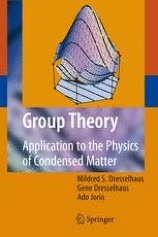
Group theory : Application to the physics of condensed matter
Every process in physics is governed by selection rules that are the consequence of symmetry requirements. The beauty and strength of group theory resides in the transformation of many complex symmetry operations into a very simple linear algebra. This concise and class-tested book has been pedagogically tailored over 30 years MIT and 2 years at the University Federal of Minas Gerais (UFMG) in Brazil. The approach centers on the conviction that teaching group theory in close connection with applications helps students to learn, understand and use it for their own needs. For this reason, the theoretical background is confined to the first 4 introductory chapters (6-8 classroom hours). From there, each chapter develops new theory while introducing applications so that the students can best retain new concepts, build on concepts learned the previous week, and see interrelations between topics as presented.

Grid computing in life science ; 1st International Workshop on Life Science Grid, LSGRID 2004 Kanazawa, Japan, May 31-June 1, 2004, Revised Selected and Invited Papers
Researchers in the ?eld of life sciences rely increasingly on information te- nology to extract and manage relevant knowledge. The complex computational and data management needs of life science research make Grid technologies an attractive support solution. However, many important issues must be addressed before the Life Science Grid becomes commonplace. The 1st International Life Science Grid Workshop (LSGRID 2004) was held in Kanazawa Japan, May 31–June 1, 2004. This workshop focused on life s- ence applications of grid systems especially for bionetwork research and systems biology which require heterogeneous data integration from genome to phenome, mathematical modeling and simulation from molecular to population levels, and high-performance computing including parallel processing, special hardware and grid computing.
Greens Functions in Quantum Physics
The main part of this book is devoted to the simplest kind of Green's functions, namely the solutions of linear differential equations with a -function source. It is shown that these familiar Green's functions are a powerful tool for obtaining relatively simple and general solutions of basic problems such as scattering and bound-level information. The bound-level treatment gives a clear physical understanding of "difficult" questions such as superconductivity, the Kondo effect, and, to a lesser degree, disorder-induced localization. The more advanced subject of many-body Green's functions is presented in the last part of the book.

Gravity, Black Holes, and the Very Early Universe : An Introduction to General Relativity and Cosmology
In the early 1900s, Albert Einstein formulated two theories that would forever change the landscape of physics: the Special Theory of Relativity and the General Theory of Relativity. By 1925, quantum mechanics had been born out of the dissection of these two theories, and shortly after that, relativistic quantum field theory. We now had in place some important ties between the laws of physics and the types of particle interactions the new physics was uncovering. Gravity is one of the four types of forces that are found throughout the universe. In fact, although it is a relatively weak force, it operates at huge distances, and so must be accounted for in any cosmological system. Unfortunately, gravity continues to defy our neat categorization of how all the forces in nature work together.

Graphs, Dioids and Semirings : New Models and Algorithms
The primary objectives of GRAPHS, DIOÏDS AND SEMIRINGS: New Models and Algorithms are to emphasize the deep relations existing between the semiring and dioïd structures with graphs and their combinatorial properties, while demonstrating the modeling and problem-solving capability and flexibility of these structures. In addition the book provides an extensive overview of the mathematical properties employed by "nonclassical" algebraic structures, which either extend usual algebra (i.e., semirings), or correspond to a new branch of algebra (i.e., dioïds), apart from the classical structures of groups, rings, and fields.
Graph Transformation ; 13th International Conference, ICGT 2020, Held as Part of STAF 2020, Bergen, Norway, June 25–26, 2020, Proceedings
This book constitutes the refereed proceedings of the 13th International Conference on Graph Transformation, ICGT 2020, in Bergen, Norway, in June 2020.* The 16 research papers and 4 tool paper presented in this book were carefully reviewed and selected from 40 submissions. One invited paper is also included. The papers deal with the following topics: theoretical advances; application domains; and tool presentations.

Graph theory, combinatorics and algorithms: interdisciplinary applications
focuses on discrete mathematics and combinatorial algorithms interacting with real world problems in computer science, operations research, applied mathematics and engineering. The book contains eleven chapters written by experts in their respective fields, and covers a wide spectrum of high-interest problems across these discipline domains.The chapters focus on "real world" applications, all of which will be of considerable interest across the areas of Operations Research, Computer Science, Applied Mathematics, and Engineering. These problems include Internet congestion control, high-speed communication networks, multi-object auctions, resource allocation, software testing, data structures, etc. In sum, this is a book focused on major, contemporary problems, written by the top research scholars in the field, using cutting-edge mathematical and computational techniques.

Graph theory
Graph theory is a flourishing discipline containing a body of beautiful and powerful theorems of wide applicability. Its explosive growth in recent years is mainly due to its role as an essential structure underpinning modern applied mathematics – computer science, combinatorial optimization, and operations research in particular – but also to its increasing application in the more applied sciences. The versatility of graphs makes them indispensable tools in the design and analysis of communication networks, for instance. The primary aim of this book is to present a coherent introduction to the subject, suitable as a textbook for advanced undergraduate and beginning graduate students in mathematics and computer science. It provides a systematic treatment of the theory of graphs without sacrificing its intuitive and aesthetic appeal. Commonly used proof techniques are described and illustrated, and a wealth of exercises - of varying levels of difficulty - are provided to help the reader master the techniques and reinforce their grasp of the material.

Graph structures for knowledge representation and reasoning ; 6th International Workshop, GKR 2020, virtual event, September 5, 2020, revised selected papers
This book constitutes the thoroughly refereed post-conference proceedings of the 6th International Workshop on Graph Structures for Knowledge Representation and Reasoning, GKR 2020, held virtually in September 2020, associated with ECAI 2020, the 24th European Conference on Artificial Intelligence.

Grammatical Inference ; Algorithms and Applications : 9th International Colloquium, ICGI 2008 Saint-Malo, France, September 22-24, 2008 Proceedings
This book constitutes the refereed proceedings of the 9th International Colloquium on Grammatical Inference, ICGI 2008, held in Saint-Malo, France, in September 2008.The 21 revised full papers and 8 revised short papers presented were carefully reviewed and selected from 36 submissions. The topics of the papers presented vary from theoretical results of learning algorithms to innovative applications of grammatical inference, and from learning several interesting classes of formal grammars to applications to natural language processing.

GPS : Theory, algorithms and applications
This reference and handbook describes Global Positioning System (GPS) theory, algorithms and applications. It is primarily based upon source-code descriptions of the KSGSoft program developed by author at the GFZ in Potsdam. The theory and algorithms are revised and extended for a new development of a multiple functional GPS software. New concepts such as the unified GPS data processing method and ambiguity-ionospheric algorithm, as well as general ambiguity search criteria, are reported for the first time. Mathematically rigorous, the book begins with the basics of coordinate and time systems and satellite orbits, as well as GPS observables, and deals with topics such as physical influences, observation equations, adjustment and filtering, ambiguity resolution, data processing, kinematic positioning, and the determination of perturbed orbits.

Global optimization and constraint satisfaction ; 2nd International Workshop, COCOS 2003, Lausanne, Switzerland, Nevember 18-21, 2003, Revised Selected Papers
Theformulationofmanypracticalproblemsnaturallyinvolvesconstraintsonthe variables entering the mathematical model of a real-life situation to be analyzed. It is of great interest to ?nd the possible scenarios satisfying all constraints, and, iftherearemanyofthem,eitherto?ndthebestsolution,ortoobtainacompact, explicit representation of the whole feasible set. The 2nd Workshop on Global Constrained Optimization and Constraint S- isfaction, COCOS 2003, which took place during November 18–21, 2003 in L- sanne, Switzerland, was dedicated to theoretical, algorithmic, and application oriented advances in answering these questions. Here global optimization refers to ?nding the absolutely best feasible point, while constraint satisfaction refers to?ndingallpossiblefeasiblepoints.AsinCOCOS2002,the?rstsuchworkshop (see the proceeedings [1]), the emphasis was on complete solving techniques for problems involving continuous variables that provide all solutions with full rigor, and on applications which, however, were allowed to have relaxed standards of rigor.

Getting Started with MuPAD
The world of mathematics is probably one of the most fascinating creations of mankind. The world of mathematics with a Computer Algebra System, like MuPAD, is even more fascinating. With MuPAD, we can develop mathematical concepts, explore them and visualize them with just a few simple commands.This book is a gentle introduction to MuPAD - a modern Computer Algebra System. A large chapter of the book is devoted to the graphical visualization of mathematical concepts ,and MuPAD graphics are also used extensively throughout the rest of the book.

Geometry of Quantum Theory ; 2nd ed.
This book a classic on the foundations of quantum theory. This view, which is essentially geometric and relies on the concept of symmetry. The mathematical treatment of symmetry in quantum theory is based on the theory of group representations, and this book includes a self-contained treatment of the parts of this theory that are most useful in quantum physics.

Geometry for Computer Graphics : Formulae, Examples and Proofs
Geometry is the cornerstone of computer graphics and computer animation, and provides the framework and tools for solving problems in two and three dimensions. This may be in the form of describing simple shapes such as a circle, ellipse, or parabola, or complex problems such as rotating 3D objects about an arbitrary axis. Geometry for Computer Graphics draws together a wide variety of geometric information that will provide a sourcebook of facts, examples, and proofs for students, academics, researchers, and professional practitioners.

Geometry and Topology in Hamiltonian Dynamics and Statistical Mechanics
This book explores the foundations of hamiltonian dynamical systems and statistical mechanics, in particular phase transition, from the point of view of geometry and topology. A broad participation of topology in these fields has been lacking and this book will provide a welcome overview of the current research in the area, in which the author himself is a pioneer. Using geometrical thinking to solve fundamental problems in these areas, compared to the purely analytical methods usually used in physics could be highly productive. The author skillfully guides the reader, whether mathematician or physicists through the background needed to understand and use these techniques.

Geometric Qp Functions
This book documents the rich structure of the holomorphic Q functions which are geometric in the sense that they transform naturally under conformal mappings. Particular emphasis is placed on recent developments based on the interaction between geometric function/measure theory and other branches of mathematical analysis, including potential theory, complex variables, harmonic analysis, functional analysis, and operator theory." "Largely self-contained, this book will be an instructional and reference work for advanced courses and research in conformal analysis, geometry, or function spaces.

Geometric Fundamentals of Robotics
Geometric Fundamentals of Robotics provides an elegant introduction to the geometric concepts that are important to applications in robotics. This second edition is still unique in providing a deep understanding of the subject: rather than focusing on computational results in kinematics and robotics, it includes significant state-of-the art material that reflects important advances in the field, connecting robotics back to mathematical fundamentals in group theory and geometry.
Geodetic Deformation Monitoring : From Geophysical to Engineering Roles ; IAG Symposium Jaén, Spain, March 7-19,2005
Geodesy is the science dealing with the determination of the position of points in space, the shape and gravity field of the Earth and with their time variations. A consequence is that geodesists feel as a permanent subject of research, the detection, analysis and interpretation of spatial deformation as well as gravity field variation. This book collects 36 selected papers from the International Symposium on Geodetic Deformation Monitoring held in Jaén (Spain) from 17th to 19th March 2005. The main topics covered in the symposium were: mathematical and statistical models for crustal deformation analysis, deformation monitoring from GPS and InSAR data: analysis and geophysical interpretation, geodetic monitoring of movements in civil engineering, integration of spatial and terrestrial techniques in deformation studies, geodynamical applications of gravimetric observations and present-day geodetic instrumentation for deformation monitoring. This volume is a good overview of theoretical matters, models and results.

Génetique statistique = Statistical genetics
Presents the main statistical tools useful in genetics: significance tests, analysis methods based on the likelihood function, EM algorithm, modeling, analysis of variance, hierarchical classifications, multiple comparisons, etc. All of them shed light on a number of biological phenomena such as carcinogenesis, population genetics, Hardy-Weinberg equilibrium, natural selection, mutations, heredity, coalescence processes, and even evolution. This book is intended for mathematicians and biologists alike. Written with a great concern for clarity, it is also accessible to non-specialists who will be able, thanks to it, to strengthen their theoretical base and above all to develop their know-how through very concrete applications.
