



الصفحة 15
الصفحة 15

Iatrogenic effects of orthodontic treatment : Decision-making in prevention, diagnosis, and treatment
This book is a well-illustrated guide to the iatrogenic effects of orthodontic treatment that provides practical information on orthodontic diagnosis, treatment planning, and post-treatment retention and highlights preventive measures to avoid complaints and lawsuits.

I disturbi della consapevolezza nelle malattie neuropsichiatriche = Disturbances of awareness in neuropsychiatric diseases
Aims to outline the set of current international knowledge on disease awareness in various neuropsychiatric conditions (hemiplegia resulting from brain damage, psychosis, dementia and mood disorders), with particular reference to anosognosia and 'insight. The comparison between different conceptualizations and the variety of clinical manifestations gives rise to a very complex picture that requires a multidimensional approach, especially as regards the diagnostic moment. To this end, the authors propose an integration of various contributions on the pathogenetic level, based on neuroanatomical evidence and supported by the most recent neuroimaging techniques. In addition, the use of a complex diagnostic battery is suggested, capable of analyzing the different aspects of the phenomenon, and distinguishing it from the psychological defensive mechanism of denial. Research in this field is also essential to promote rehabilitation and compliance with treatment, as well as the enrichment of knowledge on the processes underlying consciousness and awareness in the human being.

Hyperparameter tuning for machine and deep learning with R : A practical guide
Equips readers with the ability to achieve better results with significantly less time, costs, effort and resources using the methods described here. The case studies presented in this book can be run on a regular desktop or notebook computer. The content focuses on the hyperparameter tuning of ML and DL algorithms, and is divided into two main parts: theory (Part I) and application (Part II). Essential topics covered include: a survey of important model parameters; four parameter tuning studies and one extensive global parameter tuning study; statistical analysis of the performance of ML and DL methods based on severity; and a new, consensus-ranking-based way to aggregate and analyze results from multiple algorithms.

Hydra = هايدرا
Forgery involves the use of advanced algorithms to replicate and distribute deceptive products across various categories, casting shadows of doubt on the authenticity of goods. Although counterfeit detection can be useful in identifying and mitigating fraudulent activities, the widespread presence of counterfeit goods poses significant dangers, undermining consumer confidence and brand reputation. To underscore the severity of this issue, consider instances such as fake luxury items flooding the market, counterfeit electronics compromising safety, or bogus pharmaceuticals endangering health. Addressing this issue is critical in maintaining the integrity of brands, safeguarding consumer well-being, and preserving trust in the marketplace. The ability to distinguish between authentic and counterfeit products is paramount in ensuring accurate decision-making and preventing the harmful consequences of fraudulent goods. This technological context underscores the urgency of developing and deploying cutting-edge solutions to combat the evolving landscape of product forgery. Hydra emerges as a robust solution, utilizing a comprehensive approach that includes extracting posts and images from search engine tools, and is integrated with AI models to detect forgery. The Hydra platform not only provides users with a powerful tool for detecting counterfeit products but also offers tangible benefits such as enhanced brand security, increased awareness about the prevalence of forgeries, and the opportunity to actively participate in a real-time community.

Hybrid metaheuristics ; Vol. 4030 ; 3rd International Workshop, HM 2006, Gran Canaria, Spain, October 13-14, 2006, Proceedings
The selection of papers for HM 2006 consolidated some of the mainstream issues that have emerged from the past editions. Firstly, there are prominent examples of e?ective hybrid techniques whose design and implementation were motivated by challenging real-world applications. We believe this is particularly important for two reasons: on the one hand, researchers are conscious that the primary goal of developing algorithms is to solve relevant real-life problems; on the other hand, the path towarde?cient solving methods for practical problems is a source of new outstanding ideas and theories. A second important issue is that the research community on metaheur- tics has become increasingly interested in and open to techniques and methods known from arti?cial intelligence (AI) and operations research (OR). So far, the most representative examples of such integration have been the use of AI/OR techniques as subordinates of metaheuristic methods. As a historical and - ymological note, this is in perfect accordance with the original meaning of a metaheuristic as a “general strategy controlling a subordinate heuristic. ” The awareness of the need for a sound experimental methodology is a third keypoint.

Hybrid metaheuristics ; 4th International Workshop,HM 2007, Dortmund, Germany, October 8-9, 2007, Proceedings
This book constitutes the refereed proceedings of the 4th International Workshop on Hybrid Metaheuristics, HM 2007, held in Dortmund, Germany. The 14 revised full papers discuss specific aspects of hybridization of metaheuristics, hybrid metaheuristics design, development and testing.

Hybrid metaheuristics : An emerging approach to optimization
The book is intended both to provide an overview of hybrid metaheuristics to novices of the field, and to provide researchers from the field with a collection of some of the most interesting recent developments.
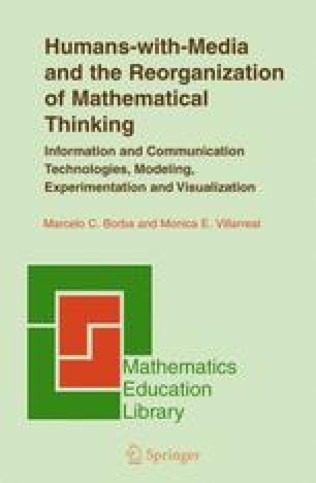
Humans-with-media and the reorganization of mathematical thinking : Information and communication technologies, modeling, visualization and experimentation
Offers a new conceptual framework for reflecting on the role of information and communication technology in mathematics education. Borba and Villarreal provide examples from research conducted at the level of basic and university-level education, developed by their research group based in Brazil, and discuss their findings in the light of the relevant literature. Arguing that different media reorganize mathematical thinking in different ways, they discuss how computers, writing and oral discourse transform education at an epistemological as well as a political level. Modeling and experimentation are seen as pedagogical approaches which are in harmony with changes brought about by the presence of information and communication technology in educational settings. Examples of research about on-line mathematics education courses, and Internet used in regular mathematics courses, are presented and discussed at a theoretical level. In this book, mathematical knowledge is seen as developed by collectives of humans-with-media.

Human-Computer Interaction and Cybersecurity Handbook - Human Factors and Ergonomics
Covers all areas of human–computer interaction and human factors in cybersecurity Includes information for IT specialists, who often desire more knowledge about the human side of cybersecurity Provides a reference for other disciplines such as psychology, behavioral science, software engineering, and security management Offers a source of information for cybersecurity practitioners in government agencies and private enterprises Presents new areas such as smart networking and devices

Human teeth : Key skills and clinical illustrations
Provides information on nomenclature, tooth numbering systems, tooth morphology, and anatomy and stages of tooth formation. It continues with root canal morphology and anatomy of incisors, canines, premolars, and molars.
Human semen analysis : From the WHO manual to the clinical management of infertile men
Intended to bridge the gap between the laboratory manual and the clinician by explaining in detail the test indication, its clinical utility, interpretation of results, and presenting a decision algorithm based on the test results. Thebook has 19 chapters grouped under seven sections that follow the chapters of the sixth edition of the WHO manual. Each chapter is written and reviewed by a team of senior clinicians, thus bringing a perspective that is truly clinically relevant. This book will be of great value to all clinicians involved in the management of male infertility and will also be of interest to laboratory scientists involved in semen testing by providing them with clinical perspectives of the test they perform. Human Semen Analysis: From the WHO Manual to the Clinical Management of Infertile Men is a useful guide for utilizing the WHO manual, interpreting test results, and deciding what subsequent clinical actions to take.

How to write effective business English : Your guide to excellent professional communication
This book is ideal for multinational companies where communication is a priority. For native English speakers, it may mean un-learning things you were taught at school and learning how to save time by getting to the point more quickly in emails; for intermediate English speakers, it focuses on the areas that are easy to get wrong.
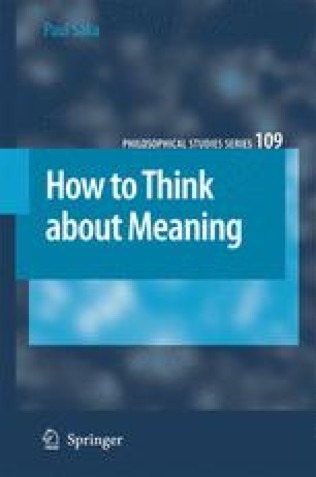
How to Think about Meaning
According to the dominant theory of meaning, truth-conditional semantics, to explain the meaning of a statement is to specify the conditions necessary and sufficient for its truth. Classical truth-conditional semantics is coming under increasing attack, however, from contextualists and inferentialists, who agree that meaning is located in the mind. "Technically exact, highly readable, and illustrated with valuable examples, ...here is a book to counterbalance decades of misdirected anti-psychologistic semantic dogma." Prof. Dale Jacquette, Pennsylvania State University, U.S.A.

How to Practice Academic Medicine and Publish from Developing Countries? : A Practical Guide
The book provides an overview of the state of research in developing countries – Africa, Latin America, and Asia (especially India) and why research and publications are important in these regions. It is written mainly by senior colleagues who have experienced and recognized the challenges with design, documentation, and publication of health research in the developing world. The book includes short chapters providing insight into planning research at the undergraduate or postgraduate level, issues related to research ethics, and conduct of clinical trials.

How to Future : Leading and Sense-making in an Age of Hyperchange
Provides clear, practical and easy to understand tools that will help you spot trends and patterns, strategically evaluate different futures and guide your strategy Depicts a strategic framework to understand the uncertain nature of the current business world that crucially allows you to embrace hyperchange and adapt and plan for it Delivers a common language to engage stakeholders and teams with innovation practices and strategy foresight

How to Develop Your Career in Dental Nursing
Guidance is included throughout, and the reader should use the book to make informed decisions and conduct further research for the benefit of their own career. The book considers the historical context, along with reviewing the current position of dental nursing and considering the future of the field, all with the overarching theme of helping dental nurses further their career in modern dentistry.

How to Build a Modern Tontine : Algorithms, Scripts and Tips
This book introduces the modern tontine and its applications in retirement and decumulation. Personal financial management in the later stages of life presents unique challenges, and renowned retirement planning expert Dr. Milevsky proposes the modern tontine as a solution. With the goal of guiding professionals and retirees in more efficient decumulation, the book demonstrates how to build a modern tontine. It is technically oriented, employing a cookbook format, featuring R code, and examining retirement planning through a statistical lens.

How to be an Even Better Manager : A Complete A-Z of Proven Techniques and Essential Skills
For current and aspiring managers alike, this bestselling handbook from expert author Michael Armstrong provides a whistle-stop tour of the skills and techniques you need to succeed. With a focus on practical application, you will be guided through four crucial areas of management: Managing people / Management activities and processes / Management personal skills / Business and financial skills

How the stock market works : A beginner's guide to investment
Cuts through the complex jargon that can alienate newcomers by providing a clear and accessible overview on how the stock market and investing works / Provides guidance on how to safely invest, and covers the responsibilities of being a shareholder to the taxation regime / New to this edition: incorporates changes and fluctuations from 2021 onwards, including the UK's exit from the EU as well as the rise of fake news and its' impact on the financial world and decision making

How the immune system recognizes self and nonself : Immunoreceptors and their signaling
This brain function must have been particularly important for most animals to protect their lives from enemies and for species to survive through evolution. Similarly, higher organisms have also acquired their immune system through evolution that discriminates nonself pathogens and self-body to protect their lives from pathogens such as bacteria or viruses. The brain system may distinguish integrated images of self and nonself created from many inputs, such as vision, sound, smell, and others. The immune system recognizes and distinguishes a variety of structural features of self and nonself components. The latter actually include almost everything but self.
