



الصفحة 15
الصفحة 15

Freshwater Governance for the 21st Century
The objective of this book is to broadly illustrate the key aspects of water governance, mapping the spectrum of decision-making from techno-centric and eco-centric approaches, to hybrid concepts and people-centric approaches. Topics covered include the challenges for water-governance models, the polycentric model, the integration challenge, water in the decision-making hierarchy, and the rise of water-sensitive design, while also taking into account interdependencies between stakeholders, as well as the issue of scale.

Framing in Sustainability Science : Theoretical and Practical Approaches
This book offers both conceptual and empirical descriptions of how to “frame” sustainability challenges. It defines “framing” in the context of sustainability science as the process of identifying subjects, setting boundaries, and defining problems. The chapters are grouped into two sections: a conceptual section and a case section.

Foundations of Trusted Autonomy
This book establishes the foundations needed to realize the ultimate goals for artificial intelligence, such as autonomy and trustworthiness. Aimed at scientists, researchers, technologists, practitioners, and students, it brings together contributions offering the basics, the challenges and the state-of-the-art on trusted autonomous systems in a single volume. The book is structured in three parts, with chapters written by eminent researchers and outstanding practitioners and users in the field. The first part covers foundational artificial intelligence technologies, while the second part covers philosophical, practical and technological perspectives on trust. Lastly, the third part presents advanced topics necessary to create future trusted autonomous systems. The book augments theory with real-world applications including cyber security, defence and space.

Foundations of social entrepreneurship : Theory, practical tools and skills
Foundations of Social Entrepreneurship presents definitions of social entrepreneurship, explains its benefits and challenges, describes the components of an ecosystem of support, and presents practical tools to approach social entrepreneurial projects.
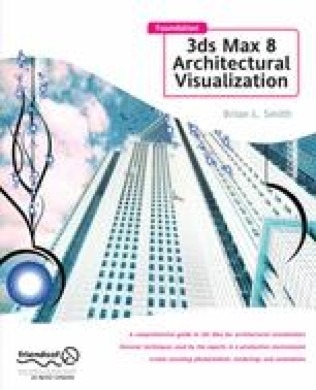
Foundation 3ds Max 8 Architectural Visualization
Welcome to the world of 3D architectural visualizations using the most powerful and versatile 3D software package on the planet: 3ds Max. In just the last few years, the visualization industry has arguably become the fastest-growing 3D industry, and may soon overtake all others in total number of users. Just as the use of computer-aided design became the norm for nearly all architectural, engineering, and construction firms in the 1990s, 3D visualizations have become standard practice today. This book takes you through the challenge of learning one of the most complex computer programs ever created, by way of easy-to-follow tutorials and instruction. It specifically focuses on those parts of the program you need to know to produce stunning architectural visualizations.
Formulating poorly water soluble drugs
A pharmaceutical scientist’s approach toward solubility enhancement of a poorly water-soluble molecule typically includes detailed characterization of the compound’s physiochemical properties, solid-state modifications, advanced formulation design, non-conventional process technologies, advanced analytical characterization, and specialized product performance analysis techniques. The scientist must also be aware of the unique regulatory considerations pertaining to the non-conventional approaches often utilized for poorly water-soluble drugs. One faced with the challenge of developing a drug product from a poorly soluble compound must possess at a minimum a working knowledge of each of the above mentioned facets and detailed knowledge of most. In light of the magnitude of the growing solubility problem to drug development, this is a significant burden especially when considering that knowledge in most of these areas is relatively new and continues to develop.
Formal methods applications and technology ; 11th International workshop on formal methods for industrial critical systems, FMICS 2006, and 5th International Workshop on parallel and distributed methods in verification, PDMC 2006, Bonn, Germany, August 26-27, and August 31, 2006, Revised Selected
The workshop program included two invited talks, by Anna Slobodova from Intel on “Challenges for Formal Veri?cation in an Industrial Setting” and by Edward A. Lee from the University of California at Berkeley on “Making C- currency Mainstream.” The former full paper can be found in this volume.
Formal approaches to software testing ; Vol. 3395 ; 4th International workshop, FATES 2004, Linz, Austria, September 21, 2004, Revised Selected Papers
Testing often accounts for more than 50% of the required e?ort during system development.Thechallengeforresearchistoreducethesecostsbyprovidingnew methods for the speci?cation and generation of high-quality tests. Experience has shown that the use of formal methods in testing represents a very important means for improving the testing process. Formal methods allow for the analysis andinterpretationofmodelsinarigorousandprecisemathematicalmanner.The use of formal methods is not restricted to system models only. Test models may alsobeexamined.Analyzingsystemmodelsprovidesthepossibilityofgenerating complete test suites in a systematic and possibly automated manner whereas examining test models allows for the detection of design errors in test suites and their optimization with respect to readability or compilation and execution time. Due to the numerous possibilities for their application, formal methods have become more and more popular in recent years. The Formal Approaches in Software Testing (FATES) workshop series also bene?ts from the growing popularity of formal methods. After the workshops in Aalborg (Denmark, 2001), Brno (Czech Republic, 2002) and Montr´ eal (Canada, 2003), FATES 2004 in Linz (Austria) was the fourth workshop of this series. Similar to the workshop in 2003, FATES 2004 was organized in a?liation with the IEEE/ACM Conference on Automated Software Engineering (ASE 2004). FATES 2004 received 41 submissions. Each submission was reviewed by at least three independent reviewers from the Program Committee with the help of some additional reviewers. Based on their evaluations, 14 full papers and one wo- in-progress paper from 11 di?erent countries were selected for presentation.
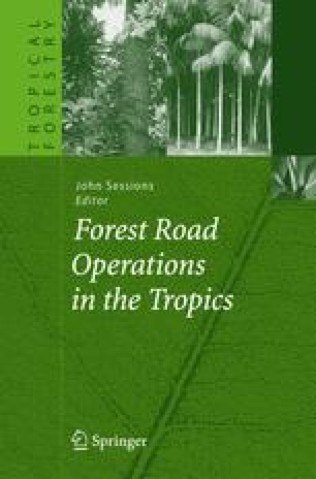
Forest Road Operations in the Tropics
This book brings together information on road planning, location, design, construction and maintenance to support environmentally acceptable operations in tropical forests. It highlights the challenges of road operations in the tropics, includes techniques that have been shown to be successful, and discusses newer technologies. It is intended as a reference book for the forest engineer and others interested in the planning and management of tropical forests. Numerical examples are provided to provide clarity for interpreting graphs, procedures, and formulas. The book covers the various facets of road management from design objectives through practices to control environmental impacts.

Forensic Psychiatry : Influences of Evil
In Forensic Psychiatry: Influences of Evil, Tom Mason brings together an international panel of experts from diverse specialties to examine the idea of "evil" in a medical context, specifically a mental health setting, to consider how the concept can be usefully interpreted, and to elucidate its relationship to forensic psychiatry. The authors challenge the belief that the concept of "evil" plays no role in "scientific" psychiatry and is not helpful to our understanding of aberrant human thinking and behavior.

Forensic Genetics in the Governance of Crime
This book uses a critical sociological perspective to explore contemporary ways of reformulating the governance of crime through genetics. Through the lens of scientific knowledge and genetic technology, Machado and Granja offer a unique perspective on current trends in crime governance. They explore the place and role of genetics in criminal justice systems, and show how classical and contemporary social theory can help address challenges posed by social processes and interactions generated by the uses, meanings, and expectations attributed to genetics in the governance of crime

Foodborne Parasites
Microbiologists are being challenged as foodborne outbreaks are increasingly being observed worldwide. Most of these outbreaks are associated with viral and bacterial pathogens such as Campylobacter, Salmonella, and lately Escherichia coli O157:H7.Foodborne Parasites examines the two major parasite groups that are transmitted via water or foods: the protozoa, which are single celled organisms, and the helminths. The helminths are classified in three sub groups: cestodes (tapeworms), nematodes (round worms), and trematodes (flukes). To better understand their significance, each chapter covers the biology, mechanisms of pathogenesis, epidemiology, treatment, and inactivation of these parasites.

Food safety and toxicology : Present and future perspectives
Safety assurance of consumer goods has become a global challenge. The presence of natural and synthetic contaminants in food compromises food safety and poses a risk to public health. Discusses biological and chemical food contaminants, predictive and detection methods of food toxicants, survival mechanism of food pathogens, legislation on microbial contaminants to prevent public health risks and strategies to mitigate contamination.

Food preservation and safety of natural products
Food Preservation and Safety of Natural Products addresses the most common causes of food spoilage that create significant loss to global food production while also discussing how food serves as a vehicle for the transmission of pathogenic microorganisms responsible for mild to debilitating health conditions in humans. The book provides essential information for food safety professionals on issues relating to foodborne diseases and offers potential solutions by presenting various methods of incorporating natural products in food production to prevent the spread of foodborne pathogenic organisms. The demand for green consumerism and consumers general distaste for synthetic food additives poses a serious challenge to food safety and preservation. Natural products are used as green and sustainable source of bioactive compounds that can be applied in various fields including food. The use of plant and other natural products in food preservation is on the rise, hence this book reviews microbial mediated food spoilage, foodborne pathogens and food contamination and offers applications of natural products in food preservation.

Focusing telescopes in nuclear astrophysics
This volume is the first of its kind on focusing gamma-ray telescopes. Forty-eight refereed papers provide a comprehensive overview of the scientific potential and technical challenges of this nascent tool for nuclear astrophysics. The book features articles dealing with pivotal technologies such as grazing incident mirrors, multilayer coatings, Laue- and Fresnel-lenses - and even an optic using the curvature of space-time. The volume also presents an overview of detectors matching the ambitious objectives of gamma ray optics, and facilities for operating such systems on the ground and in space. The extraordinary scientific potential of focusing gamma-ray telescopes for the study of the most powerful sources and the most violent events in the Universe is emphasized in a series of introductory articles.

Focus on bacterial biofilms
Bacterial biofilms are colonies of bacterial cells embedded in their self-produced matrix composed of polysaccharides, DNA, and proteins. They protect bacterial cells against antibiotics, antibacterial agents, soaps and detergents, and shear stress. Some of the most common biofilm-associated infections in humans include urinary tract infections, infection of wounds and surgical sites, diabetic foot ulcers, dental caries (tooth decay) and gingivitis (gum inflammation), ventilator-associated infections, sinusitis, microbial keratitis, secondary infection related to Covid-19 and other viral infections, and so on. Bacterial resistance to common antibiotics (e.g., penicillin, gentamycin, erythromycin, ciprofloxacin, etc.) is driving us to a catastrophic failure of our health systems. Strategies to develop novel antibacterial agents and technology must be prioritized to combat and eradicate biofilms and their associated challenges. This book provides a comprehensive overview of biofilms with chapters on bacterial virulence factors, quorum sensing in bacteria, antimicrobial resistance in bacteria, strategies to develop new antibacterial agents, and much more.
Flower Breeding and Genetics : Issues, Challenges and Opportunities for the 21st Century
This book provides a unique and valuable resource on the many issues and challenges facing flower breeders, as well as the industry at-large. In this volume, the first comprehensive assemblage of its kind, a team of 32 international authorities has contributed to make this book a ‘must-have’ reference to research and develop flower crops for the 21st century consumers. Part 1 of this book (flower breeding program issues) contains unique features of interest to horticultural professionals and students, include coverage of plant protection strategies, cultivar trialing methodology, germplasm collection/preservation, preventing invasiveness, and other timely topics. The collective body of knowledge for 24 flower crops (Part 2: Crop-specific Breeding and Genetics) represents the in-depth science and art of breeding technology available for bedding plants, flowering potted plants, cut flowers, and herbaceous perennials. Each author provides crop-specific history, evolution, biology, taxonomy, state-of-the-art breeding/genetics, classical/molecular technologies, species traits, interspecific hybridization, and directions for future development/enhancement.
Flood Risk Management in Europe : Innovation in Policy and Practice
This valuable edition brings together 26 peer reviewed articles on technical, socio-economic, environmental and policy aspects of flood risk management. These articles contribute to the five sections with the general themes: i) flood risk management practice, ii) flood events and impacts, iii) flood analysis and modelling iv) flood forecasting and v) flood risk management policy. Some emerging technologies are presented and several future challenges are identified.
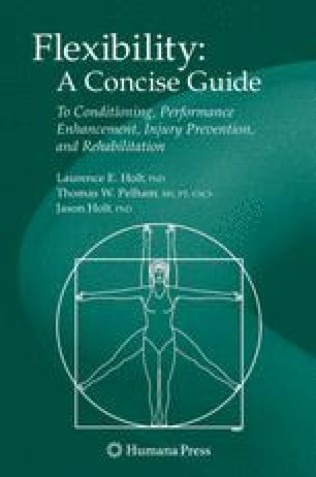
Flexibility : A concise guide to conditioning, performance enhancement, injury prevention, and rehabilitation
This groundbreaking book is a definitive guide to flexibility and revises the conceptual framework of the field. In Flexibility: A Concise Guide, the authors provide a fresh perspective on flexibility, one that challenges current thinking and professional practice, from the conceptual foundations of research to the practical applications of stretching techniques in a number of domains.
Fiscal Equalization : Challenges in the Design of Intergovernmental Transfers
These original essays highlight the state of knowledge in intergovernmental transfer design. They represent creative new thinking about challenging policy issues and offer useful options for policy makers. There is a genuine need for this book; it will become a 'benchmark' reference. I am impressed with its content, organization, readability, and fresh thematic approach.
