



الصفحة 147
الصفحة 147

Amartya Sens Capability Approach: Theoretical Insights and Empirical Applications
Kuklys examines how Nobel Prize-winning economist Amartya Sen’s approach to welfare measurement can be put in practice for poverty and inequality measurement in affluent societies such as the UK. Sen argues that an individual’s welfare should not be measured in terms of her income, but in terms what she can actually do or be, her capabilities. In Chapters 1 and 2, Kuklys describes the capability approach from a standard welfare economic point of view and provides a comprehensive literature review of the empirical applications in this area of research. In the remaining chapters, novel econometric techniques are employed to operationalise the concepts of functionings and capability to investigate inequality and poverty in terms of capability in the UK. Kuklys finds that capability measurement is always a useful complement to traditional monetary analysis, and particularly so in the case of capability-deprived disabled individuals.
Alzheimer : 100 Years and Beyond
Few medical or scientific addresses have so unmistakeably made history as the presentation delivered by Alois Alzheimer on November 4th, 1906 in Tübingen. The celebratory event, "Alzheimer 100 Years and Beyond" organized on the initiative of the Alzheimer community in Germany and worldwide, in collaboration with the Fondation Ipsen, at the very site of the original lecture, namely the Institute of Psychiatry at the University of Tübingen in Germany from November 2nd to 5th, 2006, was the highlight of the Alzheimer Year. Over the last century of Alzheimer research (1906-2006), remarkable progress has been achieved. Most of the authors of the major discoveries and the people involved in research in this field will present, during the meeting and in this volume, the pioneering research explaining the conditions under which they were conducted. The goal of this book is to honor the work accomplished, to summarize the most important knowledge and to provide material for the history of science.
Alternative Splicing and Disease
Splicing of primary RNA transcript, i.e. removal of introns and joining of exons to produce mature mRNAs competent for translation into proteins, is a quasi-systematic step of gene expression in higher organisms. However, this process is not unequivocal but can follow alternate pathways. Alternative splicing of a given transcript can therefore yield several distinct mRNAs encoding as many different proteins. Its full biological significance has not been appreciated until it was recognized that alternative splicing is so general as to affect about 75% of all human genes. Therefore, alternative splicing not only vastly increases protein diversity but also offers numerous opportunities for aberrant splicing events with pathological consequences.
Alternative pseudodifferential analysis : With an application to modular forms
This volume introduces an entirely new pseudodifferential analysis on the line, the opposition of which to the usual (Weyl-type) analysis can be said to reflect that, in representation theory, between the representations from the discrete and from the (full, non-unitary) series, or that between modular forms of the holomorphic and substitute for the usual Moyal-type brackets. This pseudodifferential analysis relies on the one-dimensional case of the recently introduced anaplectic representation and analysis, a competitor of the metaplectic representation and usual analysis.

Alternative Education : Global Perspectives Relevant to the Asia-Pacific Region
Alternative streams of education have been and remain an important but difficult theme for teachers, parents, policy-makers, and scholars. By focusing on case studies of six countries (Bolivia, Thailand, Australia, USA, The Netherlands, and Denmark), and by comprehensively analysing these by means of international comparative methodologies, the author approaches the nuts and bolts issues of alternative and mainstream education systems. The case studies include Charter Schools in the USA and Waldorf Schools in Australia. The study presents not only an insightful analysis of alternative forms of education with regard to actual issues in societies and also legal and administrative features of education. It provides insights into the kind of school development that could be appropriate in the 21st century and the types of educational communities we should seek to create in the age of globalisation.

Allergy in Practice
This book reflects the rich personal experience of a German allergist with international training and reputation, who is active in immunology and allergy research and practice for almost 30 years. In this book, not only IgE-mediated allergic reactions are covered but all other kinds of allergies such as atopic eczema, contact dermatitis, drug eruptions, anaphylaxis and food allergies are equally represented as well as psychosomatic aspects and problems of environmental intolerances.

Alla ricerca della via più breve : Un'avventura matematica = Finding the shortest way : A mathematical adventure
Il libro narra la vicenda di Rut, quindicenne, trasferitasi da poco in Germania con la famiglia, al seguito del padre che lavora per un’azienda internazionale produttrice di Software. Sarà proprio il padre a regalare a Rut un computer nuovo, mentre a scuola attraversa un periodo di crisi.E’ l’inizio di un’avventura. Nel computer è installato Vim: un programma che ascolta, capisce e risponde alle domande che la ragazza, inizialmente incredula, fa. Raccontata da Vim, la matematica prende una forma completamente nuova, sorprendente e affascinante.
All of Nonparametric Statistics
The goal of this text is to provide the reader with a single book where they can find a brief account of many, modern topics in nonparametric inference. The book is aimed at Master's level or Ph.D. level students in statistics, computer science, and engineering. It is also suitable for researchers who want to get up to speed quickly on modern nonparametric methods.This text covers a wide range of topics including: the bootstrap, the nonparametric delta method, nonparametric regression, density estimation, orthogonal function methods, minimax estimation, nonparametric confidence sets, and wavelets. The book has a mixture of methods and theory.

Aligner systems in invisible orthodontics: basic concepts and clinical management
Describes the processes, techniques and biomechanics involved in providing aligner treatment for different types of malocclusions. It opens with an overview of the material characteristics and the basic concepts of aligner therapy including topics like biocompatibility and intraoral deterioration. The main part of the book is dedicated to the various types of aligners, the methods used in their application and the practical aspects of delivery. It is structured based on the type of malocclusion being managed giving the reader a systematic pattern and a practical way of progressing through the book. The book closes with a discussion of the scientific data available.
Algoritmi : Lo spirito dell’informatica = Algorithms : The spirit of information technology
Algorithms are the heart of computer science and mathematics, since without them the use of computers would not be possible. In this book, which in its English edition has been a longtime bestseller, Harel and Feldmann answer all questions relating to this topic. They talk about the evaluation, correctness and effectiveness of algorithms, but also clarify some doubts about programming techniques and also refer to the very current discussion on quantum computing. The book is useful both as a basic text for an introductory university course in computer science, and as a general introduction to natural sciences, mathematics or engineering.
Algorithms on Trees and Graphs : With Python Code
Introduces graph algorithms on an intuitive basis followed by a detailed exposition using structured pseudocode, with correctness proofs as well as worst-case analyses. Centered around the fundamental issue of graph isomorphism, the content goes beyond classical graph problems of shortest paths, spanning trees, flows in networks, and matchings in bipartite graphs. Advanced algorithmic results and techniques of practical relevance are presented in a coherent and consolidated way. Numerous illustrations, examples, problems, exercises, and a comprehensive bibliography support students and professionals in using the book as a text and source of reference. Furthermore, Python code for all algorithms presented is given in an appendix. Topics and features: Algorithms are first presented on an intuitive basis, followed by a detailed exposition using structured pseudocode / Correctness proofs are given, together with a worst-case analysis of the algorithms / Full implementation of all the algorithms in Python / An extensive chapter is devoted to the algorithmic techniques used in the book / Solutions to all the problems
Algorithms in Real Algebraic Geometry
The algorithmic problems of real algebraic geometry such as real root counting, deciding the existence of solutions of systems of polynomial equations and inequalities, finding global maxima or deciding whether two points belong in the same connected component of a semi-algebraic set appear frequently in many areas of science and engineering. In this first-ever graduate textbook on the algorithmic aspects of real algebraic geometry, the main ideas and techniques presented form a coherent and rich body of knowledge, linked to many areas of mathematics and computing.
Algorithms in Invariant Theory
The book of Sturmfels is both an easy-to-read textbook for invariant theory and a challenging research monograph that introduces a new approach to the algorithmic side of invariant theory. The Groebner bases method is the main tool by which the central problems in invariant theory become amenable to algorithmic solutions.

Algorithms in Bioinformatics ; Vol.4175 : 6th International Workshop, WABI 2006, Zurich, Switzerland, September 11-13, 2006, Proceedings
This book constitutes the refereed proceedings of the 6th International Workshop on Algorithms in Bioinformatics, WABI 2006, held in Zurich, Switzerland in September 2006 in the course of the ALGO 2006 conference meetings. The 36 revised full papers presented were carefully reviewed and selected from 100 submissions. All current issues of algorithms in bioinformatics are addressed, ranging from mathematical tools to experimental studies of approximation algorithms and reports on significant computational analyses. Numerous biological problems are dealt with, including genetic mapping, sequence alignment and sequence analysis, phylogeny, comparative genomics, and protein structure. For the first time also machine-learning approaches along with combinatorial optimization are covered.

Algorithms in Bioinformatics ; Vol. 3692 ; 5th international workshop, WABI 2005, Mallorca, Spain, October 3-6, 2005, Proceedings
this book present the proceedings of the 5th Workshop on Algorithmsin Bioinformatics (WABI 2005) which took place in Spain, 2005. The Workshop on Algorithms in Bioinformatics highlights research workspecifically developed to address algorithmic problems in biosequence analysis. The emphasis is therefore on statistical and probabilistic algorithms that addressimportant problems in the field of molecular and structural biology. the workshop aims to present recent research results, includingsignificant work in progress, and to identify and explore directions of futureresearch.Original research papers (including significant work in progress) or state-of-the-art surveys were solicited on all aspects of algorithms in bioinformatics,including, but not limited to: exact and approximate algorithms for genomics,genetics, sequence analysis, gene and signal recognition, alignment, molecularevolution, phylogenetics, structure determination or prediction, gene expressionand gene networks, proteomics, functional genomics, and drug design.
Algorithms in Bioinformatics ; 8th International Workshop, WABI 2008, Karlsruhe, Germany, September 15-19, 2008. Proceedings
This book constitutes the refereed proceedings of the 8th International Workshop on Algorithms in Bioinformatics, WABI 2008, held in Karlsruhe, Germany, in September 2008 as part of the ALGO 2008 meeting.

Algorithms in Bioinformatics ; 7th International Workshop, WABI 2007, Philadelphia, PA, USA, September 8-9, 2007, Proceedings
All current issues of algorithms in bioinformatics are addressed, ranging from mathematical tools to experimental studies of approximation algorithms and reports on significant computational analyses. Numerous biological problems are dealt with, including genetic mapping, sequence alignment and sequence analysis, phylogeny, comparative genomics, and protein structure. Furthermore the papers feature high-performance computing approaches to computationally hard learning and optimization problems in bioinformatics and cover methods, software and dataset repositories for development and testing of such algorithms and their underlying models.
Algorithms for Fuzzy Clustering : Methods in c-Means Clustering with Applications
The main subject of this book is the fuzzy c-means proposed by Dunn and Bezdek and their variations including recent studies. We emphasize in this book is a family of algorithms using entropy or entropy-regularized methods which are less known, but we consider the entropy-based method to be another useful method of fuzzy c-means.
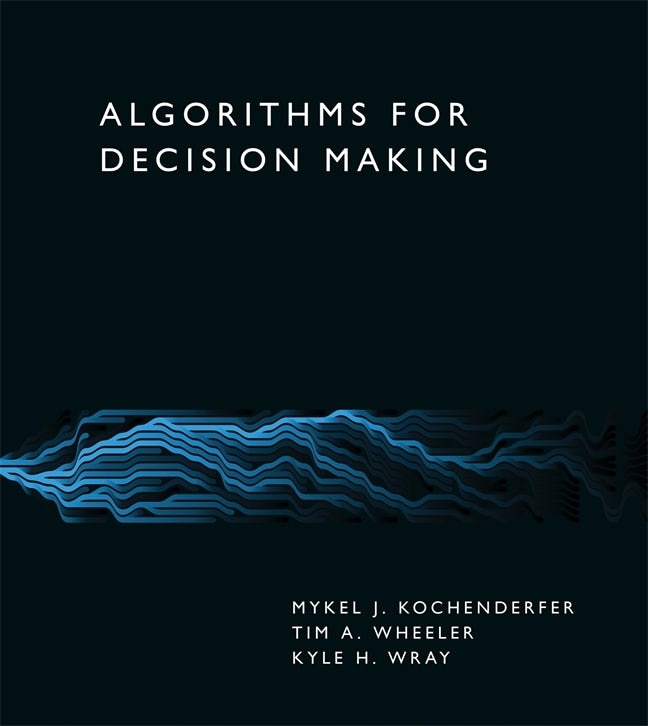
Algorithms for Decision Making
A broad introduction to algorithms for decision making under uncertainty, introducing the underlying mathematical problem formulations and the algorithms for solving them. Automated decision-making systems or decision-support systems—used in applications that range from aircraft collision avoidance to breast cancer screening—must be designed to account for various sources of uncertainty while carefully balancing multiple objectives. This textbook provides a broad introduction to algorithms for decision making under uncertainty, covering the underlying mathematical problem formulations and the algorithms for solving them.
Algorithms for Approximation ; Proceedings of the 5th International Conference, Chester, July 2005
Approximation methods are vital in many challenging applications of computational science and engineering. This is a collection of papers from world experts in a broad variety of relevant applications.
