



الصفحة 144
الصفحة 144

Applications of evolutionary computing ; EvoWorkshops 2007 : EvoCOMNET, EvoFIN, EvoIASP, EvoINTERACTION, EvoMUSART, EvoSTOC, and EvoTransLog, Valencia, Spain, April 11-13, 2007, Proceedings
This volume contains contributions for EvoCOMNET, EvoFIN, EvoIHOT, EvoMUSART, EvoSTIM, and EvoTRANSLOC. The 51 revised full papers presented were carefully reviewed and selected from numerous submissions. This volume presents an overview about the latest research in EC. Areas where evolutionary computation techniques have been applied range from telecommunication networks to complex systems, finance and economics, games, image analysis, evolutionary music and art, parameter optimization, scheduling, and logistics. These papers may provide guidelines to help new researchers tackling their own problem using EC.

Applications of declarative programming and knowledge management ; 15th international conference on applications of declarative programming and knowledge management, INAP 2004, and 18th workshop on logic programming, WLP 2004, Potsdam, Germany, March 4-6, 2004, Revised Selected Papers
This volume contains a selection of papers presented at the 15th International Conference on Applications of Declarative Programming and Knowledge M- agement, INAP 2004, and the 18th Workshop on Logic Programming, WLP 2004, Declarative programming is an advanced paradigm for the modeling and solving of complex problems. This speci?cation method has become more and more attractive in recent years, Thetopicsoftheselectedpapersofthisyear’sjointconferenceconcentrateon three currently important ?elds: knowledge management and decision support, constraint programming and constraint solving, and declarative programming and Web-based systems.

Applications of computational intelligence in biology : Current trends and open problems
The purpose of this book is to provide a medium for such an exchange of expertise and concerns. In order to achieve the goal, we have solicited cont- butions from both computational intelligence as well as biology researchers.
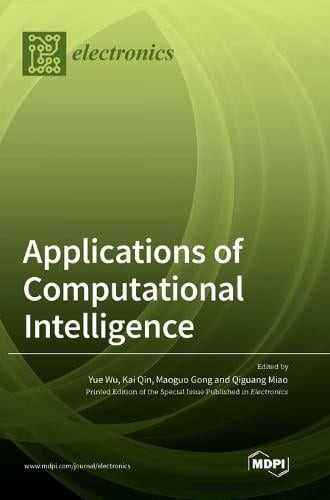
Applications of computational intelligence
Computational intelligence (CI) is the theory, design, application, and development of biologically and linguistically motivated computational paradigms. Traditionally, the three main pillars of CI have been neural networks, fuzzy systems, and evolutionary computation. However, in time, many nature-inspired computing paradigms have evolved. Thus, CI is an evolving field, and, at present, in addition to the three main constituents, it encompasses computing paradigms such as ambient intelligence, artificial life, cultural learning, artificial endocrine networks, social reasoning, and artificial hormone networks. CI plays a major role in developing successful intelligent systems, including games and cognitive developmental systems.
Applications of Agent Technology in Traffic and Transportation
Building effective and user-friendly transportation systems is one of the big challenges for engineers in the 21st century. There is an increasing need to understand, model, and govern such systems at both the individual (micro) and the society (macro) level. Still, this raises significant technical problems, as transportation systems may contain thousands of autonomous, "intelligent" entities that need to be simulated and/or controlled. Therefore, traffic and transportation scenarios are extraordinarily appealing for Distributed Artificial Intelligence, and (multi-) agent technology in particular. This book gives an overview of recent advances in agent-based transportation systems. It includes both a state-of-the-art survey and reports on cutting-edge research in the field.

Applications and Usability of Interactive TV; 8th Iberoamerican Conference, jAUTI 2019, Rio de Janeiro, Brazil, October 29–November 1, 2019, Revised Selected Papers
This book constitutes the refereed proceedings of the 8th Iberoamerican Conference on Applications and Usability of Interactive Television, jAUTI 2019, in Rio de Janeiro, Brazil, in October 2019. The 10 full papers presented were carefully reviewed and selected from 35 submissions. The papers are organized in topical sections on Design and Development; Second Screen and Crossmedia; Interaction Techniques and Technologies; Accessibility; User Experience.

Applications and theory of Petri Nets 2005 ; 26th international conference, ICATPN 2005, Miami, FL, June 20-25, 2005, Proceedings
This volume contains the proceedings of the 26th International Conference on Application and Theory of Petri Nets and Other Models of Concurrency (ICATPN 2005). The Petri net conferences serve to discuss yearly progress in the ?eld of Petri nets and related models of concurrency, and to foster new - vancesintheapplicationandtheoryofPetrinets. Several tutorials and workshops were organized within the conf- ence, covering introductory and advanced aspects related to Petri nets.Detailed
Applications and Theory of Petri Nets ; 29th International Conference, PETRI NETS 2008, Xi’an, China, June 23-27, 2008. Proceedings
This book constitutes the refereed proceedings of the 29th International Conference on Applications and Theory of Petri Nets and Other Models of Concurrency, PETRI NETS 2008, held in Xi'an, China, in June 2008.

Applications and Techniques in Information Security ; 11th International Conference, ATIS 2020, Brisbane, QLD, Australia, November 12–13, 2020, Proceedings
This book constitutes the refereed proceedings of the 11th International Conference on Applications and Techniques in Information Security, ATIS 2020, held in Brisbane, QLD, Australia, in November 2020. Due to the COVID-19 pandemic the conference was be held online. The 8 full papers presented in the volume were carefully reviewed and selected from 24 submissions. The papers are focused on all aspects on techniques and applications in information security research.
Applications and Innovations in Intelligent Systems XV ; Proceedings of AI-2007, the Twenty-seventh SGAI International Conference on Innovative Techniques and Applications of Artificial Intelligence
The papers in this volume are the refereed application papers presented at AI-2007, the Twenty-seventh SGAI International Conference on Innovative Techniques and Applications of Artificial Intelligence, held in Cambridge in December 2007.

Applications and Innovations in Intelligent Systems XIII ; Proceedings of AI-2005, the Twenty-fifth SGAI International Conference on Innovative Techniques and Applications of Artifical Intelligence
The papers in this volume present new and innovative developments in the field, divided into sections on Applied AI in Information Processing, Techniques for Applied AI, Industrial Applications and Medical Applications.This is the thirteenth volume in the Applications and Innovations series. The series serves as a key reference as to how AI technology has enabled organisations to solve complex problems and gain significant business benefit.

Applications and innovations in intelligent systems XII ; Proceedings of AI-2004, the Twenty-fourth SGAI International Conference on Innhovative Techniques and Applications of Artificial Intelligence
The papers in this volume are the refereed application papers presented at AI-2004, the Twenty-fourth SGAI International Conference on Innovative Techniques and Applications of Artificial Intelligence, held in Cambridge 2004. The papers present new and innovative developments in the field, divided into sections on Synthesis and Prediction, Scheduling and Search, Diagnosis and Monitoring, Classification and Design, and Analysis and Evaluation. This is the twelth volume in the Applications and Innovations series. The series serves as a key reference on the use of AI Technology to enable organisations to solve complex problems and gain significant business benefits. The Technical Stream papers are published as a companion volume under the title Research and Development in Intelligent Systems XXI.
Application and Theory of Petri Nets 2002 ; 23rd International Conference, ICATPN 2002, Adelaide, Australia, June 24-30, 2002. Proceedings
This book constitutes the refereed proceedings of the 23rd International Conference on Application and Theory of Petri Nets, ICATPN 2002, held in Adelaide, Australia, in June 2002. The 18 regular papers and one tool presentation presented together with six invited paper were carefully reviewed and selected from 45 submissions. All current issues on research and development of Petri nets are addressed, in particular concurrent systems analysis, model validation, business process management, reactive systems, workflow processes, wireless transaction protocols.
Anti-Spam Measures : Analysis and Design
The goal of this book is the methodical analysis of the potential, limitations, advantages, and drawbacks of anti-spam measures. These determine to which extent the measures can contribute to the reduction of spam in the long run. The range of considered anti-spam measures includes legislative, organizational, behavioral and technological ones. Furthermore, the conceptual development and analysis of an infrastructural email framework that features such a complementary application, is pointed out. The technological and organizational facets, the framework is analyzed twofold: its theoretical effectiveness is assessed with the aid of the formal model mentioned above, its storage and traffic requirements are analyzed quantitatively.
Anti-fragile ICT Systems
Introduces a novel approach to the design and operation of large ICT systems. It views the technical solutions and their stakeholders as complex adaptive systems and argues that traditional risk analyses cannot predict all future incidents with major impacts. To avoid unacceptable events, it is necessary to establish and operate anti-fragile ICT systems that limit the impact of all incidents, and which learn from small-impact incidents how to function increasingly well in changing environments. The book applies four design principles and one operational principle to achieve anti-fragility for different classes of incidents. It discusses how systems can achieve high availability, prevent malware epidemics, and detect anomalies. Analyses of Netflix’s media streaming solution, Norwegian telecom infrastructures, e-government platforms, and Numenta’s anomaly detection software show that cloud computing is essential to achieving anti-fragility for classes of events with negative impacts.
Anticipatory Behavior in Adaptive Learning Systems : From Brains to Individual and Social Behavior
Anticipatory behavior in adaptive learning systems is steadily gaining the - terest of scientists, although many researchers still do not explicitly consider the actual anticipatory capabilities of their systems.The introductory chapter of this volume therefore does not only provide an overview of the contributions included in this volume but also proposes a taxonomy of how anticipatory mechanisms can improve adaptive behavior and learning in cognitive systems. During the workshop it became clear that ant- ipations are involved in various cognitive processes that range from individual anticipatory mechanisms to social anticipatory behavior.

Anticancer activity in heterocyclic organic structures : A pathway to novel drug development : Part 1
New Directions in Organic & Biological Chemistry, explores the development of cancer therapeutics, focusing on molecular chemistry and advanced drug design approaches. Written by experts in theoretical chemistry and molecular chemistry, they bridge the gap between theoretical chemistry, molecular biology, and drug development. In Part I, they focus on the fundamental properties of heterocyclic compounds and innovative methodologies being employed to enhance therapeutic potential. By exploring various classes of heterocyclic compounds and diverse anticancer mechanisms.

Ant Colony Optimization and Swarm Intelligence ; 6th International Conference, ANTS 2008, Brussels, Belgium, September 22-24, 2008. Proceedings
This book constitutes the refereed proceedings of the 6th International Workshop on Ant Colony Optimization and Swarm Intelligence, ANTS 2008, held in Brussels, Belgium, in September 2008.

Ant Colony Optimization and Swarm Intelligence ; 5th International Workshop, ANTS 2006, Brussels, Belgium, September 4-7, 2006, Proceedings
ANTS – The International Workshop on Ant Colony Optimization and Swarm Intelligence is now at its ?fth edition. The series started in 1998 with the - ganization of ANTS 1998. At that time the goal was to gather in a common meeting those researchers interested in ant colony optimization: more than 50 researchers from around the world joined for the ?rst time in Brussels, Belgium, to discuss ant colony optimization and swarm intelligence related research. A selectionofthebest paperspresentedatthe workshopwaspublished asa special issue of the Future Generation Computer Systems journal (Vol. 16, No. 8, 2000). Two years later, ANTS 2000, organized again in Brussels, attracted more than 70 participants. The 41 extended abstracts presented as talks or posters at the workshopwere collected in a booklet distributed to participants, and a selection of the best papers was published as a special section of the IEEE Transactions on Evolutionary Computation (Vol. 6, No. 4, 2002).
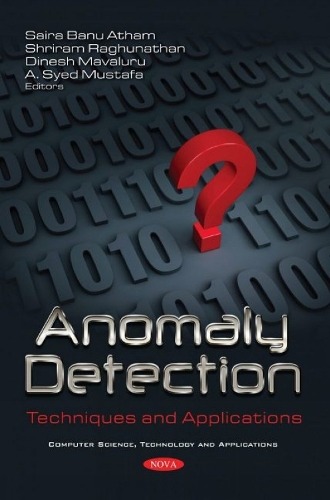
Anomaly Detection : Techniques and Applications
When information in the data warehouse is processed, it follows a definite pattern. An unexpected deviation in the data pattern from the usual behavior is called an anomaly. The anomaly in the data is also referred to as noise, outlier, spammer, deviations, novelties and exceptions. Identification of the rare items, events, observations, patterns which raise suspension by differing significantly from the majority of data is called anomaly detection. With progress in the technologies and the widespread use of data for the purpose for business the increase in the spams faced by the individuals and the companies are increasing day by day. This noisy data has boomed as a major problem in various areas such as Internet of Things, web service, Machine Learning, Artificial Intelligence, Deep learning, Image Processing, Cloud Computing, Audio processing, Video Processing, VoIP, Data Science, Wireless Sensor etc. Identifying the anomaly data and filtering them before processing is a major challenge for the data analyst. This anomaly is unavoidable in all areas of research. This book covers the techniques and algorithms for detecting the deviated data.
