



الصفحة 14
الصفحة 14

Innovations in rehabilitation sciences education : Preparing Leaders for the future
We are most fortunate to be housed in an institution that embraces risk taking and innovation in education. Part of the joy of working at McMaster University is the sense that you will be supported in your efforts to develop new ways of facilitating learning even if these are not always successful. We are privileged to work with a group of exceptional colleagues who embrace - novation and strive for ongoing excellence in education.

Innovations in classification, data science, and information systems ; Proceedings of the 27th Annual Conference of the Gesellschaft für Klassifikation e.V., Brandenburg University of Technology, Cottbus, March 12-14, 2003
The volume presents innovations in data analysis and classification and gives an overview of the state of the art in these scientific fields and applications. Areas that receive considerable attention in the book are discrimination and clustering, data analysis and statistics, as well as applications in marketing, finance, and medicine. The reader will find material on recent technical and methodological developments and a large number of applications demonstrating the usefulness of the newly developed techniques.
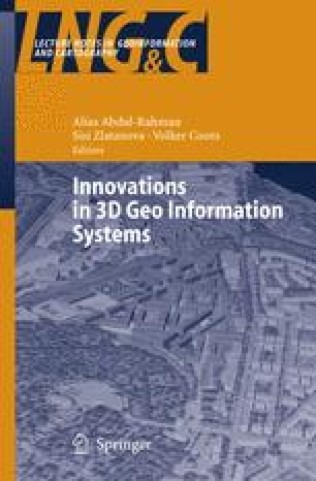
Innovations in 3D Geoinformation Science
Covers various aspects of spatial data modelling specifically regarding three-dimensional (3D) modelling and structuring. The realization of "true" 3D geoinformation spatial systems requires a high input, and the developmental process is taking place in various research centers and universities around the globe.

Innopolis university - from zero to hero : Ten years of challenges and victories
The book is divided in five parts: “The Beginning” describes the very early days in general, from the foundation and start-up of the university with the related processes. “The People” reports on the initial hiring of the faculty members, the selection of students, and the curriculum development. “The Activities” provide information about the creation of the single research institutions and labs, and their relation to industry. “The Future” gives an outlook on the planned internationalization and faculty strategy. Eventually, “A Visual Journey” shows a selection of photographs illustrating highlights of the whole process and the current achievements.

Information Visualization : Beyond the Horizon
Information visualization is not only about creating graphical displays of complex and latent information structures; it contributes to a broader range of cognitive, social, and collaborative activities. This is the first book to examine information visualization from this perspective. This 2nd edition continues the unique and ambitious quest for setting information visualization and virtual environments in a unifying framework. Information Visualization: Beyond the Horizon pays special attention to the advances made over the last 5 years and potentially fruitful directions to pursue. It is particularly updated to meet the need for practitioners. The book is a valuable source for researchers and graduate students. This new edition is forwarded by Ben Shneiderman, University of Maryland.
Information Systems Security ; Vol. 3803 : 1st International conference, ICISS 2005, Kolkata, India, December 19-21, 2005, Proceedings
The 1st InternationalConference on Information Systems Security (ICISS 2005) was held December 19–21, 2005 at Jadavpur University, Kolkata, India. The objectives of the conference were to discuss in depth the current state of the research and practice in information systems security, enable participants to bene?tfrompersonalcontactwithotherresearchersandexpandtheirknowledge, and disseminate the research results. This volumecontains 4 invitedpapers,19refereedpapersthat werepresented at the conference, and 5 ongoing project summaries. The refereed papers, which were selected from the 72 submissions, were rigorouslyreviewed by the Program Committee members. The volume provides researcherswith a broad perspective of recent developments in information systems security. A special note of than...

Information Systems Reengineering and Integration
This text takes a practical approach to re-engineering existing systems and looks at data integration, and focuses on proven methods and tools for: •the conversion of hierarchical or network database systems into relational database technology, or from relational to object-oriented and XML databases •the integration of database systems and expert systems to produce MIS and EIS systems Taking a very practical approach, the book describes in detail database conversion techniques, reverse engineering and forward engineering, and re-engineering methodology for information systems, offering a systematic software engineering approach for reusing existing database systems built with "old" technology. Many examples, illustrations and case studies are used, making the methodology easy to follow.
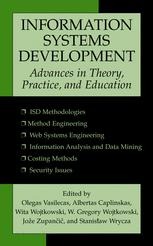
Information Systems Development : Advances in Theory, Practice, and Education
Comprised of the proceedings of the 13th International Conference on Information Systems Development held August 26th-28th, 2004, at Vilnius Gediminas Technical University, Vilnius, Lithuania. This volume aims to provide a forum for the research and practices addressing issues associated with Information Systems Development (ISD).
Information security applications : Vol. 3325 : 5th International Workshop, WISA 2004, Jeju Island, Korea, August 23-25, 2004, Revised Selected Papers
The 5th International Workshop on Information Security Applications (WISA 2004) was held in Jeju Island, Korea during August 23-25, 2004. The workshop was sponsored by the Korea Institute of Information Security and Cryptology (KIISC), the Electronics and Telecommunications Research Institute (ETRI) and the Ministry of Information and Communication (MIC). The aim of the workshop is to serve as a forum for new conceptual and - perimental research results in the area of information security applications from the academic community as well as from the industry. The workshop program covers a wide range of security aspects including cryptography, cryptanalysis, network/system security and implementation aspects. The programcommittee received169 papersfrom 22 countries,andaccepted 37 papers for a full presentation track and 30 papers for a short presentation track. Each paper was carefully evaluated through peer-review by at least three members of the programcommittee. This volume contains revised versions of 36 papers accepted and presented in the full presentation track. Short papers were only published in the WISA 2004 pre-proceedings as preliminary versions and are allowed to be published elsewhere as extended versions. In addition to the contributed papers, Professors Gene Tsudik and Ross Andersongaveinvitedtalks,entitledSecurityinOutsourcedDatabasesandWhat does ‘Security’ mean for Ubiquitous Applications?, respectively.

Information security and privacy ; Vol. 4058 ; 11th Australasian Conference, ACISP 2006, Melbourne, Australia, July 3-5, 2006, Proceedings
The 11th Australasian Conference on Information Security and Privacy (ACISP 2006) was held in Melbourne, 3–5 July, 2006. The conference was sponsored by Deakin University, the Research Network for a Secure Australia, and was organized in cooperation with the University of Wollongong. The conference brought together researchers,practitioners and a wide range of other users from academia, industries and government organizations. The program included 35 papers covering important aspects of information security technologies. The papers were selected from 133 submissions through a two-stage anonymous review process. Each paper received at least three reviews by members of the Program Committee, and was then scrutinized by the whole committee during a two-week discussion.

Information security and cryptology ; Vol. 4318 ; 2nd SKLOIS Conference, Inscrypt 2006, Beijing, China, November 29 - December 1, 2006, Proceedings
The second SKLOIS Conference on Information Security and Cryptology 2006 (Inscrypt, formerly CISC) was organized by the State Key Laboratory of Inf- mation Security of the Chinese Academy of Sciences. This international conf- ence was held in Beijing, China and was sponsored by the Institute of Software, the Chinese Academy of Sciences, the Graduate University of Chinese Academy of Sciences and the National Natural Science Foundations of China. The c- ference proceedings, with contributed papers, are published by Springer in this volume of Lecture Notes in Computer Science (LNCS).

Information Security ; Vol. 4176 ; 9th International Conference; ISC 2006, Samos Island, Greece, August 30 - September 2, 2006, Proceedings
th This volume contains the papers presented at the 9 Information Security Conference (ISC 2006) held on Samos Island, Greece, during August 30 – September 2, 2006. The Conference was organized by the University of the Aegean, Greece. ISC was first initiated as a workshop, ISW in Japan in 1997, ISW 1999 in Mal- sia, ISW 2000 in Australia and then changed to the current name ISC when it was held in Spain in 2001 (ISC 2001). The latest conferences were held in Brazil (ISC 2002), UK (ISC 2003), USA (ISC 2004), and Singapore (ISC 2005). ISC 2006 provided an international forum for sharing original research results and application experiences among specialists in fundamental and applied problems of - formation security. In response to the Call for Papers, 188 papers were submitted. Each paper was - viewed by three members of the PC, on the basis of their significance, novelty, and technical quality. Of the papers submitted, 38 were selected for presentation, with an acceptance rate of 20%.
Information and its role in nature
Infromation and Its Role in Nature presents an in-depth interdisciplinary discussion of the concept of information and its role in the control of natural processes. After a brief review of classical and quantum information theory, the author addresses numerous central questions, including: Is information reducible to the laws of physics and chemistry? Does the Universe, in its evolution, constantly generate new information? Or are information and information-processing exclusive attributes of living systems, related to the very definition of life? If so, what is the role of information in classical and quantum physics? In what ways does information-processing in the human brain bring about self-consciousness? Accessible to graduate students and professionals from all scientific disciplines, this stimulating book will help to shed light on many controversial issues at the heart of modern science.
Information and communication technologies in tourism 2005 ; Proceedings of the International Conference in Innsbruck, Austria, 2005
The key objectives of this premier conference in ICT in travel and tourism are the dissemination of research findings and strong interaction among researchers and practitioners. The conference theme this year is "eBusiness is here ? – what is next?" The future is being explored by researchers from all perspectives – papers examine the basic architectures and systems underlying how toursim information is provided and how the marketplace is responding. Trip advisory research is now moving from the speculative to the sophisticated reflecting the rapidly changing individual skill sets, motivations and goals of today's tourist while an emerging collection of work is investigating the growing phenomenon of collaboration and community-building. A close examiniation of the 51 research papers will reveal the full extent of marketing-oriented research and show how strong the link is between ICT developments per se and business adoption and use of the new technologies and systems.
Information and communication technologies in education, research, and industrial applications ; 16th International Conference, ICTERI 2020, Kharkiv, Ukraine, October 6–10, 2020, Revised Selected Papers
This book contains revised and extended versions of the best papers presented at the 16th International Conference on Information and Communication Technologies in Education, Research, and Industrial Applications, ICTERI 2020, held in Kherson, Ukraine, in October 2020. Due to the COVID-19 pandemic the conference was held online. The 8 revised full papers included in this volume were carefully reviewed and selected from 347 initial submissions. The papers are organized in the following topical sections: ICT in education; ICT in research and industry.
Information Access through Search Engines and Digital Libraries
he Information Management Systems group at the University of Padua, led by Maristella Agosti, has been a major contributor to information retrieval (IR) and digital libraries for nearly twenty years. This group has gained an excellent reputation in the IR community and has produced some of the best-known IR researchers, whose work spans a broad range of topics.The papers in this book deal with e.g. automated text categorizations, web link analysis algorithms, retrieval in multimedia digital libraries, and multilingual information retrieval. The presentation of original research results built on the past work of the group which at the same time summarizes past .
Informatics in the Future ; Proceedings of the 11th European Computer Science Summit (ECSS 2015), Vienna, October 2015
This volume discusses the prospects and evolution of informatics (or computer science), which has become the operating system of our world, and is today seen as the science of the information society. Its artifacts change the world and its methods have an impact on how we think about and perceive the world. Classical computer science is built on the notion of an “abstract” machine, which can be instantiated by software to any concrete problem-solving machine, changing its behavior in response to external and internal states, allowing for self-reflective and “intelligent” behavior. However, current phenomena such as the Web, cyber physical systems or the Internet of Things show us that we might already have gone beyond this idea, exemplifying a metamorphosis from a stand-alone calculator to the global operating system of our society.
Informatics for the Clinical Laboratory : A Practical Guide
This series is directed to healthcare professionals who are leading the tra- formation of health care by using information and knowledge. Launched in 1988 as Computers in Health Care, the series offers a broad range of titles: some addressed to specific professions such as nursing, medicine, and health administration; others to special areas of practice such as trauma and radi- ogy. Still other books in the series focus on interdisciplinary issues, such as the computer-based patient record, electronic health records, and networked healthcare systems. Renamed Health Informatics in 1998 to reflect the rapid evolution in the discipline now known as health informatics, the series will continue to add titles that contribute to the evolution of the field. In the series, eminent - perts, serving as editors or authors, offer their accounts of innovations in health informatics. Increasingly, these accounts go beyond hardware and so- ware to address the role of information in influencing the transformation of healthcare delivery systems around the world. The series also increasingly focuses on “peopleware” and the organizational, behavioral, and societal changes that accompany the diffusion of information technology in health services environments.

Infectious diseases from nature : Mechanisms of viral emergence and persistence
many outstanding virologists and others presented papers under the broad theme of "emergence". The intent was to elucidate the diseases themselves, the mechanisms by which they have emerged, the publication perception and response to the diseases, and the possibility of prevention or prediction. The papers in this book summarize the talks of this meeting.

Infectious disease : A very short introduction
Provides a conceptual framework for thinking about disease. Ecology and evolution provide the keys to answering the ‘where’ / ‘why’ / ‘how’ / and ‘what’ questions about any particular infectious disease: where did it come from? How is it transmitted from one person to another / and why are some individuals more susceptible than others? What biochemical / ecological / and evolutionary strategies can be used to combat the disease? Is it more effective to block transmission at the population level / or to block infection at the individual level? Through a series of case studies / Benjamin Bolker and Marta L. Wayne introduce the major ideas of infectious disease in a clear and thoughtful way / emphasizing the general principles of infection / the management of outbreaks / and the evolutionary and ecological approaches that are now central to much research about infectious disease.
