



الصفحة 13
الصفحة 13

Geology and Ecosystems
This book includes an analysis of the relationship between the different geological, hydrochemical, hydrogeological and engineering-geological processes and the processes within surface ecosystems. The analysis of specific interactions between the lithosphere and biosphere provides an integrated concept of the role of the geological environment in the evolution of the biosphere. The practical significance of the book is reflected by the analysis of modern engineering activity associated with the mining of minerals, excessive groundwater withdrawal, disposal of industrial and domestic wastes (including radioactive wastes) and their impacts on all components of the environment. Geology and Ecosystems includes a scientific approach to the complex monitoring of the environment under different natural and anthropogenic conditions, including the monitoring of permafrost regions. An important part of the book is the analysis of the "water factor" impact on ecosystems and sustainable development. Influences of intensive groundwater extraction on river flow, vegetation and land subsidence are also considered.

Genomics-assisted crop improvement ; Vol.2 : Genomics applications in crops
Genomics research has great potential to revolutionize the discipline of plant breeding. This two-volume set provides a critical assessment of genomics tools and approaches for crop breeding. Volume 2, entitled "Genomics Applications in Crops", compiles crop-specific studies that summarize both the achievements and limitations of genomics research for crop improvement.

Genomics-assisted crop improvement ; Vol.1 : Genomics approaches and platforms
Genomics research has great potential to revolutionize the discipline of plant breeding. This two-volume set provides a critical assessment of genomics tools and approaches for crop breeding. Volume 1, entitled "Genomics Approaches and Platforms", illustrates state-of-the-art genomics approaches and platforms presently available for crop improvement.
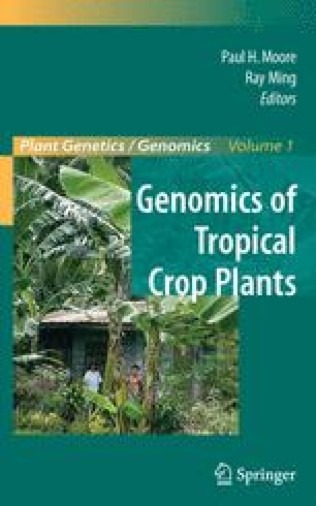
Genomics of Tropical Crop Plants
Genomics of Tropical Crop Plants summarizes recent progress on genomic research, including the development of molecular markers, genomic and cDNA libraries, expressed sequence tags (ESTs), genetic and physical maps, gene expression profiles, and whole genome sequences for 20 tropical crop plants. It offers background information about the evolutionary origin and environments of tropical crop species, international programs that are addressing the needs of tropical agriculture, and the potential for new technologies to increase the productivity and value of tropical crops. This book provides new dimensions to growing information concerning temperate crops and their morphology, physiology, and parallel evolution in diverse plant lineages.
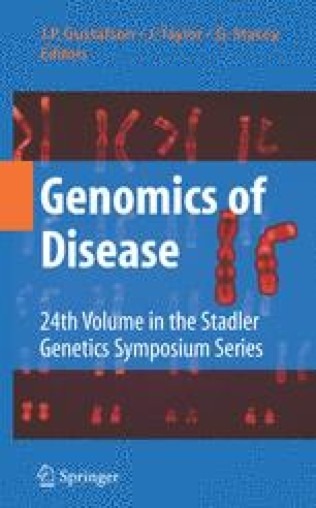
Genomics of Disease
Genomics of Disease is the 24th volume in the Stadler Genetics Symposium series published by Springer, which has, over many years, served as a comprehensive collection of current trends and hot topics in the field of genetics. The current volume summarizes recent progress in our attempts to characterize the genomics of plant and animal diseases. Authoritative analytical reviews are specialized to be attractive to professional researchers, teachers, and students, while also being appealing to a wider audience of scientists in related disciplines. Genomics of Disease offers essential reference material for any scientist or teacher working in the fields of plant and animal diseases. Coverage of key areas of both animal and plant disease is a unique feature of this volume and one that allows direct comparisons between the systems. All academics, scientists, and industry professionals that desire to take advantage of the most up-to-date information on the continuously emerging and expanding field of the genomics of plant and animal diseases will find it an invaluable resource.

Genomic intelligence : Metagenomics and artificial intelligence
The field of metagenomics has revolutionized our comprehension of microbial diversity and function across various habitats, from the human body to terrestrial and aquatic environments. Simultaneously, advancements in AI have empowered researchers to analyze vast troves of genomic data with unprecedented speed and precision, facilitating new insights into the complex interplay between microorganisms and their surroundings. Provides an overview of metagenomics and discusses the combination of metagenomics and AI and its significant consequences for advancements in science. The chapters examine the approaches, difficulties, and revolutionary uses of AI in metagenomics and provide insight into the convergence of genomics, metagenomics, and AI’s potential to revolutionize diverse fields from healthcare to environmental.
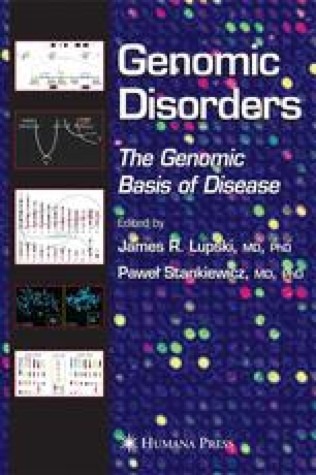
Genomic Disorders : The Genomic Basis of Disease
In Genomic Disorders: The Genomic Basis of Disease, distinguished experts and pioneers in the field of genomics and genome rearrangements summarize and synthesize the tremendous amount of data now available in the postgenomic era on the structural features, architecture, and evolution of the human genome.
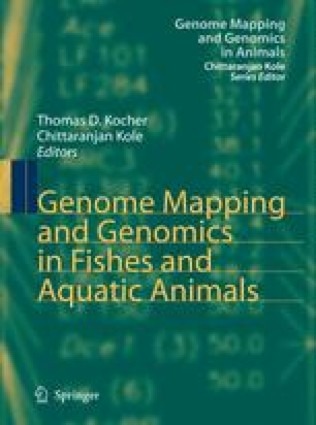
Genome Mapping and Genomics in Fishes and Aquatic Animals
The series Genome Mapping and Genomics in Animals provides comprehensive and up-to-date reviews on genomic research on a large variety of selected animal systems, contributed by leading scientists from around the world.This volume summarizes the first era of genomic studies of aquaculture species, in which the tools and resources necessary to support whole-genome sequencing were developed. These tools will enhance efforts toward selective breeding of aquaculture species. Included in this volume are summaries of work on salmonids, cyprinids, catfish, tilapias, European sea bass, Japanese flounder, shrimps and oysters.
Genome Mapping and Genomics in Arthropods
Mapping of animal genomes has generated huge databases and several new concepts and strategies, which are useful to elucidate origin, evolution and phylogeny. Genetic and physical maps of genomes further provide precise details on chromosomal location, function, expression and regulation of academically and economically important genes. The series "Genome Mapping and Genomics in Animals" provides comprehensive and up-to-date reviews on genomic research on a large variety of selected animal systems, contributed by leading scientists from around the world.Insects and other arthropods, the largest group of animals in number of species, have global impact on agriculture, industry, human health and environment. They are of particular economic importance for food production as pollinators, for natural products like silk and also as pests and parasites. Arthropods covered in this volume include honeybee, bumblebee, the parasitic Jewel Wasp, silkworm, pea aphid, mosquito, Hessian fly and tick.

Genome integrity : Facets and perspectives
The volume begins with DNA replication and continues with replicative DNA repair and pleiotropic protein interactions. Examples of human diseases are included and the cellular responses to radiation and genotoxic stress affecting whole genomes are reviewed.

Genome Exploitation : Data Mining the Genome
Data Mining the Genomes, is the 23rd volume of the Stadler Symposia series published by Springer, which have served over many years as a comprehensive collection of current trends and emerging hot topics in the field of genetics. Data Mining the Genomes summarizes the progress in bioinformatics and computational biology in data mining the vast amount of exciting information emerging from studies of plant and animal genomes, with authoritative analytical reviews specialized enough to be attractive to professional researchers, yet also appealing to the wider audience of scientists in related disciplines.

Genome Editing : Gene Therapy or Gene Optimization?
Genome editing technology is considered one of the most revolutionary techniques lately. The ability of modifying the human genome has been one of the biggest dreams for therapist for the reason that the genetic modification with exogenous DNA can be considered a problem solver for many diseases and disorders (genetic disorders), especially those with high risks and low survival rates, on this case, gene therapy appears as the tool to be used, with its many protocols and approaches. Gene therapy is based on delivering a therapeutic gene throw suitable vectors, which is most of the time-modified viruses to carry the therapeutic genes to the target cells and so on providing the functional copy of the defective gene.

Génetique statistique = Statistical genetics
Presents the main statistical tools useful in genetics: significance tests, analysis methods based on the likelihood function, EM algorithm, modeling, analysis of variance, hierarchical classifications, multiple comparisons, etc. All of them shed light on a number of biological phenomena such as carcinogenesis, population genetics, Hardy-Weinberg equilibrium, natural selection, mutations, heredity, coalescence processes, and even evolution. This book is intended for mathematicians and biologists alike. Written with a great concern for clarity, it is also accessible to non-specialists who will be able, thanks to it, to strengthen their theoretical base and above all to develop their know-how through very concrete applications.

Genetics of Adaptation
What is the genetic basis of adaptive evolution? In this volume, a new generation of biologists have taken up this challenge. Using advances in both molecular genetic and statistical techniques, evolutionary geneticists have made considerable progress in this emerging field. In this volume, a diversity of examples from plant and animal studies provides valuable information for those interested in the genetics and evolution of complex traits.

Genetic Systems Programming : Theory and Experiences
This book is devoted to reporting innovative and significant progress about the contribution of genetic programming in systems programming. The contributions of this book clearly demonstrate that genetic programming is very effective in solving hard and yet-open problems in systems programming. Followed by an introductory chapter, in the remaining contributed chapters, the reader can easily learn about systems where genetic programming can be applied successfully. These include but are not limited to, information security systems, compilers, data mining systems, stock market prediction systems, robots and automatic programming.
Genetic rogramming ; Vol. 3447 : 8th European conference, EuroGP 2005, Lausanne, Switzerland, March 30-April 1, 2005, Proceedings
In this volume we present the contributions for the 18th European Conference on Genetic Programming (EuroGP 2005). The conference took place from 30 March to 1 April in Lausanne, Switzerland. EuroGP is a well-established conf- ence and the only one exclusively devoted to genetic programming. All previous proceedings were published by Springer in the LNCS series. From the outset, EuroGP has been co-located with the EvoWorkshops focusing on applications of evolutionary computation. Since 2004, EvoCOP, the conference on evolutionary combinatorial optimization, has also been co-located with EuroGP, making this year’s combined events one of the largest dedicated to evolutionary computation in Europe. Genetic programming (GP) is evolutionary computation that solves complex problems or tasks by evolving and adapting a population of computer programs, using Darwinian evolution and Mendelian genetics as its sources of inspiration. Some of the 34 papers included in these proceedings address foundational and theoretical issues and there is also a wide variety of papers dealing with di?erent application areas, such as computer science, engineering, language processing, biology and computational design, demonstrating that GP is a powerful and practical problem-solving paradigm.

Genetic Programming Theory and Practice V
Genetic Programming Theory and Practice V was developed from the fifth workshop at the University of Michigan’s Center for the Study of Complex Systems to facilitate the exchange of ideas and information related to the rapidly advancing field of Genetic Programming (GP). Contributions from the foremost international researchers and practitioners in the GP arena examine the similarities and differences between theoretical and empirical results on real-world problems. The text explores the synergy between theory and practice, producing a comprehensive view of the state of the art in GP application.
Genetic Programming ; Vol. 3905 ; 9th European Conference, EuroGP 2006, Budapest, Hungary, April 10-12, 2006. Proceedings
This book constitutes the refereed proceedings of the 9th European Conference on Genetic Programming, EuroGP 2006, held in Budapest, Hungary, in April 2006, colocated with EvoCOP 2006. The 21 revised plenary papers and 11 revised poster papers were carefully reviewed and selected from 59 submissions. The papers address fundamental and theoretical issues, along with a wide variety of papers dealing with different application areas, such as computer science, engineering, machine learning, Kolmogorov complexity, biology and computational design.

Genetic Programming ; 11th European Conference, EuroGP 2008, Naples, Italy, March 26-28, 2008. Proceedings
The 11th European Conference on Genetic Programming, EuroGP 2008, took place in Naples, Italy from 26 to 28 March in the University of Naples Congress Centre with spectacular views over the Gulf of Naples. This volume contains the papers for the 21 oral presentations and 10 posters that were presented during this time. A diverse array of topics were covered refecting the current state of research in the ?eld of Genetic Programming, including the latest work on representations, theory, operators and analysis, evolvable hardware, agents and numerous applications. A rigorous, double-blind peer review process was employed, with each s- mission reviewed by at least three members of the international Program C- mittee.

Genes, development, and cancer : The life and work of Edward B. Lewis
Edward B. Lewis' science is the bridge linking experimental genetics as conducted in the first half of the twentieth century, and the powerful molecular genetic approaches that revolutionized the field in its last quarter. For the first time Lewis' key publications in the fields of genetics, developmental biology, radiation and cancer are compiled within one volume.
