



الصفحة 13
الصفحة 13
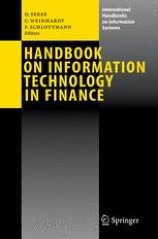
Handbook on Information Technology in Finance
This Handbook contains surveys of state-of-the-art concepts, systems, applications, best practices as well as contemporary research in the intersection between IT and finance. Included are recent trends and challenges, IT systems and architectures in finance, essential developments and case studies on management information systems, service oriented architecture modelling, IT architectures for securities trading, IT-systems in banking, process-oriented systems in corporate treasuries, grid computing and networking. The IT applications in banking, trading and insurance cover risk management and controlling, financial portals, electronic payment and others. In addition, also finance-related IT applications in non-financial companies are considered. The concept-oriented part of the book focuses on IT methods in finance like financial models and modelling financial data, planning and processes, security, algorithms and complexity.

Handbook on Architectures of Information Systems
This book is the first volume of a running series under the title Inter- tional Handbooks on Information Systems. The series is edited by Peter Bernus, Jacek Blazewicz, Günter Schmidt and Mike Shaw. One objective is to give state of the art surveys on selected topics of information systems theory and applications. To this end, a distinguished international group of academics and practitioners are invited to provide a reference source not only for problem solvers in business, industry, and government but also for professional researchers and graduate students.

Handbook of production scheduling
The HANDBOOK OF PRODUCTION SCHEDULING concentrates on real-world production scheduling in factories and industrial settings. It includes industry case studies that use innovative techniques as well as academic research results that can be used to improve real-world production scheduling. Its purpose is to present scheduling principles, advanced tools, and examples of innovative scheduling systems to persons who could use this information to improve production scheduling in their own organization.

Handbook of Petroleum Processing
"This Handbook describes and discusses the features that make up the petroleum refining industry. It begins with a description of the crude oils and their nature. It continues with the saleable products from the refining processes, with a review of the modern day environmental impact. There is a complete overview of the processes that make up the refinery with a brief history of the processes. It also describes design technique, operation, and, in the case of catalytic units, the chemistry of the reaction routes. These discussions are supported by calculation procedures and examples, sufficient to enable good input to modern computer simulation packages. The Handbook also covers off-sites and utilities, as well as environmental and safety aspects relevant to the industry."

Handbook of ocean wave energy
This book offers a concise, practice-oriented reference-guide to the field of ocean wave energy. The ten chapters highlight the key rules of thumb, address all the main technical engineering aspects and describe in detail all the key aspects to be considered in the techno-economic assessment of wave energy converters. Written in an easy-to-understand style, the book answers questions relevant to readers of different backgrounds, from developers, private and public investors, to students and researchers. It is thereby a valuable resource for both newcomers and experienced practitioners in the wave energy sector.
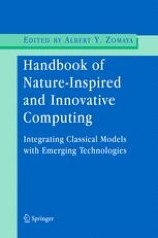
Handbook of Nature-Inspired and Innovative Computing : Integrating Classical Models with Emerging Technologies
This comprehensive handbook, the first of its kind to address the connection between nature-inspired and traditional computational paradigms, is a repository of case studies dealing with different problems in computing and solutions to these problems based on nature-inspired paradigms. The "Handbook of Nature-Inspired and Innovative Computing: Integrating Classical Models with Emerging Technologies" is an essential compilation of models, methods, and algorithms for researchers, professionals, and advanced-level students working in all areas of computer science, IT, biocomputing, and network engineering.

Handbook of Mathematical Geosciences : Fifty Years of IAMG
Presents a compilation of invited path-breaking research contributions by award-winning geoscientists who have been instrumental in shaping the IAMG. It contains 45 chapters that are categorized broadly into five parts (i) theory, (ii) general applications, (iii) exploration and resource estimation, (iv) reviews, and (v) reminiscences covering related topics like mathematical geosciences, mathematical morphology, geostatistics, fractals and multifractals, spatial statistics, multipoint geostatistics, compositional data analysis, informatics, geocomputation, numerical methods, and chaos theory in the geosciences.

Handbook of Materials Modeling
The first reference of its kind in the rapidly emerging field of computational approachs to materials research, this is a compendium of perspective-providing and topical articles written to inform students and non-specialists of the current status and capabilities of modelling and simulation. From the standpoint of methodology, the development follows a multiscale approach with emphasis on electronic-structure, atomistic, and mesoscale methods, as well as mathematical analysis and rate processes. Basic models are treated across traditional disciplines, not only in the discussion of methods but also in chapters on crystal defects, microstructure, fluids, polymers and soft matter. Written by authors who are actively participating in the current development, this collection of 150 articles has the breadth and depth to be a major contributor toward defining the field of computational materials. In addition, there are 40 commentaries by highly respected researchers, presenting various views that should interest the future generations of the community.

Handbook of intelligent and sustainable smart dentistry : nature and bio-inspired approaches, processes, materials, and manufacturing
Provides the latest and most comprehensive evidence-based guidance on intelligent and sustainable approaches in dentistry. This valuable handbook is a single-stop solution for practitioners, researchers, scholars, students, academicians, and clinicians inquisitive in updating their knowledge on intelligent and sustainable dentistry. The handbook will bestow the readers with not only theoretical knowledge but will equip them with clinical skills as well.

Handbook of brain connectivity
The Handbook provides an account of the current knowledge on the measurement, analysis and theory of the anatomical and functional connectivity of the brain. All contributors are leading experts in various fields concerning structural and functional brain connectivity.

Handbook of biomedical image analysis : Vol.1 : Segmentation bodels ; Part A
Handbook of Biomedical Image Analysis: Segmentation Models (Volume I) is dedicated to the segmentation of complex shapes from the field of imaging sciences using different mathematical techniques. This volume is aimed at researchers and educators in imaging sciences, radiological imaging, clinical and diagnostic imaging, physicists covering different medical imaging modalities, as well as researchers in biomedical engineering, applied mathematics, algorithmic development, computer vision, signal processing, computer graphics and multimedia in general, both in academia and industry .

Handbook of advanced magnetic materials : Vol 1 : Nanostructural effects ; Vol 2 : Characterization and simulation ; Vol 3 : Fabrication and processing ; Vol 4 : Properties and applications
The objective of Handbook of Advanced Magnetic Materials is to provide a timely, comprehensive review of recent progress in magnetic materials research. This broad yet detailed reference consists of four volumes: 1.) Nanostructured advanced magnetic materials, 2.) Characterization and simulation of advanced magnetic materials, 3.) Processing of advanced magnetic materials, and 4.) Properties and applications of advanced magnetic materials Emphasis is on the processing, experimental investigation, theoretical understanding, and application of nanostructured magnetic materials. The chapters, authored by worldwide known specialists, provide an introduction into the topics and review the latest advances in magnetic nanostructures and materials. This includes emerging new materials, scientific methods, and experimental techniques. The coverage is very broad and includes nanostructural effects, characterization and simulation, fabrication and processing, and properties and applications of advanced magnetic materials.

Guide to Biomolecular Simulations
Molecular dynamics simulations have become instrumental in replacing our view of proteins as relatively rigid structures with the realization that they were dynamic systems, whose internal motions play a functional role. Over the years, such simulations have become a central part of biophysics. Applications of molecular dynamics in biophysics range over many areas. They are used in the structure determination of macromolecules with x-ray and NMR data, the modelling of unknown structures from their sequence, the study of enzyme mechanisms, the estimation of ligand-binding free energies, the evaluation of the role of conformational change in protein function, and drug design for targets of known structures.
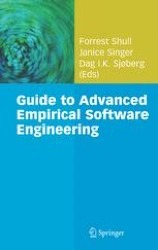
Guide to Advanced Empirical Software Engineering
Empirical studies have become an integral element of software engineering research and practice. This unique text/reference includes chapters from some of the top international empirical software engineering researchers and focuses on the practical knowledge necessary for conducting, reporting and using empirical methods in software engineering.

Grid economics and business models ; 4th International workshop, GECON 2007, Rennes, France, August 28, 2007, Proceedings
In the third contribution, Altmann and colleagues formulate a taxonomical - proach to Grid business models. They survey the development and origin of Grid technologies and focus on the importance of business-directed values when trying to commercialize today’s Grids. Therein, they identify the reduction of costs, the - provement of efficiency, the creation of novel products and services as well as the quality and collaboration between companies as key factors for the differentiation of Grid business models.

Grid computing in life science ; 1st International Workshop on Life Science Grid, LSGRID 2004 Kanazawa, Japan, May 31-June 1, 2004, Revised Selected and Invited Papers
Researchers in the ?eld of life sciences rely increasingly on information te- nology to extract and manage relevant knowledge. The complex computational and data management needs of life science research make Grid technologies an attractive support solution. However, many important issues must be addressed before the Life Science Grid becomes commonplace. The 1st International Life Science Grid Workshop (LSGRID 2004) was held in Kanazawa Japan, May 31–June 1, 2004. This workshop focused on life s- ence applications of grid systems especially for bionetwork research and systems biology which require heterogeneous data integration from genome to phenome, mathematical modeling and simulation from molecular to population levels, and high-performance computing including parallel processing, special hardware and grid computing.

Global Specification and Validation of Embedded Systems : Integrating Heterogeneous Components
Global modelling and validation is required to master the design of systems made of heterogeneous components. These systems are now omnipresent in our life, and they may be found in several domains such as communications (ex. mobile terminals, optical switches), health (e.g. cardiac stimulators, cochlear implants), transportation (ex. automotive and aeronautical), etc. The main difficulties for their design are modelling and validation of the interactions between different components (hardware, software, analogue, RF, optical and micro-mechanical).

Global design to gain a competitive edge : An holistic and collaborative design approach based on computational tools
Global Design to Gain a Competitive Edge collects together papers from the 2008 International Conference on Advanced Design and Manufacture (ICADAM). Recent advancements, emerging trends and new challenges in the fields of design and manufacturing are covered, with a particular focus on the understanding of the impact of distributed team-based design and manufacture on research and industrial practices for global companies.
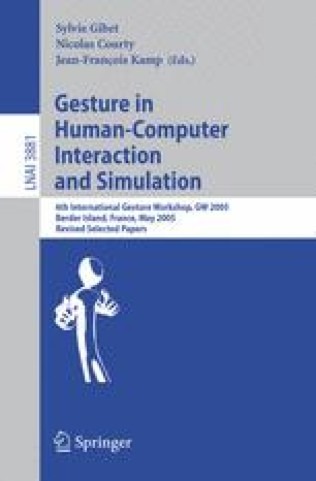
Gesture in Human-Computer Interaction and Simulation ; 6th International Gesture Workshop, GW 2005, Berder Island, France, May 18-20, 2005, Revised Selected Papers
The international Gesture Workshops have become the leading interdisciplinary events for dissemination of the latest results on gesture-based communication. The goal of these workshops is to bring together researchers who want to meet and share ideas on advanced research on gesture related to multidisciplinary scienti?c ?elds. Depending on the ?elds, the objectives can be very di?erent. While physiology and biomechanics aim to extract fundamental knowledge of physical gesture, computer sciences try to capture di?erent aspects of gesture and extract features that help to identify, interpret or rebuild the underlying mechanisms of communication gestures. Other approaches and methodologies are followed by cognitive sciences and linguistics, bringing a complementary - derstanding of motor control and gesture meaning. The results can be enhanced by technological applications or demonstrations.
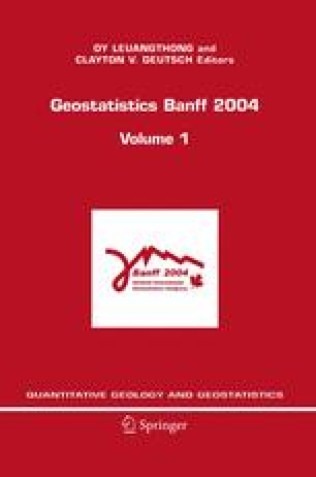
Geostatistics Banff 2004
The five major sections are: theory, mining, petroleum, environmental and other applications. The first section showcases new and innovative ideas in the theoretical development of geostatistics as a whole; these ideas will have large impact on (1) the directions of future geostatistical research, and (2) the conventional approaches to heterogeneity modelling in a wide range of natural resource industries. The next four sections are focused on applications and innovations relating to the use of geostatistics in specific industries. Historically, mining, petroleum and environmental industries have embraced the use of geostatistics for uncertainty characterization, so these three industries are identified as major application areas. The last section is open for innovative geostatistical application to address the issues and impact of uncertainty in other industries.
