



الصفحة 125
الصفحة 125

Husserl’s Logical Investigations in the New Century : Western and Chinese Perspectives
In this volume, phenomenologists from the West join hands with specialists from mainland China and Hong Kong to discuss the heritage of Husserl's Logical Investigations.
Humans-with-media and the reorganization of mathematical thinking : Information and communication technologies, modeling, visualization and experimentation
Offers a new conceptual framework for reflecting on the role of information and communication technology in mathematics education. Borba and Villarreal provide examples from research conducted at the level of basic and university-level education, developed by their research group based in Brazil, and discuss their findings in the light of the relevant literature. Arguing that different media reorganize mathematical thinking in different ways, they discuss how computers, writing and oral discourse transform education at an epistemological as well as a political level. Modeling and experimentation are seen as pedagogical approaches which are in harmony with changes brought about by the presence of information and communication technology in educational settings. Examples of research about on-line mathematics education courses, and Internet used in regular mathematics courses, are presented and discussed at a theoretical level. In this book, mathematical knowledge is seen as developed by collectives of humans-with-media.
Human-Nature Interactions : Exploring Nature’s Values Across Landscapes
Highlights how humans value nature, the opportunities and challenges in changing socio-ecological systems / Provides insights into concepts and methods to study human-nature relationships, designed for a broad audience / Focus on integrative approaches exploring interactions across different scales, intensity levels and landscapes

Human-Like Biomechanics : A Unified Mathematical Approach to Human Biomechanics and Humanoid Robotics
The book contains six Chapters and an Appendix. The first Chapter is an Introduction, giving a brief review of mathematical techniques to be used in the text. The second Chapter develops geometrical basis of human-like biomechanics, while the third Chapter develops its mechanical basis, mainly from generalized Lagrangian and Hamiltonian perspective. The fourth Chapter develops topology of human-like biomechanics, while the fifth Chapter reviews related nonlinear control techniques. The sixth Chapter develops covariant biophysics of electro-muscular stimulation. The Appendix consists of two parts: classical muscular mechanics and modern path integral methods, which are both used frequently in the main text.

Humanizing modern medicine : An introductory philosophy of medicine
In this book the author explores the shifting philosophical boundaries of modern medical knowledge and practice occasioned by the crisis of quality-of-care, especially in terms of the various humanistic adjustments to the biomedical model. To that end he examines the metaphysical, epistemological, and ethical boundaries of these medical models. He begins with their metaphysics, analyzing the metaphysical positions and presuppositions and ontological commitments upon which medical knowledge and practice is founded. Next, he considers the epistemological issues that face these medical models, particularly those driven by methodological procedures undertaken by epistemic agents to constitute medical knowledge and practice.

Humanized mice
The term humanized mouse in this text refers to a mouse in which human tissues and cells have been transplanted and show the same biological function as they do in the human body. That is, the physiological properties and functions of tra- planted human tissues and cells can be analyzed in the mouse instead of using a living human body. It should therefore be possible to study the pathophysiology and treatment of human diseases in mice with good reproducibility.

Humanistic foundation of criminal law
Uses humanity-rationality and experience and the freedom of human will as a theoretical perspective to examine the basic framework of criminal law theories constructed by the criminal classic school and the criminal empirical school. The author puts forward the principle of the duality of rationality and experience of humanity and affirms the determinism of human behavior in the ontological sense and the freedom of will in the axiological sense. From this point of view, this book examines the humanistic foundations of crime and punishment, legislation and justice.
Human-computer interaction Symposium ; IFIP 20th World Computer Congress, Proceedings of the 1st TC 13 Human-Computer Interaction Symposium (HCIS 2008), September 7-10, 2008, Milano, Italy
The IFIP series publishes state-of-the-art results in the sciences and technologies of information and communication. The scope of the series includes: foundations of computer science; software theory and practice; education; computer applications in technology; communication systems; systems modeling and optimization; information systems; computers and society; computer systems technology; security and protection in information processing systems; artificial intelligence; and human-computer interaction. Proceedings and post-proceedings of refereed international conferences in computer science and interdisciplinary fields are featured.

Human–computer interaction ; International Workshop, HCI 2007 Rio de Janeiro, Brazil, October 20, 2007 Proceedings
Constitutes the refereed proceedings of the International Workshop on Human Computer Interaction, HCI 2007, held in Rio de Janeiro, Brazil, October 20, 2007. This book covers such topics as: Affective detection and recognition, Smart interfaces, Human motion tracking, Gesture recognition, and Multimedia data modeling and visualization.

Human-computer interaction : Interaction platforms and techniques ; 12th International Conference, HCI International 2007, Beijing, China, July 22-27, 2007, Proceedings, Part II
The 12th International Conference on Human-Computer Interaction, HCI Inter- tional 2007, was held in Beijing, P.R. This volume, edited by Julie A. Jacko, contains papers in the thematic area of Human-Computer Interaction, addressing the following major topics: • Graphical User Interfaces and Visualization • Mobile Devices and Mobile Interaction • Virtual Environments and 3D Interaction • Ubiquitous Interaction • Emerging Interactive Technologies.

Human-Computer Interaction : Interaction design and usability ; 12th International Conference, HCI International 2007, Beijing, China, July 22-27, 2007, Proceedings, Part I
The 12th International Conference on Human-Computer Interaction, HCI Inter- tional 2007, was held in Beijing, P.R. This volume, edited by Julie A. Jacko, contains papers in the thematic area of Human-Computer Interaction, addressing the following major topics: • Interaction Design: Theoretical Issues, Methods, Techniques and Practice • Usability and Evaluation Methods and Tools • Understanding Users and Contexts of Use • Models and Patterns in HCI

Human-computer interaction – INTERACT 2007 ; 11th IFIP TC 13 International Conference, Rio de Janeiro, Brazil, September 10-14, 2007, Proceedings, Part II
This book is part of a two-volume work that constitutes the refereed proceedings of the 11th IFIP TC13 International Conference on Human-Computer Interaction, INTERACT 2007, held in Rio de Janeiro, Brazil in September 2007. It covers tangible user interfaces and interaction; as well as software engineering and HCI.

Human-computer interaction – INTERACT 2007 ; 11th IFIP TC 13 International Conference, Rio de Janeiro, Brazil, September 10-14, 2007, Proceedings, Part I
The two volume set LNCS 4662 and LNCS 4663 constitutes the refereed proceedings of the 11th IFIP TC13 International Conference on Human-Computer Interaction, INTERACT 2007, held in Rio de Janeiro, Brazil, in September 2007.

Human-computer interaction – INTERACT 2005 ; IFIP TC 13 International Conference, Rome, Italy, September 12-16, 2005, Proceedings
We will be, sooner or later, not only handling personal computers but also mul- purpose cellular phones, complex personal digital assistants, devices that will be context-aware, and even wearable computers stitched to our clothes…we would like these personal systems to become transparent to the tasks they will be performing. In fact the best interface is an invisible one, one giving the user natural and fast access to the application he (or she) intends to be executed. The working group that organized this conference (the last of a long row!) tried to combine a powerful scientific program (with drastic refereeing) with an entertaining cultural program, so as to make your stay in Rome the most pleasant one all round: I do hope that this expectation becomes true. July 2005 Stefano Levialdi, IEEE Life Fellow INTERACT 2005 General Chairman [1] Peter J. Denning, ACM Communications, April 2005, vol. 48, N° 4, pp. 27-31. Editors’ Preface INTERACT is one of the most important conferences in the area of Human-Computer Interaction at the world-wide level. We believe that this edition, which for the first time takes place in a Southern European country, will strengthen this role, and that Rome, with its history and beautiful setting provides a very congenial atmosphere for this conference. The theme of INTERACT 2005 is Communicating Naturally with Computers.

Human-computer interaction - HCI Intelligent Multimodal interaction environments ; 12th International Conference, HCI International 2007, Beijing, China, July 22-27, 2007, Proceedings, Part III
The 12th International Conference on Human-Computer Interaction, HCI Inter- tional 2007, was held in Beijing, P.R. This volume, edited by Julie A. Jacko, contains papers in the thematic area of Human-Computer Interaction, addressing the following major topics: • Multimodality and Conversational Dialogue • Adaptive, Intelligent and Emotional User Interfaces • Gesture and Eye Gaze Recognition • Interactive TV and Media.

Human-computer interaction - HCI : Applications and services ; 12th International Conference, HCI International 2007, Beijing, China, July 22-27, 2007, Proceedings, Part IV
The 12th International Conference on Human-Computer Interaction, HCI Inter- tional 2007, was held in Beijing, P.R. This volume, edited by Julie A. Jacko, contains papers in the thematic area of - man-Computer Interaction, addressing the following major topics: • Business Applications • Learning and Entertainment • Health Applications • Work and Collaboration Support • Web-Based and Mobile Applications and Services • Advanced Design and Development Support.

Human-centered visualization environments : GI-Dagstuhl Research Seminar, Dagstuhl Castle, Germany, March 5-8, 2006, Revised Papers
This tutorial book features an augmented selection of the material presented at the GI-Dagstuhl Research Seminar on Human-Centered Visualization Environments, HCVE 2006, held in Dagstuhl Castle, Germany in March 2006. It presents eight tutorial lectures that are the thoroughly cross-reviewed and revised versions of the summaries and findings presented and discussed at the seminar.

Human-centered software engineering - Integrating usability in the software development lifecycle
Human-CenteredSoftwareEngineering: BridgingHCI,UsabilityandSoftwareEngineering From its beginning in the 1980’s, the ?eld of human-computer interaction (HCI) has beende?nedasamultidisciplinaryarena. BythisImeanthattherehas beenanexplicit recognition that distinct skills and perspectives are required to make the whole effort of designing usable computer systems work well. Thus people with backgrounds in Computer Science (CS) and Software Engineering (SE) joined with people with ba- grounds in various behavioral science disciplines (e. g. , cognitive and social psych- ogy, anthropology) in an effort where all perspectives were seen as essential to creating usable systems. But while the ?eld of HCI brings individuals with many background disciplines together to discuss a common goal - the development of useful, usable, satisfying systems - the form of the collaboration remains unclear.

Human work interaction design : Designing for human work ; The 1st IFIP TC 13.6 WG Conference: Designing for Human Work, February 13-15, 2006, Madeira, Portugal
International Federation for Information Processing The IFIP series publishes state-of-the-art results in the sciences and technologies of information and communication. The scope of the series includes: foundations of computer science; software theory and practice; education; computer applications in technology; communication systems; systems modeling and optimization; information systems; computers and society; computer systems technology; security and protection in information processing systems; artificial intelligence; and human-computer interaction. Proceedings and post-proceedings of referred international conferences in computer science and interdisciplinary fields are featured. These results often precede journal publication and represent the most current research. The principal aim of the IFIP series is to encourage education and the dissemination and exchange of information about all aspects of computing.
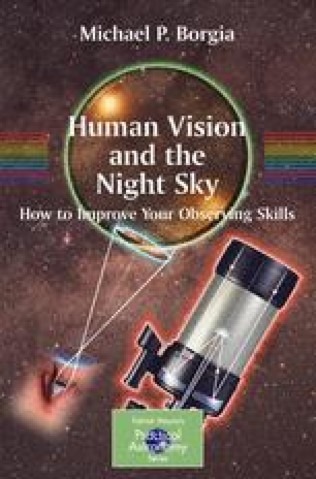
Human vision and the night sky : How to improve your observing skills
This book is not for beginners. Nor is it for experts – instead it addresses the needs of practical amateur astronomers who want to make the jump to the new challenges of serious visual observing. Second Steps in Observational Astronomy begins by teaching you, as an amateur astronomer, to use the most important tool you have: your eyes. Visual observing is very definitely a skill that can be learned. Of course it is important to have your other optical equipment – telescope and accessories – set up and operating as perfectly as possible. This book describes how. After these vital preliminaries, subsequent chapters include a series of observing challenges that will entertain you and push your observing skills to continually higher levels of excellence for years to come. Take a tour of the solar-system as you never viewed it before, then beyond into the realm of deep space – using just your own eyes to reveal more detail than you ever thought possible.
