



الصفحة 12
الصفحة 12

Gene Therapy for Cancer
The possibility of treating cancer, a disease defined by genetic defects, by introducing genes targeting these very alterations has led to an immense interest in gene therapy for cancer. Although incremental successes have been realized, enthusiasm for gene therapy has declined due to an increasing number of obstacles. These obstacles include vector systems that do not reach systemic metastases, therapeutic genes with redundant mec- nisms allowing for cellular resistance, and toxicities in clinical trials leading to premature closure of these studies. Different tactics to overcome or circumvent these obstacles have catalyzed the development of a wide range of gene therapy approaches. Thus far, almost two-thirds of gene therapy trials have focused on cancer. This reflects the concept that gene therapy approaches for the treatment of cancer do not necessarily require long-term expression of the gene as is necessary for the treatment of primary genetic defects like hemophilia or juvenile diabetes.

Gastrointestinal malignancies
Details the advances in drug discovery and delivery and the present need for emerging technologies. Throughout the text new micro and nanofabrication techniques are described, including methods such as electrohydrodynamic processes, additive manufacturing, and microfluidics, which have the potential to produce drug delivery systems that were not possible a few years ago. This book is of great use to both entry-level and experienced researchers in the field of emerging technologies for the manufacturing of drug delivery devices.

Fundamentals of Space Biology : Research on Cells, Animals, and Plants in Space
This book is intended as an overview at the undergraduate or early university level and describes the effects of spaceflight at cellular and organism levels. Past, current, and future research on the effects of gravity--or its absence--and ionizing radiation on the evolution, development, and function of living organisms is presented in layman's terms by researchers who have been active in this field. The purpose is to enlighten science and non-science readers to the benefits of space biology research for conducting basic and applied research to support human exploration of space. Also covered are the advantages of approaching the space environment as a laboratory for scientific, technological, and commercial research.

Free Energy and Self-Interacting Particles
This book examines a system of parabolic-elliptic partial differential eq- tions proposed in mathematical biology, statistical mechanics, and chemical kinetics. In the context of biology, this system of equations describes the chemotactic feature of cellular slime molds and also the capillary formation of blood vessels in angiogenesis. There are several methods to derive this system. One is the biased random walk of the individual, and another is the reinforced random walk of one particle modelled on the cellular automaton. In the context of statistical mechanics or chemical kinetics, this system of equations describes the motion of a mean field of many particles, interacting under the gravitational inner force or the chemical reaction

Fractals in Biology and Medicine : Beyond Planting Trees
This volume it highlights the potential that fractal geometry offers for elucidating and explaining the complex make-up of cells, tissues and biological organisms either in normal or in pathological conditions, including the structural changes that occur in tumours. It helps develop the concepts, questions and methods required in research on fractal biology and natural phenomena and to evidence the pitfalls of a too simplistic application of these principles in investigating topical subjects of biology and medicine. It discusses present and future applications of fractal geometry, bringing together cellular and molecular biology, engineering, mathematics, physics, medicine and other disciplines and allowing an interdisciplinary vision.
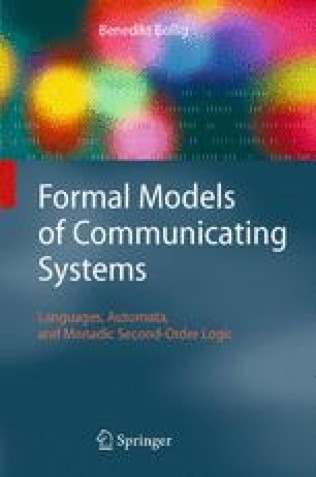
Formal Models of Communicating Systems : Languages, Automata, and Monadic Second-Order Logic
This book studies the relationship between automata and monadic second-order logic, focusing on classes of automata that describe the concurrent behavior of distributed systems.

Foodborne Microbial Pathogens : Mechanisms and Pathogenesis
The author presents up-to-date information on molecular and cellular mechanism of several major foodborne microbial pathogens, including select agents for bioterrorism, virulence genes and their regulation in the host or the food environment, pathogenicity testing models, clinical symptoms, and prevention and control strategies. In order to understand the disease process, one must have certain understanding about the role of the immune system. Thus this book also covers the host parasite interaction to a level where the readers will have a better appreciation for the disease mechanism.

Food allergens : methods and protocols
Provides a comprehensive collection of methods and protocols in food allergy and food allergens studies. The selected protocols explore the study of food allergens, from recombinant production, purification procedures, IgE and T cell epitopes characterization, to allergen structure description, cellular responses, and tolerance induction, through a variety of techniques and animal models.

Fluid volume monitoring with glucose dilution
Decision making regarding fluid volume loading, fluid restriction, or administration of vasoactive drugs may vary among physicians, depending solely upon their clinical experience in the absence of evidence-based measurement. The initial distribution volume of glucose (IDVG) is believed to be clinically relevant as a marker of cardiovascular and fluid management in critically ill patients without a significant modification of glucose metabolism. This book covers all aspects of IDVG measurement, including the basic concept, its relationship with other fluid volumes, and the clinical application of this technique in the intensive care unit based on both the authors’ studies and their clinical experience with more than 4000 IDVG determinations. When the concept of IDVG is properly understood and its measurement is then performed routinely, daily fluid and cardiovascular management in critically ill patients can be improved based on evidence-based measurement.

Fine-Tuning of RNA Functions by Modification and Editing
This book provides advance information on RNA modification, including the associated editing machinery, while offering the reader some perspective on the significance of such modifications in fine-tuning the structure and functions of mature RNA molecules and hence the ability to influence the efficiency and accuracy of genetic expression.

Fibrogenesis : Cellular and molecular basis
Fibrogenesis: Cellular and Molecular Basis is the first volume to provide a synopsis of the rapid progress that has been documented in fibrogenesis over last couple of years, which significantly enhanced our understanding of the pathomechanisms of fibrotic diseases. Knowledge on molecular and celluar basis of fibrotic diseases has provided opportunities to develop selective and effective gene-based therapeutic options.

Fatty acids
Fatty acid metabolism, including the de novo synthesis, uptake, oxidation, and derivation of fatty acids, plays several important roles at cellular and organ levels. Recent studies have identified characteristic changes in fatty acid metabolism in idiopathic pulmonary fibrosis (IPF) lungs, which implicates its dysregulation in the pathogenesis of this disorder. Here, we review the evidence for how fatty acid metabolism contributes to the development of pulmonary fibrosis, focusing on the profibrotic processes associated with specific types of lung cells, including epithelial cells, macrophages, and fibroblasts. We also summarize the potential therapeutics that target this metabolic pathway in treating IPF.

Facts about the most three common types of cancer in Syria
Cancer occurs when the cellular reproduction process goes out of control. In other words, cancer is a disease characterized by uncontrolled, uncoordinated and undesirable cell division. Unlike normal cells, cancer cells continue to grow and divide for their whole lives, replicating into more and more harmful cells. But death rates are falling, thanks to earlier detection of tumours and improved use of existing treatments - mainly chemotherapy biological therapy and radiotherapy. And today Our research tends to spot the light on the most common types of cancers in Syria which was found to be lung cancer, colorectal cancer, and breast cancer.

Facilities Design
Describes tools commonly used for presenting layout designs Presents traditional models for facility layout including the popular systematic layout planning (SLP) model in detail Provides a layout project involving the SLP model Covers group technology and cellular manufacturing at the elementary level Includes a project and case study on machine grouping and layout Considers next-generation factory layouts Discusses analytical queuing and queuing network models, and more Explains the ins and outs of facility planning and design. A reference for both student and professional, the book addresses facilities design and layout problems in manufacturing systems and covers layout, logistics, supply chain, warehousing, and materials handling.

Facial wirkles and treating strategies
Skin is a complex organ covering the entire surface of the body. Skin aging is characterized by features such as wrinkling, loss of elasticity, laxity, and rough- textured appearance. This aging process is accompanied with phenotypic changes in cutaneous cells as well as structural and functional changes in extracellular matrix components such as collagens and elastin. These changes occur under the influence of intrinsic and extrinsic factors, Skin changes associated with aging are the focus of many surgical and nonsurgical procedures aimed to improve the appearance of skin...

Experimental Glycoscience : Glycobiology
The aim of this book is to provide experimental protocols covering many aspects of glycobiology, glycotechnology, and chemistry: biochemistry, molecular and cellular biology, genetics, physiology, and medicine. The protocols are all self-contained descriptions of the equipment and reagents needed, followed by details of the experimental procedure.

Experimental Glycoscience : Glycobiology
The aim of this book is to provide experimental protocols covering many aspects of glycobiology, glycotechnology, and chemistry: biochemistry, molecular and cellular biology, genetics, physiology, and medicine. The protocols are all self-contained descriptions of the equipment and reagents needed, followed by details of the experimental procedure.

Evolving Connectionist Systems : The Knowledge Engineering Approach
Evolving Connectionist Systems is aimed at all those interested in developing and using intelligent computational models and systems to solve challenging real world problems in computer science, engineering, bioinformatics and neuroinformatics. The book challenges scientists and practitioners with open questions about future creation of new information models inspired by Nature. This edition includes new methods for adaptive, knowledge-based learning, such as online incremental feature selection, spiking neural networks, transductive neuro-fuzzy inference, adaptive data and model integration, cellular automata and artificial life systems, particle swarm optimisation, ensembles of evolving systems, and quantum inspired neural networks. New applications to gene and protein interaction modelling, brain data analysis and brain model creation, computational neuro-genetic modelling, adaptive speech, image and multimodal recognition, language modelling, adaptive robotics, modelling dynamic financial and socio-economic systems, and ecological modelling, are covered. An important new feature of the book is the attempt to connect different structural and functional levels of a complex, intelligent system, looking for inspiration from functional relationships in natural systems, such as the genetic and the brain activity.

Evolutionary Computation for Modeling and Optimization
Evolutionary Computation for Optimization and Modeling is an introduction to evolutionary computation, a field which includes genetic algorithms, evolutionary programming, evolution strategies, and genetic programming. The text is a survey of some application of evolutionary algorithms. It introduces mutation, crossover, design issues of selection and replacement methods, the issue of populations size, and the question of design of the fitness function. It also includes a methodological material on efficient implementation. Some of the other topics in this book include the design of simple evolutionary algorithms, applications to several types of optimization, evolutionary robotics, simple evolutionary neural computation, and several types of automatic programming including genetic programming. The book gives applications to biology and bioinformatics and introduces a number of tools that can be used in biological modeling, including evolutionary game theory. Advanced techniques such as cellular encoding, grammar based encoding, and graph based evolutionary algorithms are also covered.

Evolutionary cell biology : The origins of cellular architecture
Establishes the foundations of the emerging field of evolutionary cell biology. Includes a wide range of comparative data and examples from both prokaryotes and eukaryotes, integrating such observations with biophysical/biochemical principles and evolutionary theory. Provides a deep and broad coverage of the literature, with many ideas synthesised and presented for the first time
