



الصفحة 12
الصفحة 12

Defense against Bioterror : Detection Technologies, Implementation Strategies and Commercial Opportunities ; Proceedings of the NATO Advanced Research Workshop on Defense against Bioterror: Detection Technologies, Implementation Strategies and Commercial Opportunities, held in Madrid, Spain from 8 to 11 April 2004
A critical assessment of state-of-the-art of emerging ("breakthrough") biosensor technologies that will allow for the rapid identification of biological threat agents in the environment and human population, Identification of directions for future research, and to promote close working relationships between scientists from different countries and with different professional experience. The volume is devoted to a comprehensive overview of the current state of biological weapons threat; challenges confronting biodetection technologies and systems; ongoing research and development; and, future requirements. Biosensor technologies including detection platforms, networked alarm-type biodetector systems, implementation strategies, electro-optical and electrochemical biosensors.

Defending Life : The Nature of Host-Parasite Relations
Defending Life discusses the relationship between hosts and parasites. A major contention of the book is that the immune system depends ontologically on the ecosystem in which it is embedded; it would not have the features it has if it was not related in one way or other to parasitic agents and to the host’s own cells and tissues. To sustain the argument, life is investigated at all layers – from molecules up through cells, organisms and ecosystems. Together with the inverse course, which goes from ecological contingencies down to gene-expression profiles, the approach facilitates an advanced understanding of immunocompetence as well as its converse, immunoincompetence. The emphasis on analytical abstractions, coherent patterns and generative mechanisms makes possible the distinction between genuine causality and coincidental associations, and thus increases the understanding of why we observe what we observe. The book contains detailed descriptions of the immune system and the microbial world as well as methodological and conceptual clarifications.
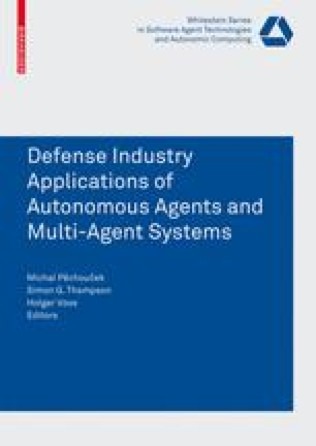
Defence Industry Applications of Autonomous Agents and Multi-Agent Systems
In this book defense and security related applications are increasingly being tackled by researchers and practioners using technologies developed in the field of Intelligent Agent research.

Defence Applications of Multi-Agent Systems; International Workshop, DAMAS 2005, Utrecht, The Netherlands, July 25, 2005, Revised and Invited Papers
This book constitutes the thoroughly refereed post-proceedings of the International Workshop on Defence Applications of Multi-Agent Systems, DAMAS 2005, held in Utrecht, The Netherlands in July 2005 as an associated event of AAMAS 2005, the main international conference on autonomous agents and multi-agent systems. The 10 revised full papers presented together with 1 invited article are organized in topical sections on decision support and simulation, unmanned aerial vehicles, as well as on systems and security.

Declarative agent languages and technologiesV ; 5th International Workshop, DALT 2007, Honolulu, HI, USA, May 14, 2007, Revised Selected and Invited Papers
This book constitutes the thoroughly refereed post-workshop proceedings of the 5th International Workshop on Declarative Agent Languages and Technologies, DALT 2007, held in Honolulu, USA, in 2007.

Declarative agent languages and technologies IV ; 4th International Workshop, DALT 2006, Hakodate, Japan, May 8, 2006, Selected, Revised and Invited Papers
Constitutes the thoroughly refereed post-proceedings of the 4th International Workshop on Declarative Agent Languages and Technologies, DALT 2006, held in Japan in May 2006. This was an associated event of AAMAS 2006, the main international conference on autonomous agents and multi-agent systems. The 12 revised full papers presented together with one invited talk and three invited papers were carefully selected for inclusion in the book.

Declarative agent languages and technologies III ; 3rd International Workshop, DALT 2005, Utrecht, The Netherlands, July 25, 2005, Selected and Revised Papers
The workshop on Declarative Agent Languages and Technologies is a we- established venue for researchers interested in sharing their experiences in the areas of declarative and formal aspects of agents and multi-agent systems, and in engineering and technology. Today it is still a challenge to develop techno- gies that can satisfy the requirements of complex agent systems. The design and development of multi-agent systems still calls for models and technologies that ensure predictability, enable feature discovery, allow for the veri?cation of properties, and guarantee ?exibility. Declarative approaches are potentially a valuable means for satisfying the needs of multi-agent system developers and for specifying multi-agent systems.

Declarative agent languages and technologies II ; 2nd international workshop, DALT 2004, New York, NY, USA, July 19, 2004, revised selected papers
Nearly 40 research groups worldwide were motivated to contribute to this event by submitting their most recent research achievements, covering a wide variety of the topics listed in the call for papers. More than 30 top researchers agreed to join the Program Committee, which then collectively faced the hard task of selecting the one-day event program. The fact that research in multi-agent systems is no longer only a novel and promising research horizon at dawn is, in our opinion, the main reason behind DALT’s (still short) success story. On the one hand, agent theories and app- cations are mature enough to model complex domains and scenarios, and to successfully address a wide range of multifaceted problems, thus creating the urge to make the best use of this expressive and versatile paradigm, and also pro?t from all the important results achieved so far. On the other hand, bui- ing multi-agent systems still calls for models and technologies that could ensure system predictability, accommodate ?exibility, heterogeneity and openness, and enable system veri?cation.

Data-driven BIM for Energy Efficient Building Design
Conceptualises the scale and spectrum of Building Information Modelling (BIM) and Artificial Intelligence (AI) approaches in energy efficient building design and to develop its functional solutions with a focus on four crucial aspects of building envelop, building layout, occupant behaviour and heating, ventilation and air-conditioning (HVAC) systems. Drawn from theoretical development on the sustainability, informatics and optimisation paradigms in built environment, the energy efficient building design will be marked through the power of data and BIM-intelligent agents during the design phase.

Databases in Networked Information Systems ; 5th International Workshop, DNIS 2007, Aizu-Wakamatsu, Japan, October 17-19, 2007, Proceedings
This book Is focusing on data semantics and infrastructure for information management and interchange, the papers are organized in topical sections on geospatial decision-making, Web data management systems, infrastructure of networked information systems, and Web query and web mining systems.

Cytokines and Cancer
This volume provides a comprehensive review of the current knowledge on cytokines and cancer. Cytokines play a variety of roles in cancer, both as components of pathogenetic mechanisms, as well as agents used in the treatment of certain malignancies.The volume is divided in two sections. Section one focuses on current developments in the basic science field with particular emphasis on novel mechanisms of cytokine actions in malignant cells. The second section deals with translational and clinical research in the field, and many of the chapter authors were among the first to introduce several cytokines in the treatment of certain tumors.
Current aopics in artificial intelligence ; 12th Conference of the Spanish Association for Artificial Intelligence, CAEPIA 2007, Salamanca, Spain, November 12-16, 2007, Selected Papers
The book presented address all current issues of artificial intelligence ranging from methodological and foundational aspects to advanced applications in various fields.

Cosmeceuticals as Game Changers in the Cosmetic Industry
Objectives of this work is to compare conventional cosmetics to biotechnology derived cosmeceuticals in terms of skin anti-aging, skin color modulation and hair growth, and to find out which is of greater overall performance. Research revealed superiority of cosmeceuticals to classical cosmetics as it was found that many classical cosmetic agents used for aesthetical purposes posed a certain level of either ineffectiveness, for the reason that the effect did not treat the cause of the problem and was merely temporary and external, or harmfulness because of proposed potential health risks and adverse effects. Whereas cosmeceuticals presented promising novel mechanisms and compounds for a deeper, more thorough remedy.

Cosmeceutical science in clinical practice
Cosmeceuticals – skin care products that fall between a cosmetic and a pharmaceutical, with active ingredients that counter skin aging and promote skin rejuvenation – are an invaluable adjunct to the cosmetic dermatologist or plastic surgeon performing minimally invasive aesthetic procedures. This guide from expert researchers and practitioners explains how best to integrate the potential of cosmeceutical products into the best international clinical practice, with new chapters to cover the very latest developments in this area.

Coordination, organizations, institutions, and norms in agent systems II ; AAMAS 2006 and ECAI 2006 International Workshops, COIN 2006 Hakodate, Japan, May 9, 2006 Riva del Garda, Italy, August 28, 2006, Revised Selected Papers
In recent years, social and organizational aspects of agency have become major research topics in MAS. Recent applications of MAS on Web services, grid c- puting and ubiquitous computing highlight the need for using these aspects in order to ensure social order within such environments. Openness, heterogeneity, and scalability of MAS, in turn, pose new demands on traditional MAS int- action models and bring forward the need to look into the environment where agents interact and at di?erent ways of constraining or regulating interactions.it provide theoretically demanding and interdisciplinary research questions at d- ferent levels of abstraction.
Coordination, organizations, institutions, and norms in agent system III ; COIN 2007 International Workshops COIN@AAMAS 2007, Honolulu, HI, USA, May 14, 2007 COIN@MALLOW 2007, Durham, UK, September 3-4, 2007 Revised Selected Papers
This book constitutes the refereed post-workshop proceedings of the International Workshop on Coordination, Organization, Institutions and Norms in Agent Systems, COIN 2007.

Coordination, organizations, institutions, and norms in agent system ; AAMAS 2005 International Workshops on Agents, Norms, and Institutions for Regulated Multiagent Systems, ANIREM 2005 and on organizations in multi-agent systems, OOOP 2005, Utrecht, The Netherlands, July 25-26, 2005, Revised Selected Papers
This book constitutes the refereed post-proceedings of the International Workshop on Agents, Norms and Institutions for Regulated Multiagent Systems, ANIREM 2005, and the International Workshop on Organizations in Multi-Agent Systems, OOOP 2005, held in Utrecht, The Netherlands, July 2005.

Coordination of Large-Scale Multiagent Systems
Challenges arise when the size of a group of cooperating agents is scaled to hundreds or thousands of members. In domains such as space exploration, military and disaster response, groups of this size (or larger) are required to achieve extremely complex, distributed goals. To effectively and efficiently achieve their goals, members of a group need to cohesively follow a joint course of action while remaining flexible to unforeseen developments in the environment. Coordination of Large-Scale Multiagent Systems provides extensive coverage of the latest research and novel solutions being developed in the field.

Coordination models and languages ; Vol.3454 : 7th international conference, COORDINATION 2005, Namur, Belgium, April 20-23, 2005, Proceedings
This book constitutes the refereed proceedings of the 7th International Conference on Coordination Models and Languages, COORDINATION 2005, held in Namur, Belgium in April 2005. The 19 revised full papers presented were carefully reviewed and selected from 88 submissions. Among the topics addressed are Web services, safe ambients, process calculus, abstract verification, role-based software, delegation modeling, distributed information flow, adaptive Web content provision, global computing, mobile agents, mobile computing, multithreaded code generation, shared data space coordination languages, automata specifications, time aware coordination, and service discovery.
Cooperative Information Agents XII ; 12th International Workshop, CIA 2008, Prague, Czech Republic, September 10-12, 2008. Proceedings
This book constitutes the refereed proceedings of the 12th International Workshop on Cooperative Information Agents, CIA 2008, held in Prague, Czech Republik, in September 2008.
