



الصفحة 112
الصفحة 112
Cancer vaccination and challenges Vol.2 : delivery strategies for cancer vaccine and immunotherapy in the management of various carcinomas
Covers delivery strategies of cancer vaccines for the management of various forms of carcinoma, examining the prospects of delivering immuno-oncology therapies, focusing specifically on effective drug delivery strategies for the treatment of lung, prostate, and pancreatic carcinomas.
Cancer vaccination and challenges Vol.1 : strategies for therapeutic cancer vaccine development
Deals with different strategies of cancer vaccine development, focusing on techniques for the development of therapeutic cancer vaccines and the roles of tumor antigens, proteins/peptides, microbial genes, and stem cells for the development of vaccines for cancer management.
Cancer Proteomics : From Bench to Bedside
the authors collectively provide the current status of proteomics in cancer therapy and offers the existing technologies used in proteomics that allow for protein profiling and for the identification of druggable targets in human samples. Mass spectrometry based protein characterization and protein microarrays hold great promise of predicting response to specific drugs in cancer therapy. Insightful to the reader with broad perspectives on topics related to the use of proteomic strategies in cancer therapy, Cancer Proteomics offers anticipated challenges that may arise from its application in daily practice.
Cancer Neurology in Clinical Practice : Neurologic Complications of Cancer and Its Treatment
This book gives a comprehensive analysis of how cancer affects the nervous system, It encompasses the experience of senior physicians actively engaged in neuro-oncology centers throughout the world.
Cancer Informatics in the Post Genomic Era : Toward Information-Based Medicine
Medical information science requires analytic tools. This is achieved by developing and assessing methods and systems for the acquisition, processing, and interpretation of patient data, aided by scientific discovery. Cancer Informatics in Post-Genomic Era provides both the necessary methodology and practical information tools.Key challenges include integrating research and clinical care, sharing data, and establishing partnerships within and across sectors of patient diagnosis and treatment.Addressing important clinical questions in cancer research will benefit from expanding computational biology.
Cancer immunotherapy : Methods and protocols
Details multiple areas of new and emerging methods to develop the next generation of immunotherapy treatments. Chapters guide readers through analysis and characterisation of the interactions between tumour and immune cells, and cell engineering tools for cancer treatment, to provide a unique and compelling set of techniques instrumental to work with, and engineer, immune cells. Written in the highly successful Methods in Molecular Biology series format, chapters include introductions to their respective topics, lists of the necessary materials and reagents, step-by-step, readily reproducible laboratory protocols, and tips on troubleshooting and avoiding known pitfalls.
Cancer grading manual
Cancer Grading Manual addresses all histopathologic aspects of tumor pathology essential for grading of tumors. It discusses the history and basic tenets of tumor grading; principles of microscopic grading of tumors; ancillary methods currently used to improve tumor grading; and new techniques used in evaluating tumors and formulating prognosis. It is designed to be a practice-oriented, concise and well-illustrated resource for diagnostic surgical pathologists and pathology residents.
Cancer et traitement: Domicile ou hôpital : Le choix du patient = Cancer and treatment : Home or hospital : The patient's choice
This book takes stock of the needs, expectations and challenges of caring for a cancer patient at home or in hospital. Indeed, if the number of cancer cases is increasing in Western countries, their management is evolving. The emphasis today is on a more humane announcement of the disease, less aggressive treatments and a better quality of life. Better informed patients often wish to be treated at home. As the survival time lengthens, hospital stays are reduced and chosen. Home care teams will soon be relying on the hospital more easily, thanks to specific communication methods and care networks. Here, all the stakeholders involved in the psycho-oncological approach to the patient discuss the choice of place and means of treatment for patients: from the general practitioner to the psychologist, from the oncologist to the mobile palliative care unit.
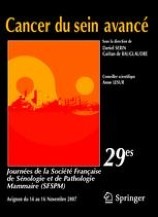
Cancer du sein avancé : 29es Journées de la Société Française de Sénologie et Pathologie Mammaire (SFSPM) Avignon, 14–16 novembre 2007 = Advanced breast cancer : 29th Days of the French Society of Senology and Breast Pathology (SFSPM) Avignon, November 14–16, 2007
These days are an opportunity to remind and persuade those less convinced that the treatment of this very particular phase of the disease is not limited to a score played by a few speakers or even by medical oncologists alone; but on the contrary, we must bring into play a truly philharmonic polyphonic ensemble, united around the patient and comprising all the players in multidisciplinary care: general practitioner, surgeon, radiotherapist, imaging specialist, gynecologist, general practitioner, psychologist, algologist, supportive care workers ...

Cancer du sein ; Compte rendu cours supérieur francophone de cancérologie, (Saint-Paul-de-Vence 13-15 Janvier 2005) = Breast cancer ; Report on the advanced French-language course in oncology, (Saint-Paul-de-Vence, January 13-15, 2005)
In January 2005, the 9th Cours de Saint-Paul-de-Vence, devoted to Breast Cancer, was dominated by the establishment of "Recommendations for Clinical Practice". The five subjects of these recommendations, such as the management of the axillary cavity, neo-adjuvant treatments, the management of patients whose tumor overexpresses HER2, adjuvant hormone therapy and finally adjuvant chemotherapy have been widely discussed. As in each course, certain essential fields were treated such as organized screening, conventional radiology and MRI, prognostic and predictive factors. Ductal cancers and lobular cancers have been compared in a remarkable way in three papers which were produced by the Saint-Cloud school. Data on in situ cancers have been updated. Finally, advice was given for the use of the various standards, whether local, regional or national.R2, l¹hormonothérapie adjuvante et enfin la chimiothérapie adjuvante ont été largement abordés.
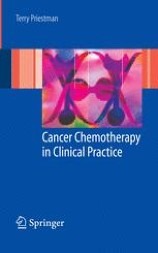
Cancer Chemotherapy in Clinical Practice
This book summarises the whole range of systemic cancer therapies, explaining their mode of action and potential side-effects, as well as their clinical applications.
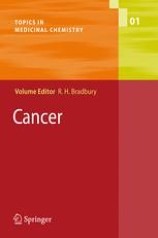
Cancer
The last decade has seen a dramatic shift in anticancer drug research towards agents that aim to target selectively key regulatory and signaling processes known to drive tumorigenesis. A number of these newer agents have now been introduced into clinical practice. This volume reviews advances in cancer chemotherapy research over the last 10 years and will be of interest to scientists engaged in drug research in the pharmaceutical industry, biotechnology and startup companies, academia and government institutions. Chapters written by leading experts in their field reflect a range of current medicinal chemistry approaches to small molecule drugs, including anti-hormonal therapy, growth factor inhibition, survival signaling, cell cycle inhibition, anti-angiogenics and anti-nvasives. Each chapter aims to cover the drug target and biological rationale, chemotypes, clinical status and future prospects in this rapidly developing area of drug research.
Canadian Semantic Web
This book covers a variety of well known topics of interest to practitioners in industry and research scientists. The range of topics includes languages, tools and methodologies for the semantic Web, semantic Web-based ontology management and engineering, semantic Web services, practical applications of the semantic Web techniques, artificial intelligence methods and tools for the semantic Web, software agents on the semantic Web, visualization and modeling of the semantic Web. The goal of this book is to provide a state-of-the-art review of the research as well as to introduce topics of interest to experts.

Campbell biology ; 11th ed.
Biology has always been important, although never as important as it is now. There has also never been a more exciting time to make biology you lifelong passion and career. the author team and those who bought this text to life worked to convey to you the challenges, the wonders and the foundations you will need as a practicing biologist specialising in the Southern Hemisphere and in Australia and New Zealand particularly

Calvinisms First Battleground : Conflict and Reform in the Pays de Vaud, 1528-1559
A specifically Calvinist identity and theology emerged out of two key conflicts in the region: first, the fight to turn away from Catholic practices and traditions a population that had been forced to convert to Protestantism by the Bernese after their conquest of Vaud in 1536; second, the struggle against the Zwinglian political and theological ideas that dominated the Swiss Confederation and differed from the Calvinists' understanding of ecclesiastical discipline, the Eucharist, and predestination. The Pays de Vaud was central to this struggle, for it was subject politically to Zwinglian, German-speaking Bern, but many of its ministers were more strongly influenced by Calvin. Calvin himself was initially excited about the prospects for reform in the region, but frustrations with the Swiss led him and the Genevans increasingly to focus their efforts on France.
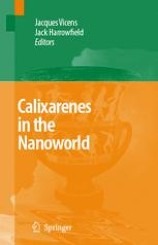
Calixarenes in the Nanoworld
Calixarenes have been widely exploited in all areas of supramolecular chemistry over the past three decades and many recent developments have concerned their applications in the production of chemical entities with the dimensions of nanometres, as in "nanochemistry".Calixarenes in the Nanoworld Relates calixarenes to nanochemistry – key information for industries engaged in the production of high-tech materials. Provides a timely review of both what is known and the exciting prospects provided by calixarenes, Contains several review articles which define the importance of calixarenes as reagents in nanochemistry.
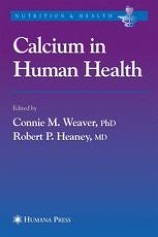
Calcium in Human Health
Calcium performs diverse biological functions in the human body and is a micronutrient essential to human health and well-being. It serves as a second messenger for nearly every biological process, stabilizes many proteins, and in deficient amounts is associated with a large number diseases and disorders. In Calcium in Human Health, a panel of highly respected researchers and clinical practitioners comprehensively reviews the state of our knowledge concerning this ubiquitous micronutrient, not only demonstrating its importance to human health, but also defining its many complex roles.
CADD and informatics in drug discovery
Updates knowledge on recent advances in computational and bioinformatics tools/techniques and their practical applications in modern drug design and discovery programme. Also it encompasses fundamental principles, advanced methodologies and applications of various CADD approaches including several cutting-edge areas / presenting recent developments covering ongoing trends in the field of computer-aided drug discovery. Having contributions by a global team of experts, the book is expected to be an ideal resource for drug discovery scientists, medicinal chemists, pharmacologists, toxicologists, phytochemists, biochemists, biologists, RandD personnel, researchers, students, teachers and those working in the field of drug discovery. It will fill the knowledge gaps that exist in the current CADD approaches and methodologies/ protocols being widely used in both academic and research practices. Further, a special focus on current status of various computational drug design approaches (SBDD, LBDD, De-novo drug design, Pharmacophore-based search), bioinformatics tools and databases, computational screening and modeling of phytochemicals/natural products, artificial intelligence and machine learning, and network pharmacology and system biology would certainly guide researchers, students or readers to conduct their research in the emerging area(s) of interest. It is also expected to be highly beneficial to different stakeholders working in the pharmaceutical and biotechnology industries (RandD), the academic as well as research sectors. .

C++ for Engineers and Scientists
Introduce the power and practicality of C++ programming to entry-level engineers with Bronson's C++ FOR ENGINEERS AND SCIENTISTS, 4E. This proven, pragmatic text is designed specifically for today's first- and second-year engineering and science students with a wealth of new applications and examples taken from real situations involving electrical and structural engineering, fluid mechanics, mathematics, power generation, and heat transfer challenges.

Business trends in practice : The 25+ trends that are redefining organizations
In Business Trends in Practice: The 25+ Trends That Are Redefining Organizations, best-selling business author and strategist Bernard Marr breaks down the social and technological forces underlying these rapidly advancing changes and the impact of those changes on key industries.
