



الصفحة 11
الصفحة 11

Environmental Problems of Central Asia and their Economic, Social and Security Impacts
entral Asia is a developing region with great potential, but there are valid concerns that current resource management practices are not sustainable, particularly with regard to the management of water resources. Recent changes in social structures, accompanied by regional climate change, have caused substantial environmental changes leading to security concerns in the region. As a result, the local economy has been significantly impacted to the extent that the potential for social unrest is of great concern.

Environmental Policy Instruments for Conserving Global Biodiversity
If you can believe, all things are possible to him who believes. —Mark 9:23 The current, unprecedented loss of global biodiversity as a result of anthropo genic interference in the world's ecosystems is affecting human well-being across the globe with increasing severity. It therefore represents a major chal lenge in international environmental policymaking. With the Convention on Biological Diversity (CBD), the community of states has recognized the in creasing importance of preserving biodiversity. Given the extensive context of biodiversity loss and preservation, this study focuses on two issues, which are at the center of the public discussion regarding the objectives of conservation and the sustainable use of biodiversity, and that are addressed by specific policy instruments. The first issue is the regulation of cross-border trade in genetic information and genetic resources. Here, the question is whether the commercial use of genetic information derived from bio diversity can create incentives for its preservation. The second issue involves the conservation of biodiversity through the protection of ecologically valuable eco systems from human use.

Environmental Governance in Latin America
The multiple purposes of nature – livelihood for communities, revenues for states, commodities for companies, and biodiversity for conservationists – have turned environmental governance in Latin America into a highly contested arena. In such a resource-rich region, unequal power relations, conflicting priorities, and trade-offs among multiple goals have led to a myriad of contrasting initiatives that are reshaping social relations and rural territories. This edited collection addresses these tensions by unpacking environmental governance as a complex process of formulating and contesting values, procedures and practices shaping the access, control and use of natural resources. Contributors from various fields address the challenges, limitations, and possibilities for a more sustainable, equal, and fair development. In this book, environmental governance is seen as an overarching concept defining the dynamic and multi-layered repertoire of society-nature interactions, where images of nature and discourses on the use of natural resources are mediated by contextual processes at multiple scales.
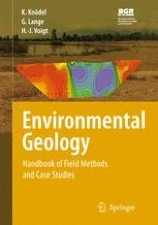
Environmental Geology : Handbook of Field Methods and Case Studies
As earth’s population continues to grow and the detrimental aftereffects of industrialization and environmental negligence become more apparent, society has become more aware of, and concerned about, stewardship of the natural environment – water, soil, and air. Sustainable development has become more widely received and promoted in many parts of the world. The need is now critical for earth and environmental scientists and engineers to work together to implement technologies that can preserve our environment. The Earth’s population was 6.6 billion as of April 2007 according to the U.S. Census Bureau. This number is expected to rise to 9.4 billion by 2050. The population is increasing the demand for natural resources and energy, and increasing stress on the environment. Thus, protection of the environment and remediation of damage to the environment must be a priority. It is also important to develop procedures that will help to avert further damage to the environment and to recognize as early as possible the risks associated with changes in the environment. Many methodologies and technologies have become more advanced in the past few decades, and new technologies and approaches have been developed, all to address the growing need for environmental assessment, monitoring, and remediation. As these technologies have grown, the need for interdisciplinary cooperation has also become more apparent.

Environmental Bioremediation Technologies
Environmental contamination from both natural and anthropogenic sources is, today, a major environmental concern due to pervasiveness and persistence of many toxicants. It is considered as an inevitable evil of our progress and modernization. To decontaminate the soils, sediments and waters, polluted by anthropogenic activities, the scientists and technologists have evolved different technologies over the years. Although we have to pay high cost for physical and chemical environmental technologies, but they are not eco-friendly and safe. Hence, it was deeply realized to develop viable technologies employing microbes and plants to remediate not only metallic residues and radionuclides, but also the xenobiotic compounds like PCBs, PAHs, PCPs, petroleum sludge and the military wastes. No doubt, the scientists have also got some success in this endeavour and as the result, many companies are in place today to promote the sale of plant or microbe-based technologies to deal with specific environmental contamination challenges. Besides, these technologies are se- driven and do not disturb the sites in cleaning process.

Environmental and Resource Valuation with Revealed Preferences : A Theoretical Guide to Empirical Models
Environmental and Resource Valuation with Revealed Preferences: A Theoretical Guide to Empirical Models provides a systematic review of those economic approaches for valuing the environment and natural resources that use information on what people do, not what they say.

Enterprise Risk Management : Modern Approaches to Balancing Risk and Reward
Demonstrates how Enterprise Risk Management creates value in strategic- and decision-making-processes. The author introduces modern approaches to balancing risk and reward based on many examples of medium-sized and large companies from different industries. Since traditional risk management in practice is often an independent stand-alone process with no impact on decision-making processes, it is unable to create value and ties up resources in the company unnecessarily. Herewith, he serves students as well as practitioners with modern approaches that promote a connection between ERM and corporate management. The author demonstrates in a didactically appropriate manner how companies can use ERM in a concrete way to achieve better risk-reward decisions under uncertainty. Furthermore, theoretical and psychological findings relevant to entrepreneurial decision-making situations are incorporated.

English, French & German comparative law
This comparative analysis considers the differing approaches to important areas of law in England, France and Germany. In particular, constitutions, sources of law, rights against the state to prevent abuse of power, and rights of private individuals and organisations against each other in tort and contract are examined and compared, and the system of courts is also considered. Updated and revised, each sub-topic is introduced with the relevant material in the English system.

Energy Resources in East Africa: Opportunities and Challenges
East African states have historically shared several resources including energy and common heritage of its people. This book provides information on available sources of energy in the region and how the energy suppliers can exploit them in an integrated form to produce the right blend of energy for various applications e.g., industrial, domestic and recreational uses. We provide an in-depth analysis of the advantages and disadvantages of different energy sources in-terms of environmental, industrialization, distribution costs and impacts. We hope that the book will contribute towards a sustainable exploitation of energy resources for the improvement of the people’s quality of life.

Energy in Africa : Challenges and Opportunities
This open access book presents a picture of the current energy challenges on the African continent (and the Sub-Saharan region in particular) and proposes pathways to an accelerated energy transition. Starting with an analysis of the status quo and the outlook for Africa’s energy demand and energy access, it provides an account of the available resources, including hydrocarbons and renewable energy resources, which are playing an increasingly crucial role. It then moves on to analyze the level of investment required to scale-up Africa’s energy systems, shedding light on the key barriers and elaborating on potential solutions. It also provides a suggestion for improving the effectiveness of EU–Africa cooperation. While mainly intended for policymakers and academics, this book also speaks to a broader audience interested in gaining an overview of the challenges and opportunities of the African energy sector today and in the future.

Energy and Sustainable Futures : Proceedings of 2nd ICESF 2020
This book presents papers displayed in the 2nd International Conference on Energy and Sustainable Futures (ICESF 2020), co-organised by the University of Hertfordshire and the University Alliance DTA for Energy.
Enabling things to talk : Designing IoT solutions with the IoT architectural reference model
The Internet of Things (IoT) is an emerging network superstructure that will connect physical resources and actual users. It will support an ecosystem of smart applications and services bringing hyper-connectivity to our society by using augmented and rich interfaces. Whereas in the beginning IoT referred to the advent of barcodes and Radio Frequency Identification (RFID), which helped to automate inventory, tracking and basic identification, today IoT is characterized by a dynamic trend toward connecting smart sensors, objects, devices, data and applications. The next step will be “cognitive IoT,” facilitating object and data re-use across application domains and leveraging hyper-connectivity, interoperability solutions and semantically enriched information distribution.

Enabling Consumer and Entrepreneurial Literacy in Subsistence Marketplaces
This book describes research on low-literate, poor buyers and sellers in subsistence marketplaces, the consequent development of an innovative marketplace literacy educational program that enables consumer and entrepreneurial literacy, and implications of the research and the educational program for business, education, and a variety of disciplines and functions. There are two important resources that individuals living in subsistence need to function in the economic realm: finances and know-how. The book describes an educational program that focuses on enabling generic skills about the marketplace. This program uses the "know-why" or an understanding of marketplaces as a basis for the know-how of being an informed buyer or seller. This volume discusses implications of the research and the educational program for non-profit organizations, for research and practice in education, for business research and practice, and for academic and applied research.

Employment Law for Business and Human Resources Professionals
"The revised fourth edition features changes in the Employment Standards Act and Bill 148 (Fair Workplaces Better Jobs Act). Bill 148's passage also impacts the content in numerous other chapters and the changes to the ESA resulting from Bill 47 will result in updates to the Employment Standards Act chapter.

Employability revisited : Strengths- and life-phase-oriented human resource management
One of the most pressing issues in current and future human resource management is the inclusion of strengths and life stages within human resource structures. This book examines in a multi-perspective, innovative and participatory way the conditioning factors for persistent stereotyping processes in the context of age and work. Levers for change as well as the circular model for optimizing or implementing life-phase oriented human resource management are presented. It also offers practical assistance for corporate leaders and human resources managers for the implementation of a strength-oriented human resources management.

Empirical Research within Resource-Based Theory : A Meta-Analysis of the Central Propositions
Katja Nothnagel evaluates this growing body of empirical research in resource-based theory. She starts out by deriving six central propositions and then examines how these propositions have been tested empirically. Over 190 empirical resource-based papers are identified. The results of this work are evaluated through a narrative review, vote counting as well as the use of a meta-analysis. The results suggest that substantial progress has been made within the empirical part of RBT: (a) various operationalization examples on the propositions’ central constructs prove that testing RBT propositions is possible; (b) vote counting results indicate an overall positive significant impact of resources on performance with negligible results in the opposite direction of the theory; and (c) meta-analysis results show significant positive relationships. The author concludes, however, that more research is needed regarding the factor market conditions and the operationalization of resource conditions.

Emerging Drugs in Sport
Offers a timely analysis of the new challenges posed by this phenomenon in the anti-doping community. The authors present the first comprehensive perspective on the rapidly shifting doping scenario and reflect on use, regulation, policy, and market structure of NPS used in sports. They highlight the challenges with the list of prohibited substances and methods in and out of competition. They also evaluate how methods to detect new drugs present an ongoing battle for doping control as they have to be adapted constantly. Topics covered within the chapters include: Contamination of Sports Supplements with Novel Psychoactive Substances Untested Supplement Use Among Athletes: An Overlooked Phenomenon? International Drug Control: Protecting the Health of the Athlete Analysis of New Chemical Entities in a Sport Context Emerging Drugs in Sport establishes a clear benchmark on the policy discussion, drawing from available evidence and sources, including athletes' personal experiences, to generate a fact-based resource that informs a research as well as wider audience.

Emerging Contaminants from Industrial and Municipal Waste : Removal Technologies
This book focuses on innovative treatment technologies for the elimination of emerging contaminants from wastewater and drinking water. The respective treatment processes, such as membrane bioreactors, photocatalysis, ozonation and advanced oxidation are dealt with in detail. The book also discusses sources and occurrence of emerging contaminants in municipal and industrial waste, giving a concise and critical overview of state-of-the-art analytical methods for their identification. Further important aspects covered by the book include the acute and chronic effects and overall impact of emerging contaminants on the environment.

Emerging Contaminants from Industrial and Municipal Waste : Occurrence, Analysis and Effects
This book focuses on innovative treatment technologies for the elimination of emerging contaminants from wastewater and drinking water. The respective treatment processes, such as membrane bioreactors, photocatalysis, ozonation and advanced oxidation are dealt with in detail. The book also discusses sources and occurrence of emerging contaminants in municipal and industrial waste, giving a concise and critical overview of state-of-the-art analytical methods for their identification. Further important aspects covered by the book include the acute and chronic effects and overall impact of emerging contaminants on the environment.

EM Modeling of Antennas and RF Components for Wireless Communication Systems
The book focuses on the practical aspects of computational electrodynamics. A short review of electromagnetic field theory and an illustrative introduction to basic concepts of numerical methods provide the mathematical and physical background. The main part the book guides the reader step-by-step through the modelling process: from the initial "what question shall the model answer?", through the setting up of a computer model by creating geometry, boundary conditions, sources, …, to post processing, validation, and optimization. A number of antenna and filter examples demonstrate the advantages and disadvantages of different numerical methods. So the book provides a realistic view on the capabilities and limits of state-of-the-art 3D-field simulators and on how to apply this knowledge efficiently to EM analysis and designing of RF applications in modern communication systems.
