



الصفحة 11
الصفحة 11

Mechanics of Biological Tissue
The mechanics of biological tissues is a multidisciplinary and rapidly expanding area of research. This book highlights some important research directions that combine mechanical sciences with exciting new developments in biology. This collection of papers should be of interest to theoretical, computational and experimental researchers and doctoral students in the area of biomechanics and in related areas of engineering, biology and medicine.
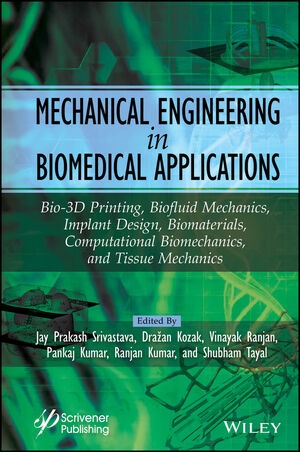
Mechanical engineering in biomedical application: bio-3D printing, biofluid mechanics, implant design, biomaterials, computational biomechanics, tissue mechanics
Explores the latest research and developments related to the interdisciplinary field of biomedical and mechanical engineering offering insights and perspectives on the research, key technologies, and mechanical engineering techniques used in biomedical applications.

Matrix Metalloproteinases in Tissue Remodelling and Inflammation
Matrix metalloproteinases (MMPs) are proteolytic enzymes believed to be involved in many physiological and pathological processes associated with inflammatory reactions. This volume presents new advances in the involvement of MMPs in various diseases associated with inflammatory processes. Moreover, the recent development of selective and non selective inhibitors of MMPs provides new insights in the relationship between activation of inflammatory cells and tissue remodelling and advises new therapeutic possibilities for the treatment of inflammatory diseases.

Islamic Bioethics : Problems and Perspectives
This book presents a critical analysis of the debate at the religious, legal and political level sparked off by the introduction of new biomedical technologies (cloning, genetics, organ transplants, IVF, etc.) in Muslim countries. It compares the positions of "classic" Muslim law and contemporary religious authorities; laws in Muslim countries; the attitudes and concrete behaviour of populations, families and individuals, as well as the regulations of medical associations, bioethics committees etc..
Iron Nutrition in Plants and Rhizospheric Microorganisms
This book uses an interdisciplinary approach to provide a comprehensive review on the status of iron nutrition in plants. International scientists discuss research on acquisition of iron by strategy I and strategy II plants. These reviews summarize a variety of plant species and include both laboratory and field observations. Topics covered in this book include: plants as a source of iron for animals and humans, iron translocation in the plants, iron-stimulated activities that influence crop yield and fruit tree productivity, iron uptake by plants as influenced by microorganisms (i.e. free living soil microorganisms, symbiotic nitrogen-fixing and pathogenic bacteria), the role of plant hormones in iron transport, iron-metal competition in phytoremediation, root zone activities involving interactions between minerals and organic matter, the role of microbial siderophores in rhizospheric iron cycling, iron storage as phytoferritin, proteomic and metabolic studies associated with iron stress response, methods for studying iron metabolism including stable isotopes, and the correction of iron deficiency through the use of synthetic or natural chelates.

Iron metabolism : Methods and protocols
Explores classical and cutting-edge methods optimized and validated to analyze various aspects of iron metabolism, from in vitro to multi-organ level. Opening with a section on basic iron metabolism methods, the book continues with methods applicable to a variety of systems, ranging from bacteria to cultured mammalian cells and tissues, with a focus on cellular heme and iron-sulfur cluster species, as well as mitochondrial iron and its derivatives. Written for the highly successful Methods in Molecular Biology series, chapters include introductions to their respective topics, lists of the necessary materials and reagents, step-by-step and readily reproducible laboratory protocols, and tips on troubleshooting and avoiding known pitfalls.

IoT-enabled Smart Healthcare Systems, Services and Applications
In IoT-Enabled Smart Healthcare Systems, Services and Applications, an accomplished team of researchers delivers an insightful and comprehensive exploration of the roles played by cutting-edge technologies in modern healthcare delivery. The distinguished editors have included resources from a diverse array of learned experts in the field that combine to create a broad examination of a rapidly developing field.
Ion Channels
Ion channels play a vital role in basic physiological functions such as generation of electrical activity in nerves and muscle, control of cardiac excitability, intracellular signaling, hormone secretion, cell proliferation and many other biological processes. Because of their prevalence and the critical role they play in virtually all tissue types and organs, ion channels are also involved in a number of pathophysiological conditions. The aim of this volume is to review recent advances in the field of ion channel related diseases. Following an overview chapter summarizing the current state of ion channel screening technologies, five topics covering areas such as cancer, cardiac arrhythmias, cystic fibrosis, and pain have been selected, and the current state of knowledge is presented by leading experts in their field.

Invasive Species in Forests and Rangelands of the United States : A Comprehensive Science Synthesis for the United States Forest Sector
This book describes the serious threat of invasive species to native ecosystems. Invasive species have caused and will continue to cause enormous ecological and economic damage with ever increasing world trade.

Invasive Plants : Ecological and Agricultural Aspects
The study of plant invasions is the science that attempts to understand causes and consequences of plant introductions outside of their native areas. contributing authors have strived to provide up-to-date reviews and discussions of invasion-related research involving natural and agroecosystems. Readers will get a unique perspective on ecological and agricultural aspects of plant invasions through employing general principles of ecology to plant invasions.

Invasive forest insects, introduced forest trees, and altered ecosystems : Ecological pest management in global forests of a changing world
Demand for timber and fibre continues to grow and is being met by increased reliance on plantation forestry. Many of the plantations that are being grown around the globe are non-native species that have characteristics of rapid growth and good commercial qualities. In some cases, the high rates of production are a result of the absence of native herbivore and diseases. This limited pest status is threatened as pest species move around the globe. At the same time there is concern about threats of these non-native plantation species on native communities and the impact of changing climates on forest productivity. This volume explores many of these issues for the first time.

Introduzione alla medicina molecolare = Introduction to molecular medicine
An indispensable guide for understanding a young science with rapid and promising developments. Now in its third completely revised edition, it presents in a concise yet comprehensive way the scientific and technological principles of this discipline and provides, in widely accessible language, the basic conceptual tools for understanding the human genome, gene expression and regulation, the various aspects of genetic engineering that allow for the manipulation of DNA, and human cloning.

Introduction to Systems Biology
Informative and cutting-edge, this volume presents a clear and intuitive illustration of the biological systemic approaches and introduces ideal computational methods for research. Introduction to Systems Biology is an indispensable resource, providing a first glimpse into the state-of-the-art in systems biology.

Introduction to organic and medicinal chemistry
Designed to be an undergraduate reference textbook for students of chemistry who aim to select degree modules geared towards medicinal chemistry. The first two chapters offer an overview of basic organic chemistry, followed by organic synthesis in Chapter 3, with an emphasis on the importance of synthetic procedures in relation to the chemistry of drug design. In Chapter 4, the book covers foundational aspects of biochemistry and biomedical science to provide a basis for students understanding where and how drugs work on selected targets. Later, the book explains how medicines have been created for selected topics in medicinal chemistry – namely against pathogens, cancer and neurological targets.

Introduction to Mathematical Methods in Bioinformatics
This book looks at the mathematical foundations of the models currently in use. This book is unique in the sense that it looks at the mathematical foundations of the models, which are crucial for correct interpretation of the outputs of the models.

Introduction to Epigenetics
This textbook leads the reader from basic concepts of chromatin structure and function and RNA mechanisms to the understanding of epigenetics, imprinting, regeneration and reprogramming. The textbook treats epigenetic phenomena in animals, as well as plants.

Introduction to Computational Biology : An Evolutionary Approach
Molecular biology has changed dramatically over the past two decades. Until the early 1990s genes were studied one at a time by small teams of researchers; today entire genomes are sequenced by internationally collaborating laboratories. In the bygone gene-centered era the accumulation of data was the rate-limiting step in research. Now that step is often data interpretation. This is increasingly dependent on computational methods and as a consequence, computational biology has emerged in the past decade as a new subdiscipline of biology. This introduction to computational biology is centered on the analysis of molecular sequence data. There are two closely connected aspects to biological sequences: (i) their relative position in the space of all other sequences, and (ii) their movement through this sequence space in evolutionary time. Accordingly, the first part of the book deals with classical methods of sequence analysis: pairwise alignment, exact string matching, multiple alignment, and hidden Markov models. In the second part evolutionary time takes center stage and phylogenetic reconstruction, the analysis of sequence variation, and the dynamics of genes in populations are explained in detail. In addition, the book contains a computer program with a graphical user interface that allows the reader to experiment with a number of key concepts developed by the authors.

Introduction to Biosemiotics : The New Biological Synthesis
This book is addressed to students, researchers and academics who have barely heard of the emerging young science of Biosemiotics, and who want to know more about it. Written by many of the field’s major contributors, it provides a highly qualified introduction to Biosemiotics and illustrates the most recent views in its background and development.

Introducing Biological Rhythms : A Primer on the Temporal Organization of Life, with Implications for Health, Society, Reproduction, and the Natural Environment
Biological rhythms are a fundamental property of all life and encompass a wide range of frequencies, from seconds to a century or more. Introducing Biological Rhythms is a primer that serves to introduce individuals to the area of biological rhythms. It describes the major characteristics and discusses the implications and applications of these rhythms, while citing scientific results and references. Also, the primer includes essays that provide in-depth historic and other background information for those interested in more specific topics or concepts. Introducing Biological Rhythms covers a basic cross-section of the field of chronobiology clearly enough so that it can be understood by a novice, or an undergraduate student, but it is also sufficiently technical and detailed for the scientist.

Intraspecific Genetic Diversity : Monitoring, Conservation, and Management
Population and evolutionary genetics have been quickly developing ?elds of biological research over the past decades. This book compiles our current understanding of genetic processes in natural populations. In addition, the book provides the author’s original ideas and concepts based on the data obtained by himself and his close coworkers. The author introduces his pioneering concept of population genetic stability,and much of thebook is concerned with the factors and conditions of such stability. Why does genetic stability matter so much? Altukhov argues that the sustainable use of natural resources, including genetic resources of popu- tions, critically depends on the maintenance of their stability. The preser- tion of well-adapted genetic characteristics from one generation to the next is essential for this stability. Traditionally, population genetics has been - cusedonevolution andthe role of evolutionary factorsinshapinggenetic structures of populations. While the idea of a population as a dynamic unit of evolution has been widely accepted, the signi?cance of genetic stability and its implications for the long-term survival of populations and species have not been fully appreciated.
