



الصفحة 11
الصفحة 11

Issues of Decapod Crustacean Biology
This volume presents the proceedings of the eighth Colloquium Crustacea Decapoda Mediterranea, which was held at the Ionian University on Corfu Island, Greece, from 2 to 6 September 2002, and reflects recent advancements in decapod crustacean research. The meeting is the oldest European carcinological event, organized regularly at 3-year intervals since 1972. Although focused on the Mediterranean Sea, worldwide contributions provided a forum for fruitful contact and scientific exchange. The book covers up-to-date issues in decapod crustacean research, including genetics, morphology, reproduction, ecology, behaviour and fisheries, and it is primarily aimed at scientists interested in decapod crustacean research, but other scientists and decision-makers working on marine ecology and fisheries will also find up-to-date information on relevant issues.
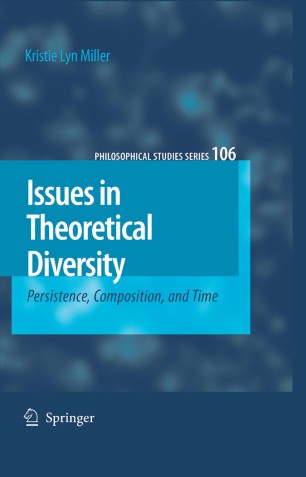
Issues in Theoretical Diversity : Persistence, Composition, and Time
Our world is full of composite objects that persist through time: dogs, persons, chairs and rocks. But in virtue of what do a bunch of little objects get to compose some bigger object, and how does that bigger object persist through time? This book aims to answer these questions, but it does so by looking at accounts of composition and persistence through a new methodological lens. It asks the question: what does it take for two theories to be genuinely different, and how can we know whether what seems like metaphysical disagreement is really just semantic disagreement

ISSE 2006 — Securing Electronic Busines Processes : Highlights of the Information Security Solutions Europe 2006 Conference
Presents the most interesting talks given at ISSE 2006 - the forum for the interdisciplinary discussion of how to adequately secure electronic business processes. The topics include: Smart Token and e-ID-Card Developments and their Application - Secure Computing and how it will change the way we trust computers - Risk Management and how to quantify security threats - Awareness raising, Data Protection and how we secure corporate information. Adequate information security is one of the basic requirements of all electronic business processes. It is crucial for effective solutions that the possibilities offered by security technology can be integrated with the commercial requirements of the applications. The reader may expect state-of-the-art: best papers of the Conference ISSE 2006.
Isotopes in Palaeoenvironmental Research
This thorough reference shows how stable isotopes can be applied to understanding the palaeoenvironment, with chapters on the interpretation of isotopes in water, tree rings, bones and teeth, lake sediments, speleothems and marine sediments.
Computational and Statistical Approaches to Genomics
Computational and Statistical Approaches to Genomics, 2nd Edition, aims to help researchers deal with current genomic challenges. During the three years after the publication of the first edition of this book, the computational and statistical research in genomics have become increasingly more important and indispensable for understanding cellular behavior under a variety of environmental conditions and for tackling challenging clinical problems. In the first edition, the organizational structure was: data à analysis à synthesis à application. In the second edition, the same structure remains, but the chapters that primarily focused on applications have been deleted.
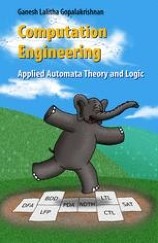
Computation Engineering : Applied Automata Theory and Logic
This book covers automata in depth, providing good intuitions along the way, and culminating with applications that are used every day in the field. In this respect, it is a departure from the conventional textbooks on complexity and computability, although these 'tradtional' aspects remain well represented.

COMPSTAT 2006 - Proceedings in Computational Statistics ; 17th Symposium Held in Rome, Italy, 2006
International Association for Statistical Computing The International Association for Statistical Computing (IASC) is a Section of the International Statistical Institute.The objectives of the Association are to foster world-wide interest in effective statistical computing and to - change technical knowledge through international contacts and meetings - tween statisticians, computing professionals, organizations, institutions, g- ernments and the general public.

Comprehensive mathematics for computer scientists 1 : Sets and numbers, graphs and algebra, logic and machines, linear geometry
This two-volume textbook Comprehensive Mathematics for Computer Scientists is a self-contained comprehensive presentation of mathematics including sets, numbers, graphs, algebra, logic, grammars, machines, linear geometry, calculus, ODEs, and special themes such as neural networks, Fourier theory, wavelets, numerical issues, statistics, categories, and manifolds. The concept framework is streamlined but defining and proving virtually everything.
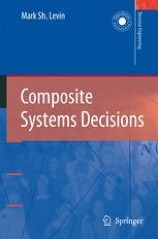
Composite Systems Decisions
Composite decisions consist of interconnected parts or subdecisions and correspond to a composite (composable, modular, decomposable) system. Composite Systems Decisions describes an educational approach that is based on systems engineering and considered modular design of composite decisions. Divided into four parts, this book contains descriptions of basic systems approaches and examines basic ‘technological’ problems for composite systems, including: modular hierarchical design; multistage design; multistage planning; redesign/improvement/adaptation; evaluation; and, combinatorial evolution/development.
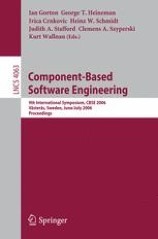
Component-based software engineering ; Vol. 4063 ; 9th International Symposium, CBSE 2006, Västeras, Sweden, June 29 - July 1, 2006, Proceedings
CBSE is concerned with the development of software-intensive systems from reusable parts (components), the development of reusable parts, and system maintenance and improvement by means of component replacement and customization. CBSE 2006 was the ninth in a series of events that promote a science and technology foundation for achieving predictable quality in software systems through the use of software component technology and its associated software engineering practices.
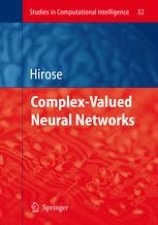
Complex-valued neural networks
This book is the first monograph ever on complex-valued neural networks, which lends itself to graduate and undergraduate courses in electrical engineering, informatics, control engineering, mechanics, robotics, bioengineering, and other relevant fields. It is useful for those beginning their studies, for instance, adaptive signal processing for highly functional sensing and imaging, control in unknown and changing environment, brainlike information processing, robotics inspired by human neural systems, and interdisciplinary studies to realize comfortable society. It is also helpful to those who carry out research and development regarding new products and services at companies.

Complexity in landscape ecology
Interactions matter. To understand the distributions of plants and animals in a landscape you need to understand how they interact with each other, and with their environment. The resulting networks of interactions make ecosystems highly complex. Recent research on complexity and artificial life provides many new insights about patterns and processes in landscapes and ecosystems. This book provides the first overview of that work for general readers. It covers such topics as connectivity, criticality, feedback, and networks, as well as their impact on the stability and predictability of ecosystem dynamics. With over 60 years of research experience of both ecology and complexity, the authors are uniquely qualified to provide a new perspective on traditional ecology.
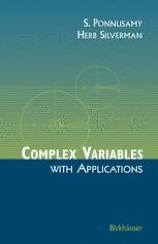
Complex Variables with Applications
Complex numbers can be viewed in several ways: as an element in a field, as a point in the plane, and as a two-dimensional vector. Examined properly, each perspective provides crucial insight into the interrelations between the complex number system and its parent, the real number system. It explore these relationships by adopting both generalization and specialization methods to move from real variables to complex variables, and vice versa, while simultaneously examining their analytic and geometric characteristics, using geometry to illustrate analytic concepts and employing analysis to unravel geometric notions. The engaging exposition is replete with discussions, remarks, questions, and exercises, motivating not only understanding on the part of the reader, but also developing the tools needed to think critically about mathematical problems. This focus involves a careful examination of the methods and assumptions underlying various alternative routes that lead to the same destination.

Complex Systems Science in Biomedicine
Complex Systems Science in Biomedicine covers the emerging field of systems science involving the application of physics, mathematics, engineering and computational methods and techniques to the study of biomedicine including nonlinear dynamics at the molecular, cellular, multi-cellular tissue, and organismic level. With all chapters helmed by leading scientists in the field, Complex Systems Science in Biomedicine's goal is to offer its audience a timely compendium of the ongoing research directed to the understanding of biological processes as whole systems instead of as isolated component parts.

Complex Systems in Biomedicine
Features contributions from several Italian research groups that are working on the field of biomedicine. Each chapter in this book deals with a specific subfield, with the aim of providing an overview of the subject and an account of the research results.

Complex Scheduling
This book deals with such complex scheduling problems and methods to solve them. It consists of three parts: The ?rst part (Chapters 1 and 2) contains a description of basic scheduling models with applications and an introduction into discrete optimization (covering complexity, shortest path algorithms, linear programming, network ?ow algorithms and general optimization methods). In the second part (Chapter 3) resource-constrained project scheduling problems are considered. Especially, methods like constraint propagation, branch-a- bound algorithms and heuristic procedures are described. Furthermore, lower bounds and general objective functions are discussed.

Complex Orthogonal Space-Time Processing in Wireless Communications
Complex Orthogonal Space-Time Processing in Wireless Communications incorporates orthogonal space-time processing using STBCs in MIMO wireless communication systems. Complex Orthogonal STBCs (CO STBCs) are given emphasis because they can be used for PSK/QAM modulation schemes and are more practical than real STBCs. The overall coverage provides general knowledge about space-time processing and its applications for broad audiences. It also includes the most up-to-date review of the literature on space-time processing in general, and space-time block processing in particular.

Complex Intracellular Structures in Prokaryotes
The new series "Microbiology Monographs" begins with two volumes on intracellular components in prokaryotes. In this second volume, "Complex Intracellular Structures in Prokaryotes", the components, labeled complex intracellular structures, encompass a multitude of important cellular functions. Continuing and newly initiated research will provide a clearer understanding of the complex intracellular structures known at present and will bring to light surprising new ones as well.
Complex Engineered Systems : Science Meets Technology
This volume examines the difficulties that arise in creating highly complex engineered systems and new approaches that are being adopted. Topics addressed range from the formal representation and classification of distributed networked systems to revolutionary engineering practices inspired by biological evolution. By bringing together the latest research in Complex Engineered Systems, this book sheds light on the current state and future course of this emerging field.
Complex Computing-Networks : Brain-like and Wave-oriented Electrodynamic Algorithms
This book uniquely combines new advances in the electromagnetic and the circuits&systems theory. It integrates both fields regarding computational aspects of common interest. Emphasized subjects are those methods which mimic brain-like and electrodynamic behaviour; among these are cellular neural networks, chaos and chaotic dynamics, attractor-based computation and stream ciphers.
