



الصفحة 108
الصفحة 108
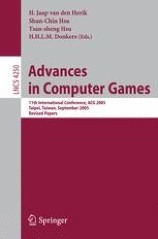
Advances in computer games ; 11th International Conference, ACG 2005, Taipei, Taiwan, September 6-8, 2005. Revised Papers
Constitutes the thoroughly refereed post-proceedings of the 11th International Conference on Advances in Computer Games, ACG 2005, held in Taipei, Taiwan, in September 2005 in conjunction with the 10th Computer Olympiad. The 20 revised full papers presented were carefully selected during two rounds of reviewing and improvement from 32 submissions. The papers cover all aspects of artificial intelligence in computer-game playing. Reasearch topics addressed are automatic generation, optimization, opponent modelling, search, knowledge representation, and graph history interaction. Games covered are western chess, chinese and japanese chess, checkers, lose checkers, amazons, go, poker, loa, mastermind, awari, ataxx, pool, as well as the two theoretical games connect and sumbers.

Advances in Computer and Information Sciences and Engineering
Advances in Computer and Information Sciences and Engineering includes a set of rigorously reviewed world-class manuscripts addressing and detailing state-of-the-art research projects in the areas of Computer Science, Software Engineering, Computer Engineering, and Systems Engineering and Sciences.
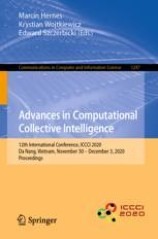
Advances in Computational Collective Intelligence ; 12th International Conference, ICCCI 2020, Da Nang, Vietnam, November 30 – December 3, 2020, Proceedings
Constitutes refereed proceedings of the 12th International Conference on International Conference on Computational Collective Intelligence, ICCCI 2020, held in Da Nang, Vietnam, in November – December 2020. Due to the the COVID-19 pandemic the conference was held online. The 68 papers were thoroughly reviewed and selected from 314 submissions. The papers are organized according to the following topical sections: data mining and machine learning; deep learning and applications for industry 4.0; recommender systems; computer vision techniques; decision support and control systems; intelligent management information systems; innovations in intelligent systems; intelligent modeling and simulation approaches for games and real world systems; experience enhanced intelligence to IoT; data driven IoT for smart society; applications of collective intelligence; natural language processing; low resource languages processing; computational collective intelligence and natural language processing.

Advances in computation and intelligence ; 2nd International symposium, ISICA 2007, Wuhan, China, September 21-23, 2007, Proceedings
Constitutes the refereed proceedings of the Second International Symposium on Intelligence Computation and Applications, cover such topics as evolutionary computation, evolutionary learning, neural networks, swarms, pattern recognition, and data mining.
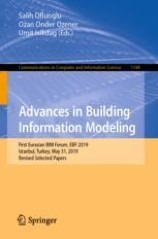
Advances in Building Information Modeling ; 1st Eurasian BIM Forum, EBF 2019, Istanbul, Turkey, May 31, 2019, Revised Selected Papers
Constitutes the refereed proceedings of the First Eurasian BIM Forum, EBF 2019, held in Istanbul, Turkey, in May 2019. The 16 full papers were carefully reviewed and selected from 44 submissions. The papers cover such topics as BIM adoption and implementation; BIM for project management; BIM for sustainability and performative design; BIM and facility management and infrastructural issues.

Advances in Blended Learning ; 2nd Workshop on Blended Learning, WBL 2008, Jinhua, China, Augustl 20-22, 2008. Revised Selected Papers
This book constitutes the thoroughly refereed post-workshop proceedings of the Second Workshop on Blended Learning, WBL 2008, held in Jinhua, China, in August 2008, as a satellite event of ICWL 2008, the 7th International Conference on Web-based Learning.

Advances in Biometrics ; International Conference, ICB 2007, Seoul, Korea, August 27-29, 2007, Proceedings
Biometrics technology continues to stride forward with its wider acceptance and its real need in various new security facets of modern society. From simply logging on to a laptop to crossing the border of a country, biometrics is being called upon to meet the growing challenges of identity management. This book presents a comprehensive treatment of biometrics and offers coverage of the entire gamut of topics in the field, including data acquisition, pattern-matching algorithms, and issues that impact at the system level, such as standards, security, networks, and databases. It has been organized under three sections: sensors, advances in biometric matching algorithms, and topics that deal with issues at the systems level.

Advances in Artificial Life ; 9th European Conference, ECAL 2007, Lisbon, Portugal, September 10-14, 2007, Proceedings
This book is organized in topical sections on conceptual articles, morphogenesis and development, robotics and autonomous agents, evolutionary computation and theory, cellular automata, models of biological systems and their applications, ant colony and swarm systems, evolution of communication, simulation of social interactions, self-replication, artificial chemistry, and posters.
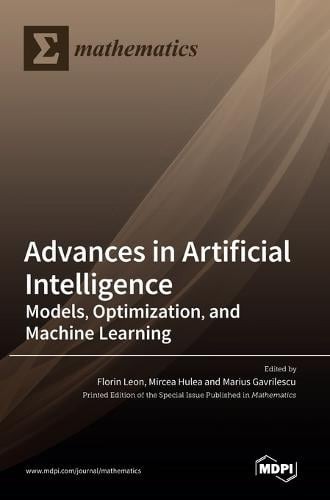
Advances in artificial intelligence: models, optimization, and machine learning
Contains all the articles accepted and published in the Special Issue “Advances in Artificial Intelligence: Models, Optimization, and Machine Learning” of the MDPI Mathematics journal, which covers a wide range of topics connected to the theory and applications of artificial intelligence and its subfields. These topics include, among others, deep learning and classic machine learning algorithms, neural modelling, architectures and learning algorithms, biologically inspired optimization algorithms, algorithms for autonomous driving, probabilistic models and Bayesian reasoning, intelligent agents and multiagent systems.
Advances and Innovations in Systems, Computing Sciences and Software Engineering
Acollection of world class paper articles addressing the following topics: Image and Pattern Recognition: Compression, Image processing, Signal Processing Architectures, Signal Processing for Communication, Signal Processing Implementation, Speech Compression, and Video Coding Architectures. Languages and Systems: Algorithms, Databases, Embedded Systems and Applications, File Systems and I/O, Geographical Information Systems, Kernel and OS Structures, Knowledge Based Systems, Modeling and Simulation, Object Based Software Engineering, Programming Languages, and Programming Models and tools. Parallel Processing: Distributed Scheduling, Multiprocessing, Real-time Systems, Simulation Modeling and Development, and Web Applications. New trends in computing: Computers for People of Special Needs, Fuzzy Inference, Human Computer Interaction, Incremental Learning, Internet-based Computing Models, Machine Intelligence, Natural Language Processing, Neural Networks, and Online Decision Support System.

Advancement of Deep Learning and its Applications in Object Detection and Recognition
In just the past five years, deep learning has taken the world by surprise, driving rapid progress in fields as diverse as computer vision, natural language processing, automatic speech recognition, etc. This book presents an introduction to deep learning and various applications of deep learning such as recommendation systems, text recognition, diabetic retinopathy prediction of breast cancer, prediction of epilepsy, sentiment, fake news detection, software defect prediction and protein function prediction.

Advanced Wired and Wireless Networks
ADVANCED WIRED AND WIRELESS NETWORKS brings the reader a sample of recent research efforts representative of advances in the areas of recognized importance for the future Internet, In Part I, we bring ad-hoc networking closer to the reality of practical use. The focus is on more advanced scalable routing suitable for large networks, directed flooding useful in information dissemination networks, as well as self-configuration and security issues important in practical deployments. Part II illustrates the efforts towards development of advanced mobility support techniques (beyond traditional "mobile phone net") and Mobile IP technologies. The issues range from prediction based mobility support, through context transfer during Mobile IP handoff, to service provisioning platforms for heterogeneous networks. The focus of the final section concerns the performance of networks and protocols. Furthermore this section illustrates researchers’ interest in protocol enhancement requests for improved performance with advanced networks, reliable and efficient multicast methods in unreliable networks, and composite scheduling in programmable/active networks where computing resources equal network performance as transmission bandwidth.

Advanced Web and Network Technologies, and Applications ; APWeb 2006 International Workshops : XRA, IWSN, MEGA, and ICSE, Harbin, China, January 16-18, 2006, Proceedings
The QOS evaluating model for computational grid nodes put forward can help greatly improving the self-adaptability of resource management and accelerating the appli- tion and development of Computational Grid. Now this model has been applied in NPU Campus Computational Grid. And the good effect brought by it has effectively proved its function. References 1. Foster, I. and C. Kesselman, eds. The Grid: Blueprint for a New Computing Infrastructure. Morgan Kaufmann, 1999. 2. Liu Liang, Zhou Xing-she, and Gu Jian-hua: A Multi-Agent System for Grid Computing. The Second International Conference on Active Media Technology, 2003 3. Yao Wang, Julita Vassileva: Trust and Reputation Model in Peer-to-Peer Networks. Farag Azzedin and Muthucumaru Maheswaran: Integrating Trust into Grid Resource M- agement Systems.

Advanced Visual Quantum Mechanics
Investigate and to teach quantum mechanics with the aid of computer-generated animations. It is a self-contained textbook that combines selected topics from atomic physics (spherical symmetry, the hydrogen atom, and particles with spin) with an introduction to quantum information theory (qubits, EPR paradox, teleportation, quantum computers). It explores relativistic quantum mechanics and the strange behavior of Dirac equation solutions. A series of appendices covers important topics from perturbation and scattering theory. The book places an emphasis on ideas and concepts, with a fair to moderate amount of mathematical rigor. Though this book stands alone, it can also be paired with Thaller Visual Quantum Mechanics to form a comprehensive course in quantum mechanics. The software for the first book earned the European Academic Software Award 2000 for outstanding innovation in its field.

Advanced Trends in ICT for Innovative Business Management
Contains a collection of scientific chapters addressing the emerging trends in IT and telecommunications, as well as the issues that accompany them in business. It addresses issues in cyber applications, ICT solutions and innovative cyber know-how, and demonstrates how high-tech IT communications resources can be used to improve business production, sales and service strategies, supply chains and logistics.

Advanced Topics in Exception Handling Techniques
Modern software systems are becoming more complex in many ways and are having to cope with a growing number of abnormal situations which, in turn, are increasingly complex to handle.This book is composed of five parts; the first four deal with topics related to exception handling in the context of programming languages, concurrency and operating systems, pervasive computing systems, and requirements and specifications. The last part focuses on case studies, experimentation and qualitative comparisons. The 16 coherently written chapters by leading researchers competently address a wide range of issues in exception handling.

Advanced structural mechanics : An introduction to continuum mechanics and structural mechanics
In recent years an increasing emphasis has been placed on numerically based methods of structural analysis. This has been reflected in the production of structural mechanics texts that are orientated towards particular numerical methodologies, especially the finite element method. Whilst this approach serves the needs of potential research' engineers, a concentration on the numerical analysis aspects of structural mechanics is of less relevance to professional' engineers, who are likely to be concerned with the use and interpretation of numerical analyses, but not in the development of the methodologies.
Advanced Software Engineering : Expanding the Frontiers of Software Technology ; IFIP 19th World Computer Congress, First International Workshop on Advanced Software Engineering, August 25, 2006, Santiago, Chile
The scope of the series includes: foundations of computer science; software theory and practice; education; computer applications in technology; communication systems; systems modeling and optimization; information systems; computers and society; computer systems technology; security and protection in information processing systems; artificial intelligence; and human-computer interaction. Proceedings and post-proceedings of referred international conferences in computer science and interdisciplinary fields are featured. These results often precede journal publication and represent the most current research. The principal aim of the IFIP series is to encourage education and the dissemination and exchange of information about all aspects of computing.

Advanced REIT Portfolio Optimization : Innovative Tools for Risk Management
This book provides an investor-friendly presentation of the premises and applications of the quantitative finance models governing investment in one asset class of publicly traded stocks, specifically real estate investment trusts (REITs). The models provide highly advanced analytics for REIT investment, including: portfolio optimization using both historic and predictive return estimation; model backtesting; a complete spectrum of risk assessment and management tools with an emphasis on early warning systems, risk budgeting, estimating tail risk, and factor analysis; derivative valuation; and incorporating ESG ratings into REIT investment.

Advanced Planning in Fresh Food Industries: Integrating Shelf Life into Production Planning
Production planning in fresh food industries is a challenging task. Although modern Advanced Planning and Scheduling (APS) systems could provide significant support, APS implementation numbers in these industries remain low. Therefore, based on an in-depth analysis of three sample fresh food industries (dairy, fresh and processed meat), the author evaluates what APS systems should offer in order to effectively support production planning and how the leading systems currently handle the most distinguishing characteristic of fresh food industries, the short product shelf life. Starting from the identified weaknesses, customized software solutions for each of the sample industries are proposed that allow to optimize the production of fresh foods with respect to shelf life.
