



الصفحة 107
الصفحة 107

Basics of dental technology : a step by step approach
A complete reference for the current techniques and materials used in dental technology. Retains the accessible, task-based approach and step-by-step guidance. Features digital dental technology and an interactive student website to support self-assessment. Explains key competencies, concepts, instruments, and equipment, and also introduces more specialist techniques and procedures, such as denture prosthetics, fixed prosthodontics and orthodontic work. Provides essential information for trainee dental technicians and students learning about dental technology, including study tips and strategies for working effectively within a dental team
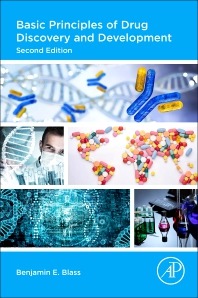
Basic principles of drug discovery and development ; 2nd ed.
Presents the multifaceted process of identifying a new drug in the modern era, which requires a multidisciplinary team approach with input from medicinal chemists, biologists, pharmacologists, drug metabolism experts, toxicologists, clinicians, and a host of experts from numerous additional fields. Enabling technologies such as high throughput screening, structure-based drug design, molecular modeling, pharmaceutical profiling, and translational medicine are critical to the successful development of marketable therapeutics. Given the wide range of disciplines and techniques that are required for cutting edge drug discovery and development, a scientist must master their own fields as well as have a fundamental understanding of their collaborator’s fields.

Basic Fracture Mechanics and its Applications
Presents specific aspects of how fracture mechanics is used to address fatigue crack growth, environment assisted cracking, and creep and creep-fatigue crack growth. Other topics include mixed-mode fracture and materials testing and selection for damage tolerant design, alongside in-depth discussions of ensuring structural integrity of components through real-world examples. There is a strong focus throughout the book on the practical applications of fracture mechanics. It provides a clear description of the theoretical aspects of fracture mechanics and also its limitations.

Barry's Introduction to Construction of Buildings ; 4th ed.
Based mainly on domestic and residential buildings—and filled with extensive illustrations throughout—this concise text is the ideal introduction to the subject of building construction. It provides the basic material that readers need in order to understand the construction process for the majority of low rise buildings. The book explains construction technology through the key functional and performance requirements for the main elements common to all buildings. With a strong focus on building efficiency and meeting the challenges posed by limiting the environmental impact of buildings, and new “at a glance” summaries allowing you to grasp the salient points of each chapter, readers will find the text fully up to date with the latest building regulations and construction technology. Deals with design, technology, site assembly, and environmental issues of domestic and residential buildings. Thoroughly updated, with particular attention paid to the concept of building efficiency and improved integration of the topics covered to match current student needs. New “at a glance” summaries at the beginning of each chapter.

Banking on (artificial) intelligence : Navigating the realities of ai in financial services
Provides a tailored overview of what AI specifically means for financial services, a highly regulated yet also disrupted industry. it investigates the current state of AI applications in financial services today along with the state of funding and partnerships between tech and banking industries. it also examines the key pillars of responsible AI and the importance of keeping humans in the loop. the book takes a deep dive into the use cases in the financial services industry, the challenges and opportunities, and the fragmented regulatory landscape. how can we effectively assess risks, and balance innovation and customer centricity with trust in AI in financial services? can smaller organizations reap the benefits of the technology? how can institutions deploy AI responsibly and securely, and promote a fairer and more equitable future for more people?

Banking for Family Business: A New Challenge for Wealth Management
Hints of globalization have actually been around for several decades, even though they made only a modest impact; however, the availability of global capital and advances in communication technology have emp- sized the process of internationalization and the tools available to connect and integrate business activities to answer to more complex needs of c- ents. Moreover, the financial scandals and the review of mutual fund trade activity in the US by the Attorney General Elliot Spitzer have highlighted the importance to focus all efforts on renewing the confidence of prof- sional investors and their clients who have entrusted their capital to asset managers. Therefore, there is a growing need in the market to reinforce the concept of “Shared Positive Values” among the entire industry and among its stakeholders.

Bacteriophage therapy : a potential solution for antibiotic resistance crisis
For many years, humans have been fighting with bacteria, in a matter of fact, bacteria have been winning for the last decade, becoming resistant to every weapon we have; The antibiotics. In order to win the fight humans had to think of alternative ways, like viruses. There is a special type of viruses that have been in a war with bacteria for millenniums, Bacteriophages. Bacteriophages (or phages), the most abundant viral entity of the planet. On the basis of their unique characteristics and anti-bacterial property, phages are being the freshly evaluated taxonomically. Phages replicate inside the host either by lytic or lysogenic mode after infecting and using the cellular machinery of a bacterium. Phage became an important agent for combating pathogenic bacteria in clinical treatments and its related research gained momentum. However, due to recent rise of bacterial resistance on antibiotics, applications of phage (phage therapy) become an unavoidable option of research. In this dissertation, the advantage and limitations of Bacteriophages for use in humans will be discussed. Furthermore, this dissertation deals with recent development of its application in the areas of biotechnology.

Bacteriocins : Ecology and Evolution
Microbes produce an extraordinary array of defense systems. These include bacteriocins, a class of antimicrobial molecules with narrow killing spectra, produced by bacteria. The book describes the diversity and ecological role of bacteriocins of Gram-positive and Gram-negative bacteria, presenting a new classification scheme for the former and a state-of-the-art look at the role of bacteriocins in bacterial communication. It discusses the molecular evolution of colicins and colicin-like bacteriocins, and provides a contemporary overview of archaeocins, bacteriocin-like antimicrobials produced by archaebacteria. Furthermore, various modeling (in silico) studies elucidate the role of bacteriocins in microbial community dynamics and fitness, delving into rock-paper-scissors competition and the counter-intuitive survival of the weakest. The book makes compelling reading for a multi-faceted scientific audience, including those working in the fields of biodiversity and biotechnology, notably in the human and animal health domain.

Bacterial Physiology : A Molecular Approach
The application of new molecular methodologies in the study of bacterial behaviour and cell architecture has enabled new revolutionary insights and discoveries in these areas. While this has also raised a number of scientific mysteries about bacteria, it certainly improved our understanding of these organisms as complex and adaptive entities rather than just simple tiny buckets of enzymes. The value of this recent knowledge in bacterial physiology is not only restricted to fundamental biology, but it also extends to biotechnology and drug-discovery disciplines where understanding cell behaviour and structure is essential for better exploitation of useful bacteria and effective eradication of harmful ones. This makes a new text accommodating recent developments in bacterial physiology highly relevant to a wide range of readership including those interested in basic and applied knowledge.

Bacterial and Bacteriophage Genetics
Genetic investigations and manipulations of bacteria and bacteriophage have made vital contributions to our basic understanding of living cells and to the development of molecular biology and biotechnology. This volume is a survey of the genetics of bacteria and their viruses, and it provides students with a comprehensive introduction to this rapidly changing subject. The book is written for upper level undergraduates and beginning graduate students, particularly those who have had an introductory genetics course.

Aviation Noise Impact Management : Technologies, Regulations, and Societal Well-being in Europe
This book provides a view into the state-of-the-art research on aviation noise and related annoyance. The book will primarily focus on the achievements of the ANIMA project (Aviation Noise Impact Management through Novel Approaches), but not exclusively.
AVENUE21. Connected and Automated Driving : Prospects for Urban Europe
This publication examines the impact of connected and automated vehicles on the European city and the conditions that can enable this technology to make a positive contribution to urban development. The authors argue for two theses that have thus far received little attention in scientific discourse: as connected and automated vehicles will not be ready for use in all parts of the city for a long time, previously assumed effects – from traffic safety to traffic performance as well as spatial effects – will need to be re-evaluated.
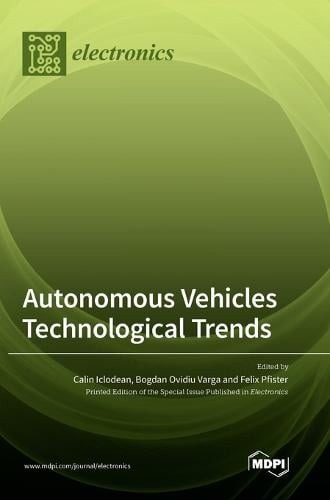
Autonomous vehicles technological trends
The automotive industry has always been synonymous with research and innovation, but nowadays the industry is adding pressure and is establishing the agenda of the researchers from the field. Visions have been provided, and the hardware and the software exist; the only question remaining is: “who is going to deliver”? To answer this question, we encouraged scientists, researchers, industry specialists, and academics to share their vision of autonomous vehicles. What will the platform look like? What kind of hardware and software is most suitable? Who will make the connection between these two interdependent environments (and how), so that in the end the AI will define the process? These are the pressing issues of the current moment, and this Special Issue will help all those interested in the topic to promote their vision and ideas.
Autonomous Navigation in Dynamic Environments
The purpose of this book is to address the challenging problem of Autonomous Navigation in Dynamic Environments, and to present new ideas and approaches in this newly emerging technical domain. The book surveys the state-of-the-art, discusses in detail various related challenging technical aspects, and addresses upcoming technologies in this field. The aim of the book is to establish a foundation for a broad class of mobile robot mapping and navigation methodologies for indoor, outdoor, and exploratory missions.Three main topics located on the cutting edge of the state of the art are addressed, from both the theoretical and technological point of views: Dynamic world understanding and modelling for safe navigation, Obstacle avoidance and motion planning in dynamic environments, and Human-robot physical interactions. Several models and approaches are proposed for solving problems such as Simultaneous Localization and Mapping (SLAM) in dynamic environments, Mobile obstacle detection and tracking, World state estimation and motion prediction, Safe navigation in dynamic environments, Motion planning in dynamic environments, Robust decision making under uncertainty, and Human-Robot physical interactions.
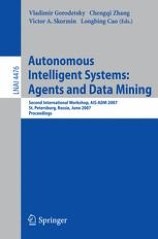
Autonomous intelligent systems : Multi-agents and data mining ; 2nd International workshop, AIS-ADM 2007, St. Petersburg, Russia, June 3-5, 2007, Proceedings
MAS offiers powerful metaphors for information system conceptualization, a range of new techniques, and technologies specifically focused on the design and implementation of lar- scale open distributed intelligent systems. KDD also provides intelligent inf- mation technology with powerful ideas, algorithms, and software means to help cope with the main problem of artificial intelligence, formulated in the we- known question “Where does the knowledge come from?”, thus actually making modern applications intelligent and adaptive. The evident recent trend in both science and industry is to integrate and take advantage of both technologies. The existing experience with combined application of multi-agent technology to design architectures of distributed (- erarchical and peer-to-peer) data mining and KDD systems, as well as the u- lization of data mining and KDD achievements to provide enhanced intelligence of MAS, confirms the fact that both technologies are capable of mutual enri- ment and their integrateduse may result in intelligent information systems with new emergent properties.
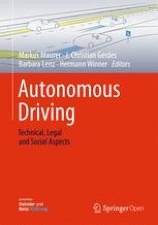
Autonomous driving : Technical, legal and social aspects
This book takes a look at fully automated, autonomous vehicles and discusses many open questions: How can autonomous vehicles be integrated into the current transportation system with diverse users and human drivers? Where do automated vehicles fall under current legal frameworks? What risks are associated with automation and how will society respond to these risks? How will the marketplace react to automated vehicles and what changes may be necessary for companies?
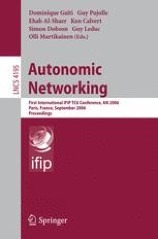
Autonomic networking ; 1st International IFIP TC6 Conference, AN 2006, Paris, France, September 27-29, 2006, Proceedings
The autonomic communication paradigm has been defined mainly through the Autonomic Communications Forum (ACF) and particularly as follows: Autonomic communication is centered on selfware – an innovative approach to perform known and emerging tasks of a network control plane, both end-to-end and middle box communication-based. Selfware assures the capacity to evolve; however, it requires generic network instrumentation. Selfware principles and technologies borrow largely from well-established research on distributed systems, fault tolerance among others, from emerging research on non-conventional networking (multihop ad hoc, sensor, peer-to-peer, group communication, etc.

Automotive software - connected services in mobile networks ; 1st Automotive software workshop, ASWSD 2004, San Diego, CA, USA, January 10-12, 2004, Revised Selected Papers
Software development for the automotive domain is currently subject to a silent revolution. On the one hand, software has become the enabling technology for almost all safety-critical and comfort functions o?ered to the customer. A total of 90 % of all innovations in automotive systems are directly or indirectly - abled by software. the following list highlights three of the corresponding challenges: First, the dependencies between safety-critical and comfort functions are rapidly increasing;a simple example is the interplay of airbag controland power seat control in the case of an accident. Careful analysis and design of these dependencies are necessary to yield correct software solutions. Second, advances in wired and wireless networking infrastructures enable - terconnection between cars and backend service providers .
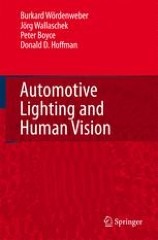
Automotive Lighting and Human Vision
Visual perception is the most important of the human senses. Lack of visual perception is one of the main causes of accidents. The safety of vehicle traffic depends on how well automotive lighting supports the visual perception of the driver. This book explains the fundamentals of visual perception, like e.g. physiology of eye and brain, as well as those of automotive lighting technology, like e.g. design of headlamps and signal lights. It is an interdiciplinary approach to a fastly evolving field of science and technology, answering questions like "How does information enter our brain when driving a car?" and "What are the benefits and dangers of LED signal lighting?"

Automation in construction toward resilience : Robotics, smart materials and intelligent systems
Presents all aspects of automation in construction pertaining to the use of information technologies in design, engineering, construction technologies, and maintenance and management of constructed facilities. The broad scope encompasses all stages of the construction life cycle from initial planning and design, through the construction of the facility, its operation, and maintenance, to the eventual dismantling and recycling of buildings and engineering structures
