



الصفحة 102
الصفحة 102

Dynamic Analysis of Structures
Reflects the latest application of structural dynamics theory to produce more optimal and economical structural designs. The author includes carefully worked-out examples which are solved utilizing more recent numerical methods. These examples pave the way to more accurately simulate the behavior of various types of structures. The essential topics covered include principles of structural dynamics applied to particles, rigid and deformable bodies, thus enabling the formulation of equations for the motion of any structure.

Drugs used in murder and drugs facilitated sexual assaults
Since ancient times, the methods of committing crimes have varied and the methods of killing have varied. The killer has always sought to hide his crime. One of the methods of killing is poisoning the victim, but with the development of science also methods for detecting toxins inside the victim's body have developed. Also, in recent decades, drugs facilitating sexual assault have spread, which aim to make the victim unconscious and paralyze his resistance...

Drugs in palliative care
While palliative care has adopted a holistic approach to treatment / medication-driven symptom management ostensibly forms the critical aspect of care. Prescribing in palliative care can be extremely complex because the patient may often have comorbidity / or occasionally multimorbidity. The associated polypharmacy further complicates the pharmacological management of symptoms being caused by the palliative condition. This can be daunting for healthcare professionals and can negatively impact upon the effectiveness of care provided. Fully revised and updated / the third edition of Drugs in Palliative Care provides a detailed / yet concise overview of topics that are encountered in palliative care clinical practice. The book will appeal to a variety of healthcare professionals involved in the provision of palliative care and medicines information.

Drugs and a methodological compendium : From bench to bedside
Provides a meticulous view on methodological drug discovery and development insights from bench to bedside. Focus on computational modus operandi, pharmacological optimization approaches, modern high-throughput screening methods and in-vitro procedures, role of structural biologists in drug discovery and development, medicinal chemistry approaches for drug design, formulation and drug delivery, in-vivo evaluations of candidate molecules, clinical trial procedures and others. Covers specific case studies, regulatory approval proceedings, and industrial view point alongside the aforementioned conceptual layout. And at the same time, the volume integrates medical, biological, medicinal, pharmacological and computational streams, and it is suggested as an ideal guideline to a wide audience including molecular biologists, biochemist, pharmacologists, medicinal chemist, toxicologists, drug discovery and development researchers, and all other students interested in these disciplines.

Drug utilization research : Methods and applications
Drug Utilization Research (DUR) is a discipline which combines aspects of pharmacotherapy, epidemiology, and health services research into an interdisciplinary set of methods for analyzing and assessing the prescribing, dispensing and consumption of medicines. It combines both qualitative and quantitative approaches to facilitate the safe and effective use of pharmaceuticals. Drug Utilization Research: Methods and Applications provides a comprehensive introduction to this discipline, prepared by an international team of authors with broad experience in numerous fields. Now reorganized and updated to reflect the latest research and global challenges, it is an indispensable resource for understanding the use of pharmaceuticals.

Drug transporters : Molecular characterization and role in drug disposition
Drug Transporters: Molecular Characterization and Role in Drug Disposition provides in-depth analysis of the conceptual evolution and technical development for studying drug transporters. Contributions by an international panel of leading researchers address advances in transporters as drug targets, transporters in pharmacotherapy, the impact of transporters on drug efficacy and safety, the development of sophisticated model systems and sensitive assay methods, and more. Divided into two parts, the book first provides a thorough overview of relevant drug transporters before detailing the principles of drug transport and associated techniques.

Drug safety evaluation : Methods and protocols
Focuses on the most recent advances in the field of drug safety evaluation. Divided into seven parts, chapters detail specific aspects related to the experimental design of preclinical studies conducted to support the safety of pediatric and combination drugs, necropsy and histopathology evaluation, mass spectrometry imaging, genetic toxicology protocols including the Pig-a mutation assay, safety pharmacology methods such as automatization of patch-clamp procedures, target safety assessment for investigative toxicology, screening assays for developmental toxicology, and methods to characterize novel translational safety biomarkers like microRNAs. Written in the highly successful Methods in Molecular Biology series format, chapters include introductions to their respective topics, lists of the necessary materials and reagents, step-by-step, readily reproducible laboratory protocols, and tips on troubleshooting to avoid known pitfalls.

Drug repurposing and computational drug discovery strategies and advances
Defined as identifying new pharmacological indications from old, existing, failed, investigational, already marketed, or FDA-approved drugs and prodrugs, and applying these new uses in the treatment of diseases other than the drug’s original intended therapeutic use. The application of computational techniques in discovery research not only helps in the development of drugs from leads or existing drug molecules but can also be useful for the repurposing of existing drug candidates.

Drug delivery systems using quantum computing
Drug delivery systems (DDS) are defined as methods by which drugs are delivered to desired tissues, organs, cells, and subcellular organs for drug release and absorption through a variety of drug carriers. By controlling the precise level and/or location of a given drug in the body, side effects are reduced, doses are lowered, and new therapies are possible. Nevertheless, there are still significant obstacles to delivering certain medications to particular cells. Drug delivery methods change pharmacokinetic, pharmacodynamic, and drug release patterns to enhance product efficacy and safety, as well as patient convenience and compliance.

Drug Delivery Systems
Expands on the previous editions with a discussion of new and updated methods used to study drug delivery. Chapters cover topics such as drug delivery in cancer and intrathecal delivery of analgesics in humans. The increasing role of nanobiotechnology is reflected in eight of the sixteen chapters that include synthesis of gold nanoparticles; targeted siRNA delivery; and lipid nanocarriers. Written in the highly successful Methods in Molecular Biology series format, chapters include introductions to their respective topics, lists of the necessary materials and reagents, step-by-step, readily reproducible laboratory protocols, and tips on troubleshooting and avoiding known pitfalls.
Drawn to Design : Analyzing Architecture Through Freehand Drawing
A guide for students and teachers to understand the need for, the role of and the methods and techniques of freehand analytical sketching in architecture. The presentation focuses on drawing as an approach to and phase of architectural design. The conceptual goal of this approach is to use drawing not as illustration or depiction, but as exploration. The first part of the book discusses underlying concepts of freehand sketching in design education and practice as a complement to digital technologies. The main component is a series of chapters that constitute a typology of fundamental issues in architecture and urban design; for instance, issues of "façade" are illustrated with sketch diagrams that show how façades can be explored and sketched through a series of specific questions and step-by-step procedures.
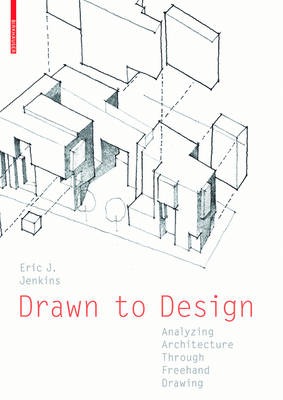
Drawn to Design : Analyzing Architecture Through Freehand Drawing
A guide for students and teachers to understand the need for, the role of and the methods and techniques of freehand analytical sketching in architecture. The presentation focuses on drawing as an approach to and phase of architectural design. The conceptual goal of this approach is to use drawing not as illustration or depiction, but exploration. The first part of the book discusses underlying concepts of freehand sketching in design education and practice as a compliment to digital technologies. The main component is a series of chapters that constitute a typology of fundamental issues in architecture and urban design; for instance, issues of "facade" are illustrated with sketch diagrams that show how facades can be explored and sketched through a series of specific questions and step-by-step procedures.

Drawing from the model : Fundamentals of digital drawing, 3D modeling, and visual programming in architectural design
Bridges traditional and contemporary methods of creating architectural design drawings and 3D models through digital tools and computational processes.

Double-stranded RNA : Methods and protocols
Examines classical and cutting-edge methods involving double-stranded RNA (dsRNA), specifically regarding isolation, visualization, characterization, production, and application. Many protocols, such as co-immunoprecipitation-based isolation of double-stranded RNA-associated protein complexes, identification of mycoviruses by dsRNA extraction, application of dsRNA for fungi disease management (Sclerotinia sclerotiorum and Botrytis cin), and production of double-stranded RNA in plants by plant viral vectors for gene silencing, can also be easily adapted for identification of viruses from other organisms, control of other pathogens, and fundamental research. Written for the highly successful Methods in Molecular Biology series, chapters include introductions to their respective topics, lists of the necessary materials and reagents, step-by-step and readily reproducible laboratory protocols, as well as tips for troubleshooting and avoiding known pitfalls.

Domain Modeling and the Duration Calculus : International Training School, Shanghai, China, September 17-21, 2007, Advanced Lectures
The book presented provide competent coverage of software security, domain modeling of software engineering, and duration calculus for real time systems - originating from lectures of leading experts in these fields from Europe and Asia.It addressed in detail are: development of real-time systems, domain engineering using abstract modeling, the area of duration calculus, and formal methods like language description using the operational semantics approach.

Domain Decomposition Methods in Science and Engineering XVII
This volume contains a selection of papers presented at the 17th International Conference on Domain Decomposition Methods in Science and Engineering held at St. Wolfgang / Strobl, Austria, July 3 - 7, 2006. Domain decomposition is an active, interdisciplinary research area concerned with the development, analysis, and implementation of coupling and decoupling strategies in mathematical and computational models. Domain decomposition techniques provide efficient tools for treating problems in all Computational Sciences. The reader will become familiar with the newest domain decomposition technologies and their use for modeling and simulating of complex problems from different fields of applications.

Domain Decomposition Methods in Science and Engineering XVI
The present volume sets forth new contributions in areas of numerical analysis, computer science, scientific and industrial applications, and software development.

Domain Decomposition Methods in Science and Engineering
Domain decomposition is an active, interdisciplinary research area that is devoted to the development, analysis and implementation of coupling and decoupling strategies in mathematics, computational science, engineering and industry.This book special focus has been on numerical analysis, computational issues,complex heterogeneous problems, industrial problems, and software development.

Domain Decomposition Methods for the Numerical Solution of Partial Differential Equations
Domain decomposition methods are divide and conquer methods for the parallel and computational solution of partial differential equations of elliptic or parabolic type. They include iterative algorithms for solving the discretized equations, techniques for non-matching grid discretizations and techniques for heterogeneous approximations. This book serves as an introduction to this subject, with emphasis on matrix formulations. The topics studied include Schwarz, substructuring, Lagrange multiplier and least squares-control hybrid formulations, multilevel methods, non-self adjoint problems, parabolic equations, saddle point problems (Stokes, porous media and optimal control), non-matching grid discretizations, heterogeneous models, fictitious domain methods, variational inequalities, maximum norm theory, eigenvalue problems, optimization problems and the Helmholtz scattering problem. Selected convergence theory is included.

Domain Decomposition Methods - Algorithms and Theory
This book offers a comprehensive presentation of some of the most successful and popular domain decomposition preconditioners for finite and spectral element approximations of partial differential equations. It places strong emphasis on both algorithmic and mathematical aspects. It covers in detail important methods such as FETI and balancing Neumann-Neumann methods and algorithms for spectral element methods.
