



الصفحة 10
الصفحة 10

Foundation Mathematics for Computer Science : A Visual Approach
In this second edition of Foundation Mathematics for Computer Science, John Vince has reviewed and edited the original book and written new chapters on combinatorics, probability, modular arithmetic and complex numbers. These subjects complement the existing chapters on number systems, algebra, logic, trigonometry, coordinate systems, determinants, vectors, matrices, geometric matrix transforms, differential and integral calculus. During this journey, the author touches upon more esoteric topics such as quaternions, octonions, Grassmann algebra, Barrycentric coordinates, transfinite sets and prime numbers.

Foundation Flex for Designers
All Flex applications look the same—a blue-gray background and silver-skinned components—right? That doesn't have to be the case, though. This book shows you how to ensure that your Flex 2 and 3 projects stand out from the crowd and provide your users with an application that is both visually stunning and beautifully functional. Flex Builder, coupled with the Adobe Creative Suite (CS3), is a powerful combination, providing all the tools you need to create compelling, vibrant interfaces. This book guides you through creating applications with Flex Builder, designing layouts in Fireworks, creating custom skins for your components in Photoshop and Illustrator, and using CSS to enhance the appearance of your rich Internet applications (RIAs).

Foundation ASP.NET for Flash
If you're a reasonably experienced Flash user who has mastered the basics but wants to empower your SWFs, taking them further toward rich Internet applications, then you've come to the right place! Foundation ASP.NET for Flash will teach you everything you need to know to integrate two of the most exciting technologies used on the Web today. Using Flash and ASP.NET, it's possible to utilize the amazing user interface capabilities of Flash along with the extensive power of ASP.NET to create dynamic, data-driven web applications. In this book, advanced topics are made easy by providing intuitive step-by-step examples. This book covers Flash MX 2004 and Flash 8, ASP.NET 2.0, Visual Studio 2005, and Access and SQL Server 2005. It is an essential part of any Flash or ASP.NET web developer's arsenal.
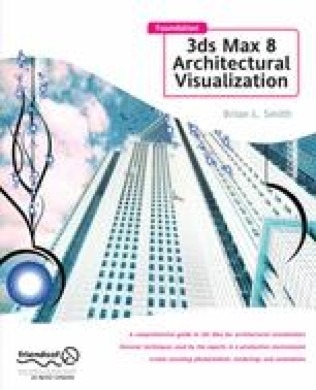
Foundation 3ds Max 8 Architectural Visualization
Welcome to the world of 3D architectural visualizations using the most powerful and versatile 3D software package on the planet: 3ds Max. In just the last few years, the visualization industry has arguably become the fastest-growing 3D industry, and may soon overtake all others in total number of users. Just as the use of computer-aided design became the norm for nearly all architectural, engineering, and construction firms in the 1990s, 3D visualizations have become standard practice today. This book takes you through the challenge of learning one of the most complex computer programs ever created, by way of easy-to-follow tutorials and instruction. It specifically focuses on those parts of the program you need to know to produce stunning architectural visualizations.
Forms of List-Making : Epistemic, Literary, and Visual Enumeration
This book attempts to show that an examination of the list’s formal features has the potential to produce genuine insights into the production of knowledge, the poetics of literature and the composition of visual art. Following a conceptual introduction, the twelve single-authored chapters place the list in a variety of well-researched contexts, including ancient Roman historiography, medieval painting, Enlightenment periodicals, nineteenth-century botanical geography, American Beat poetry and contemporary photobooks.

Formal Methods in Software and Systems Modeling : Essays Dedicated to Hartmut Ehrig on the Occasion of His 60th Birthday
By presenting state-of-the-art research results on various aspects of formal and visual modeling of software and systems, this book commemorates the 60th birthday of Hartmut Ehrig. The 24 invited reviewed papers are written by students and collaborators of Hartmut Ehrig who are established researchers in their fields. Reflecting the scientific interest and work of Hartmut Ehrig, the papers fall into three main parts on graph transformation, algebraic specification and logic, and formal and visual modeling.

Formal concept analysis ; Vol. 3874 ; 4th International Conference, ICFCA 2006, Dresden, Germany, Feburary 13-17, 2006, Proceedings
This book constitutes the refereed proceedings of the 4th International Conference on Formal Concept Analysis, held in February 2006. The 17 revised full papers presented together with four invited papers were carefully reviewed and selected for inclusion in the book. The papers show advances in applied lattice and order theory and in particular scientific advances related to formal concept analysis and its practical applications: data and knowledge processing including data visualization, information retrieval, machine learning, data analysis and knowledge management.

Formal concept analysis ; Vol. 3403 ; 3rd International Conference, ICFCA 2005, Lens, France, February 14-18, 2005, Proceedings
This book constitutes a comprehensive and systematic presentation of the state of the art of formal concept analysis and its applications. The first part of the book is devoted to foundational and methodological topics. The contributions in the second part demonstrate how formal concept analysis is successfully used outside of mathematics, in linguistics, text retrieval, association rule mining, data analysis, and economics. The third part presents applications in software engineering.

Formal Concept Analysis ; 6th International Conference, ICFCA 2008, Montreal, Canada, February 25-28, 2008. Proceedings
Formal Concept Analysis (FCA) is a mathematical theory of concepts and c- ceptual hierarchyleadingto methods for conceptually analyzing data and kno- edge. The theory itselfstronglyreliesonorder and lattice theory,whichhasbeen studied by mathematicians over decades. FCA proved itself highly relevant in several applications from the beginning , and, over the last years, the range of application shaskept growing. The mainreasonfor this comesfromthe fact that our modern society has turned into an “information” society. After years and years of using computers, companies realized they had stored gigantic amounts of data.

Formal Concept Analysis ; 5th International Conference, ICFCA 2007, Clermont-Ferrand, France, February 12-16, 2007, Proceedings
This book constitutes the refereed proceedings of the 5th International Conference on Formal Concept Analysis, ICFCA 2007. The papers comprise state of the art research from foundational to applied lattice theory and related fields, all of which involve methods and techniques of formal concept analysis such as data visualization, information retrieval, machine learning, data analysis and knowledge management.

FOBA : Buildings
The book also chronicles the FOB Homes systema FOBA subsidiary company established in 1999a uniquely creative response to the generic mass-produced pre-fabricated housing available in Japan. With five basic prototypes that can be easily adapted to any site or client, FOB Homes redefines the concept of standardized housing. Their simple, neutral white boxes counter the visual chaos of contemporary Japan and offer the elegance and experience of "architecture" to the general publica union of modernist aesthetics with the modernist ideology of democratic, affordable design.
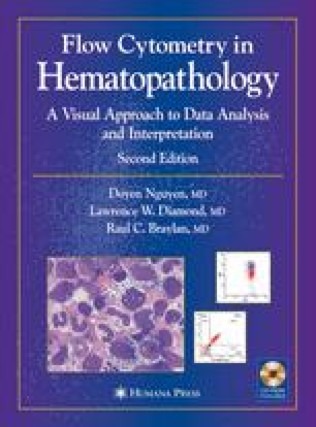
Flow cytometry in hematopathology : A visual approach to data analysis and interpretation
Although instrumentation and laboratory techniques for flow cytometry (FCM) immunophenotyping of hematopoietic malignancies are well documented, there is relatively little information on how best to perform data analysis, a critical step in FCM testing. In Flow Cytometry in Hematopathology: A Visual Approach to Data Analysis and Interpretation, three physicians highly experienced in laboratory hematopathology and FCM offer a unique systematic approach to FCM data analysis and interpretation based on the visual inspection of dual parameter FCM graphics. This step-by-step approach to optimal FCM data analysis is demonstrated by means of numerous FCM graphics derived from actual well-documented clinical cases.The focus of the additional material is on the TCR-Vb eight-tube kit which has greatly facilitated the evaluation mature T-cell disorders, and on the DNA dye DRAQ5 for improved grading of malignant lymphoma. The authors also include notes on "tricks of the trade" and pitfalls to avoid. The discussion, covering leukemias, lymphomas, and other conditions, moves from simple to complex specimens, with an emphasis on visual pattern analysis.
Finite Difference Computing with Exponential Decay Models
This text provides a very simple, initial introduction to the complete scientific computing pipeline: models, discretization, algorithms, programming, verification, and visualization. The pedagogical strategy is to use one case study – an ordinary differential equation describing exponential decay processes – to illustrate fundamental concepts in mathematics and computer science. The book is easy to read and only requires a command of one-variable calculus and some very basic knowledge about computer programming. Contrary to similar texts on numerical methods and programming, this text has a much stronger focus on implementation and teaches testing and software engineering in particular.

Fashion-ology : Fashion studies in the postmodern digital era - Dress, body, culture
This new edition of a classic work offers a concise introduction to the sociology of fashion, and demystifies the workings of the fashion system. From the origins of fashion studies and the difference between clothing and fashion, through to an examination of 21st century subcultures, and the impact of the digital age on designers, Fashion-ology explores fashion as a global, institutionalized system.

Fashionity
This project is an AI fashion design system to generate fashion images based on user textual description. The proposed system incorporates advanced technology for dissemination and machine translation with the aim of facilitating a seamless user experience for input in both Arabic and English languages. Moreover, the project encompasses the incorporation of a recommendation system that proposes appropriate visual content based on user style. The primary objective of this project is to develop a robust framework capable of generating high-quality images based on textual descriptions, providing recommendations for similar clothing items, and facilitating the retrieval of photographic and apparel articles through image search.

Fashion forge
"Fashion forge" revolutionizes clothing shopping with a cutting-edge mobile application. This AI-powered platform empowers users to describe their dream garment and visualize it instantly, bridging the gap between imagination and reality for fashion-forward users and designers. A recommendation system tailors clothing suggestions based on user preferences, while stores leverage a dedicated social platform for effective marketing. "Fashion Forge" fosters a connected fashion community, empowering users, designers, and stores alike.

Fashion aesthetics and ethics : Past and present
Covering a wide range of subjects such as fashion's highly problematic production and consumption practices, the possibility of producing and consuming fashion ethically, fashion's intimate connection with nature and technology, Fashion Aesthetics and Ethics highlights the powerful aesthetical presence of fashion in relation to its ethical premises and often problematic outcomes.
Eye Tracking Methodology : Theory and Practice
Despite the availability of cheap, fast, accurate and usable eye trackers, there is still little information available on how to develop, implement and use these systems. This second edition of Andrew Duchowski’s successful guide to these systems contains significant additional material on the topic and fills this gap in the market with this accessible and comprehensive introduction. Opening with useful background information, including an introduction to the human visual system and key issues in visual perception and eye movement, the second part surveys eye-tracking devices and provides a detailed introduction to the technical requirements necessary for installing a system and developing an application program. The book focuses on video-based, corneal-reflection eye trackers – the most widely available and affordable type of system, before closing with a look at a number of interesting and challenging applications in human factors, collaborative systems, virtual reality, marketing and advertising.

Extending the Horizons : Advances in Computing, Optimization, and Decision Technologies
Computer Science and Operations Research continue to have a synergistic relationship and this book represents the results of cross-fertilization between OR/MS and CS/AI. It is this interface of OR/CS that makes possible advances that could not have been achieved in isolation. Taken collectively, these articles are indicative of the state-of-the-art in the interface between OR/MS and CS/AI and of the high caliber of research being conducted by members of the INFORMS Computing Society.
Exploratory Analysis of Spatial and Temporal Data : A Systematic Approach
Exploratory data analysis (EDA) is about detecting and describing patterns, trends, and relations in data, motivated by certain purposes of investigation. As something relevant is detected in data, new questions arise, causing specific parts to be viewed in more detail. So EDA has a significant appeal: it involves hypothesis generation rather than mere hypothesis testing.
