



الصفحة 10
الصفحة 10

Hydrodynamics of Explosion : Experiments and Models
Hydronamics of Explosion presents the research results for the problems of underwater explosions and contains a detailed analysis of the structure and the parameters of the wave fields generated by explosions of cord and spiral charges, a description of the formation mechanisms for a wide range of cumulative flows at underwater explosions near the free surface, and the relevant mathematical models. Shock-wave transformation in bubbly liquids, shock-wave amplification due to collision and focusing, and the formation of bubble detonation waves in reactive bubbly liquids are studied in detail. Particular emphasis is placed on the investigation of wave processes in cavitating liquids, which incorporates the concepts of the strength of real liquids containing natural microinhomogeneities, the relaxation of tensile stress, and the cavitation fracture of a liquid as the inversion of its two-phase state under impulsive (explosive) loading. The problems are classed among essentially nonlinear processes that occur under shock loading of liquids and may be of interest to researchers in physical acoustics, mechanics of multiphase media, shock-wave processes in condensed media, explosive hydroacoustics, and cumulation.

Hyberbolic Conservation Laws in Continuum Physics
This masterly exposition of the mathematical theory of hyperbolic system for conservation laws brings out the intimate connection with continuum thermodynamics, by emphasising issues in which the analysis may reveal something about the physics and, in return, the underlying physical structure may direct and drive the analysis.Theis edition contains chapter recounting the exciting recent developments on the vanishing viscosity method. Numerous new sections have been incorporated in preexisting chapters, to introduce newly derived results or present older material
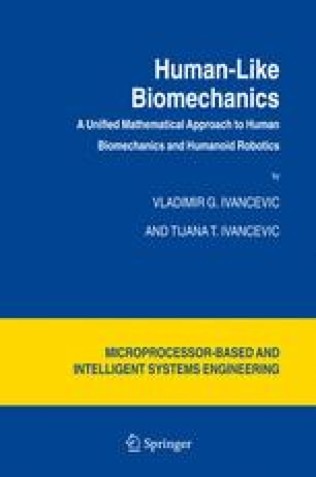
Human-Like Biomechanics : A Unified Mathematical Approach to Human Biomechanics and Humanoid Robotics
The book contains six Chapters and an Appendix. The first Chapter is an Introduction, giving a brief review of mathematical techniques to be used in the text. The second Chapter develops geometrical basis of human-like biomechanics, while the third Chapter develops its mechanical basis, mainly from generalized Lagrangian and Hamiltonian perspective. The fourth Chapter develops topology of human-like biomechanics, while the fifth Chapter reviews related nonlinear control techniques. The sixth Chapter develops covariant biophysics of electro-muscular stimulation. The Appendix consists of two parts: classical muscular mechanics and modern path integral methods, which are both used frequently in the main text.

Human Exploitation and Biodiversity Conservation
The sustainable use of biodiversity is one of the three key objectives of the 1992 "Convention on Biological Diversity". To achieve this, sound conservation practice has to be recognized as beneficial and implemented by all who access, or use it – from subsistence farmers to skiers and pharmaceutical bioprospectors. At the same time, indigenous peoples necessarily utilize enormous numbers of plants, fungi, and fish, particularly for foods and medicines. This book gathers together a wide range of contributions addressing diverse aspects of front-line human involvement in biodiversity exploitation and conservation. Its scope is broad, the organisms explored ranging from birds, invertebrates and mammals – both terrestrial and aquatic – to crops and medicinal plants. Meanwhile, the issues addressed include land use changes, the importance of gardens, hedges and green lanes, housing developments, hunting, invasive species, local community involvement, sacred groves, socioeconomic factors and trade.

Human Ecology : Biocultural Adaptations in Human Communities
Beginning with resource use and food procurement behaviour, the text examines major subsistence modes, the circumstances and dynamics of large-scale subsistence change, the effect of social differentiation on resource use and the effects of subsistence behaviour on population development and regulation.

Housing Market Dynamics in Africa
Utilizes new data to thoroughly analyze the main factors currently shaping the African housing market. Some of these factors include the supply and demand for housing finance, land tenure security issues, construction cost conundrum, infrastructure provision, and low-cost housing alternatives. Through detailed analysis, the authors investigate the political economy surrounding the continent’s housing market and the constraints that behind-the-scenes policy makers need to address in their attempts to provide affordable housing for the majority in need. With Africa’s urban population growing rapidly, this study highlights how broad demographic shifts and rapid urbanization are placing enormous pressure on the limited infrastructure in many cities and stretching the economic and social fabric of municipalities to their breaking point. But beyond providing a snapshot of the present conditions of the African housing market, the book offers recommendations and actionable measures for policy makers and other stakeholders on how best to provide affordable housing and alleviate Africa’s housing deficit.

Housing Estates in Europe : Poverty, Ethnic Segregation and Policy Challenges
Explores the formation and socio-spatial trajectories of large housing estates in Europe. Are these estates clustered or scattered? Which social groups originally had access to residential space in housing estates? What is the size, scale and geography of housing estates, their architectural and built environment composition, services and neighbourhood amenities, and metropolitan connectivity? How do housing estates contribute to the urban mosaic of neighborhoods by ethnic and socio-economic status? What types of policies and planning initiatives have been implemented in order to prevent the social downgrading of housing estates?The collection of chapters in this book addresses these questions from a new perspective previously unexplored in scholarly literature. The social aspects of housing estates are thoroughly investigated (including socio-demographic and economic characteristics of current and past inhabitants; ethnicity and segregation patterns; population dynamics; etc.), and the physical composition of housing estates is described in significant detail (including building materials; building form; architectural and landscape design; built environment characteristics; etc.).

Hospitality marketing and consumer behavior : Creating memorable experiences
Drawing on global experiences, this new book, Hospitality marketing and consumer behavior: Creating memorable experiences, looks at the diverse factors that create these positive experiences and provides insight into marketing and consumer behavior in the context of hospitality and tourism. The dynamics of emerging economies has been captured, and some lessons have been drawn from best practices across the globe. The book covers marketing research, different elements of the marketing mix, consumer feedback and recovery, technology, people aspects, and how they impact consumer experience.

Hipparcos, the New Reduction of the Raw Data
This book provides overviews of the new reduction as well as on the use of the Hipparcos data in a variety of astrophysical implementations. A range of new results, like cluster distances and luminosity calibrations, is presented. The Hipparcos data provide a unique opportunity for the study of satellite dynamics.

High-Resolution Methods for Incompressible and Low-Speed Flows
This book covers the basic techniques for simulating incompressible and low-speed flows with high fidelity in conjunction with high-resolution methods. This includes techniques for steady and unsteady flows with high-order time integration and multigrid methods.

High-Pressure Shock Compression of Solids VIII : The Science and Technology of High-Velocity Impact
Research in the field of shock physics and ballistic impact has always been intimately tied to progress in development of facilities for accelerating projectiles to high velocity and instrumentation for recording impact phenomena. The chapters of this book, written by leading US and European experts, cover a broad range of topics and address researchers concerned with questions of material behaviour under impulsive loading and the equations of state of matter, as well as the design of suitable instrumentation such as gas guns and high-speed diagnostics. Applications include high-speed impact dynamics, the inner composition of planets, syntheses of new materials and materials processing. Among the more technologically-oriented applications treated is the testing of the flight characteristics of aeroballistic models and the assessment of impacts in the aerospace industry.

High-dimensional chaotic and attractor systems : A comprehensive introduction
If we try to describe real world in mathematical terms, we will see that real life is very often a high–dimensional chaos. Sometimes, by ‘pushing hard’, we manage to make order out of it; yet sometimes, we need simply to accept our life as it is. To be able to still live successfully, we need tounderstand, predict, and ultimately control this high–dimensional chaotic dynamics of life. This is the main theme of the present book.

High resolution morphodynamics and sedimentary evolution of estuaries
This book focuses on the use of high-resolution geophysical techniques, field observations and modeling to investigate the morphodynamics of estuaries on both glaciated and non-glaciated coasts and on different time scales. Papers in this book offer a new approach to nearshore and estuary studies, with an emphasis on multidisciplinary techniques and data integration. Results of these studies have important implications for estuary resource management and shoreline stability. This book will be of interest to sedimentologists, coastal and Quaternary geologists, environmental scientists, and coastal managers.

High performance computing in science and engineering, Munich 2004 ; Transactions of the 2nd Joint HLRB and KONWIHR Status and Result Workshop, March 2-3, 2004, Technical University of Munich, and Leibniz-Rechenzentrum Munich, Germany
Three of the 38 papers deal with computer science, 11 with computational fluid dynamics, two with bio-sciences, six with chemistry, nine with solid-state physics, one with geophysics, four with fundamental physics and two with astrophysics. At a workshop on high performance computing papers should not only have a high scientific quality of the subject addressed, e.g. CFD (Computational Fluid Dynamics), physics, chemistry, but should ecially emphasize the necessity to have access to a high performance computer in order to solve the problem. It should also contain information about the simulation techniques used and about the performance of the computer when using distinc algorithms.

High performance computing in science and engineering, Garching 2004 ; Transaction of the KONWIHR Result Workshop, October 14-15, 2004, Technical University of Munich, Garching, Germany
This volume of High Performance Computing in Science and Engineering is fully dedicated to the final report of KONWIHR, the Bavarian Competence Network for Technical and Scientific High Performance Computing. It covers projects from basic research in computer science to develop tools for high performance computing as well as applications from biology, chemistry, electrical engineering, geology, mathematics, physics, computational fluid dynamics, materials science and computer science.

High performance computing in science and engineering 04 ; Transactions of the High Performance Computing Center, Stuttgart (HLRS) 2004
This book presents the state-of-the-art in modelling and simulation on supercomputers. Leading German research groups present their results achieved on high-end systems of the High Performance Computing Center Stuttgart (HLRS) for the year 2004. The reports cover all fields of computational science and engineering ranging from computational fluid dynamics via computational physics and chemistry to computer science. Special emphasis is given to industrially relevant applications. Presenting results for both vector-systems and micro-processor based systems the book allows to compare performance levels and usability of a variety of supercomputer architectures. In the light of the success of the Japanese Earth-Simulator this book may serve as a guide book for a US response

High Frequency Financial Econometrics : Recent Developments
This exciting volume presents cutting-edge developments in high frequency financial econometrics, spanning a diverse range of topics: market microstructure, tick-by-tick data, bond and foreign exchange markets and large dimensional volatility modelling. The chapters on market microstructure deal with liquidity, asymmetries of information, and limit order aggressiveness in pure limit order book markets. The chapters on tick-by-tick data present statistical techniques for the analysis of the discrete nature of price movements, the intraday seasonal patterns of financial durations, and the joint probability law of prices, volume and durations. Bond markets are brought into focus through the analysis of macroeconomic announcements in the future bond market as a function of the business cycle.

Hierarchy in Natural and Social Sciences
This book reviews ancient and modern representations and explanations of hierarchies, and compares their relevance in a variety of fields, such as language, societies, cities, and living species. It throws light on concepts and models such as scaling laws, fractals and self-organisation that are fundamental in the dynamics and morphology of complex systems.This book addresses a wide audience of biologists and social scientists, as well as managers and executives in a variety of institutions.

Heat transfer : Evolution, design and performance
Covers thermodynamics principles and establishes performance and evolution as fundamental concepts in thermal sciences Demonstrates how principles of physics predict a future with economies of scale, multi-scale design, vascularization, and hierarchical distribution of many small features Explores new work on conduction architecture, convection with nanofluids, boiling and condensation on designed surfaces, and resonance of natural circulation in enclosures

Heat Conduction : Mathematical Models and Analytical Solutions
Many phenomena in social, natural and engineering fields are governed by wave, potential, parabolic heat-conduction, hyperbolic heat-conduction and dual-phase-lagging heat-conduction equations. The focus of the present monograph is on these equations: their solution structures, methods of finding their solutions under various supplementary conditions, as well as the physical implication and applications of their solutions.
