



الصفحة 10
الصفحة 10
Applications of Gene-Based Technologies for Improving Animal Production and Health in Developing Countries
This book will help in bridging the wide gap between developed and developing countries, in the development and use of gene-based technologies, and to elucidate the current and future roles of such technologies in the developing world. It is a good reference source for researchers, students and policy-makers alike.
Anti-vivisection and the profession of medicine in Britain : A social history
This book explores the social history of the anti-vivisection movement in Britain from its nineteenth-century beginnings until the 1960s. It discusses the ethical principles that inspired the movement and the socio-political background that explains its rise and fall. Opposition to vivisection began when medical practitioners complained it was contrary to the compassionate ethos of their profession. Christian anti-cruelty organizations took up the cause out of concern that callousness among the professional classes would have a demoralizing effect on the rest of society. As the nineteenth century drew to a close, the influence of transcendentalism, Eastern religions and the spiritual revival led new age social reformers to champion a more holistic approach to science, and dismiss reliance on vivisection as a materialistic oversimplification.
Antioxidants effects in health : The bright and the dark side ; 1st ed.
Examines the role that antioxidants play in a variety of health and disease situations. The book discusses antioxidants’ historical evolution, their oxidative stress, and contains a detailed approach of 1) endogenous antioxidants, including endogenous sources, mechanisms of action, beneficial and detrimental effects on health, in vitro evidence, animal studies and clinical studies; 2) synthetic antioxidants, including sources, chemistry, bioavailability, legal status, mechanisms of action, beneficial and detrimental effects on health, in vitro evidence, animal studies and clinical studies; and 3) natural antioxidants, including sources, chemistry, bioavailability, mechanisms of action, possible prooxidant activity; beneficial and detrimental effects on health, in vitro evidence, animal studies and clinical studies. Throughout the boo, the relationship of antioxidants with different beneficial and detrimental effects are examined, and the current controversies and future perspectives are addressed and explored. Antioxidants Effects in Health: The Bright and the Dark Side evaluates the current scientific evidence on antioxidant topics, focusing on endogenous antioxidants, naturally occurring antioxidants and synthetic antioxidants. It will be a helpful resource for pharmaceutical scientists, health professionals, those studying natural chemistry, phytochemistry, pharmacognosy, natural product synthesis, and experts in formulation of herbal and natural pharmaceuticals.
Antarctic ecosystems : Environmental contamination, climate change, and human impact
This volume provides an overview of climate change data, its effects on the structure and functioning of Antarctic ecosystems, and the occurrence and cycling of persistent contaminants. It discusses the unique physico-chemical characteristics of the Antarctic environment, ecophysiological adaptations of terrestrial and marine organisms, the transfer of contaminants in pelagic and neritic food chains and the possible consequences for animals at higher trophic levels.

Animals Kingdom = مملكة الحيوانات
يهدف المشروع لجمع عدة أنواع من الحيوانات وتأمين البيئة الملائمة لها للعيش ضمن الحديقة بطريقة تتيح للزوار الاطلاع على تفاصيل حياة الحيوانات بشكل امن والاستمتاع بها والتمتع بجمال الطبيعة بالإضافة للمتحف الذي يفيد الزوار لمعرفة معلومات عن الحيوانات النادرة والمنقرضة وقاعات لعرض وشرح مراحل حياة بعض الحيوانات حول العالم وتأمين الترفيه والراحة للزوار، كما يضم المشروع ملجئ لجمع ومعالجة الحيوانات الشاردة وعرضها للتبني او البيع
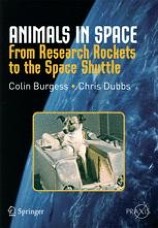
Animals in space : From research rockets to the space shuttle
Animals in Space will explain why dogs, primates, mice and other rodents were chosen and tested, at a time when dedicated scientists from both space nations were determined to establish the survivability of human subjects on both ballistic and orbital space flights. It will also recount the way this happened; the secrecy involved and the methods employed, and offer an objective analysis of how the role of animals as spaceflight test subjects not only evolved, but subsequently changed over the years in response to a public outcry led by animal activists. It will explore the ways in which animal high-altitude and space flight research impacted on space flight biomedicine and technology, and how the results - both successful and disappointing - allowed human beings to then undertake that same hazardous journey with far greater understanding and confidence.
Animals in Our Midst : The Challenges of Co-existing with Animals in the Anthropocene
This book brings together authoritative voices in animal and environmental ethics, who address the many different facets of changing human-animal relationships in the Anthropocene. As we are living in complex times, the issue of how to establish meaningful relationships with other animals under Anthropocene conditions needs to be approached from a multitude of angles. This book offers the reader insight into the different discussions that exist around the topics of how we should understand animal agency, how we could take animal agency seriously in farms, urban areas and the wild, and what technologies are appropriate and morally desirable to use regarding animals. This book is of interest to both animal studies scholars and environmental ethics scholars, as well as to practitioners working with animals, such as wildlife managers, zookeepers, and conservation biologists.
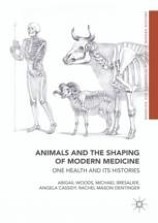
Animals and the shaping of modern medicine : One health and its histories
This book breaks new ground by situating animals and their diseases at the very heart of modern medicine. In demonstrating their historical significance as subjects and shapers of medicine, it offers important insights into past animal lives, and reveals that what we think of as ‘human’ medicine was in fact deeply zoological.Each chapter analyses an important episode in which animals changed and were changed by medicine. Ranging across the animal inhabitants of Britain’s zoos, sick sheep on Scottish farms, unproductive livestock in developing countries, and the tapeworms of California and Beirut, they illuminate the multi-species dimensions of modern medicine and its rich historical connections with biology, zoology, agriculture and veterinary medicine. The modern movement for One Health – whose history is also analyzed – is therefore revealed as just the latest attempt to improve health by working across species and disciplines.
Animal Welfare : Competing Conceptions and Their Ethical Implications
The thesis of this book is that members of what I shall call the “animal welfare science community,”3 which includes both scientists and philosophers, have illegitimately appropriated the concept of animal welfare by claiming to have given a scientific account of it that is more objectively valid than the more sentimental” account given by animal liberationists.
Animal Models of T Cell-Mediated Skin Diseases
Pharmaceutical companies are spending increasing amounts of money on drug discovery and development. Nevertheless, attrition rates in clinical development are still very high, and up to 90% of new compounds fail in clinical phase I - III trials, which is partially due to lack of clinical efficacy. This indicates a strong need for highly predictive in vitro and in vivo models. The "50th International Workshop of the Ernst Schering Research Foundation" focussed on "Animal Models of T Cell-Mediated Skin Diseases". Such animal models should have impact not only on inflammatory dermatoses but also on other inflammatory disorders due to their model character. The current volume summarises recent advances in animal research that are important for anti-inflammatory drug discovery.
Animal cell technology meets genomics ; Proceedings of the 18th ESACT Meeting. Granada, Spain, May 11-14, 2003
Reflects the spirit and scientific excellence of the 18th ESACT meeting in different chapters. This book presents, in form of short papers, a high number of the contributions to the meeting, and has been prepared with the aim to provide a relevant reference of the research efforts in Animal Cell Technology

Animal cell technology : Basic & applied aspects ; Proceedings of the 7th Annual Meeting of the Japanese Association for animal cell technology (JAACT), Nagoya, Japan, November 15-18, 2004
This book contains the proceedings of the 17th Annual and International Meeting of the Japanese Association for Animal Cell Technology (JAACT) that was held in Nagoya, Japan from November 15 to 18, 2004. This volume gives the readers a complete review of present state-of-the-art in Japan and other countries where this field is well advanced. The Proceedings will be useful for the cell biologists, biochemists, molecular biologists, immunologists, biochemical engineers and other disciplines related to animal cell culture, working in either academic environments or in industries of biotechnology and pharmacy.

Ane's Encyclopedic Dictionary of General & Applied Entomology
Keeping the requirements of teachers and researchers in mind, this encyclopedic dictionary presents the terminology in entomology and pest management in the most authentic and comprehensive way. It also includes terms related to the close relatives of insects, such as mites and ticks and some other organisms which are pests of crops.

Anatomy for Dental Medicine
Strikes an optimal balance between systemic and regional approaches to complex head and neck anatomy. Award-winning full-color illustrations, succinct text, summary tables, and questions put anatomical structures and knowledge into a practical context. NEW! Additional radiologic images and landmark features throughoutNEW! Reorganized brain/nerve sectionsNEW! Expanded clinical question appendix including patient box questions in the style of the INBDENEW! Factual question appendix places greater emphasis on areas including the skull, larynx, cross sectional anatomy, body below the neck, and local anesthesia
Analysis of variance for random models, Vol. 2 : Unbalanced data : Theory, methods, applications, and data analysis
Analysis of variance (ANOVA) models have become widely used tools and play a fundamental role in much of the application of statistics today. In particular, ANOVA models involving random effects have found widespread application to experimental design in a variety of fields requiring measurements of variance, including agriculture, biology, animal breeding, applied genetics, econometrics, quality control, medicine, engineering, and social sciences. This two-volume work is a comprehensive presentation of different methods and techniques for point estimation, interval estimation, and tests of hypotheses for linear models involving random effects. Both Bayesian and repeated sampling procedures are considered. Volume I examines models with balanced data (orthogonal models); Volume II studies models with unbalanced data (nonorthogonal models).

Alternatives to Animal Testing : Proceedings of Asian Congress 2016
This book presents recent advances in the pure sciences that are of significance in the quest for alternatives to the use of animals in research and describes a variety of practical applications of the three key guiding principles for the more ethical use of animals in experiments – replacement, reduction, and refinement, collectively known as the 3Rs. Important examples from across the world of implementation of the 3Rs in the testing of cosmetics, chemicals, pesticides, and biologics, including vaccines, are described, with additional information on relevant regulations. The coverage also encompasses emerging approaches to alternative tests and the 3Rs.

Agricultural Implications of the Fukushima Nuclear Accident : The First Three Years
Consists of various topics, including radioactivity inspection of food products; decontamination trials for rice and livestock production; the state of contamination in wild animals and birds, trees, mushrooms, and timber; the dynamics of radioactivity distribution in mountain and paddy fields; damage incurred by the forestry and fishery industries; and the change in consumers’ minds. The last chapter introduces a real-time radioisotope imaging system, the forefront technique to visualize actual movement of cesium in soil and in plants. This is the only book to provide systematic data about the actual change of radioactivity, and thus is of great value for all researchers who wish to understand the effect of radioactive fallout on agriculture.

Agricultural Implications of the Fukushima Nuclear Accident (III)
Reports on studies undertaken at contaminated sites such as farmland, forests, and marine and freshwater environments, with a particular focus on livestock, wild plants and mushrooms, crops, and marine products in those environments. It also provides additional data collected in the subsequent years to show how the radioactivity levels in agricultural products and their growing environments have changed with time and the route by which radioactive materials entered agricultural products as well as their movement between different components (e.g., soil, water, and trees) within an environmental system (e.g., forests). The book covers various topics, including radioactivity testing of food products; decontamination trials for rice and livestock production; the state of contamination in, trees, mushrooms, and timber; the dynamics of radioactivity distribution in paddy fields and upland forests; damage incurred by the forestry and fishery industries; and the change in consumers’ attitudes. Chapter 19 introduces a real-time radioisotope imaging system, a pioneering technique to visualize the movement of cesium in soil and in plants.
Aging and the Heart : A Post-Genomic View
In this book, the genetic and molecular basis of cardiovascular aging will be discussed. In addition, a comprehensive assessment of the bioenergetic changes that occur in human and animal models of cardiac aging as well as current diagnostic and future therapeutic modalities will be undertaken.
Ageing : The Paradox of Life : Why We Age
For centuries people have been puzzled by the inevitability of human aging. For most of the second half of the twentieth century aging remained a mystery, or an unsolved biological problem. At the end of the 20th century a remarkable scientific discovery emerged. It was not a single discovery in the usual sense, because it was based on a series of important interconnected insights over quite a long period of time. These insights made it possible for the very first time to understand the biological reasons for aging in animals and man. It can already be said, however, that the many observations and insights that explain aging will not be accepted as established knowledge for a long time.
