



الصفحة 1
الصفحة 1

The Future of Financial Systems in the Digital Age : Perspectives from Europe and Japan
The increasing capacity of digital networks and computing power, together with the resulting connectivity and availability of “big data”, are impacting financial systems worldwide with rapidly advancing deep-learning algorithms and distributed ledger technologies. They transform the structure and performance of financial markets, the service proposition of financial products, the organization of payment systems, the business models of banks, insurance companies and other financial service providers, as well as the design of money supply regimes and central banking.

The financial services guide to fintech : Driving banking innovation through effective partnerships
Explores how banks can collaborate with fintech firms to drive innovation in areas such as cash management, compliance and tax / Explains key fintech segments such as regtech, robo-advisory, blockchain and personal finance management / Includes case studies and business models of banks who have had successful partnerships including Barclays and Citibank / Covers key fintech hubs in Europe, Africa, Asia, Latin America and the US

The AI Book : The Artificial Intelligence Handbook for Investors, Entrepreneurs and FinTech Visionaries
The AI Book aggregates diverse expertise into a single, informative volume and explains what artifical intelligence really means and how it can be used across financial services today. Key industry developments are explained in detail, and critical insights from cutting-edge practitioners offer first-hand information and lessons learned.

Super-Flexibility for Knowledge Enterprises : A Toolkit for Dynamic Adaption
Living with uncertainty is an everyday reality for most business entities today. This is especially the case for knowledge-intensive enterprises, such as those in technology, financial services, biotechnology and telecommunications, where new innovations and shifting customer preferences can radically change competitive dynamics. The focus of the book is on how knowledge enterprises can harness uncertainty by becoming super-flexible. Based on over 20 years of field research and practical experience in Silicon Valley’s technology ecosystem, the authors present conceptual frameworks, illustrative examples and practical lessons for strategizing, organizing and managing knowledge-based enterprises in turbulent settings.

Reading Between the Lines of Corporate Financial Reports : In Search of Financial Misstatements
Provides a digestible step-by-step guide to reading corporate financial reports, drawing upon real-life case studies and examples of corporate collapses and accounting scandals, and applying practical tools to financial statement analysis. Appealing to a range of practitioners within corporate finance including investors, managers, and business analysts, this book is the first to specifically address the challenges facing those who are not professional accountants and auditors when examining corporate financial reports. Corporate financial reports are used widely by managers, investors, creditors, and government agencies to examine company performance and evaluate potential risks. However, although seemingly an invaluable source of information for managerial decision-making, financial reports are often based on rough simplifications of a very complex reality. With no way of avoiding deliberate manipulations and fraudulent activity, these statements cannot be relied on completely when selecting stocks or evaluating credit risk, and therefore poor analysis can lead to potentially disastrous investment decisions.

New Frontiers in Banking Services : Emerging Needs and Tailored Products for Untapped Markets
This book is devoted to an issue that is the subject of growing interest amongst policy makers, financial providers and academics. That issue is the problem of unbanking or underbanking in developed countries. The issue has arisen because, faced with an ever more sophisticated and efficient financial system, an increasing number of people have found themselves in danger of being excluded from it. The goal of the papers that follow is to draw attention, both through a theoretical framework and through field study, to the need for banks, financial institutions, public authorities and non profit associations to increase their efforts to understand the process of financial exclusion, so that they can develop approaches to help people on low to moderate incomes to gain access to the whole range of financial services, from payment to savings, and from loans to investment.

Islamic FinTech : Insights and Solutions
Addresses the effects and implications of rapid technological changes within the financial services industry on Islamic finance and Islamic banks. Exploring current challenges, opportunities and threats, the authors provide an overview of how FinTech can operate within an Islamic context, under the Shari’ah principles or the Halal framework, for example. Examining the potential opportunities of Islamic FinTech from a socio-economic perspective, this edited collection will be of use to anyone researching FinTech or Islamic Finance as well as practitioners and policy-makers involved in banking and financial services.

Insurance distribution directive : A legal analysis
This book of the AIDA Europe Research Series on Insurance Law and Regulation offers the first comprehensive legal and regulatory analysis of the Insurance Distribution Directive (IDD).

Global Fintech : Financial Innovation in the Connected World
How the global financial services sector has been transformed by artificial intelligence, data science, and blockchain. Artificial intelligence, big data, blockchain, and other new technologies have upended the global financial services sector, creating opportunities for entrepreneurs and corporate innovators. Venture capitalists have helped to fund this disruption, pouring nearly $500 billion into fintech over the last five years. This book offers global perspectives on technology-fueled transformations in financial services, with contributions from a wide-ranging group of academics, industry professionals, former government officials, and current government advisors. They examine not only the struggles of rich countries to bring the old analog world into the new digital one but also the opportunities for developing countries to “leapfrog” directly into digital.

Financial Technology : Case Studies in Fintech Innovation
Combines theoretical and commercial perspectives informed by the author's professional experience and academic research Thoroughly explains key technologies and emerging business models in a clear and accessible manner for those with no technological background Includes a mix of international case studies from large financial services organizations and smaller start-ups, including Lloyds Bank, TransferWise, Generali, Starling and Stocktwits Covers the topics required for postgraduate and undergraduate Financial Technology courses and includes learning objectives and discussion questions based on case studies
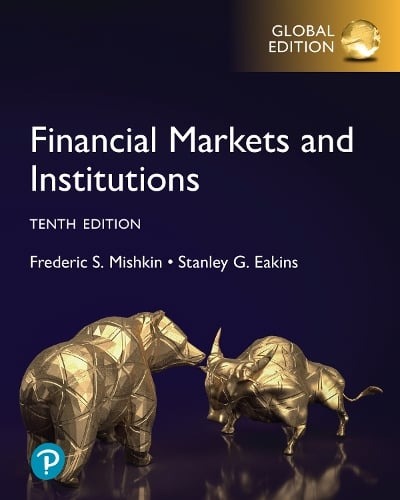
Financial markets and institutions
A practical introduction to the workings of today's financial markets and institutions. Moving beyond the descriptions and definitions provided by other textbooks in the field, Financial Markets and Institutions encourages students to understand the connection between the theoretical concepts and their real-world applications. By enhancing students' analytical abilities and concrete problem-solving skills, this textbook prepares students for successful careers in the financial services industry or successful interactions with financial institutions, whatever their jobs

Faith, finance, and economy : Beliefs and economic well-being
This book seeks to foster a multidisciplinary understanding of the ties between faith, financial intermediation, and economic progress by drawing on research across economics, finance, history, philosophy, ethics, theology, public policy, law, and other disciplines.

European capital markets law
Examines the underlying concepts from a broadly interdisciplinary perspective. The 3rd edition deals with 3 central developments: the project of the capital markets union; sustainable finance; and the further digitalisation of financial instruments and securities markets. Throughout the book emphasis is placed on legal practice, and frequent reference is made to the key decisions of supervisory authorities and courts

EU Accession - Financial Sector Opportunities and Challenges for Southeast Europe
A distinguished international group of central bankers, commercial bankers, entrepreneurs, academic advisors, policymakers, and representatives of development finance organizations and donor agencies, brought together by KfW, examines in this book the future of financial sector development in Southeast Europe. They explore ways to strengthen the banking sector in Southeast Europe, further promote SMEs, and improve access to financial services in the region. Experts and decision-makers assess the opportunities and challenges presented by the EU accession process and Basel II, and offer candid insight into the expanding role of the private sector in developing the financial landscape. The perspectives presented in this book will prompt discussion and intellectual exchange that will serve as a new starting point for further successful cooperative initiatives.

Enterprise Applications and Services in the Finance Industry ; 3rd International Workshop, FinanceCom 2007, Montreal, Canada, December 8, 2007. Revised Papers
This book constitutes the proceedings of the 4th International Workshop on Enterprise Applications and Services in the Finance Industry, FinanceCom2008, held in Paris, France, on December 13, 2008. The workshop spans multiple disciplines, including technical, economic, sociological and behavioral sciences. The guiding theme of this workshop was concerned with innovations in the financial services industry, driven by either new business models or changed regulations.

Enhancing Smallholder Farmers' Access to Seed of Improved Legume Varieties Through Multi-stakeholder Platforms : Learning from the TLIII project Experiences in sub-Saharan Africa and South Asia
This book shares the experiences of Tropical Legumes III (TLIII) project in facilitating access to seed of improved legume varieties to smallholder farmers through innovation platforms. It highlights practices and guiding principles implemented in eight developing countries of sub-Saharan Africa and South Asia. This book details key processes that respective teams employed to create an innovation space that delivers seed, other inputs, knowledge and financial services to agricultural communities and most importantly, the underserved farmers in remote areas of the drylands

Embedded finance : When payments become an experience
In Embedded Finance: When Payments Become An Experience, veteran growth strategists, entrepreneurs, and fintech disruptors Scarlett Sieber and Sophie Guibaud deliver a thought-provoking and page-turning discussion on the most impactful and exciting trend of fintech yet: embedded finance. In the book, you’ll explore the past, present, and future of fintech, from how embedded finance is being leveraged today by industry heavyweights like Google and Amazon to supercharge their customers’ experience to the offerings of smaller, niche players who stand poised to dominate their own corners of the market as their answer unmet customers’ needs.

Distributed Ledgers : Design and Regulation of Financial Infrastructure and Payment Systems
In this book, Robert Townsend steps back from the hype and controversy surrounding DLT (and the related, but not synonymous, innovations of blockchain and Bitcoin) to offer an economic analysis of what distributed ledgers can do and a blueprint for the optimal design and regulation of financial systems. He analyzes four crucial components of distributed ledgers—ledgers as accounts, e-messages and e-value transfers, cryptography, and contracts—assessing each in terms of both economics and computer science, and forges some middle ground. Relatedly, Townsend highlights hybrid systems in which some of these components allow useful innovation while legacy or alternative pieces deal with the problem of scale.

Disrupting Finance : FinTech and Strategy in the 21st Century
This Pivot demonstrates how a variety of technologies act as innovation catalysts within the banking and financial services sector. Traditional banks and financial services are under increasing competition from global IT companies such as Google, Apple, Amazon and PayPal whilst facing pressure from investors to reduce costs, increase agility and improve customer retention. Technologies such as blockchain, cloud computing, mobile technologies, big data analytics and social media therefore have perhaps more potential in this industry and area of business than any other. This book defines a fintech ecosystem for the 21st century, providing a state-of-the art review of current literature, suggesting avenues for new research and offering perspectives from business, technology and industry.

Digitalization and the Future of Financial Services : Innovation and Impact of Digital Finance
The aim of this book is to extend our understandings on how digitalization and the future of financial services can be helpful in different business circumstances in many cross-functional financial areas, such as financial markets, financial risk management, financial technologies, investment finance, etc. Thus, the book aims at addressing the relevance of digital finance for different players, highlighting differences in tools and processes as well as identifying innovative practices in financial digitalization.
